Taking a Wisconsin Machine to Minnesota
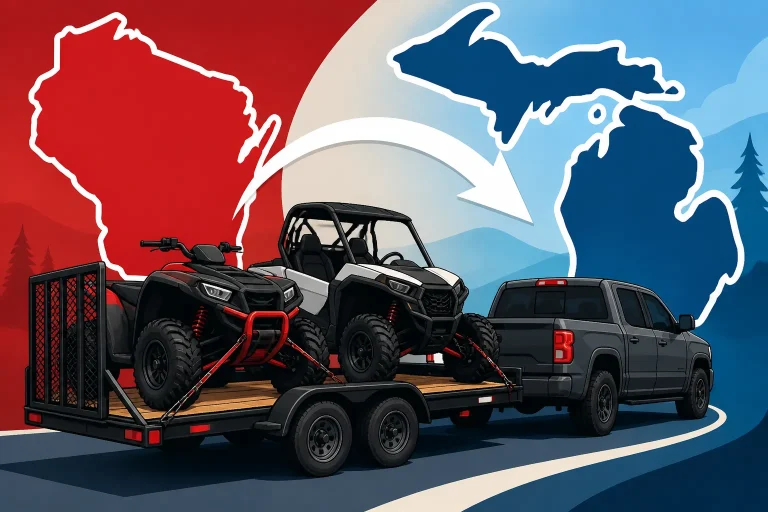
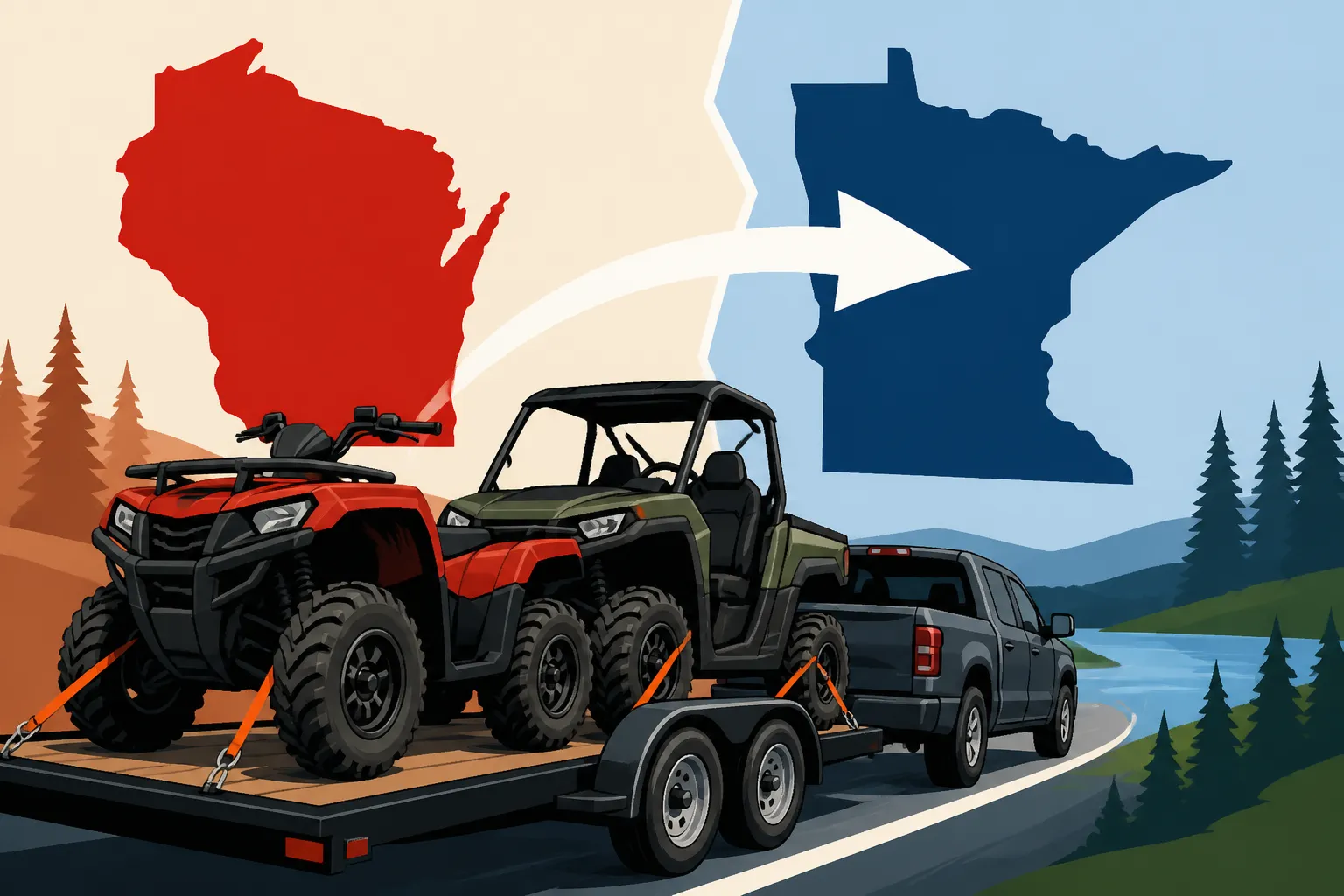
A Wisconsin registration does not automatically settle every requirement for riding in Minnesota. The rules can depend on where you ride, whether your machine is an ATV or UTV, and whether you use public trails or roads. Before loading up, check the registration, any Minnesota trail-pass requirement, and local access rules so a legal Wisconsin machine stays legal across the border.
What a Wisconsin registration does and does not cover
A current Wisconsin registration is important proof that your machine is registered at home, but it is not a blanket permit to ride every Minnesota trail, forest road, or route. Each state sets its own rules for public-land access, trail passes, road use, equipment, and rider eligibility.
In practice, keep three questions separate:
- Is the machine currently registered in Wisconsin? Confirm that the registration is valid and that the registration record matches the machine.
- Does Minnesota require a pass or other authorization for the place you plan to ride? Rules may differ between designated trails, public lands, roads, and private property.
- Does your particular machine meet the local requirements? A rule that applies to an ATV may not apply in the same way to a UTV or side-by-side.
Wisconsin’s registration does not replace Minnesota’s requirements. Likewise, a Wisconsin trail pass is not a general pass for Minnesota trails. Reciprocity, if it applies to a particular requirement, is specific: it does not necessarily transfer every privilege from one state to another.
| Riding situation in Minnesota | What to check before you go |
|---|---|
| Designated state or grant-in-aid trail | Whether a nonresident trail pass is required for your machine |
| Other public land | The land manager’s access and registration rules |
| Local road or route | Whether the road is open to ATVs or UTVs and what local ordinances require |
| Private land | The landowner’s permission and any applicable state rules |
| A mix of trails and roads | Requirements for each part of the planned route |
For trail riding, check Minnesota’s current instructions for out-of-state machines directly with the Minnesota Department of Natural Resources. Confirm whether Wisconsin registration affects the pass requirement for the trails you intend to use. Requirements can depend on the machine’s registration status and where it will be operated, so do not assume that a pass is unnecessary because you have Wisconsin decals.
The same principle applies in the other direction. A Minnesota trail pass does not register a machine in Wisconsin or make an expired Wisconsin registration current. If you need to check the Wisconsin side of your paperwork before leaving, see Wisconsin’s Public Use ATV Registration and What Wisconsin Riders Need Before They Ride.
Check the Minnesota pass and trail rules before loading
The most common trip-planning mistake is treating “Minnesota trail access” as a single statewide permission. A trail system may have a specific pass requirement, while a nearby road or public-land area follows different rules. The pass requirement can also depend on whether the machine is registered in Minnesota or another state.
Before traveling, identify the specific trail system and confirm these details with the relevant official source:
- Whether the trail is open to your type of machine
- Whether a nonresident trail pass is required
- How the pass must be displayed or carried
- Whether the trail is currently open
- Any width, equipment, hours, or seasonal restrictions
- Whether the trail connects to roads that are open to ATVs or UTVs
Do this close to the trip rather than relying on an old forum post, a trail map saved years ago, or what a riding companion remembers. Trail access can change because of maintenance, weather, land-management decisions, or local rules. A route shown on a map is not proof that it is open to motorized riding today.
When checking pass rules, be precise about your machine. “ATV” is often used casually to describe several kinds of off-highway vehicles, but a UTV, side-by-side, or other larger machine may fall into a different category under a particular rule. Give the agency the machine’s type and Wisconsin registration status instead of asking only whether “an ATV” needs a pass.
If the machine is not currently registered, do not count on a trail pass to cure that problem. A trail pass and a vehicle registration serve different purposes. Check the requirements for both before riding. If your trip includes Wisconsin trails too, review Wisconsin’s Non-Resident Trail Pass and Passes for a Machine Registered Out of State separately; Minnesota and Wisconsin requirements do not automatically match.
Prepare the machine and paperwork for the trip
Make the paperwork easy to reach, and check that the information on it matches the machine. A practical trip folder can include:
- Wisconsin registration card or other accepted proof of registration
- Any Minnesota trail pass or purchase confirmation required for your route
- Proof of ownership or purchase documents if you recently bought the machine
- Insurance information, if required by the land manager or local ordinance
- A paper or offline map showing the intended trail system and access points
Keep registration materials protected from water and mud, but do not store them somewhere you cannot reach if asked to show them. For Wisconsin paperwork questions, Do You Carry Papers on a Wisconsin Trail? explains why having documentation available matters at home; still, confirm Minnesota’s own expectations for an out-of-state rider.
Inspect decals and other required displays before departing. A pass or registration sticker that is valid but hidden, damaged, or placed incorrectly may create avoidable confusion. Follow the instructions for each document rather than assuming Wisconsin’s display rules apply in Minnesota. For Wisconsin decal placement and replacements, see Sticker Placement on a Wisconsin Machine and Replacing Lost Wisconsin Decals.
Check the machine’s basic safety equipment as well. Requirements may vary by machine type and riding location, but sound brakes, working lights, suitable tires, and secure cargo are useful wherever you ride. If your route includes public roads, do not assume trail equipment alone makes the machine road-legal. Confirm local road access and the rules that apply to the specific road.
Age and safety-training requirements also deserve a separate check. A Wisconsin rider’s eligibility to operate a machine does not necessarily answer every Minnesota question. Review Minnesota’s current rules for the rider’s age, machine type, and riding area, and bring any certificate or identification required for your situation. For Wisconsin’s home-state rules, Wisconsin’s ATV Safety Certificate Requirement and Wisconsin Age Rules for ATVs and UTVs provide related background, but they do not substitute for Minnesota requirements.
Plan around roads, property boundaries, and changing conditions
A route that begins on a legal trail can still lead to a problem if it crosses a closed segment, an unapproved road, or private property. Plan the complete ride, not just the trailhead. Check where the trail begins and ends, whether connecting roads are open to your machine, and whether the route passes through a town with additional restrictions.
In particular, do not assume that a road is open because it is gravel, lightly traveled, or shown as a connection on an informal map. Road access is controlled separately from trail access. A local government may allow ATV or UTV travel on certain roads while closing others, or may set conditions such as operating hours, equipment requirements, or insurance rules. Confirm access with the local authority responsible for the road.
Respect posted boundaries and private land. A trail shown near a property line may not authorize riding across the property, and permission to ride one parcel does not automatically include neighboring land. If a route uses a private connection, verify that access is still allowed.
Before driving to the trailhead, check for closures, weather-related restrictions, and parking or staging rules. Bring a backup plan in case the route is closed or the parking area is full. In areas with limited cell service, download maps and route information in advance, and carry a way to navigate if your phone loses reception.
A short pre-trip check helps catch common oversights:
- Verify the Wisconsin registration is current and matches the machine.
- Confirm Minnesota pass requirements for the specific trail and machine type.
- Check trail status, local road access, and any municipal rules.
- Pack required documents and follow display instructions for decals or passes.
- Confirm rider eligibility, equipment requirements, and property access.
- Recheck official notices before leaving, especially if weather or seasonal closures may affect the route.
A Wisconsin-registered machine can be a straightforward visitor machine in Minnesota when its paperwork is current and the rider follows the rules for each place along the route. The key is not to treat registration, trail-pass permission, and road access as interchangeable. Verify each one separately, and use the official state or local source responsible for the area you plan to ride.
Disclaimer
This article is for general informational purposes only and does not constitute professional advice. Laws, prices and regulations vary by location and change over time. Consult a qualified professional for guidance on your specific situation.