Wisconsin’s Public Use ATV Registration
Getting out on Wisconsin's incredible network of ATV and UTV trails is a dream for many, but the paperwork can feel like a tangled mess. One of the biggest points of confusion for riders, especially those new to the state or the sport, revolves around "public use" registration. It's not just a suggestion; it's a legal requirement that keeps you riding legally and helps maintain those trails you love. This guide is here to untangle that knot, walking you through everything you need to know about registering your machine for public use in Wisconsin, so you can focus on the ride, not the worry.
Understanding Public Use Registration in Wisconsin
The concept of "public use" for ATVs and UTVs in Wisconsin can be a bit of a head-scratcher, even for seasoned riders. It sounds simple enough, but the nuances are often where folks get tripped up, leading to unnecessary fines or frustrating encounters with wardens. Let's break down what it truly means and why it's so critical for every rider who ventures beyond their own property lines.
What Exactly is "Public Use" for an ATV or UTV?
When the Wisconsin Department of Natural Resources (DNR) talks about "public use," they're drawing a clear line in the sand between riding on land you own or have explicit permission to ride on, and riding anywhere else. This distinction is absolutely fundamental because it dictates which type of registration your ATV or UTV requires. Essentially, if you plan to ride your machine on any trail, route, or area that is open to the general public, even if it's managed by a county, the state, or the federal government, you need public use registration.
Think about it this way: are you going to load your side-by-side onto a trailer and drive up north to hit the trails in Marinette County or explore the Chequamegon-Nicolet National Forest? Are you planning to ride an approved ATV route through a small Wisconsin town to get from one trail segment to another, or perhaps just to grab a bite to eat? If the answer to any of these is yes, then you're engaging in "public use." This also extends to riding on frozen lakes, which are generally considered public access, even if you’re just going out to your ice shanty. The moment your tires touch land or ice accessible to others, your machine needs to be properly registered for public use.
The frustration often comes from not fully understanding the vastness of what "public" encompasses. It's not just designated state trails; it includes county trails, town roads that have been officially opened as ATV routes, forest roads in public lands, and even public access points to waterways. It’s a broad category designed to ensure all riders contributing to wear and tear on these shared resources, and benefiting from them, are doing their part to support the system.
Why Public Use Registration Matters
Beyond simply being a legal requirement, having proper public use registration for your ATV or UTV is paramount for several reasons, both for individual riders and for the overall health of Wisconsin's beloved trail systems. Ignoring this requirement isn't just a minor oversight; it can lead to significant headaches and financial penalties.
Firstly, let's talk about the immediate legal ramifications. Wisconsin DNR wardens and local law enforcement actively patrol trails and routes. If you're stopped and your machine doesn't have current public use registration decals properly displayed, you're looking at a citation. These aren't just minor slaps on the wrist; [Penalties for an Unregistered ATV in Wisconsin] can be substantial, often costing far more than the registration fee itself, plus court costs. Imagine driving all the way up north for a long-planned weekend of riding, only to have it cut short because you didn't sort out your registration. It's a frustrating scenario that's entirely avoidable.
Secondly, and perhaps more importantly for the community of riders, the funds generated from these public use registrations are absolutely crucial for the maintenance, development, and improvement of Wisconsin's extensive ATV and UTV trail network. When you pay your registration fee, you're directly contributing to things like trail grooming, bridge repairs, signage installation, and the administrative costs of managing these vast recreational areas. Without these funds, many of the trails we all enjoy simply wouldn't exist or would fall into disrepair. [Where Wisconsin ATV Registration Money Goes] shows just how vital rider contributions are. It's a pay-it-forward system that ensures future generations of riders can experience the same incredible opportunities we do today. So, while it might feel like "just another fee," it's truly an investment in the future of the sport in Wisconsin.
The Nuts and Bolts of Wisconsin Public Use Registration
Navigating the administrative side of ATV and UTV ownership can feel a bit like wading through quicksand, especially when you're just eager to get out on the trails. Thankfully, Wisconsin's public use registration process, while specific, is quite manageable once you understand the steps. It's all about providing the right information and knowing where to go.
Who Needs Public Use Registration?
The simplest answer to "who needs public use registration?" is: anyone who intends to operate their ATV or UTV on lands or trails open to the public in Wisconsin. This includes residents of Wisconsin as well as non-residents, though non-residents have an additional requirement, which we'll touch on later. It doesn't matter if you're riding a brand-new side-by-side or a vintage utility quad; if it's hitting a public trail, it needs public use registration.
The common misunderstandings here are plentiful. Some riders might think, "Oh, I only ride a few times a year, surely I don't need it?" or "I'm just going to cross the road to get to my friend's property." These scenarios, even if brief, still count as public use. There are no exemptions based on how frequently you ride or the duration of your public exposure. Even if your machine is primarily used for farm work on your private land, the moment you decide to take it down a town road that's been designated as an ATV route, you need that public use registration. Similarly, age doesn't exempt the machine itself; while rider age has specific safety course requirements, the machine's registration status is separate. It's the machine's intended use, not the rider's demographics, that dictates this need. [Public Use Versus Private Use in Wisconsin] goes into more detail about these distinctions.
The Registration Application Process
Once you've determined you need public use registration, the next step is actually getting it done. Wisconsin offers a few convenient ways to apply, allowing you to choose the method that best suits your needs. The key is to be prepared with the necessary documentation to ensure a smooth process.
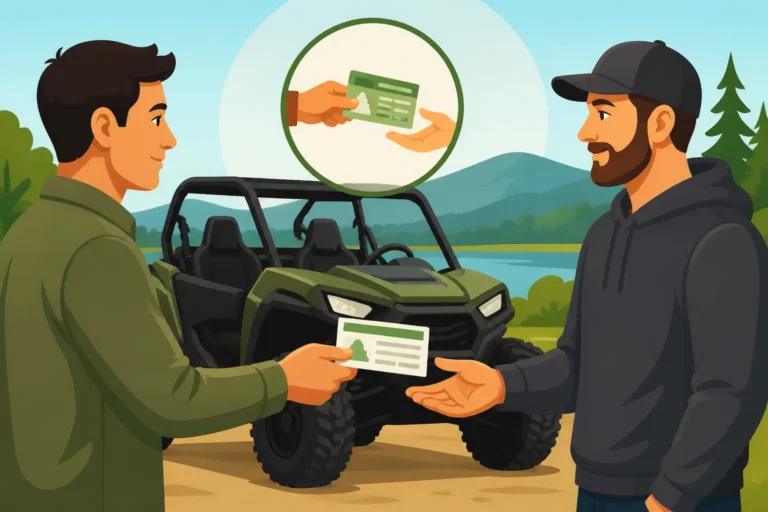
You can register your ATV or UTV online through the Wisconsin DNR's GoWild system, which is often the quickest and most convenient option for many. This portal allows you to input your machine's information, pay the required fees, and even print a temporary operating receipt while you wait for your official decals and registration card to arrive in the mail. If you're more of a hands-on person or prefer in-person assistance, you can visit one of the many authorized DNR registration agents located throughout the state. These agents can process your application on the spot, and some may even provide temporary documentation. Finally, if you're not in a rush, you can also apply by mail, sending your completed application form and payment directly to the DNR.
Regardless of the method you choose, you'll need proof of ownership for your machine. Since Wisconsin does not title ATVs or UTVs, this typically means a bill of sale or a manufacturer's statement of origin (MSO) for a new machine. You’ll also need the machine's Vehicle Identification Number (VIN), which is crucial for identification and record-keeping. Make sure your bill of sale includes all the necessary details, such as buyer and seller information, the machine's make, model, year, and VIN, and the purchase price. A robust bill of sale, perhaps one you drafted with the help of a service like LawDepot, can serve as excellent proof of ownership. You'll also need to account for sales tax information, as Wisconsin requires proof that sales tax has been paid on the purchase of the machine. Getting all these details correct the first time around saves a lot of back-and-forth later on. For a more detailed breakdown, check out [Wisconsin DNR ATV Registration Explained].
Fees and Costs Associated with Public Use
Let's be realistic: nothing in life is truly free, and that includes the privilege of tearing up those beautiful Wisconsin trails. The registration process comes with a fee, and understanding the shape of that cost is important for budgeting your off-road adventures. While I can't provide the exact, current dollar amount (as these can change), I can tell you what types of fees you'll generally encounter.
The primary cost will be the Wisconsin ATV Public Use Registration fee itself. This fee is set by the state and is what directly funds the trail maintenance and administration we discussed earlier. It’s an investment in the trail system you’ll be using. Beyond this base fee, you might encounter other minor costs depending on how you register. For instance, if you choose to register through an authorized agent, they may charge a small service fee on top of the state registration fee for the convenience of in-person processing. If you're transferring registration from a previous owner, there's typically a separate transfer fee involved, which is generally a smaller amount than the full registration fee, but still something to factor in.
It’s always a good idea to check the Wisconsin DNR's official website for the most current fee schedule before you begin the registration process. Knowing these figures upfront prevents any surprises and ensures you have the correct payment ready, whether you're submitting it online, by mail, or to an agent. These fees are a small but essential part of being a responsible rider in Wisconsin. For a clearer picture of the primary fee, refer to [Wisconsin ATV Registration Fee for Public Use].
Displaying Your Wisconsin Public Use Registration
Once you've gone through the effort of registering your ATV or UTV for public use, the job isn't quite done. Proper display of your registration decals and carrying your registration card are just as important as the registration itself. These steps ensure that law enforcement can quickly verify your compliance and that you have proof of registration readily available.
Where to Place Your Decals
This is one of those small details that can get you stopped by a warden if not done correctly. Wisconsin has specific requirements for where your public use registration decals must be affixed to your ATV or UTV. The general rule is that they need to be clearly visible and permanently attached.
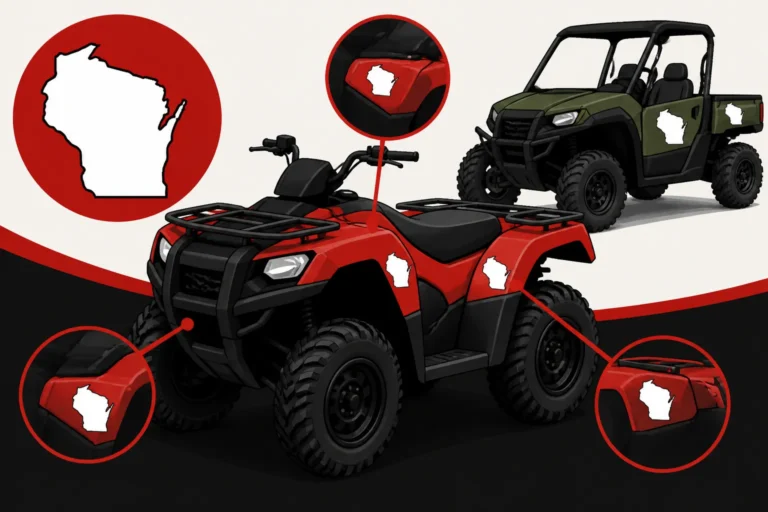
For ATVs, the decals are typically placed on the left side of the machine, on the front half. You want to choose a flat, clean surface where they won't be easily obscured by mud, equipment, or your riding gear. Many riders find a spot on the front fender or the side plastic near the handlebars works well. For UTVs (side-by-sides), the placement is usually on the left side of the cowl or the main body of the machine, again, making sure it's prominent and unobstructed.
It's not enough to just stick them on; they need to be affixed. This means using the adhesive backing provided and ensuring they are pressed firmly onto a clean, dry surface. Over time, especially in Wisconsin's varied weather conditions, decals can peel or fade. If your decals become unreadable or fall off, you are responsible for obtaining replacements. Riding with unreadable or missing decals is just as problematic as not being registered at all, as it prevents easy verification. So, take a moment to choose a good spot and apply them carefully. For visual guidance and detailed rules, see [Sticker Placement on a Wisconsin Machine].
Carrying Your Registration Card
While the decals are for external verification, your registration card is your personal proof of ownership and legal operation. It's absolutely critical that you carry this card with you whenever you are operating your ATV or UTV on public lands or routes. This isn't just a suggestion; it's a legal requirement.
Think of it like your driver's license for a car. If a DNR warden or other law enforcement officer stops you on a public trail or route, one of the first things they will ask for, after your safety certificate, is your machine's registration card. This card contains vital information about your ATV or UTV, including its registration number, your name, and the expiration date. Being unable to produce it can lead to delays, further questioning, and potentially a citation, even if your machine is technically registered.
To protect your card from the elements and wear and tear, consider keeping it in a waterproof baggie or a dedicated, secure pouch on your machine. Many riders keep it in a small compartment, a glove box on a UTV, or even a sealed pocket on their riding jacket. The goal is to have it accessible and protected. Losing it or having it damaged can be a hassle, so treat it like the important document it is. For more tips on this, refer to [Keeping the Registration Card With the Machine].
What Happens if Decals or Cards are Lost/Damaged?
Life on the trails is tough on equipment, and sometimes, despite your best efforts, things go missing or get damaged. This applies to your registration decals and card as well. Mud, branches, extreme weather, or even just an accidental snag can render them unreadable or simply gone. If this happens, don't just ignore it and hope for the best. You need to take action.
If your decals become lost, damaged, or unreadable, you are legally obligated to order replacements. The process is straightforward and typically involves contacting the Wisconsin DNR either online or by mail. You’ll usually need to provide your machine's registration number and a small fee to cover the cost of the new decals and shipping. While you wait for your new decals to arrive, it’s a good idea to carry any proof of your re-order or a copy of your current registration (if you still have the card) to show authorities if you happen to be stopped. This proactive step can help explain the situation and potentially avoid a citation.
The same principle applies if you lose or damage your physical registration card. You'll want to request a replacement from the DNR. Having a digital copy or a picture on your phone might help in a pinch, but it is not a substitute for the physical card that the law requires you to carry. The best practice is always to have the valid, physical documents. It’s a minor inconvenience to replace them, but far less of a headache than facing a fine for non-compliance. Details on how to handle this are available in [Replacing Lost Wisconsin Decals].
Renewing Your Public Use Registration
Understanding the initial registration process is one thing, but staying on top of renewals is another crucial aspect of responsible ATV and UTV ownership in Wisconsin. Missing a renewal deadline can quickly turn a fun day on the trails into a costly and frustrating experience.
The March 31st Expiration Deadline
This is perhaps the single most important date for public use ATV and UTV riders in Wisconsin to remember: March 31st. Every year, without fail, public use registrations for ATVs and UTVs expire on March 31st. This isn't a rolling date based on when you initially registered; it's a fixed date for everyone.
The fixed expiration date can be a common trap, especially for new riders who might assume their registration is valid for a full year from the date of purchase or initial registration. Not so in Wisconsin for public use! So, if you register your machine in July, it will still expire the following March 31st, not the next July. This means your first "year" of registration might be shorter than 12 months, but all subsequent renewals will run from April 1st to March 31st of the following year. This system ensures a streamlined renewal process for the state but puts the onus on riders to be aware of this specific deadline.
Why is this date so critical? Because come April 1st, if your machine is on any public trail, route, or open land with an expired registration, you are operating illegally. This is when wardens are often out in full force, checking registrations as the spring riding season kicks into gear. Many riders learn this lesson the hard way, receiving a citation on what was supposed to be a carefree spring ride. Don't let that be you. Mark your calendars, set reminders, and make sure your registration is current well before March 31st. More on this critical date can be found in [The March 31 Expiration Every Wisconsin Rider Learns].
Renewal Options: Online, Agent, Mail
Just like initial registration, renewing your Wisconsin public use ATV or UTV registration offers a few convenient options to ensure you stay legal on the trails. The Wisconsin DNR aims to make this process as straightforward as possible, recognizing that riders want to spend their time riding, not dealing with paperwork.
The most popular and often fastest method for renewal is online through the Wisconsin DNR's GoWild system. This portal allows you to easily log in, confirm your machine's details, pay your renewal fee with a credit card, and get an immediate confirmation. It’s accessible 24/7, meaning you can renew at your convenience, even if it's late at night or on a weekend. Once renewed online, you'll receive a temporary operating receipt that you can print out and carry with you until your new decals and registration card arrive in the mail, which usually takes a week or two.
Alternatively, you can renew in person at an authorized DNR registration agent. These agents, often found in sporting goods stores, bait shops, or other businesses, can process your renewal on the spot. While they might charge a small service fee, the benefit is immediate verification and sometimes even temporary decals. This is a great option if you're close to the deadline and want peace of mind. Lastly, you can renew by mail, though this is generally the slowest option. If you choose this route, be sure to send your renewal form and payment well in advance of the March 31st deadline to account for mail delivery and processing times. The DNR typically sends out renewal reminders, but it’s ultimately your responsibility to ensure it’s done. For a detailed walkthrough of the online renewal, check out [Renewing a Wisconsin Registration Online].
Consequences of Expired Registration
Let's not sugarcoat it: riding with an expired public use registration in Wisconsin is a definite no-go, and the consequences can be quite unpleasant. It's not just a minor slap on the wrist; it can impact your wallet and your riding privileges.
The most immediate and common consequence is a citation from a DNR warden or local law enforcement. These fines are often significantly higher than the cost of renewal itself, turning a simple administrative oversight into a costly legal issue. Beyond the monetary penalty, you might also be required to cease operation of your machine immediately until proper registration is obtained, potentially ruining a planned riding trip. Imagine having your machine trailered and having to head home because of an expired decal – a total waste of a day and fuel.
Furthermore, repeated offenses or severe infractions related to unregistered operation could potentially lead to more serious legal action, though this is less common for a simple expired registration. However, it underscores the importance of compliance. It's truly a scenario where an ounce of prevention (renewing on time) is worth a pound of cure (avoiding fines and hassle). The DNR provides ample opportunities for renewal, so there's really no good reason to risk it. Make it a habit to check your decals every spring, and you’ll avoid a lot of potential headaches. For a deeper dive into the penalties, refer to [Penalties for an Unregistered ATV in Wisconsin].
Special Situations and Common Questions
The world of ATV and UTV ownership is rarely straightforward, and various situations can pop up that leave riders scratching their heads about registration. From buying and selling machines to understanding the needs of out-of-state visitors, there are specific guidelines to follow.
Buying and Selling an ATV/UTV with Public Use Registration
When an ATV or UTV changes hands in Wisconsin, the registration doesn't automatically transfer with the machine to the new owner. There are clear responsibilities for both the seller and the buyer to ensure the machine remains legally registered for public use.
Seller's Responsibilities: As the seller, your primary responsibility is to provide the buyer with proof of ownership, typically a bill of sale. Even though Wisconsin doesn't title ATVs, a comprehensive bill of sale is crucial. You should also hand over the current registration card for the machine. Even if it's expired, it serves as an important record for the buyer. It's often helpful to provide documentation for any lien releases if the machine was financed. While not legally required for the registration transfer, having a detailed bill of sale, perhaps generated using a service like LawDepot, can protect both parties. For a full list of what to give the buyer, check [What a Wisconsin ATV Seller Must Give the Buyer].
Buyer's Responsibilities: As the buyer, you have a crucial and relatively tight window to transfer the registration into your name. Wisconsin law dictates that the new owner must transfer the registration within ten days of the purchase date. This isn't just a suggestion; it's a legal requirement. You'll need the bill of sale and the previous owner's registration card (if available). The transfer can be done online through the DNR's GoWild system, by mail, or in person at an authorized agent. There will be a transfer fee, which is separate from the full public use registration fee. If the previous owner's registration was expired, you'll need to pay the full public use registration fee. Missing this ten-day window can lead to penalties and delays in getting your machine legally registered. For the details on this deadline, see [Transferring a Wisconsin Registration Within Ten Days].
Out-of-State Riders and Non-Resident Trail Passes
If you're an out-of-state rider eyeing Wisconsin's fantastic trail system, you might be wondering how your home state's registration plays into things. The answer is, it's a bit different. Wisconsin has a specific system for non-resident riders to ensure they contribute to the trail system they use.
If your ATV or UTV is registered in another state, that registration does not satisfy Wisconsin's public use registration requirement. Instead, out-of-state riders are required to purchase a Wisconsin Non-Resident ATV/UTV Trail Pass. This pass is specifically designed for visitors and ensures that all users of Wisconsin's public trails contribute to their upkeep, regardless of where their machine is permanently registered. The trail pass is an annual pass, typically expiring on March 31st, similar to Wisconsin resident public use registrations.
The non-resident trail pass needs to be displayed prominently on your machine, usually next to your home state's registration decals. You can purchase these passes online through the Wisconsin DNR GoWild system, at authorized DNR registration agents, or from many vendors located in popular trail towns across the state. It's vital to have this pass before you hit any Wisconsin public trails. Trying to ride without one can result in a citation, spoiling your vacation. For more information on this, refer to [Wisconsin's Non-Resident Trail Pass] and [What Wisconsin Charges an Out-of-State Rider].
Public Use vs. Private Use: Which Do You Need?
One of the most enduring sources of confusion for Wisconsin ATV and UTV owners is differentiating between public use and private use registration. Many assume that if they own the machine, any registration covers them. This is not the case, and understanding the distinction is paramount to avoid legal issues.
Public Use Registration: As we've extensively covered, this is for any machine operated on lands or trails open to the general public, including designated ATV trails, road routes, and public access points. This is the registration most riders need if they plan to trailer their machine to a state or county trail system.
Private Use Registration: This type of registration is for machines that will only be operated on private property owned by the operator, or on private property with the explicit permission of the landowner, and will never be operated on public trails or routes. This includes machines used solely for farming, hunting on private land, or simply riding around your own acreage. A key differentiator here is that machines registered for private use do not contribute to the public trail system and therefore cannot be ridden on them. The fee for private use registration is typically a one-time fee, and the registration generally never expires.
The "gray areas" often arise when riders have machines they primarily use privately but occasionally want to take on a public route. For example, a farmer might use their UTV daily on their land but then want to ride it down a town road (which is an ATV route) to get to a neighbor's field. In this instance, even though the primary use is private, the moment it touches the public route, it needs public use registration. The safest bet for most recreational riders who even consider trail riding, going to a friend's cabin to ride, or accessing an ice fishing spot via public land, is to opt for public use registration. It provides far more flexibility and prevents those uncomfortable encounters with wardens. Dive deeper into this crucial distinction with [Public Use Versus Private Use in Wisconsin].
Ensuring Compliance and Enjoying the Trails
Once you've navigated the registration process, understanding the broader context of Wisconsin's trail system and practicing responsible riding habits are the final pieces of the puzzle. It's not just about what stickers are on your machine, but how you operate it and how you contribute to the community.
Understanding Wisconsin's Trail Network and Regulations
Wisconsin boasts an incredibly diverse and extensive network of ATV and UTV trails, offering everything from scenic forest routes to challenging terrain. Counties across the state have invested heavily in creating and maintaining these systems, making Wisconsin a premier destination for off-road enthusiasts. From the vast expanses of the Chequamegon-Nicolet National Forest to the hundreds of miles of county forest trails in places like Clark, Jackson, and Marinette Counties, there's truly something for everyone. [Where to Ride an ATV in Wisconsin] offers a comprehensive overview of these areas.
However, with great trails comes great responsibility – and a need to understand the local rules. While state registration and safety certificates are statewide requirements, many individual counties, towns, and municipalities have their own specific ordinances that apply to routes within their borders. These can include things like speed limits, hours of operation, noise restrictions, and even specific insurance requirements for road routes. It's crucial to check with the local government or DNR resources for the specific area you plan to ride in. A quick search on the county's website or a call to their forestry department can save you a lot of trouble. Always look for official signage on trails and routes, as these are your primary guide to local regulations. Ignoring these local rules, even if you're perfectly registered, can still lead to citations.
Safety and Responsibility on Public Trails
Proper registration gets you on the trails legally, but safe and responsible riding ensures you (and everyone else) have a good time and stay out of trouble. Wisconsin has several key requirements and recommendations designed to keep riders safe.
Firstly, remember the safety certificate requirement. In Wisconsin, anyone born on or after January 1, 1988, must complete an approved ATV or UTV safety course to legally operate on public trails. This course teaches vital information about machine operation, trail etiquette, and state laws. [Wisconsin ATV Safety Certificate Requirement] offers more details on this. For younger riders, specific age restrictions apply, and helmets are mandatory for anyone under 18 years of age. Even if you're over 18, wearing a helmet is always a smart choice for your own safety, as are other protective gear like goggles, gloves, and sturdy footwear. [Wisconsin Helmet Rules for Riders Under 18] provides specific age-related helmet rules.
Secondly, always operate your machine sober. Wisconsin has strict laws regarding operating ATVs and UTVs under the influence of alcohol or drugs, mirroring those for automobiles. An OWI on an ATV carries serious penalties, including fines, loss of riding privileges, and even jail time. Beyond the legal aspect, impaired riding is incredibly dangerous, putting yourself and others at severe risk. Respect the trails, respect other riders, and respect private property. Stay on marked trails, don't trespass, and be mindful of noise levels, especially when riding near residential areas. This helps preserve access and ensures a positive reputation for the riding community.
How Registration Funds Support Wisconsin Trails
It's easy to view registration fees as just another expense, but it's important to remember that these fees are directly reinvested into the very trail systems we cherish. Your public use registration isn't just a permit; it's a contribution to the sustainability and future growth of ATV and UTV riding in Wisconsin.
The funds collected from public use registrations, along with other revenue sources like non-resident trail passes, are channeled into the state's segregated ATV/UTV account. From this account, grants are distributed to counties and municipalities that manage and maintain public ATV and UTV trails and routes. These grants cover a wide range of essential services: from the routine grooming and brushing of trails to more significant infrastructure projects like repairing bridges, installing culverts, and developing new trail segments. They also support proper signage, mapping, and the enforcement efforts of DNR wardens who work to keep the trails safe and enjoyable for everyone.
This system creates a direct link between riders and the trails they enjoy. Every time you register or renew your public use registration, you are directly funding the vital work that keeps Wisconsin's trails open, safe, and exciting. It's a testament to the collaborative effort between riders, clubs, and state and local governments. By staying compliant with your registration, you're playing an active role in ensuring Wisconsin remains a top destination for off-road adventure for years to come.
| Registration Type | Use Case | Expiration | Cost Structure | Key Requirement |
|---|---|---|---|---|
| Public Use | On any public trail, route, or open land (e.g., state/county trails, designated road routes, frozen lakes). | March 31st (Annual) | Annual Fee | State Registration Decals & Card |
| Private Use | Only on private property owned by operator or with permission, never on public access. | Never (One-time) | One-time Fee | Private Use Registration Decals & Card |
| Non-Resident Trail Pass | For out-of-state registered machines on Wisconsin public trails. | March 31st (Annual) | Annual Fee | Non-Resident Trail Pass Decal |
Disclaimer
This article is for general informational purposes only and does not constitute professional advice. Laws, prices and regulations vary by location and change over time. Consult a qualified professional for guidance on your specific situation.