Iowa Riders on Wisconsin Trails
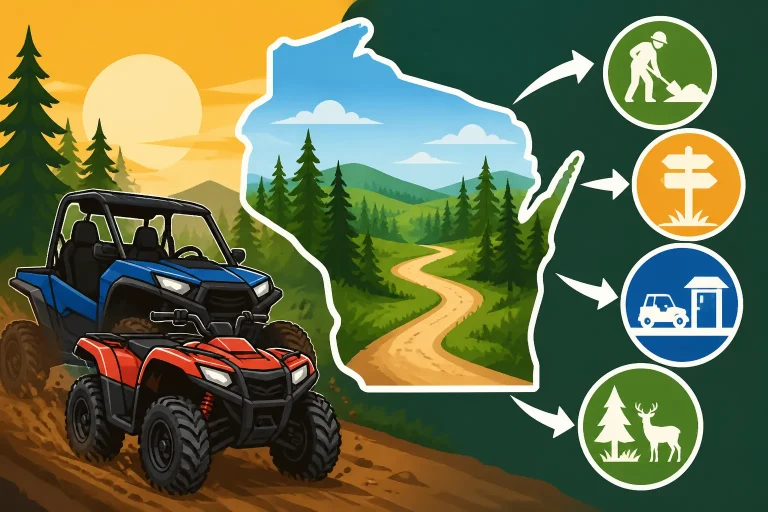
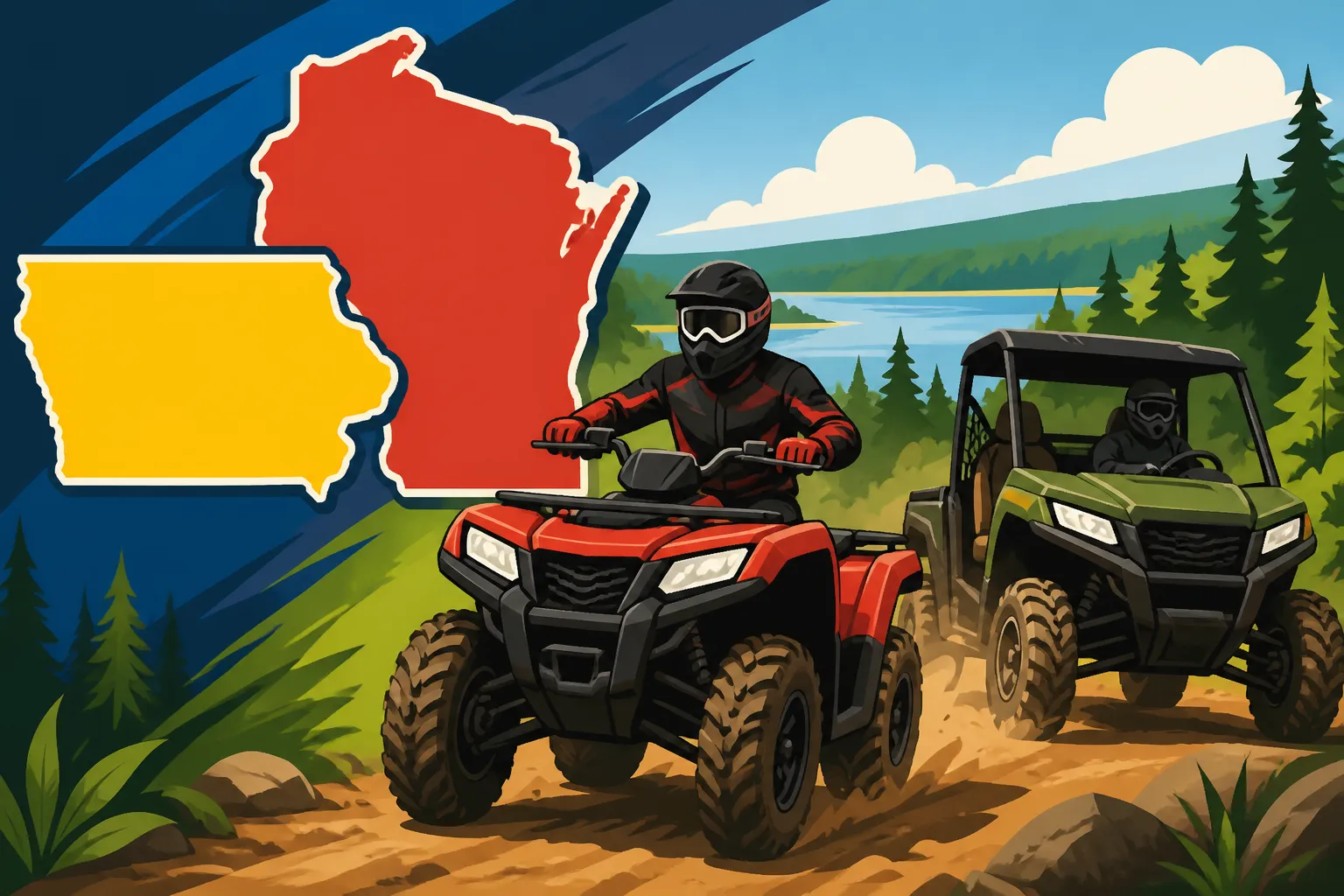
An Iowa registration or trail permit does not automatically cover every ride in Wisconsin. If you are bringing an ATV or UTV north, the key question is whether you will use a public trail, a road route, or both. Here is how Wisconsin’s nonresident trail-pass requirement works, what to check before unloading, and why local route rules still matter.
The short answer: Iowa registration is not a Wisconsin trail pass
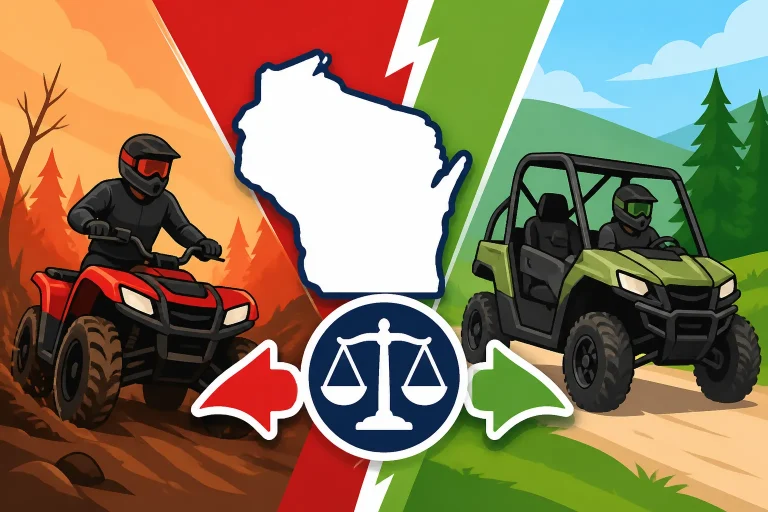
Wisconsin does not treat an out-of-state registration as a substitute for its nonresident ATV/UTV trail pass. If your Iowa-registered machine will use a Wisconsin public ATV trail, plan to obtain the Wisconsin pass required for that machine. A pass for one ATV or UTV does not cover a second machine, even if you ride together.
That is the practical meaning of “reciprocity” for an Iowa visitor: do not assume that having Iowa paperwork removes Wisconsin’s pass requirement. Your Iowa registration may be relevant to whether the machine is properly registered, but it does not, by itself, grant access to Wisconsin public trails. For the current pass options and rules, check the Wisconsin DNR before you travel. Wisconsin’s Non-Resident Trail Pass explains the requirement in more detail, and Which Wisconsin Trails Require a Pass helps clarify where it applies.
| Where you ride in Wisconsin | What an Iowa rider should check |
|---|---|
| Public ATV or UTV trail | Obtain the required Wisconsin nonresident trail pass for each machine, and check that the trail is open to that machine type. |
| Public road route | Check the town or other local authority’s route rules. A trail pass is not a general authorization to ride every road. |
| Private land | Get the landowner’s permission and check whether any separate rules apply. A public-trail pass does not grant access to private property. |
| A trip that uses both trails and routes | Meet the trail-pass requirement for public trails and follow the route rules for each road segment. |
A trail pass is permission to meet one part of the requirements for riding public trails. It does not make a closed trail open, turn a road into an ATV route, or replace other rules on registration, equipment, age, training, and safe operation.
Before leaving Iowa, make a list of the places you intend to ride and how you will connect them. A route on a map may include a county forest trail, a town road, a public road crossing, and a short private access road. Each segment can have a different rule. What a Wisconsin ATV Route Actually Is explains the distinction between designated routes and trails.
Get the right pass and make sure it is displayed
Use the Wisconsin DNR’s current instructions to select and obtain a pass before riding. The available options, purchasing methods, and display instructions can change, so confirm the current requirements rather than relying on an old pass, an Iowa document, or advice from a previous trip. Buying a Wisconsin Trail Pass Online and Wisconsin Agents That Sell Trail Passes describe common ways riders can arrange one.
The pass is associated with a particular machine, not with a passenger or a group of riders. If your group brings two ATVs and a UTV, check the requirement for all three machines individually. Having a pass on the lead vehicle does not cover the machines behind it.
Follow the DNR’s instructions for displaying the pass on the vehicle. Keep any purchase confirmation or related paperwork accessible, but do not treat a receipt as a substitute for the required display. If a decal is damaged, comes off, or is hard to read, resolve the problem before riding. Displaying a Wisconsin Trail Pass covers display expectations, while Replacing a Trail Pass That Peeled Off addresses a common problem during travel.
It also helps to keep the machine’s Iowa registration information and a record of the pass purchase together. Store the documents where you can find them without leaving them loose where they may be lost or damaged. If the machine is borrowed or rented, confirm who is responsible for obtaining the Wisconsin pass and check that the specific vehicle has what it needs. A pass should not be assumed to transfer from a different machine.
Think of the pass as one item on a pre-ride checklist, not as an all-purpose permit. A pass does not guarantee that a particular trail is open, that the machine fits the trail, or that every road connection is legal. It also does not replace an Iowa registration or any documents you need for the trip. For registration questions about an out-of-state machine, see Wisconsin Registration for an Out-of-State Machine.
Check training, age, and machine rules before riding
Wisconsin’s age and safety-certificate rules can apply to visitors as well as residents when riding on public trails. Check the requirements for the rider’s age and the type of vehicle. ATV and UTV rules are not interchangeable: age limits and requirements can differ by machine type.
Wisconsin recognizes qualifying out-of-state safety certificates in some circumstances, but do not assume every card, course, or informal training record is accepted. Confirm whether a rider’s Iowa certificate meets Wisconsin’s requirements and whether the rider must carry proof. Start with Wisconsin ATV Safety Certificate Requirements and Out-of-State Certificates Wisconsin Accepts.
If a young rider is traveling with your group, check the rules well before departure. A parent’s permission or supervision does not necessarily override a minimum age or training requirement. Also check helmet and passenger rules for the rider and machine. A UTV designed for multiple occupants still needs to be operated according to its seating and restraint requirements; adding a passenger to a single-seat ATV does not make it a legal two-person machine. The details are covered in Wisconsin Age Rules for ATVs and UTVs and Wisconsin Helmet Requirements Under 18.
Do a basic equipment check before entering a trail. Confirm that the machine is suitable for the route, that required safety equipment is present and working, and that the vehicle’s width and configuration are permitted. A trail system may have restrictions that matter to a wide UTV, a modified vehicle, or a machine with tracks. Read the local trail information rather than assuming that every ATV trail accommodates every UTV.
Pack for the ride, not just the drive to Wisconsin. Bring water, a first-aid kit, basic repair supplies, and a way to navigate if mobile service is weak. A current digital map is useful, but a paper county map can be a helpful backup; if you order one through Amazon or another retailer, make sure it covers the specific trail area and is current enough to be useful. Do not rely on a general road map to show which ATV trails are open.
Plan trail and road-route connections separately
A Wisconsin trail pass applies to trail access; it is not a permit to ride on any road you encounter. Road routes are established locally, and access can change from town to town. A road that is open to ATVs in one community may be closed in the next, or may have operating hours, equipment requirements, or other restrictions.
Before the trip, identify the town or local authority responsible for each road segment and read its current rules. Check whether the route is open to ATVs, UTVs, or both. Also look for rules on hours, speed, insurance, helmets, passengers, and required equipment. Finding a Wisconsin Town’s ATV Ordinance is a useful starting point; Municipal Ordinances Wisconsin Riders Must Read explains why local rules deserve a separate check.
Do not assume that a county road, state highway, or road shown as a connection on a general map is automatically open to recreational riding. The route needs to be legally designated, and riders must follow posted signs and any applicable crossing rules. Review Wisconsin Rules on State Highways and Crossing a Wisconsin Highway Safely if your planned trip includes highway crossings.
Trail status matters just as much as legal access. Seasonal closures, maintenance, weather, and local conditions can affect whether a trail is rideable. Check official status information shortly before you leave and again if conditions change during the trip. Checking Wisconsin Trail Status Before You Drive and Wisconsin Trail Closures in April explain what to look for when planning around closures.
A practical planning sequence is:
- Choose the trail system and confirm that it allows your machine type.
- Check whether each intended trail requires the Wisconsin nonresident pass.
- Identify any road routes needed to reach the trail or connect sections.
- Check the local ordinances for each route and the rules for any road crossings.
- Confirm each rider’s age, safety-certificate status, and required equipment.
- Check closures and conditions close to departure, then carry a reliable map.
If a trail or route appears on an app but you cannot confirm its legal status, do not treat the map line as permission. Contact the relevant local authority or use its current official trail information. Staying on designated routes and trails protects access for other riders and reduces the risk of a citation or an unsafe detour.
For an Iowa rider, the simplest rule is to keep the requirements separate: maintain the appropriate Iowa paperwork, obtain Wisconsin’s nonresident pass for public-trail riding, and check local rules for every road route. Confirm details with the Wisconsin DNR and the local authorities responsible for the areas you plan to ride. A little checking before the trip can prevent a pass, route, or paperwork problem from ending the ride early.
Disclaimer
This article is for general informational purposes only and does not constitute professional advice. Laws, prices and regulations vary by location and change over time. Consult a qualified professional for guidance on your specific situation.