Wisconsin Helmet Requirements Under 18
A Wisconsin ride with a child or teenager raises a simple but important question: when is a helmet required, and what kind will satisfy the rule? The answer depends on the rider’s age, the machine and where it is being operated. Here’s how to understand the under-18 requirement, check for exceptions and choose a helmet that fits and is appropriate for off-road riding.
Wisconsin’s helmet rule for riders under 18
In Wisconsin, a person under 18 generally must wear protective headgear when operating or riding as a passenger on an ATV. A similar requirement applies to UTVs, with a possible exception for a UTV that meets the legal standard for an enclosed cab. Because a machine’s features and the circumstances of a ride can affect whether an exception applies, check the current Wisconsin DNR rules if you’re relying on one.
The key age boundary is straightforward: the rule applies to anyone who is not yet 18. Turning 16 or getting a driver’s license does not, by itself, remove the helmet requirement. A rider who is 17 still needs to follow the under-18 rule, even if they are experienced or riding with an adult.
The rule can apply whether the young person is driving or riding as a passenger. A passenger’s age matters too. An adult operator does not make a ride exempt for a child passenger, and a child who is old enough to operate a machine may still be required to wear a helmet.
The requirement is about the rider’s age and the type of machine, not just whether the ride is on a public trail. A route, trail, road crossing or other riding area does not automatically make the rule disappear. If you’re planning a ride on private property, check the separate exception discussed below rather than assuming that “off-road” means “no helmet required.”
| Situation | What to plan for |
|---|---|
| Rider under 18 on an ATV | Wear protective headgear unless a specific legal exception applies |
| Passenger under 18 on an ATV | Wear protective headgear unless a specific legal exception applies |
| Rider or passenger under 18 in a UTV | Wear a helmet unless an applicable exception, such as the enclosed-cab provision, applies |
| Rider has turned 18 | The under-18 helmet rule no longer applies, but other safety rules and local requirements may still matter |
| Ride is on private land | Check the precise land-ownership exception; permission to ride is not necessarily enough |
Helmet rules are only one part of youth riding law. Age limits, safety certification, supervision and machine suitability may also apply. For the separate age requirements, see Wisconsin Age Rules for ATVs and UTVs and Wisconsin’s Rule for Riders Aged 12 to 15. A helmet does not make an otherwise prohibited ride legal.
Where exceptions may apply
Wisconsin’s rules include an exception associated with riding on land owned by the operator or a member of the operator’s immediate family. The details matter: a private location is not automatically exempt simply because it is not a public trail.
For example, riding on a friend’s land with permission is not the same thing as riding on land owned by the rider or an eligible family member. A hunting lease, campground, resort or other privately managed property may also have its own rules, and its private status alone should not be treated as proof that the helmet exception applies. Review the current rule and confirm how it applies to the specific land and rider.
UTVs need an additional check. Wisconsin’s helmet requirement for people under 18 can have an exception for a UTV that meets the legal definition of an enclosed cab. Do not assume that a windshield, roof, doors or aftermarket enclosure automatically qualifies. Equipment configurations differ, and the legal test may be more specific than everyday descriptions such as “cabbed” or “enclosed.” If you are relying on this exception, confirm that the vehicle and ride meet the current standard.
Even where an exception does apply, wearing a helmet may still be the sensible choice. A private trail, yard or field can have uneven ground, branches, rocks, vehicles and other hazards. Enclosed cabs also do not remove the need to use installed seat belts or follow other applicable safety requirements.
A useful rule for family planning is to treat the helmet as required unless you have checked the exact exception and are confident it fits. If the landowner, vehicle configuration or rider’s status is unclear, bring and wear a suitable helmet rather than making the decision at the trailhead. For more on how rules differ off public trails, see Wisconsin Rules on Private Land.
Choosing a helmet that meets the standard
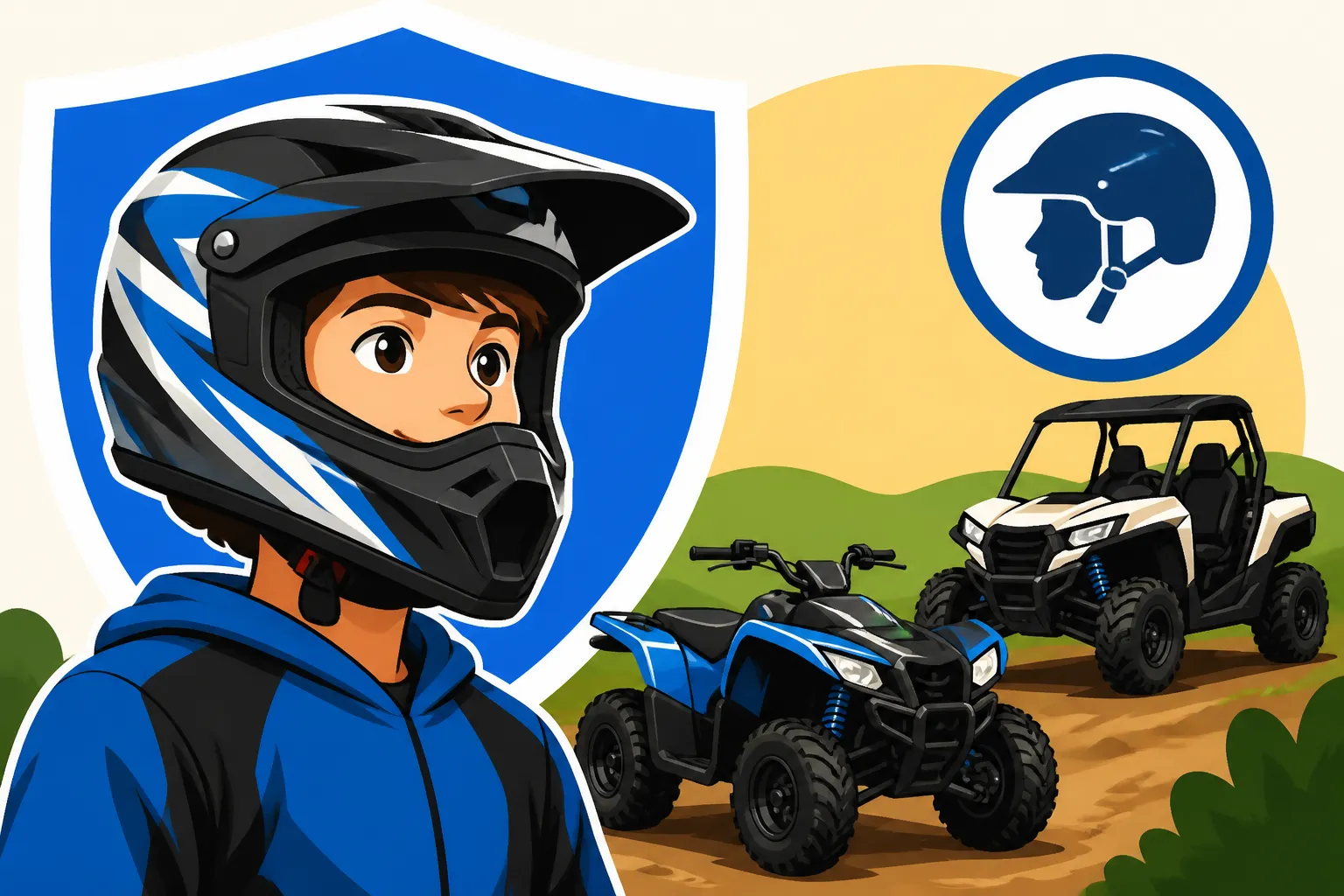
A helmet should be built and labeled for motorized riding, fit the wearer securely and be in good condition. A bicycle helmet is not a substitute simply because it covers the head. Bicycle helmets are designed and tested for a different activity and may not meet the applicable protective-headgear standard for an ATV or UTV ride. See Why a Bicycle Helmet Does Not Count and Wisconsin Helmet Standards and Bicycle Helmets for more on the distinction.
Look for the appropriate safety certification label on the helmet, and check the label and product information rather than relying on a seller’s description alone. A helmet that looks like a motocross or motorcycle helmet is not necessarily compliant. If a label is missing, unreadable or does not identify an accepted standard, choose a different helmet or confirm the model’s status before using it. DOT Helmet Ratings Wisconsin Accepts explains what to look for.
Fit matters just as much as the label. A helmet that is too loose can shift or come off during a crash; one that is too tight may be uncomfortable enough that a young rider leaves it unfastened or refuses to wear it. Use the manufacturer’s sizing guidance and try the helmet on before the ride when possible. For a child whose head is still growing, check fit regularly instead of assuming last season’s helmet still works.
A practical fit check includes the following:
- Check the size and position. The helmet should sit level on the head, with the front edge positioned as the manufacturer directs. It should not tilt back or wobble from side to side.
- Fasten the retention system. Adjust the chin strap so it holds the helmet securely without being painfully tight. A helmet that is not fastened is not being worn as intended.
- Test for movement. With the strap secured, gently try to move the helmet. The skin on the forehead and cheeks should move with it rather than the helmet sliding freely.
- Check vision and comfort. The rider should be able to see clearly, turn their head and wear any required eye protection without the helmet obstructing it.
- Inspect before riding. Look for cracks, damaged straps, loose parts or signs of a serious impact. Follow the maker’s guidance about replacement after a crash or other damage.
If buying online, including from a marketplace such as Amazon, verify the exact model, certification label, size and return conditions before relying on it for a ride. Product photos and broad phrases such as “off-road helmet” do not prove that a particular helmet meets Wisconsin’s requirements. When in doubt, check the manufacturer’s information or select a helmet whose compliance is clearly documented.
A full-face design can provide more coverage than an open-face style, but no helmet prevents every injury. The goal is a correctly certified helmet that fits, stays fastened and is suitable for the rider and machine. Pair it with eye protection when required or appropriate; Eye Protection on a Wisconsin Ride covers that separate issue.
Making a youth ride safer and lawful
A helmet is essential, but it is not a substitute for matching the rider to the machine. A young rider needs to be able to reach and operate the controls, understand how the machine responds and stop safely. An ATV that is too large or powerful can be difficult to handle, even for a child who has ridden before. A UTV’s passenger capacity and restraint system matter too: do not carry more people than the vehicle is designed and equipped to carry.
Before setting out, check the rules that apply to the rider, the machine and the location. Depending on the ride, that may mean checking age restrictions, required safety certification, registration, trail-pass requirements, route rules and any landowner conditions. A helmet is one requirement, not a general permission to ride. For certification details, see Wisconsin ATV Safety Certificate Requirements.
Then make a brief pre-ride check with the young rider:
- Confirm the helmet fits and the strap is fastened.
- Check the machine’s controls, brakes, tires, lights and any required restraints.
- Agree on where the rider may go, what speed is appropriate and what to do if separated from the group.
- Explain that trails and routes can include blind corners, changing surfaces, other riders and unexpected obstacles.
- Make sure the rider knows not to carry a passenger unless the machine is designed for one and the rider can operate safely with that passenger.
- Recheck local rules and access conditions instead of assuming that a route or trail is open.
If a helmet is missing, damaged or does not fit, postpone the ride until you have a suitable one. Borrowing a helmet can work only if it fits the wearer properly and meets the applicable standard. A helmet that slips, cannot be fastened or obstructs the rider’s vision is not a good solution.
Adults should also set an example. Wearing appropriate protective gear reinforces that the helmet is part of riding, not a punishment reserved for younger people. It also avoids a common source of confusion: an adult may not be subject to the same under-18 helmet rule, but that does not mean an adult’s choice removes the youth rider’s obligation.
Common misunderstandings about the rule
“The rider is nearly 18, so the helmet is optional.” The under-18 rule applies until the person turns 18. Being close to that birthday does not create an earlier exception.
“The child is only a passenger.” The requirement can apply to passengers as well as operators. Check the passenger’s age and the machine’s rules before leaving.
“It’s private land, so helmets are not required.” The exception is tied to specific circumstances, including land ownership. A private trail, permission to ride or a temporary stay on someone else’s property should not automatically be treated as exempt.
“The UTV has a roof, so it counts as enclosed.” A roof alone may not satisfy the legal standard for an enclosed cab. Confirm the actual vehicle configuration and current rule before relying on an exception.
“Any helmet is better than none, so it must meet the law.” Wearing a helmet is a good safety step, but the legal requirement concerns protective headgear that meets the applicable standard. A bicycle helmet or an unlabeled novelty helmet may not qualify.
“A helmet is all a young rider needs.” Age rules, training, equipment, route restrictions and passenger limits may still apply. Check those separately, especially before riding public trails or roads.
These misunderstandings are easy to avoid if the adult planning the trip checks the rules in advance, confirms the machine’s features and treats helmet fit as part of the pre-ride inspection.
Frequently Asked Questions
Does a 17-year-old need a helmet on a Wisconsin ATV?
Yes. A 17-year-old is still under 18 and generally must wear protective headgear when operating or riding as a passenger on an ATV, unless a specific legal exception applies.
Does a child riding as a UTV passenger need a helmet?
Generally, yes, if the passenger is under 18. An exception may apply to a UTV that meets the legal standard for an enclosed cab. Verify the current rule and vehicle configuration rather than assuming any roof or enclosure qualifies.
Does permission to ride on private property remove the helmet requirement?
Not necessarily. The relevant exception is tied to specific conditions, including land ownership. Permission to use another person’s property does not automatically mean the exception applies.
Is a bicycle helmet acceptable for an ATV ride?
A bicycle helmet is not a reliable substitute for protective headgear that meets the applicable ATV or UTV standard. Check the helmet’s certification label and product information.
Disclaimer
This article is for general informational purposes only and does not constitute professional advice. Laws, prices and regulations vary by location and change over time. Consult a qualified professional for guidance on your specific situation.