Wisconsin Agents That Sell Trail Passes
Finding a Wisconsin trail pass seller can be confusing when you are headed north with an out-of-state ATV or UTV and want to ride the same day. Authorized agents may be close to trail towns, but hours, inventory and services vary. Here’s how to find a seller, choose between an agent and online purchase, and avoid mistaking a trail pass for registration or route permission.
Who Needs a Wisconsin Trail Pass
A trail pass is a riding permit for eligible machines on Wisconsin trails where a pass is required. It is not the same thing as registering a machine, and having one does not make every trail, road or private route open to you.
The pass most often matters to visitors riding a machine registered in another state. A Wisconsin public-use registration generally serves a different role for a Wisconsin-registered machine. The rules can depend on the machine’s registration status and the kind of public trail you intend to ride, so check the current Wisconsin DNR requirements before buying.
For a quick overview of the distinction, see Wisconsin’s Non-Resident Trail Pass and Machines Registered in Wisconsin and the Pass. If you are still working out whether your planned route needs a pass, Which Wisconsin Trails Require a Pass can help you separate trail access from road-route rules.
A trail pass does not replace:
- Your machine’s required registration or other applicable operating documents
- A local permit, if a specific land manager requires one
- Any safety certification or age requirements that apply to the operator
- Permission to ride private land
- Compliance with trail closures, hours, machine restrictions and posted signs
This is why it is worth checking both the pass requirement and the trail status. A pass is not an all-access ticket. One county trail might be open while another is closed, and a road route can follow different rules from a managed trail.
Visitors and Wisconsin-registered machines
If you are visiting from another state, do not assume your home-state registration automatically covers Wisconsin trail use. A nonresident pass may be required for an out-of-state-registered machine on trails that require one. The details can depend on the machine and the specific area, so verify the current rule for your situation rather than relying on what happened during a previous trip.
If you have a Wisconsin-registered machine, check which registration type it carries and what that registration allows. The rules for public-use and private-use registration are not interchangeable. Public Use Versus Private Use in Wisconsin explains the difference, while Do Minnesota Riders Need a Wisconsin Pass? is useful if you are bringing a machine registered in Minnesota.
Before you make the trip, confirm three things:
- The machine’s registration is valid for its state and intended use.
- The correct Wisconsin pass or registration is in place for the trail you plan to ride.
- The trail is currently open to your machine type.
This takes a few minutes and can save a frustrating stop at the trailhead—or a ride that has to be rerouted.
Where to Find Wisconsin Trail Pass Agents
Wisconsin trail passes are available through official Wisconsin DNR channels, including authorized sales agents. Agent locations can be useful if you want to buy in person, need help choosing the correct pass, or would rather have the pass in hand before unloading your machine.
There is not one fixed type of business that sells passes statewide. An authorized agent may be a dealer, outdoor recreation business or another listed sales location. The best way to find one near your destination is to check the Wisconsin DNR’s current sales-agent information or trail-pass purchasing page. Search by the town or county where you will start riding, not only by your home address.
For a more general overview of buying options, see Where to Buy a Wisconsin Trail Pass. Riders heading toward northern trail systems can also use Wisconsin Agents Near the Northwoods Trails as a starting point, then confirm the agent’s current status and hours directly.
Search near your launch point
It may seem easiest to find the closest agent to home, but that is not always the most practical choice. If you are traveling a long distance, look for sellers near your lodging, trailhead or first fuel stop. That way, a delayed departure or a change in plans is less likely to leave you without a convenient place to buy.
Try searching for an agent in:
- The town where you will unload
- A nearby trail town with recreation businesses
- The county where your first ride is planned
- A larger town along your travel route, if you expect to arrive after local businesses close
Then confirm the details before setting out. A location appearing in an old search result or travel post does not guarantee that it still sells passes, is open that day or has someone available to process a sale.
Check more than the address
Call or contact the agent before making a special trip. Ask whether it currently sells Wisconsin ATV trail passes, what information you need to bring, and whether it can issue the pass for your machine type. If you are arriving outside ordinary business hours, ask about those hours specifically rather than assuming a listed store schedule includes pass sales.
The agent may ask for information such as the machine’s registration details and the buyer’s contact information. Have the out-of-state registration document available, and make sure the machine’s registration number is readable. The agent may not need every item in every case, but being prepared helps avoid a second visit.
If you are buying passes for more than one machine, ask whether each machine needs its own pass and what details are required for each transaction. Do not assume that one pass covers a group, trailer or household. A pass is generally associated with a particular machine, not simply with the person who bought it.
Buying From an Agent or Online
You can usually choose between an authorized in-person seller and an official online purchase channel. Neither option is automatically better. Your best choice depends on timing, location and whether you are comfortable completing the transaction yourself.
| Option | Most useful when | What to check |
|---|---|---|
| Authorized in-person agent | You want help or want to buy near your destination | Current authorization, opening hours, pass availability and required machine information |
| Official Wisconsin DNR online channel | You want to arrange the purchase before traveling | That you are using the official channel, that the pass matches your machine and that you understand any display or delivery instructions |
| Agent near a trail town | You are already in the riding area and need a local option | Whether the business sells passes that day and whether it closes before you arrive |
| Unofficial marketplace or classified listing | Generally not a dependable option for official permits | Do not treat a resale listing or seller’s claim as proof of a valid pass |
If you want to buy online, use the Wisconsin DNR’s official purchasing process rather than a search result that merely looks convenient. Buying a Trail Pass Through Wisconsin DNR covers the online route in more detail.
An agent can be a better fit if you have a question about which pass applies, are unsure what information to enter, or want a person to check that the transaction was completed correctly. Online can be convenient if you prefer to handle the paperwork before leaving home. In either case, retain the confirmation or receipt and follow the official instructions for displaying the pass.
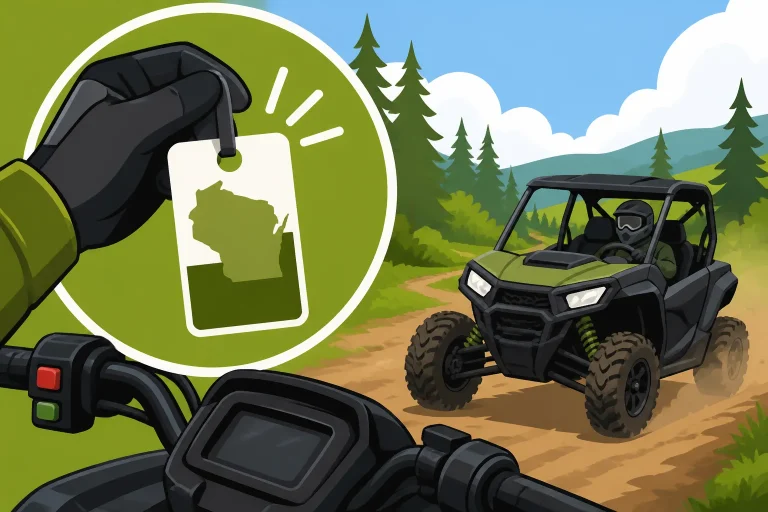
A seller’s receipt is not necessarily the pass itself. Read the instructions you receive and make sure the pass is attached or displayed as required before riding. For placement details, see Displaying a Wisconsin Trail Pass. If something goes wrong—such as a pass not arriving, a transaction not showing up, or a display item being damaged—contact the official channel or agent rather than trying to improvise a substitute.
Don’t buy from an unverified seller
A pass should come through an authorized sales channel. A listing on a general online marketplace, including Amazon, should not be treated as an official Wisconsin trail-pass sale unless the Wisconsin DNR identifies that seller as an authorized provider. A screenshot, a previous owner’s receipt or a seller’s promise that a pass is “good for the season” is not a reliable substitute for checking the current record and rules.
Amazon may be useful for ordinary riding supplies, such as a waterproof pouch for keeping a receipt or registration document dry. It is not a reason to assume that a pass sold or advertised there is valid. Keep the permit purchase itself within the official DNR process or an authorized agent.
If your agent is out of stock, does not handle the type of pass you need, or cannot complete the sale before closing, ask whether the official online channel is available. Do not ride first and plan to buy later unless the rules explicitly allow it.
What to Bring and What to Confirm at the Counter
A little preparation makes an in-person purchase easier, especially when several machines are involved or you are buying close to the start of your ride.
Bring the machine’s registration information. For an out-of-state machine, have its current registration document accessible, not buried under luggage in the truck. Check the registration number and other identifying information before the agent enters it. A typo can create confusion later when you need to show that the pass belongs to the machine you are riding.
It also helps to have:
- The name and contact details the purchase requires
- The machine’s registration number and state of registration
- The machine with you, if you need to confirm a number or display location
- A payment method accepted by that agent
- A phone with access to your confirmation, if you purchase online
The agent is not a substitute for checking the rules yourself. Ask questions if you are uncertain, but verify that the answer matches the current Wisconsin DNR guidance for your machine and destination.
Questions worth asking
Before completing the purchase, confirm:
- Is this agent currently authorized to sell the pass I need?
- Does my machine’s registration status mean I need this pass?
- Does the pass apply to this machine, or do I need a separate one for each?
- What should I keep as proof of purchase?
- How and where must the pass be displayed?
- Are there any additional permits or local requirements for the trail system I plan to use?
The first few questions concern the pass transaction. The last one concerns the route itself. Keep those separate: an agent can sell a pass, but that does not guarantee that a particular trail is open or that your machine meets the trail’s restrictions.
If your registration is from another state, do not rely only on a seller’s quick verbal summary of reciprocity. Registration and trail-pass requirements can be separate questions. Passes for Machines Registered Out of State explains why the machine’s home-state paperwork and Wisconsin trail access should be checked independently.
Keep proof accessible
After buying, save the receipt or confirmation somewhere you can retrieve it. A phone photo can be a useful backup, but follow the official display instructions for the actual pass. Do not assume that a picture of a receipt replaces a required decal or other display method.
A small waterproof document pouch can help keep paperwork dry in a wet or dusty riding environment. Amazon is one place riders may look for that kind of general storage item, but choose something that will not interfere with the machine or obscure the pass. The pass should remain visible and attached as instructed.
Avoid putting a decal on a surface that is oily, dirty, rough or likely to peel. Clean and dry the area first, and follow the placement directions. If the pass is damaged or will not stay attached, check the official replacement procedure rather than covering it with tape or transferring it to another machine. See Replacing a Trail Pass That Peeled Off for the next steps.
Plan Around Agent Hours and Trail Conditions
Buying a pass is one small part of getting ready to ride. The timing matters because the closest seller may be closed when you reach town, and a pass cannot solve a trail closure, weather-related restriction or machine-access issue.
Buy before the last minute
If you know your machine needs a pass, arrange it before you reach the trailhead. Buying ahead can reduce pressure on the first morning of a trip, when you may also be unloading, checking tire pressure, meeting other riders and finding the correct staging area.
If you plan to buy locally, make the agent part of your travel schedule. Check business hours for the day you will arrive, and call if your arrival is close to closing time. Do not assume a location open on a weekday will have the same hours on a weekend or holiday.
For an online purchase, complete the process early enough to resolve a problem before riding. Keep the confirmation available and read any instructions about how to display the pass. If a transaction is delayed or you are unsure whether it went through, contact the official source before treating the machine as ready.
Check the trail system separately
A Wisconsin trail pass does not mean that every public trail is open. Trail status may vary by county, forest, season and conditions. In particular, spring thaw closures and temporary restrictions can affect access even when you have all the right paperwork.
Check the trail manager’s current notices before leaving home and again before unloading. Use current county or land-manager information rather than an old printed map, social media comment or last year’s trip report. If the trail is closed, stay off it; riding around a barrier can damage the trail and create problems for future access.
Also confirm whether you are riding a trail, a road route or a combination. A trail pass is not a general road permit, and local rules can determine which roads are open, what hours apply and what equipment or operator qualifications are required. Riding an ATV on a Wisconsin Road Route explains the separate route issue.
If you plan a route that crosses land managed by more than one authority, check each part. A pass requirement, opening date or machine-width rule can change at a boundary. A useful pre-ride checklist is:
- Confirm the pass requirement for your machine and registration status.
- Buy through the DNR or a currently authorized agent.
- Follow the display instructions and retain proof of purchase.
- Check current trail openings, closures and restrictions.
- Confirm route, age, safety and local ordinance requirements.
- Carry the machine’s registration information and any other required documents.
That checklist is more reliable than assuming the pass alone covers every part of a ride.
Common Mistakes When Buying From an Agent
Most pass problems are avoidable. They usually come from confusing the pass with a different document, waiting until a seller is closed, or assuming a pass guarantees access.
Treating a pass as registration
A trail pass does not replace required machine registration. Likewise, a registration document does not necessarily answer whether you need a trail pass for a particular trail. Check both questions independently. If you are buying a used machine and are uncertain about its paperwork, resolve the registration issue before planning a public-trail ride.
Assuming any outdoor business sells passes
A bait shop, powersports dealer or convenience store may be a convenient place to ask, but a business should be treated as a seller only if it is listed or confirmed as an authorized agent. Use the official DNR sales information to verify, and call to check that the service is available when you plan to visit.
Waiting until after arriving at the trailhead
A trailhead may not have a pass agent nearby, and phone service may be unreliable in some riding areas. If the agent is closed or far away, you may lose time backtracking. Purchase before travel or identify a confirmed seller near your lodging or staging point.
Assuming one person’s pass covers every machine
Confirm the requirement for each machine. Do not assume a pass follows the owner, applies to a trailer load or can be moved between machines. Keep purchase records clear when traveling with a family or riding group.
Confusing a county trail with a road route
Some rides use both. The pass requirement and local operating rules may not be identical on a managed trail and a road route. Verify the rules for each segment, especially where a trail connects to a road or crosses into another jurisdiction.
Assuming last year’s answer is still valid
Agent locations, business schedules, trail conditions and rules can change. If you rode the same area before, use that experience as a starting point, not as your only source. Confirm current information with the Wisconsin DNR, the agent and the relevant trail manager.
The simplest reliable approach is to identify your machine’s registration status, check whether a pass is needed for the trail you intend to ride, and purchase through an official channel. If you want to buy in person, verify the agent and its hours before making a detour. Then confirm trail access separately and display the pass exactly as instructed.
Disclaimer
This article is for general informational purposes only and does not constitute professional advice. Laws, prices and regulations vary by location and change over time. Consult a qualified professional for guidance on your specific situation.