Where Wisconsin Trail Pass Money Goes
Wisconsin trail passes help support the riding system visitors use, but the money does not simply go straight from a sale to the trail under your tires. It moves through a state program and grant process, where eligible sponsors can seek funding for work such as maintenance, development and signs. Here’s how that system works and what riders should know about it.
How trail pass revenue enters Wisconsin’s ATV program
Wisconsin’s ATV and UTV trail network depends on more than the person who owns a trail machine or the local club that clears brush. Maintaining public riding opportunities involves state administration, local sponsors, land managers and, in many places, volunteer labor. Trail passes are one piece of the funding system behind that work.
A nonresident trail pass is required for many out-of-state machines using Wisconsin ATV trails. Money from passes contributes to the state’s ATV and UTV trail program, which can support trail work through grants to eligible sponsors. The program also relies on other sources of revenue, including registration-related funds. That means a pass purchase is not best understood as a direct payment to a particular county, trail or club.
The state program manages funding and grant decisions. Local governments and other eligible sponsors are often closer to the work itself: they identify needs, plan projects, apply for assistance and arrange for work to be completed. A sponsor might be responsible for a route across land it owns or manages, or it might coordinate with a club or another partner.
This distinction matters when you are trying to find out what your pass paid for. The purchase supports a statewide system; it does not buy access to one particular trail or guarantee that a specific site will receive funding. A trail may benefit from state-supported work even when the pass was bought somewhere else, and the exact funding mix for a local project can vary.
For a closer look at the pass requirement itself, see Wisconsin’s Non-Resident Trail Pass. If you are unsure whether a Wisconsin-registered machine needs a separate pass, Machines Registered in Wisconsin and the Pass explains how registration and trail-pass rules fit together.
It is also useful to separate trail pass revenue from every other cost a rider may pay. A pass is not a general payment for every service around the trail network. It does not automatically cover fuel, lodging, private campground access, local business costs or repairs to a machine. Those expenses are separate from the public program that helps fund eligible trail work.
What the trail aid program can support
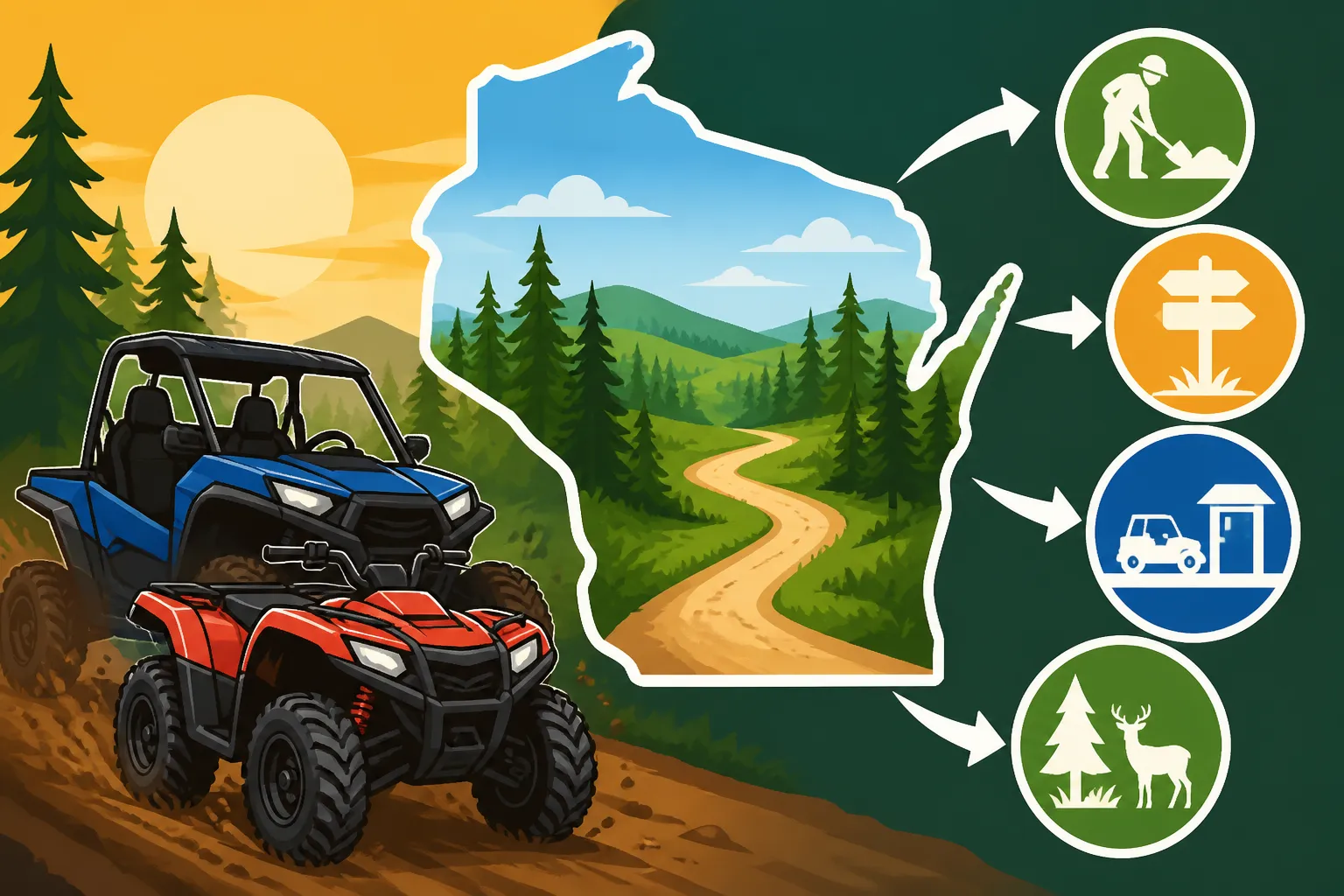
Wisconsin’s ATV trail aid program is designed to help sponsors provide and maintain riding opportunities. The exact work a grant can cover depends on the program’s current rules and the approved project. Common types of needs include maintaining existing trails, improving damaged sections, developing or rehabilitating routes, and installing or replacing signs.
A project might address erosion, drainage, a failing crossing, or a section that has become difficult to ride safely. Another might involve route development or upgrades that help make an established system more usable. Signage can also be part of the work, since riders need clear information about route direction, restrictions, closures and connections. More detail is available in How Wisconsin’s ATV Trail Aids Grants Fund Trails and Signage Funded by Wisconsin Trail Aids.
| Type of work | Why it matters to riders | What to check locally |
|---|---|---|
| Trail maintenance | Helps keep open routes passable and in usable condition | Whether work is planned, underway or complete |
| Rehabilitation | Addresses damage or deterioration on an established route | Whether a section is closed during repairs |
| Development or improvement | Can create or improve riding opportunities where approved | Whether the route is open to the public and to which machine types |
| Signs and route information | Helps riders follow legal routes and understand restrictions | Whether temporary signs or detours are in place |
| Crossings and drainage | Can reduce water damage and improve safe passage | Whether a crossing is closed or has operating limits |
A grant does not mean that every requested project receives funding. Sponsors need to meet program requirements, describe the work and follow the applicable application and reporting process. Funding decisions also have to fit the available resources and program priorities. The Ranked Priorities in Wisconsin Trail Aids covers how those priorities can shape decisions, while Who Can Apply for Wisconsin Trail Aids explains the kinds of organizations that may be eligible to sponsor a project.
Some trail work is visible right away, such as a new sign or a repaired bridge. Other work is less obvious to a rider passing through. Drainage improvements, erosion control and routine upkeep may not change the look of a route dramatically, but they can help protect the trail and reduce the chance that a small problem becomes a larger closure.
The program’s purpose is not to pay every expense associated with every trail. Local sponsors may have other funding sources, and volunteer groups can contribute time or coordinate work. A grant may be one part of a project rather than its sole source of support. For that reason, it is difficult to infer a project’s full cost or funding source just by looking at the completed work.
What a grant does not automatically mean
A funded project is not necessarily a promise that a route will remain open year-round. Trail access can depend on land agreements, weather, seasonal conditions, local rules, maintenance needs and other restrictions. A route that has received improvements may still close during thaw, after damage, or when the land manager determines that riding should pause.
Nor does a trail aid grant give riders permission to leave marked routes. Stay on the designated trail, follow posted restrictions, and check the local status before heading out. A trail grant supports approved work; it does not change where riding is allowed.
Who decides where the work happens
State funding and local decisions serve different roles. The state program sets eligibility and grant requirements, reviews applications, and administers awards. Local sponsors are usually the ones who know which trail sections need attention, what access arrangements apply and what work can be carried out in their area.
Eligible sponsors can include public agencies or other entities allowed under the program rules. The particular applicant and project structure vary. A county or municipality may apply for work on a system it manages, while a club or other group may help with planning, maintenance or volunteer coordination. Do not assume that a club can apply directly for every grant or that every local trail organization receives state money. Check the program’s current guidance and the sponsor’s project information.
This arrangement gives local knowledge an important role. A statewide office cannot see every washed-out culvert or damaged sign in person. Riders, clubs and land managers often spot problems first and can report them to the organization responsible for that area. The sponsor can then decide whether to address the issue through routine work, a grant-funded project or another arrangement.
The fact that work is locally managed can also explain why trail conditions differ between neighboring areas. Sponsors may have different project schedules, equipment, staffing and volunteer capacity. Some routes may need more substantial repairs than others, while a project can be delayed by weather, access or environmental considerations.
For riders curious about how volunteer and paid work fit into the system, Wisconsin Trail Crews Paid From Pass Fees discusses trail crews and program support. Keep in mind that a trail crew’s funding and responsibilities can differ by location and project. A crew may not be responsible for every segment of a connected route.
How to find out who is responsible
Start with the trail map or official information for the county, forest or riding area you plan to visit. Look for the managing agency or local sponsor, then check its trail-status notices. If a sign is missing or a route is damaged, report the issue to the responsible organization rather than assuming the state office can dispatch a crew directly.
If you are planning a trip, Finding a Wisconsin County Trail Map can help you locate area information, and Checking Wisconsin Trail Status Before You Drive is useful for verifying closures and conditions. A map shows where routes are; it may not show every temporary closure or the latest repair notice.
When a route crosses different jurisdictions, responsibility may change along the way. The trail system can connect public land, municipal routes and other managed segments. Follow the signs and local information for each portion rather than assuming one agency controls the entire ride.
What riders can reasonably expect from a pass
A pass helps support a broader public riding system, but it is not a personal contribution to a named project. Riders should not expect to see a direct one-to-one connection between the pass they buy and work on a particular trail. The money is managed through a statewide program, and funding is distributed according to program rules and approved projects.
That does not make the pass irrelevant to local trails. State assistance can help sponsors maintain or improve routes that riders use. The connection is indirect: passes contribute to program resources; eligible sponsors seek funding; approved projects support trail opportunities. Whether a specific trail gets a grant depends on its sponsor, project needs, eligibility and available funding.
A pass also does not replace other requirements. Riders still need to meet applicable registration, pass, safety, equipment and local access rules. Trail access may depend on land permissions and posted restrictions, and a pass is not permission to ride on a closed or private route. For an overview of how trail access and riding locations fit together, see Where to Ride an ATV in Wisconsin.
A useful way to think about the pass is as part of the funding structure that helps keep organized trail riding available. It supports a program, not a guaranteed service package. It does not promise a specific number of miles, a particular trail condition, immediate repairs, or access to every route in the state.
If you are an out-of-state visitor, confirm that you have the right pass for the machine and use you intend. Rules may differ depending on registration status and where you plan to ride. What Wisconsin Riders Need Before They Ride is a helpful starting point for sorting out the basic requirements.
How riders can follow the money and support trail work
Riders do not need to be grant administrators to understand where trail funding goes. A few practical steps can help you find reliable local information and make your contribution more useful.
- Identify the managing sponsor. Check the official map or trail-area information to see which agency or organization manages the route.
- Read current trail notices. Look for closures, detours, construction updates and restrictions before traveling. A project may be active even when most of the system remains open.
- Ask specific questions. If you want to know whether a visible improvement was grant-supported, ask the local sponsor or the program office about that project. Avoid assuming that all work in an area comes from pass money.
- Report damage clearly. Include the route or location, the problem, and whether it appears to create an immediate safety concern. Do not ride around barriers or create a new path to bypass damage.
- Respect the work. Stay on the marked route, avoid riding through closures, and follow seasonal limits. Repeated damage can add costs and delay reopening.
- Volunteer through an established group. Local clubs may organize trail work or communicate with land managers. Ask what tasks are permitted and whether training or authorization is needed before working on public land.
When reporting a problem, a precise description is more helpful than a general complaint. If you can safely note the nearest intersection, trail marker or map location, include it. A clear photo may help a manager understand the issue, but do not stop in a dangerous place or enter a restricted area to take one. Reporting Trail Damage in Wisconsin offers more on communicating trail problems.
Riders can also support the system by checking trail conditions before a trip and adjusting plans when a section is closed. A closure can be frustrating, especially when it affects a planned loop, but riding around a barrier can damage the route and undermine repair work. Use posted detours or choose another open area.
The funding process is not always visible from the seat of a machine. A grant may pay for work that happens before the riding season, or it may address maintenance that prevents a route from deteriorating later. Following local notices and program updates gives a fuller picture than judging the system by whether one specific trail looks newly built.
Frequently Asked Questions
Does every Wisconsin trail pass dollar go to the trail I ride?
No. A pass contributes to a statewide program rather than being assigned to one trail or county. Approved funding can support eligible work through sponsors, but the project and amount depend on program rules and available resources.
Can I find out whether a local trail received a grant?
Often, the local sponsor or the state program can tell you about a specific project. Start with the agency or organization responsible for the trail, then ask about the project name, work completed and funding source. Not every maintenance task will be a separate grant project.
Do trail passes pay for all trail maintenance?
No. Trail maintenance may draw on multiple sources, including local resources, volunteer work and program assistance. A grant can support eligible work, but it does not necessarily cover every expense or every section of a trail system.
Does buying a pass guarantee that a trail will be open?
No. Pass purchase does not guarantee access to a particular route. Trails can close for weather, seasonal conditions, damage, land-management decisions or other restrictions. Check the local trail status before riding.
Disclaimer
This article is for general informational purposes only and does not constitute professional advice. Laws, prices and regulations vary by location and change over time. Consult a qualified professional for guidance on your specific situation.