Driveway Crossings Along a Route
Navigating Wisconsin's ever-expanding ATV and UTV route system is an absolute blast, opening up so much of our beautiful state to exploration. But let's be real, it also presents its own set of unique challenges. One of the most frequently encountered, yet often underestimated, situations is dealing with driveway crossings along these designated routes. It’s not just about sharing the road; it’s about sharing it safely and respectfully with folks who live right there. This guide is all about helping you understand the nuances of these crossings, equip you with the best safety practices, and make sure your ride stays enjoyable for everyone.
The Unique Challenges of Driveway Crossings on Wisconsin ATV/UTV Routes
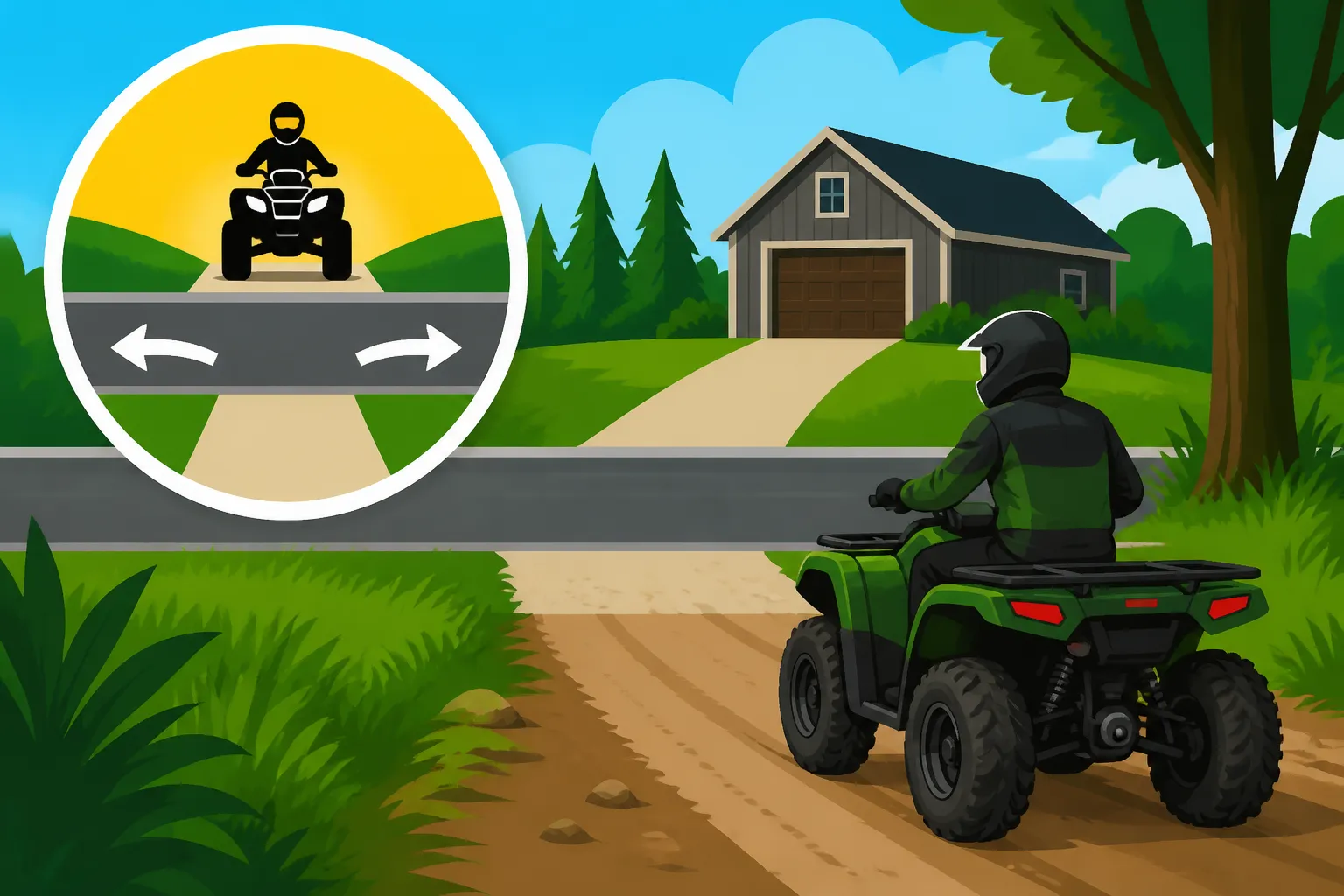
When you're out enjoying a designated ATV or UTV route in Wisconsin, whether it’s a quiet town road or a county highway, you're going to encounter driveways. Lots of them. It’s not like cruising down a dedicated trail where you primarily worry about natural obstacles. Here, you're in a shared space, and every driveway represents a potential interaction point between your machine and another vehicle, a pedestrian, or even a pet. This isn't just a minor inconvenience; it's a critical safety consideration that riders often overlook in their excitement.
Unexpected Obstacles and Hazards
Unlike crossing a quiet side road, driveways often come with a whole host of sudden, unpredictable elements. Think about it: one moment you’re enjoying the open road, the next you could be passing someone’s mailbox, their trash cans awaiting pickup, or a car unexpectedly backing out. Children might be playing near the end of their driveway, focused on a game and not on an approaching ATV. Family pets, often given free roam near their homes, might dart out without a moment’s notice. Even something as seemingly benign as a garden hose snaking across the approach can present a trip hazard if you’re not paying attention.
Then there are the blind spots. Hedges, tall fences, parked vehicles, or even the natural topography of a yard can completely obscure your view of a vehicle preparing to pull out, or their view of you. The surface itself can vary dramatically, too. A paved route might suddenly give way to a gravel driveway, a grassy path, or even a patch of mud after a recent rain. Each of these changes demands a slight adjustment in your riding technique and a heightened level of awareness. You can't just power through; you have to anticipate.
The Legal Framework and Right-of-Way
In Wisconsin, when you're operating your ATV or UTV on a properly designated public route, you generally have the right-of-way over vehicles entering or exiting private driveways. These routes are, after all, public thoroughfares, and private driveways are considered access points to private property. However, having the legal right-of-way is not a license to proceed without caution. The law is one thing, but real-world safety is another. A driver backing out of their driveway might not see or hear you, or they might simply be distracted. Their right-of-way might be legally subordinate to yours, but a collision will still be devastating for everyone involved.
It's also important to remember that many of these ATV/UTV routes are established by local municipalities, and some towns or counties might have specific ordinances that add layers of complexity or particular expectations for riders. While the general rule of having the right-of-way holds, always be on the lookout for specific signage or local rules that might require extra vigilance. If you're riding with younger family members, it’s crucial to impress upon them the importance of caution, even if they're learning the ropes about [Wisconsin Rules for a Driver Who Turns 16] or [Wisconsin Rules for a Rider Aged 12 to 15]. The responsibility for safety ultimately rests with the operator, regardless of legal right-of-way, especially when it comes to avoiding accidents.
Mastering Safe Driveway Crossing Techniques
Riding on designated routes means you're operating in a space where caution and courtesy are paramount. There's a widely accepted approach to navigating these public ways, and it boils down to a systematic method for driveway crossings. It’s not just about scanning, but about active observation and predictive awareness.
The "Scan, Slow, Signal, Proceed" Method
This isn't just a catchy phrase; it's a disciplined approach that can literally save lives. Let’s break it down:
-
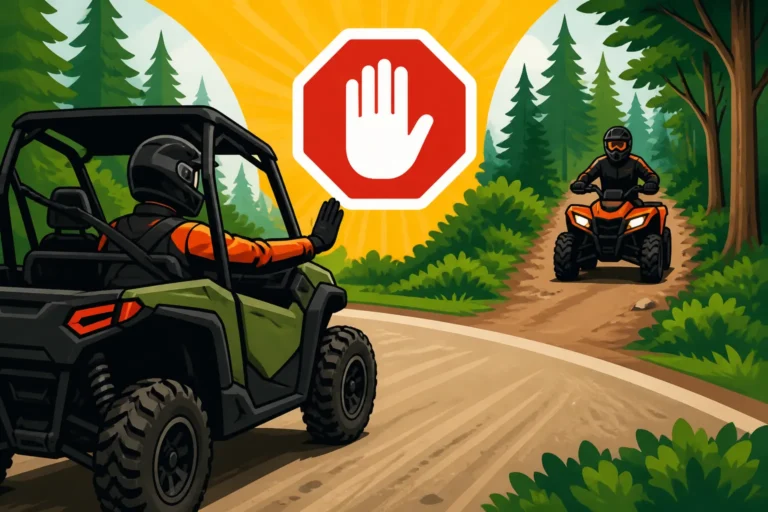
Scan: This is your first and most critical step. Don't just glance. Actively scan the driveway and the area around it. Look for any signs of activity: open garage doors, lights on in the house, movement in windows, even tire tracks leading to or from the road. Are there children's toys near the driveway? Is there a pet dish outside? These are all indicators that someone or something might suddenly appear. Look far down the driveway to see if a vehicle is approaching the road or if someone is getting into a car. Your eyes should be constantly moving, left, right, and ahead, taking in the full picture, not just the road directly in front of you.
-
Slow: As you approach any driveway, ease off the throttle. Reduce your speed significantly. Why? First, it gives you more time to react if something unexpected happens. If a car suddenly backs out, those extra seconds can be the difference between a near-miss and a collision. Second, slowing down reduces dust, which is a major courtesy to the homeowner. Kicking up a massive dust cloud every time you pass can quickly sour public opinion towards ATV/UTV routes. Third, it shows respect. Residents appreciate riders who are mindful of their homes and property. Sometimes, slowing down means bringing your speed down to a crawl, almost as if you were pulling out of the driveway yourself. This is especially true for blind driveways or those with dense vegetation.
-
Signal: While ATVs and UTVs often lack traditional turn signals, the principle still applies. If you're planning to turn into a specific driveway (perhaps you're visiting a friend or stopping at a local business) use clear hand signals if your machine doesn't have lights. Even if you're going straight, a quick head turn in both directions can signal to any observers that you are aware of your surroundings and proceeding with caution. In a group ride, the leader often signals upcoming turns or hazards, allowing the rest of the group to prepare. This kind of communication within your group is crucial for everyone's safety, tying into the broader concept of [Group Etiquette Through a Northwoods Town].
-
Proceed: Only after you have scanned, slowed, and, if necessary, signaled, should you proceed. And even then, maintain your vigilance. Don't assume the danger has passed just because you've cleared the immediate approach. Keep your eyes moving, scanning for any last-second surprises. Accelerate smoothly and maintain awareness of the next driveway. This isn't about rushing; it's about a continuous flow of cautious and informed movement.
Communicating with Other Riders and Residents
Riding in a group adds another layer to driveway safety. The lead rider has a critical role in calling out hazards, including upcoming driveways, especially blind ones. This allows everyone behind them to adjust their speed and heighten their awareness. Simple hand signals or even a shouted "Driveway!" can make a huge difference. Good group etiquette isn't just about riding order; it's about collective safety and communication.
Beyond your fellow riders, there's an unspoken communication with the residents whose property you're riding past. Keeping your machine's noise level down, particularly when passing homes, is a massive show of respect. Excessive noise, especially from aftermarket exhausts that exceed the 96-decibel limit, can lead to complaints and ultimately jeopardize the existence of these routes. You want to avoid becoming one of the causes for [Noise Complaints From Lake Neighbors Up North]. A simple nod or wave to a homeowner you pass can also go a long way in fostering good relationships between riders and residents. Remember, you're a guest on these roads, and your behavior reflects on the entire ATV/UTV community.
Equipment and Awareness for Enhanced Safety
While careful riding habits are your primary defense, your machine's setup and your overall awareness of its capabilities can significantly enhance your safety during driveway crossings on Wisconsin's ATV/UTV routes. It's about making yourself as visible and predictable as possible.
Visibility is Key
In a shared road environment, being seen is just as important as seeing. Your machine's lighting is your first line of defense, even during daylight hours. Always run your headlights and taillights. It makes your presence much more noticeable, especially on overcast days or in areas with dappled sunlight. For nighttime riding, [Lighting Rules for Wisconsin Night Riding] become even more critical, ensuring your headlights illuminate the path and your taillights clearly mark your position from behind.
Consider your riding attire too. Bright, contrasting colors make you stand out against the natural backdrop of trees or the muted tones of a roadway. Blaze orange, while often associated with hunting season, is an excellent choice for visibility year-round. Beyond personal gear, a whip flag can dramatically increase your visibility, especially on dusty roads or over hills where a driver pulling out of a driveway might not see your machine until it's too late. The flag extends well above your machine, catching the eye of drivers, even if your machine itself is obscured. Products from brands like SuperATV often include excellent aftermarket lighting options, whip flags, and even mirrors that can greatly improve your ability to see and be seen, offering an edge in safety that stock machines might lack. Investing in a quality mirror, for instance, can give you that crucial rear-view glance without having to turn your whole body, maintaining focus forward.
Anticipating and Adapting to Conditions
The Wisconsin landscape and weather are constantly changing, and a safe rider constantly anticipates and adapts. Dust, for example, is a perpetual challenge on many of our gravel or dirt routes. When conditions are dry, even a moderate speed can kick up a significant cloud. This dust doesn't just obscure your vision; it also blinds any resident trying to pull out of their driveway. Slowing down isn't just courteous; it's a safety imperative. Think about [Dust on a Dry Wisconsin Town Road] and how it impacts visibility for everyone.
Weather conditions also play a huge role. Rain can reduce visibility and make driveway surfaces slick. Snow and ice make braking and steering treacherous. Always adjust your speed and braking distance accordingly. If you're riding at dawn, dusk, or after dark, your visibility—and that of others—is inherently reduced. These are times when extra caution, even beyond the usual, is warranted, especially when it comes to [Riding a Wisconsin Route After Sundown]. Finally, be mindful of static obstructions. Tall hedges, dense tree lines, or large vehicles parked near a driveway can create blind spots that require you to slow down even more and approach with extreme caution, leaning forward to try and peek around the corner.
Common Pitfalls and How to Avoid Them
Even experienced riders can sometimes fall into habits that compromise safety, especially when it comes to routine tasks like crossing driveways. Recognizing these common pitfalls is the first step toward avoiding them and ensuring a safer, more enjoyable ride for everyone.
Overconfidence and Complacency
One of the biggest dangers on any route is overconfidence. After encountering dozens of empty driveways, it's easy to assume the next one will also be clear. This complacency can lead to maintaining higher speeds, glancing rather than thoroughly scanning, and generally letting your guard down. The problem is, it only takes one time for that assumption to be wrong. One car backing out when you're not fully prepared, one child chasing a ball, and the situation can turn from routine to disastrous in an instant.
It’s human nature to gravitate toward the path of least resistance, and that often means speeding up when a section of road looks clear. However, this habit can lead to a false sense of security. Every driveway, every intersection, every bend in the road demands renewed attention. Treat each driveway as if a vehicle will pull out, forcing you to maintain that heightened state of readiness. Remember, even if you’ve ridden a particular route a hundred times, the conditions at a specific driveway, or the actions of a resident, can be different every single time.
Ignoring Local Nuances and Signage
While general state laws provide a framework for ATV/UTV use, Wisconsin's route system relies heavily on local municipal ordinances. This means that rules and expectations can vary from one town to the next. What might be perfectly acceptable in one township could be prohibited or have different conditions just a few miles down the road in another. Ignoring these local nuances, whether it's specific speed limits, hours of operation, or even unique right-of-way rules at certain points, can lead to dangerous situations and, at best, a citation. Always pay close attention to [Municipal Ordinances Wisconsin Riders Must Read] and any posted signage.
Furthermore, routes are dynamic. New signs can be added, routes can be altered, or conditions can change. It’s vital to be constantly aware of [Wisconsin Route Signs and What They Mean]. These signs aren't just suggestions; they are critical instructions for safe and legal riding. Missing a speed limit sign or an indicator for a blind curve near a cluster of driveways can have serious consequences. While brands like SuperATV offer great aftermarket add-ons like wider mirrors that can help you see approaching traffic, no amount of equipment can replace the vigilance required to read and heed local signage and adjust your riding to the immediate environment. A rider who assumes all routes are the same, or who relies solely on their memory of a route, puts themselves and others at risk.
Here's a quick summary of the best practices for safe driveway crossings:
| Action | Description | Why It Matters |
|---|---|---|
| Scan Thoroughly | Look for any signs of activity – open garage doors, lights on, parked cars, children, pets. | Anticipates unexpected movements and helps you react in time. |
| Slow Down | Reduce speed significantly as you approach and pass driveways. | Increases reaction time, reduces dust, shows respect to residents. |
| Be Visible | Use headlights/taillights (day or night), wear bright clothing, consider a whip flag. | Makes it easier for drivers exiting driveways to see you. |
| Communicate | Use hand signals if turning; leaders call out driveways in group rides. | Informs others of your intentions and alerts fellow riders to potential hazards. |
| Anticipate | Assume something could pull out. Be aware of blind spots (hedges, parked cars). | Prepares you for the worst-case scenario, preventing complacency. |
| Respect | Keep noise levels down. Give a nod or wave to residents. | Fosters good relationships and supports the continued use of ATV/UTV routes. |
| Obey Signs | Pay attention to local municipal ordinances and route signage. | Ensures you're riding legally and safely according to local rules. |
Disclaimer
This article is for general informational purposes only and does not constitute professional advice. Laws, prices and regulations vary by location and change over time. Consult a qualified professional for guidance on your specific situation.