Do You Need a License to Ride a Wisconsin Route?
It can feel like you need a law degree just to figure out if you're legal to ride down a town road in Wisconsin on your ATV or UTV. Many riders assume that if they're on any public road, even a designated route, they automatically need a standard driver's license. This common misconception often leaves riders confused, worried about citations, and unsure of what paperwork to carry. This guide will cut through the clutter and clearly explain the licensing and certification requirements for operating an ATV or UTV on Wisconsin's extensive network of road routes.
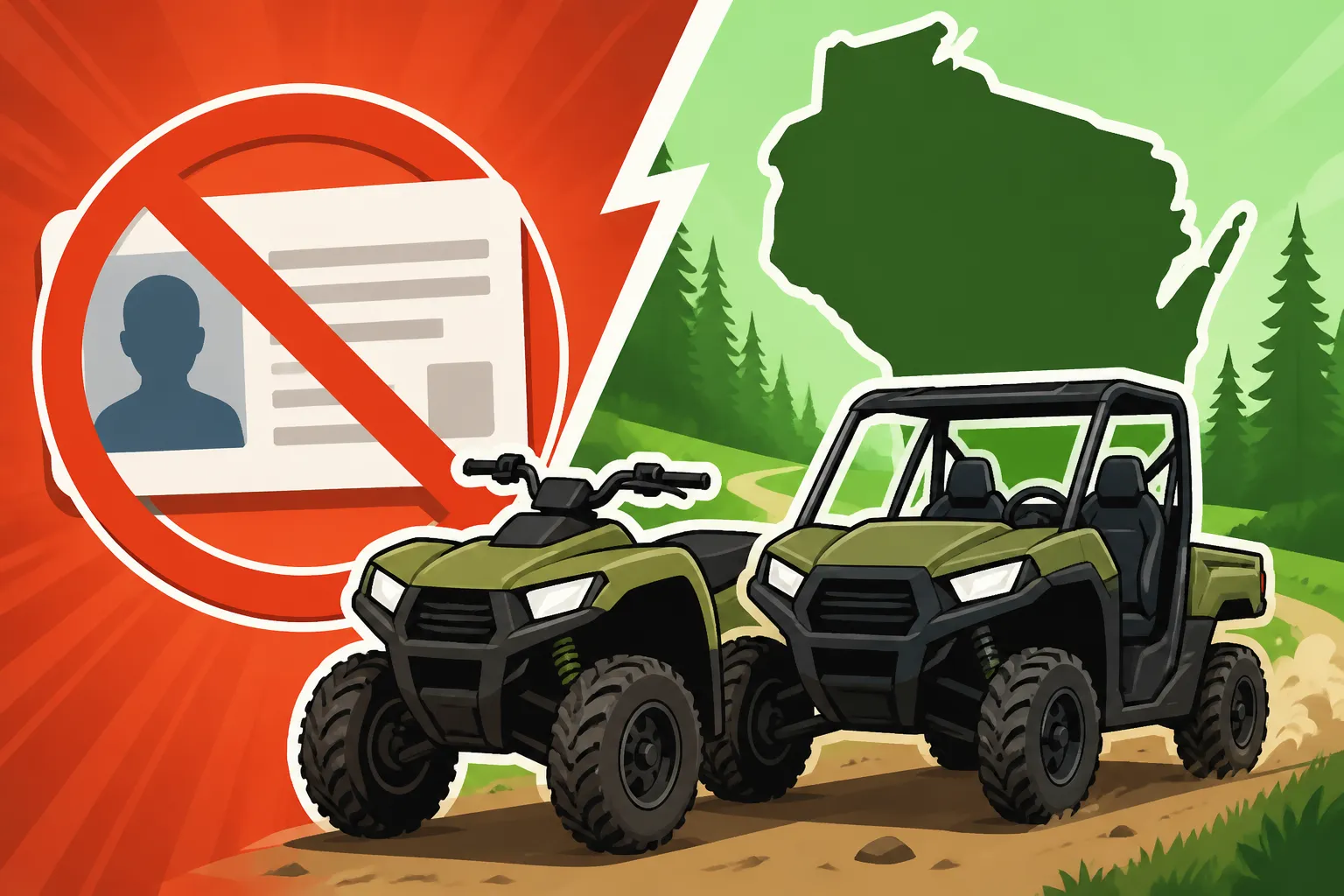
The Core Question: Driver's License for Wisconsin ATV Routes?
The short answer for ATVs on most Wisconsin routes is often "no, not necessarily a driver's license," but for UTVs, it's a bit different, and there's a crucial distinction with safety certificates. Understanding this difference is key to riding legally and confidently in the Badger State. It's a question many riders ponder when planning a trip to a trail town or just heading out to explore local roads opened for off-highway vehicles.
Wisconsin's General Rule for ATV Operators
When it comes to operating an ATV (often called a quad or four-wheeler) on public land and designated road routes in Wisconsin, the state law focuses more on age and safety education than on a traditional driver's license. For anyone 12 years of age or older, you can operate an ATV on designated routes and trails. This is a significant point: a 12-year-old is clearly not old enough to hold a Wisconsin driver's license, yet they are permitted to operate an ATV under specific conditions. This immediately tells you that a driver's license isn't a blanket requirement for all ATV operators on routes.
The key condition here, especially for younger riders, is often supervision and, for those born after a certain date, a safety certificate. The law acknowledges that these machines are different from cars and require specialized knowledge, not just general driving skills. So, while you might be riding alongside cars on a town road that's also an ATV route, the state's primary concern for ATV operators leans towards demonstrating competence through specific training rather than holding a car driver's license.
UTVs: A Different Set of Wheels, Different Rules
Now, if you're riding a UTV (Utility Terrain Vehicle), often called a side-by-side, the rules shift a bit, particularly regarding age and, by extension, driver's license eligibility. Wisconsin law generally treats UTVs differently on public road routes, and this often comes as a surprise to riders who assume ATVs and UTVs fall under the same exact regulations. For UTV operators on designated road routes, you generally need to be at least 16 years of age.
This 16-year-old minimum age for UTVs on public routes directly aligns with the age at which a person can obtain a probationary driver's license in Wisconsin. While the state law doesn't explicitly say "you must have a driver's license to operate a UTV on a route," the age requirement effectively creates that link. If you're 16 or older and operating a UTV on a road route, you're expected to possess the general driving maturity that comes with being eligible for a driver's license. This distinction for UTVs is one of the more common points of confusion for riders, especially those who might have a younger family member who can legally operate an ATV but not a UTV on the same route. Understanding [Why UTVs Are Treated Differently on Routes] can help clarify this distinction further.
Age, Safety Certificates, and Your Wisconsin Ride
Beyond the question of a driver's license, Wisconsin has specific requirements related to age and formal safety training that are absolutely critical for anyone operating an ATV or UTV on public lands, including road routes. These rules are designed to ensure riders have the necessary knowledge to operate these machines safely and responsibly, regardless of their experience behind the wheel of a car. Ignoring these can lead to fines and a ruined ride, which is the last thing anyone wants when they're trying to enjoy the Northwoods.
The All-Important Safety Certificate
For many riders, especially those who are relatively new to the sport or younger, the ATV/UTV safety certificate is the most crucial piece of "paperwork" outside of registration. Wisconsin law mandates that anyone born on or after January 1, 1988, must possess an ATV and/or UTV safety certificate to operate on public trails and routes. If you fall into this age category, this certificate is non-negotiable for public land riding. It's truly a foundational requirement. You can get this certification through state-approved online courses or in-person classes, both of which cover critical topics like machine operation, safety gear, trail etiquette, and understanding Wisconsin's specific regulations.
It's vital to remember that this safety certificate is distinct from a driver's license. A driver's license proves you can operate a car on a road, adhering to traffic laws. An ATV/UTV safety certificate proves you've received specialized training in the safe operation of off-highway vehicles, which have different handling characteristics and environmental considerations. Many riders express frustration with the multiple certifications, but think of it like this: driving a boat requires a boating safety certificate, not a car driver's license, even though both involve operating a vehicle. The same logic applies here. For a deeper dive into what's required, check out [Wisconsin's ATV Safety Certificate Requirement] and [The Wisconsin Rule for Riders Born On or After 1988].
Age Restrictions and Supervision
Wisconsin's age restrictions for ATV and UTV operation on public routes are quite specific and aim to balance access with safety, particularly for younger riders. For ATVs, a child needs to be at least 12 years old to operate on routes and trails. However, there's a significant nuance: if they are between 12 and 15 years old, they generally must be accompanied by an adult, typically a parent or guardian, or another adult approved by the parent. This adult must also be operating an ATV and be within sight. This supervision ensures that younger riders have immediate guidance and assistance if needed, making their entry into the sport safer.
The rules for UTVs on public routes are stricter, requiring operators to be at least 16 years old. As mentioned earlier, this aligns with the age for obtaining a driver's license, implying a higher level of maturity and driving experience is expected for these larger, often heavier machines that might be carrying passengers. This means a 14-year-old, even with a safety certificate and adult supervision, cannot legally operate a UTV on a Wisconsin road route. These age distinctions are crucial to understand, especially for families who ride together. For more detailed information, consider reading [Wisconsin's Rule for Riders Aged 12 to 15] and [Riding With a Parent-Approved Adult]. These resources can clarify the specifics of what "supervision" truly entails and who qualifies as an approved adult.
Navigating Local Ordinances and Route Specifics
While the state of Wisconsin sets the general framework for ATV and UTV operation, it's incredibly important to remember that individual towns, villages, and counties have the authority to create their own ordinances regarding off-highway vehicle use within their boundaries. This local control means that the rules for riding on a designated road route can vary slightly from one municipality to the next, adding another layer of complexity that riders need to be aware of. It's not uncommon for riders to be caught off guard by a local rule they didn't know existed, leading to unnecessary citations.
When Towns Add Their Own Rules
This is where the idea of needing a driver's license sometimes creeps back into the conversation, even for ATV operators. While state law doesn't generally require a driver's license for ATVs on routes, a specific local ordinance in a town might impose additional requirements. Some municipalities, when they designate a road as an ATV/UTV route, might add a clause stating that operators must possess a valid motor vehicle driver's license. This is not the norm statewide for ATVs, but it can happen locally. For UTVs, given the 16-year-old minimum age, a driver's license is often a de facto requirement, but again, local rules can sometimes solidify this or even add other stipulations.
The key takeaway here is to always, always check the local ordinances for the specific area you plan to ride. Information about [Municipal Ordinances Wisconsin Riders Must Read] is critical. Many trail towns are fantastic about publishing their ATV/UTV ordinances online, often on their town or county websites, or displaying them at trailheads and local businesses. A quick call to the local sheriff's department or town clerk's office before your trip can save you a lot of headache. Understanding [Driver's License Rules Some Wisconsin Towns Add] can prevent an unexpected encounter with local law enforcement.
Understanding Wisconsin's Road Route System
Wisconsin's road route system is a fantastic feature that allows riders to connect trails, access services like gas stations and restaurants, and explore areas that might otherwise be unreachable by ATV or UTV. However, it's essential to understand exactly what a "road route" is and where you can and cannot ride. A road route is typically a town, village, or county road that has been officially designated and signed for ATV and UTV use. These roads are often shared with regular vehicle traffic, meaning riders must adhere to typical road rules, such as stopping at stop signs, yielding to traffic, and signaling turns, in addition to specific ATV/UTV regulations.
Crucially, "road route" does not mean "any road." Riding an ATV or UTV on state or federal highways is generally prohibited, with very limited exceptions (like crossing at a designated intersection). You cannot simply take your machine down a busy highway, even if it's the most direct path to your destination. The routes are carefully chosen and marked, often on less-trafficked rural roads. Knowing [What a Wisconsin ATV Route Actually Is] and which [Town Roads Open to ATVs in Wisconsin] can make all the difference between a legal, enjoyable ride and a potential citation. Always look for the official signage indicating that a road is indeed part of the ATV/UTV route system.
Practical Considerations and What to Carry
Beyond simply understanding the rules, there are practical steps every Wisconsin ATV and UTV rider should take before hitting the routes. This includes knowing what documents to carry and ensuring your machine is properly equipped. It's not just about avoiding a ticket; it's about being prepared for any situation you might encounter on the trail or road. Wardens and local law enforcement are out there, and they'll expect you to have your ducks in a row.
Proof of Your Riding Privileges
When you're stopped by a Wisconsin warden or local law enforcement on a trail or road route, they will likely ask for several pieces of documentation. First and foremost, you'll need proof of your machine's registration. The registration card should be carried with you whenever you're operating the machine on public lands. This is non-negotiable. If you're required to have a safety certificate (remember, if you were born on or after January 1, 1988), you must carry proof of that certificate as well. This could be the physical card or, increasingly, a digital version on your phone if the local authority accepts it. It's always a good idea to have a physical copy, though, just in case cell service is spotty up north.
While a traditional driver's license might not be required for an ATV operator, it's still highly advisable to carry some form of valid government-issued identification, especially if you're an adult. This helps law enforcement verify your identity quickly and easily. In some municipalities, a driver's license might be implicitly required for UTV operators due to local ordinances or simply because the age requirement (16+) means you're likely to have one. Think of it as being prepared. [What a Wisconsin Warden Asks a Rider For] details precisely what officials will want to see, and [Keeping the Registration Card With the Machine] is a critical piece of advice for all riders.
Preparing Your Machine for Routes
Ensuring your ATV or UTV is properly equipped for route riding is just as important as having the right paperwork. While not directly tied to a driver's license, these machine requirements are part of being "route legal." For instance, all ATVs and UTVs operated on public trails or routes must have working headlights and taillights, especially for riding after dark or in low-light conditions. Brakes must be in good working order, and your machine must have an effective muffler and spark arrester to meet noise and safety regulations. These are not optional; they are safety and environmental requirements.
Many riders, especially those who frequently use road routes, will add accessories to enhance safety and comfort, and to ensure they meet potential municipal requirements. For example, turn signals are not always explicitly required by state law for ATVs on routes, but some local ordinances might mandate them, or they simply make for a safer ride when sharing the road with cars. A sturdy windshield from a brand like SuperATV can provide protection from bugs, dust, and debris, improving visibility and comfort on longer stretches of road. Even aftermarket mirrors, readily available from retailers like SuperATV, can significantly improve your awareness of traffic behind you, which is crucial on shared routes. Equipping your machine thoughtfully, with an eye towards both state regulations and potential local expectations, makes for a much smoother and safer riding experience. Whether it's a new skid plate or a set of upgraded A-arms, SuperATV offers a wide range of parts and accessories that can enhance both the safety and performance of your machine.
Here's a quick summary of the general requirements:
| Vehicle Type | Operator Age Minimum | Driver's License Required? | ATV/UTV Safety Certificate Required? | Notes for Public Routes |
|---|---|---|---|---|
| ATV | 12 years old | No (state level) | Yes (if born Jan 1, 1988 or later) | Ages 12-15 usually need adult supervision. Local ordinances may add DL requirement. |
| UTV | 16 years old | No (explicitly by state) | Yes (if born Jan 1, 1988 or later) | 16+ age often means operator has a DL. Local ordinances may add explicit DL requirement. |
In Wisconsin, the question of needing a driver's license for an ATV or UTV on a designated route isn't always a simple yes or no, but it's certainly manageable once you understand the nuances. For ATVs, the focus is heavily on age and the ATV safety certificate, with no statewide requirement for a driver's license. However, for UTVs, the 16-year-old age minimum often means a driver's license is effectively needed. Crucially, always remember to check local ordinances, as they can add specific requirements. By understanding these distinctions, carrying the right documentation, and ensuring your machine is properly equipped, you'll be well on your way to enjoying the fantastic ATV and UTV riding opportunities Wisconsin has to offer. Safe riding!
Disclaimer
This article is for general informational purposes only and does not constitute professional advice. Laws, prices and regulations vary by location and change over time. Consult a qualified professional for guidance on your specific situation.