Stopping Where a Route Crosses a Trail
We’ve all been there: riding along a beautiful, winding ATV trail, lost in the rhythm of the machine and the Northwoods scenery, when suddenly, a stop sign appears. You’re at a crossing, where your beloved dirt trail abruptly intersects with what feels like a regular road, often a town or county route that has been opened for ATV and UTV use in Wisconsin. These intersections can be jarring, confusing, and if not approached with care, downright dangerous. This guide is all about navigating these critical points safely and confidently, making sure your ride continues without a hitch.
The Unique Challenges of ATV Route-Trail Intersections in Wisconsin
Wisconsin's vast and interconnected trail systems offer incredible riding opportunities, but they often crisscross through various types of terrain and access points. One of the most common and often overlooked challenges is the intersection where a dedicated ATV trail meets a designated ATV route – which is typically a public road opened up to off-road vehicles. Understanding these crossings, and the specific rules that govern them, is crucial for both your safety and the safety of others.
Understanding the "Route" vs. "Trail" Distinction
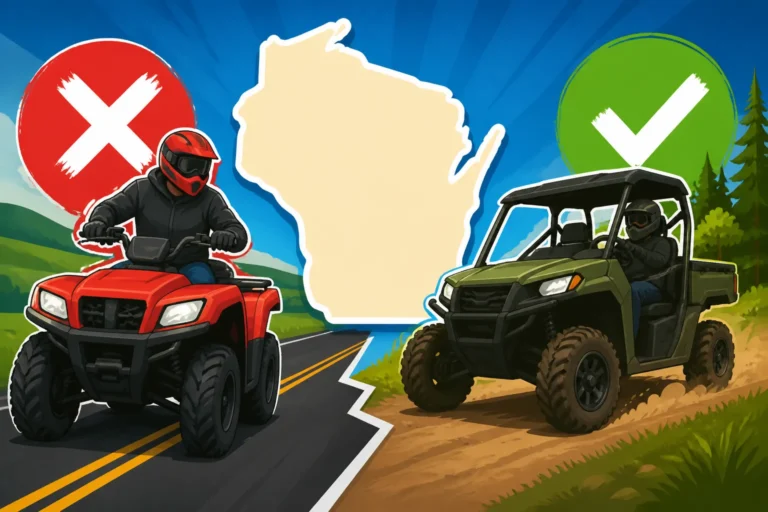
It's easy to think of all places you ride an ATV or UTV as simply "trails," but in Wisconsin, there's a really important legal and practical distinction. A "trail" is generally a dedicated, purpose-built path for off-road vehicles. It might be through a county forest, on an old railroad grade, or across private land with an easement. These are typically dirt, gravel, or sand, designed specifically for the unique characteristics of ATVs and UTVs. The rules of the trail often focus on things like speed limits, environmental protection, and rider conduct specific to off-road environments.
On the other hand, an "ATV route" in Wisconsin is almost always a town or county road that has been opened up to ATV and UTV traffic by local ordinance. Think of these as regular roads that still carry cars, trucks, and even farm equipment. They might be paved, gravel, or even dirt, but they are fundamentally public roadways. This distinction is paramount because when you're on a route, you're generally subject to the rules of the road, even if you're on an off-road machine. This means yielding to other vehicles, following posted speed limits for road traffic, and obeying traffic signs just as if you were driving a car. The sudden shift from a single-track, off-road trail to a two-lane gravel road with oncoming traffic can be a real jolt to your focus.
Why These Crossings Can Be Confusing and Dangerous
The biggest frustration and danger at these intersections stem from the abrupt change in environment and rules. You might be cruising along a quiet, tree-lined trail, enjoying the solitude, and then suddenly you're at a stop sign facing a paved road where cars are traveling at 45 mph. Your mind might still be in "trail mode," expecting other recreational users, not someone headed to town in their pickup truck. This cognitive shift takes a moment, and that moment can be critical.
Visibility is often a major issue as well. Trails can emerge from dense woods onto a route, making it hard for both you and approaching road traffic to see each other. Intersections can be on blind curves, over hills, or at points where tall brush obscures the view. Furthermore, the surface change can be tricky. Transitioning from soft dirt or sand onto hard pavement, or vice versa, can affect your braking distance and steering control, especially if you need to stop quickly or avoid an obstacle. Add in the differing speeds and expectations of trail riders versus road drivers, and you have a recipe for potential confusion and accidents. It’s no wonder so many riders feel a knot in their stomach approaching these spots.
The Rules of the Road (and Trail) at Wisconsin Crossings
Navigating these combined "road-and-trail" scenarios requires a clear understanding of the rules that apply. It’s not enough to simply follow what feels right; you need to know what the law expects of you as an operator. Failing to do so can lead to not only dangerous situations but also significant legal penalties. Remember, ignorance of the law is rarely an excuse when a warden or local police officer pulls you over.
Yielding and Right-of-Way Basics
When a trail intersects a public road (route), the general rule in Wisconsin is that the trail traffic must yield to the road traffic. Think of it like a driveway entering a main street – the vehicle entering the main street must yield. This means if you're coming off a trail and encountering a road route, you should expect to stop and yield to any vehicles already on that route, whether they are cars, trucks, or other ATVs/UTVs that are traveling along the route. You'll often see explicit stop signs or yield signs placed where trails meet routes, and you must obey these signs. Ignoring them is a surefire way to invite a citation, or worse, a collision.
It's important to remember that just because a road is designated an "ATV route" doesn't mean it's exclusively for off-road vehicles. Regular vehicle traffic still has primary right-of-way on these roads. The burden is almost always on the ATV/UTV coming off the trail to ensure the crossing is clear before proceeding. The goal is to make these transitions as seamless and safe as possible for everyone, regardless of what they are driving or riding. Don't assume anything; always be prepared to stop.
Signaling and Situational Awareness
While hand signals might be less common when riding solo on an open trail, they can be incredibly helpful when riding in a group or when making a turn onto or off a route. A simple hand signal can communicate your intentions to riders behind you or to other drivers if they happen to see it. However, the most critical aspect here is situational awareness. As you approach any intersection, your eyes and ears need to be fully engaged.
Look left, right, and then left again. Listen for the sound of approaching vehicles – sometimes you'll hear them before you see them, especially if the intersection is around a blind corner. Pay extra attention to blind spots, especially if you're operating a larger UTV or if your machine is loaded down. Remember that other drivers might not expect to see an ATV emerging from a wooded trail, and they might not be looking for you. Therefore, you must be looking for them. Make eye contact if possible, and don't proceed until you are absolutely certain the way is clear and safe. For more general guidelines, it's always good to review [Wisconsin Road Rules Riders Get Wrong].
Specific Wisconsin DNR Guidelines and Local Ordinances
Wisconsin's Department of Natural Resources (DNR) sets many of the statewide rules for ATV and UTV operation, but when it comes to routes, local municipalities have significant control. A town or county has to specifically pass an ordinance to open its roads to ATV/UTV use, and they can set their own additional rules for those routes. This means the exact regulations might vary from one county to the next, or even between adjacent townships. For example, one town might allow ATVs on routes from dawn to dusk, while another might permit riding until 10 PM.
These local ordinances often cover things like speed limits on routes, specific hours of operation, and sometimes even additional insurance requirements beyond what the state mandates. It is absolutely vital that you do your homework before riding in an unfamiliar area. You can often find these ordinances on county or town websites, or by contacting the local municipality. Ignoring these local rules, especially at intersections, can lead to steep penalties. A local warden can cite you for various infractions related to routes and trails, so knowing what's expected is your first line of defense. You can learn more about potential consequences by looking into [Wisconsin Fines for Illegal Road Riding].
| Common Crossing Danger | Impact on Rider | Proactive Safety Measure |
|---|---|---|
| Blind Approaches | Collision risk, sudden stop | Slow significantly, listen, lean forward to see |
| Unseen Traffic | High-speed collision risk | Stop completely, look both ways multiple times |
| Surface Changes | Loss of traction, control | Anticipate, adjust speed, cover brakes |
| Conflicting Rules | Confusion, legal penalties | Research local ordinances, obey all signs |
| Other Drivers' Inattention | Lack of being seen, collision | Increase visibility, make eye contact, wait for clear gap |
Practical Strategies for Safe Crossings
Okay, so we know why these crossings are tricky and what the general rules are. Now, let's talk about the practical, real-world strategies you can use to make every single route-trail intersection a safe and smooth experience. These aren't just legal requirements; they're habits that will keep you, your passengers, and your machine safe for many years of Wisconsin riding.
Approaching an Intersection: Slow Down and Be Ready
The single most effective strategy for safe crossings is simple: slow down, and do it early. As soon as you see a sign indicating an upcoming intersection, or even sense that the trail is about to open up to a road, begin to reduce your speed. Don't wait until you're right at the stop sign or edge of the pavement. Give yourself plenty of time to react to anything unexpected. This means easing off the throttle, and perhaps gently applying the brakes, well before you reach the actual crossing point.
"Covering" the brake is another smart move. This means having your fingers or foot lightly resting on the brake lever or pedal, ready to apply full braking pressure instantly if needed. As you slow, actively scan the environment: look for traffic signs ([Route Signage Standards in Wisconsin]), other vehicles, pedestrians, cyclists, or even wildlife that might dart across the road. Be particularly vigilant for children, as they might not be expecting an ATV. This proactive approach ensures you're not caught off guard by a sudden stop sign or an approaching vehicle.
Making the Stop and Looking for Traffic
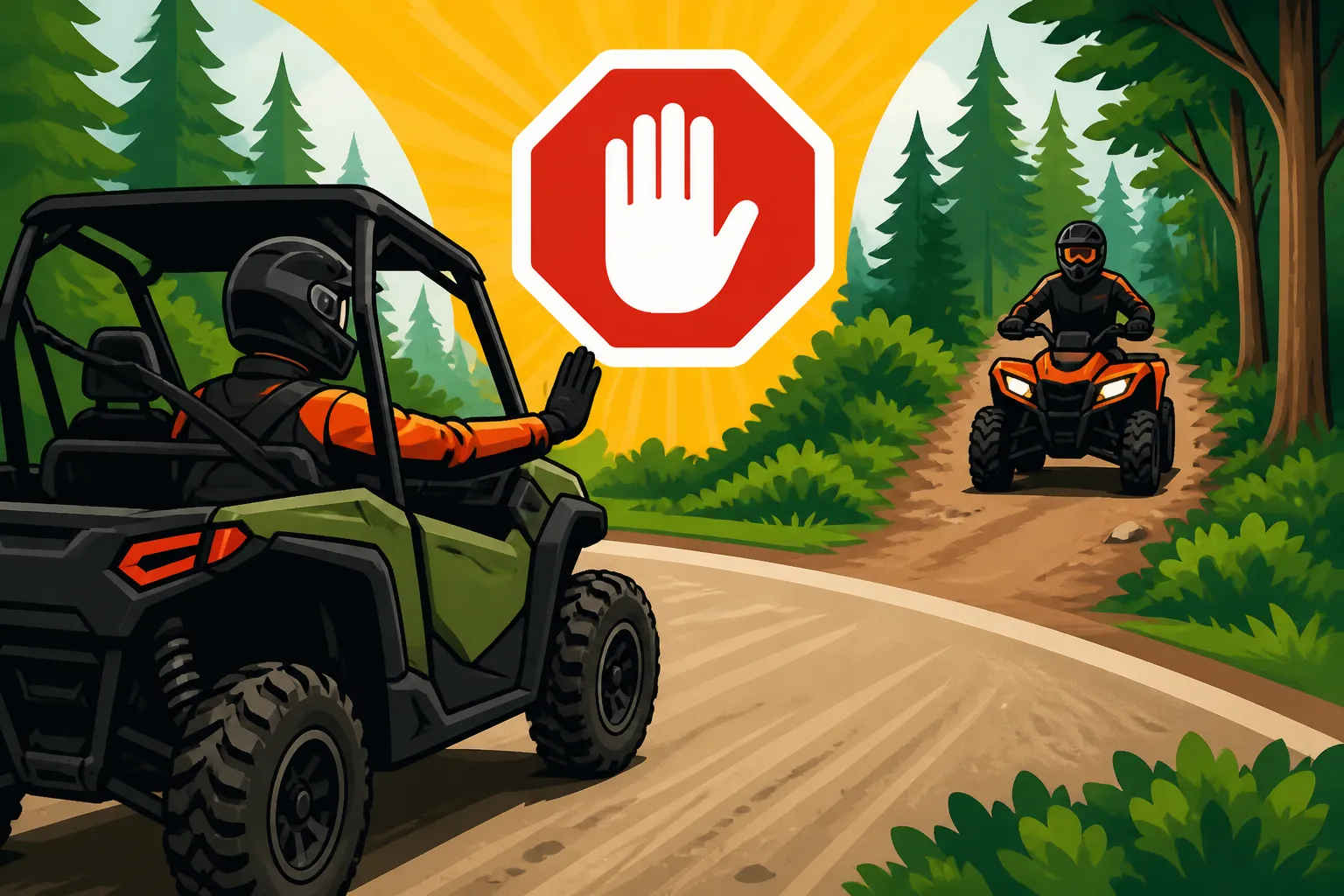
Once you've slowed down, your next step is to come to a complete stop. This isn't just a suggestion; it's a non-negotiable step, even if there's no stop sign explicitly telling you to. Stopping completely gives you the best vantage point to assess the situation. Roll slowly up to the edge of the trail where it meets the route, but don't pull out into traffic.
Then, do the classic "look left, right, left again" – and take your time. Don't just glance. Really look down the road in both directions. Remember that ATVs and UTVs are smaller than cars and can be harder for other drivers to spot, especially if they're moving quickly. If you're on a larger UTV, be mindful of your side mirrors and potential blind spots. Wait for a clear, safe gap in traffic that gives you ample time to cross completely. Never assume a driver sees you or will yield to you, even if they should. Your safety is paramount, and a few extra seconds waiting for a truly clear path is always worth it. If you're ever stopped by a warden, they'll be looking for these careful practices. [What a Wisconsin Warden Asks a Rider For] details other things they might check.
Crossing Safely and Regaining Speed
Once you've determined the way is clear, proceed to cross the route safely and efficiently. Cross directly across the road, not at an angle that could potentially catch a tire or make your machine unstable. Accelerate smoothly but decisively, aiming to clear the intersection quickly without being reckless. Avoid any sudden, jerky movements that could upset your machine's balance, especially if you're transitioning from one surface type to another.
Before you even start across, know exactly which direction you intend to go once you're on the other side – whether continuing on a trail, turning onto the route, or taking another trail entrance. Hesitation in the middle of a road is a risky move. Once you're clear of the intersection and safely on your way, you can gradually regain your cruising speed and settle back into your ride. This whole process, from slowing down to accelerating away, should be a fluid, intentional series of actions.
Equipment and Preparation for Wisconsin Crossings
Beyond just good riding habits, your machine itself and your overall preparation play a huge role in how safely you navigate these critical intersections. A well-maintained machine and the right gear can make all the difference when those unexpected moments arise.
Machine Maintenance for Optimal Braking and Control
Your ATV or UTV's ability to stop quickly and handle predictably is never more important than at a route-trail intersection. Regular maintenance is key here. Make sure your brakes are always in top condition. This means checking your brake pads for wear, ensuring your brake fluid levels are correct, and confirming that both front and rear brakes engage smoothly and effectively. Worn brakes significantly increase your stopping distance, which can be disastrous when a car suddenly appears.
Your tires also play a critical role. Ensure they are properly inflated and have adequate tread. Worn or improperly inflated tires can reduce traction, especially when you're braking hard or encountering different surfaces like loose gravel or wet pavement at an intersection. Finally, check your steering and suspension. Any looseness or play in these components can make your machine less predictable and harder to control, particularly during quick maneuvers or emergency stops. A machine that tracks straight and responds crisply to your inputs is a safer machine.
Enhancing Visibility: Lights, Flags, and Gear
Because other drivers might not be looking for an ATV or UTV, it’s up to you to make yourself as visible as possible. Always ride with your headlights and taillights on, even during the day. This is particularly important at dawn, dusk, or on overcast days when visibility is naturally lower. If your UTV has turn signals, use them!
Consider adding extra visibility aids. A brightly colored whip flag mounted on your machine can significantly increase your profile, especially in areas with tall brush or uneven terrain that might obscure your view. Reflective tape on your machine or helmet can also help, especially during lower light conditions. Brands like SuperATV offer a range of aftermarket lighting solutions, mirrors, and other accessories that can dramatically improve your visibility and awareness on the trail and route. These might include brighter LED headlights, side mirrors for better rear visibility, or even auxiliary lights to cut through the dark. And, of course, always wear appropriate riding gear, including a helmet, especially if you are under 18 where [Wisconsin Helmet Rules for Riders Under 18] apply, and protective clothing. Brightly colored gear makes you stand out even more. For night riding, don't forget to review [Lighting Rules for Wisconsin Night Riding].
Planning Your Route: Maps and Local Knowledge
One of the best ways to prepare for intersections is to know where they are before you even leave camp. Digital mapping tools like onX Offroad or even traditional paper maps are invaluable. These resources often show where trails intersect roads, allowing you to anticipate these critical points and mentally prepare for the transition. Look for sections where [Wisconsin Trails That Link Two Towns], as these often involve significant stretches on routes or multiple route crossings.
Beyond maps, leverage local knowledge. If you're riding in a new area, talk to locals, check with nearby businesses, or browse county websites. Many counties and towns that open their roads to ATVs will post specific information about their routes and any unique rules. Knowing what to expect – whether it's a busy highway crossing or a quiet gravel road intersection – allows you to adjust your approach and ride with greater confidence and safety. Think of it as part of your pre-ride checklist, just like checking your tire pressure or fuel level. Your [Finding a Wisconsin County Trail Map] and [Finding a Wisconsin Town's ATV Ordinance] are your best friends here. You might also consider taking a [Wisconsin ATV Safety Certificate Requirements] course, which often covers these kinds of intersections in detail.
Disclaimer
This article is for general informational purposes only and does not constitute professional advice. Laws, prices and regulations vary by location and change over time. Consult a qualified professional for guidance on your specific situation.