Blind Approaches on a Wisconsin Route
Picture this: you're cruising down a scenic Wisconsin ATV route, enjoying the fresh air and the hum of your machine. Suddenly, a blind crest in the road looms ahead, or a sharp turn with dense foliage obscures what's on the other side. That sudden lurch of anxiety? That's the challenge of blind approaches, and they're a very real part of riding on many of our beloved Wisconsin routes. This guide is all about helping you understand these hidden hazards and arming you with the strategies you need to navigate them safely, ensuring your Northwoods adventures remain enjoyable and accident-free.
Understanding Blind Approaches: What They Are and Why They're Dangerous
When you're out on a Wisconsin ATV or UTV route, whether it's a quiet town road or a bustling county trail connector, you're bound to encounter spots where your line of sight is cut off. These are what we call "blind approaches," and they're not just annoying—they can be downright dangerous if you're not prepared. The core problem is simple: you can't see what's coming, and what you can't see can very much hurt you.
Defining the Hazard
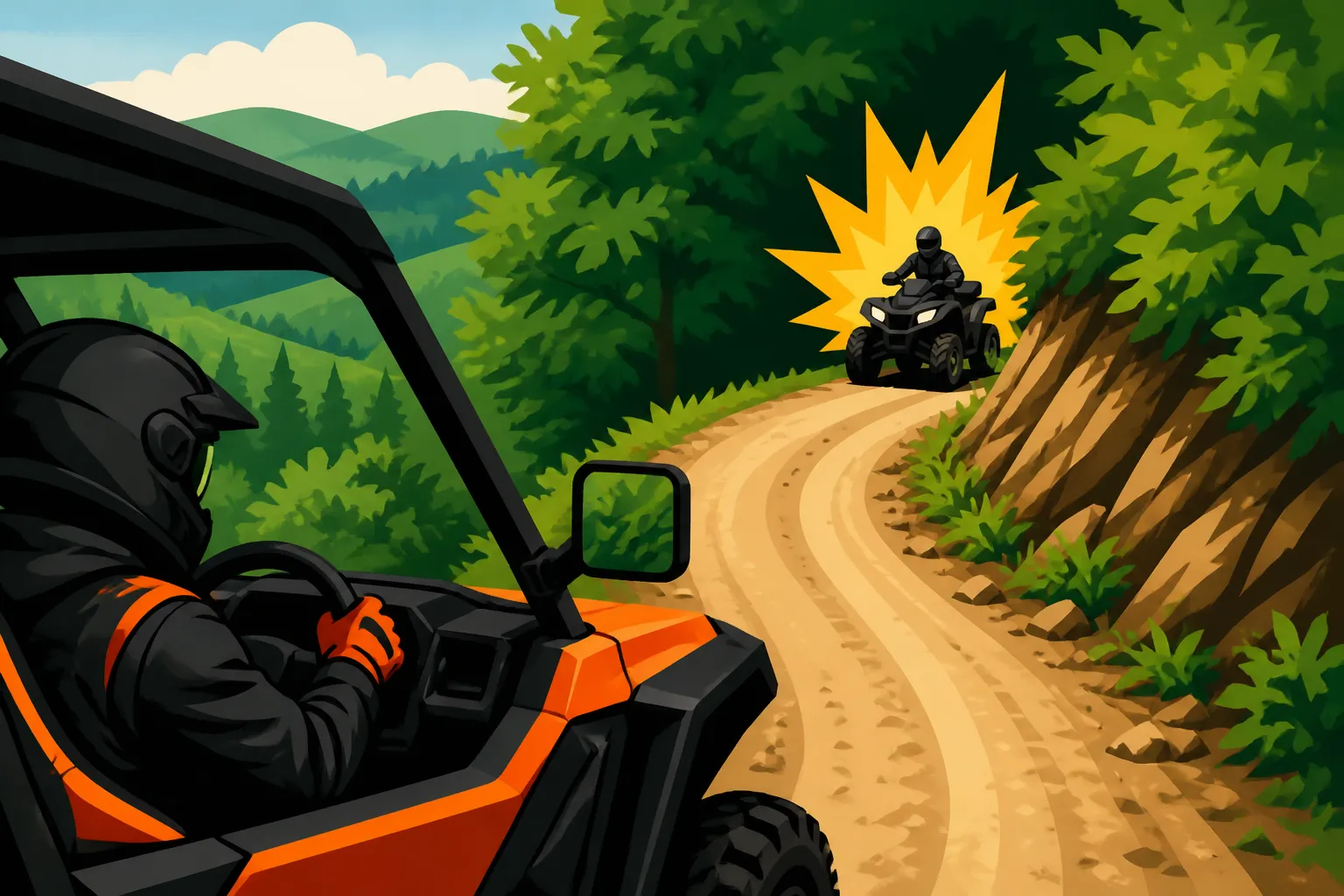
A blind approach is essentially any point on a route where natural features, man-made structures, or even other vehicles prevent you from seeing far enough ahead to react safely to potential hazards. Imagine cresting a hill on a gravel road, only to find a logging truck stopped just over the other side. Or taking a sharp bend in a wooded area, and suddenly you're face-to-face with an oncoming UTV. The immediate danger comes from the lack of time and space to take evasive action. You might need to brake hard, swerve, or even stop completely, and if you haven't seen the hazard in advance, those precious seconds disappear.
Visual obstructions are the main culprits. In Wisconsin, this often means dense stands of pine or hardwood that hug the edges of town roads and county routes. Buildings, especially farm structures, can create significant blind spots as you approach driveways or intersections. Even tall crops in summer can obscure views, making it impossible to see a tractor pulling out of a field until you're right on top of it. Beyond stationary objects, the unpredictability of other users adds another layer of risk. You might encounter another rider, a pedestrian walking their dog, a deer bolting across the road, or even a local resident pulling out of their driveway in a car. Each unexpected encounter reduces your reaction time and increases the potential for a collision.
Common Locations for Blind Approaches
Blind approaches aren't uniform; they pop up in various forms and locations across Wisconsin's extensive ATV and UTV route network. Knowing where to expect them is half the battle.
One of the most frequent places you'll find blind approaches is on sharp turns, especially those on winding town roads or gravel county routes that meander through hilly or forested terrain. The curve itself, combined with thick underbrush or tall trees, can completely hide oncoming traffic or stalled vehicles until you're already committed to the turn. These corners require maximum vigilance because the potential for a head-on collision or running off the road is very real.
Crested hills are another prime spot for these hazards. As you climb, your view of the road beyond the summit disappears. You can't see if there's a vehicle stopped just over the rise, a pothole, or even a group of riders taking a break. The faster you approach the crest, the less time you'll have to react to anything unexpected on the other side. This is particularly true on many of the rural, undulating roads found in central and northern Wisconsin.
Driveways, whether they lead to a cozy cabin, a sprawling dairy farm, or a private logging operation, are notorious for creating blind approaches. A vehicle or person could emerge from a driveway at any moment, and often, trees, bushes, or even snowbanks in winter can completely block your view until you're right at the entrance. [Driveway Crossings Along a Route] are places where you simply have to assume someone might be coming out. It’s also important to remember that people pulling out of driveways might not be expecting an ATV or UTV, especially on less-traveled routes.
Intersections, even those with stop or yield signs, can also be blind. If the cross-street has heavy vegetation or buildings close to the corner, you might not be able to see cross-traffic until you're right at the stop line. This is especially true in smaller communities where routes pass through residential areas. Always be extra cautious at any intersection, even if you have the right-of-way, because visibility can be deceiving. Lastly, keep an eye out for logging roads or private access routes that sometimes unexpectedly join public ATV routes. These can be particularly blind, and the vehicles emerging from them might be heavy, slow-moving, and less visible.
Strategies for Safely Navigating Blind Approaches on Wisconsin Routes
Navigating blind approaches successfully isn't about luck; it's about adopting a proactive, defensive riding style. By implementing a few key strategies, you can significantly reduce your risk and make your ride much safer for everyone on the route. Think of it as always riding with a mental "what if" playing in your head.
Proactive Rider Techniques
The most crucial advice for any blind approach is simple: slow down. This isn't just a suggestion; it's a fundamental safety principle. Your speed should always be appropriate for your sight distance. If you can only see 50 feet ahead, you need to be able to stop your machine within that 50 feet. Riding too fast into a blind corner or over a crest means you're gambling with your reaction time. Reduce your speed well before you enter the blind section, allowing you ample time to identify and react to any potential hazards. Remember, hitting your brakes suddenly on gravel or loose dirt can lead to a loss of control, so it’s better to scrub speed gradually and intentionally.
Another critical technique is to stay right. On any shared route, hugging the right-hand side of your lane gives you maximum separation from oncoming traffic, especially around blind curves. It creates a buffer zone that can make all the difference if an unexpected vehicle or obstacle appears. Never cut corners by riding into the opposing lane on a blind bend, even if you think it's clear. You might be wrong, and the consequences could be severe.
Beyond visual cues, train yourself to look, listen, and anticipate. Use your eyes to scan as far ahead as possible, even looking for subtle clues like dust rising over a hill [Dust on a Dry Wisconsin Town Road] or light reflecting off an unseen vehicle. Actively listen for the sound of other engines, horns, or even voices, which can indicate hidden activity. Anticipate what might be around the bend: a farm tractor, another group of riders, a dog, or a deer. Riding defensively means expecting the unexpected and preparing for it.
If you're riding in a group, communication is vital. Utilize hand signals or a comms system to warn riders behind you about upcoming hazards, especially those that are blind. If the lead rider slows down unexpectedly or points to a potential issue, the rest of the group needs to be ready to react in kind. [Group Etiquette Through a Northwoods Town] stresses the importance of cohesive and communicative riding to enhance safety.
Machine-Specific Considerations
Your machine itself plays a role in navigating blind approaches, both in its inherent capabilities and the accessories you choose. One often overlooked aspect is your machine's visibility. While you might see well from your perch, how well can others see you? Keeping your headlights on, even during the day, can significantly increase your visibility to oncoming traffic or those pulling out of driveways. For group rides, some riders opt for [Whip Flags on a Route Ride], especially in open areas, as they can add an extra measure of visibility over rises or around gentle curves, although they might not be practical in heavily treed routes.
Maintaining excellent braking capability is non-negotiable. Regularly inspect your brake pads, rotors, and fluid levels. Knowing your machine's stopping distance on different surfaces (pavement, gravel, dirt) is crucial. Practice emergency braking in a safe, controlled environment so that if you encounter an unexpected hazard, your muscle memory takes over. A well-maintained braking system is your first line of defense when reaction time is limited.
Finally, consider aftermarket accessories that can enhance your awareness and safety. Wider mirrors can give you a better view of what's behind and beside you, reducing blind spots that could hide a vehicle about to pass or an obstacle you've just cleared. Auxiliary lighting, particularly powerful LED light bars, can dramatically improve your visibility, especially when [Lighting Rules for Wisconsin Night Riding] demand strong illumination. Many riders opt for aftermarket accessories from brands like SuperATV, such as wider mirrors or auxiliary lighting, to give themselves an edge in these situations. While these won't replace good riding judgment, they can certainly supplement it.
Navigating Specific Wisconsin Scenarios and How to Handle Them
Wisconsin's ATV and UTV routes offer incredible diversity, from rural farm roads to deep woods trails that sometimes connect to town routes. Each environment presents its own unique set of blind approach challenges. Being aware of these specific scenarios can help you tailor your defensive riding strategies.
Farm Driveways and Rural Intersections
Many Wisconsin ATV routes utilize quiet town roads that pass right through agricultural areas. This means you'll frequently encounter farm driveways and rural intersections. The biggest challenge here is to expect the unexpected. Farmers often operate large, slow-moving equipment—tractors, combines, hay wagons—that may pull out onto the road with little warning and might not be able to stop quickly. Children or animals (pets, livestock) can also suddenly appear. Approach all farm driveways and rural intersections with extreme caution, assuming something is about to emerge.
Another factor in these areas is dust and gravel. On dry days, a following machine can kick up a significant amount of dust [Dust on a Dry Wisconsin Town Road], which can create an instant blind spot for riders behind you, or even for oncoming traffic. If you're riding in dusty conditions, increase your following distance and be extra aware that your own visibility, and that of others, is compromised. When riding past fields or barns, always approach slowly. The visual cues might be limited, with tall crops or structures blocking your view of what's happening just off the road. It's better to creep past these areas than to blast through, risking a collision with unseen farm equipment or a vehicle.
Forested Routes and Trail Crossings
Northern Wisconsin, in particular, boasts many routes that weave through dense forests. Here, the challenge shifts from open fields to thick tree cover. Dense tree cover can block natural light, creating deep shadows that make it harder to discern obstacles or distinguish between the route and the surrounding woods. It also makes it incredibly difficult to see far ahead on winding turns. Combine this with the often-uneven terrain, and you have a recipe for reduced visibility and increased reaction time.
These routes often see shared use. While you're on your ATV, you might encounter hikers, mountain bikers, or even logging trucks. Always be prepared for non-motorized users who might not be as audible or visible as other power-sports vehicles. It's a good practice to slow down significantly and give ample space to anyone you encounter. Finally, many ATV routes connect directly with designated trails. When a route crosses a trail, always treat it with the same respect you would a road intersection. [Stopping Where a Route Crosses a Trail] is critical; look both ways thoroughly before proceeding, even if you feel you have the right-of-way. Other riders or users might be coming off the trail quickly.
Urban/Village Route Transitions
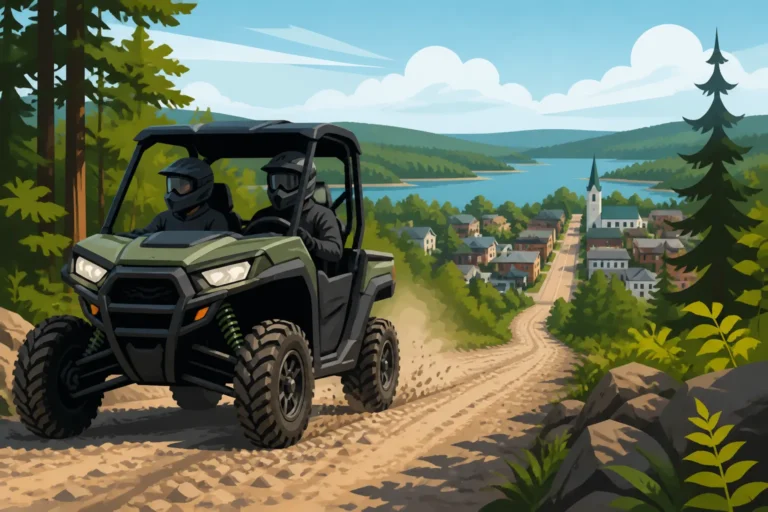
While most of Wisconsin's ATV routes are rural, some do transition into or through small towns and villages. When you find yourself [Riding Into a Wisconsin Trail Town], the environment changes dramatically, and with it, the blind approach challenges. You'll encounter increased traffic, not just other ATVs, but cars, pedestrians, and cyclists who might be unfamiliar with ATV traffic. The slower speed limits in these areas are there for a reason—to allow more time to react to the increased complexity.
Parked vehicles on residential streets can create dynamic blind spots. A car pulling out, a child running between vehicles, or even someone opening a door can become a sudden hazard. Maintain a buffer zone around parked cars and assume that a hazard could emerge from behind or between them. Lastly, just as with rural intersections, you'll find more actual street intersections in towns. While some might have stoplights or four-way stops, others might have less clear signage or unexpected traffic patterns. Your situational awareness needs to be at its peak when navigating these more populated transitions.
Beyond the Rider: Other Factors for Route Safety
While your personal riding habits are paramount, broader factors also contribute to your ability to safely navigate blind approaches. These include the condition of your machine, the signage on the routes, and the general awareness within the riding community. Taking these into account can further enhance your safety margin.
Machine Maintenance for Optimal Safety
A well-maintained machine is a safe machine, and this holds especially true when you're dealing with unexpected hazards on blind approaches. Your brakes are your most critical safety feature. Regularly check your brake fluid, inspect pads for wear, and ensure your lines are free of leaks or damage. If your brakes feel spongy or less responsive, get them serviced immediately. A few extra feet of stopping distance can be the difference between a close call and a serious incident.
Tires also play a huge role. Proper inflation is key for optimal traction and handling. Check your tire pressure before every ride, and make sure your tires have adequate tread. Worn tires will have reduced grip, especially on loose gravel or wet surfaces, making emergency maneuvers or quick stops much riskier.
Finally, your lighting system, including headlights, taillights, and any turn signals (if equipped and required by local ordinances), needs to be in perfect working order. Blown bulbs or faulty wiring reduce your visibility to others and can compromise your own view after dark. Always perform a quick check of all your lights before heading out. Beyond these basics, ensure your machine's suspension and steering components are in top shape; a quality steering rack or A-arms, perhaps even an upgrade from SuperATV, can make a real difference in control on uneven or unexpected terrain. When you're forced to react quickly, you want your machine to respond precisely as intended.
Community Awareness and Signage
Riding safely on Wisconsin's routes is also a shared responsibility that extends to understanding and respecting the rules and features of the routes themselves. Local ordinances are incredibly important. Each town or county that hosts an ATV route can have specific rules regarding speed limits, hours of operation, or even insurance requirements. [Finding a Wisconsin Town's ATV Ordinance] is a vital step before riding in a new area. These rules are often designed to address specific local concerns, including safety around blind spots or high-traffic areas.
Signage is your friend. Pay close attention to [Wisconsin Route Signs and What They Mean]. Yellow diamond-shaped signs often warn of upcoming curves, hills, or intersections, giving you advance notice of potential blind approaches. Regulatory signs (like speed limits or stop signs) are there to ensure safe flow of traffic, and ignoring them significantly increases your risk. Take heed of signs indicating "No Passing" or "Blind Driveway Ahead."
Lastly, respecting locals is not just about being a good neighbor; it's also a safety measure. When you're [Riding Slowly Past a Farmyard on a Route] or through a residential area, you're not just being courteous, you're reducing noise and dust, and demonstrating that you're aware of your surroundings. This positive interaction helps maintain good relations with the communities that open their roads to us, and it also means you're operating at a speed that allows for maximum reaction time if a local resident or pet unexpectedly enters the route.
Here's a quick guide to navigating different types of blind approaches:
| Blind Approach Type | Description | Recommended Rider Actions |
|---|---|---|
| Sharp Road Curves | Limited sight around the bend due to trees, banks, or buildings. | Slow Down Significantly: Enter the curve at a speed that allows you to stop if an obstacle is immediately present. Stay Right: Maintain position as far right as safely possible to maximize separation from oncoming traffic. Look, Listen, Anticipate: Scan for dust, lights, or engine sounds. |
| Crested Hills | View of the road is completely obscured beyond the top of the rise. | Reduce Speed Before Crest: Decelerate before reaching the top, preparing for anything on the other side. Stay Right: Assume oncoming traffic might be in your lane. Smooth Acceleration Over Top: Avoid sudden bursts of speed that could lead to loss of control. |
| Farm/Rural Driveways | Vehicles, farm equipment, or people may suddenly emerge. | Assume Entry/Exit: Always expect someone to pull out or enter. Slow Down and Scan: Look for movement or a glimpse of a vehicle. Be Prepared to Stop: Keep a finger on the brake lever. |
| Intersections | Poor sight lines due to buildings, foliage, or parked cars. | Approach with Caution: Treat all intersections as potentially hazardous, even with right-of-way. Look Both Ways (Multiple Times): Scan thoroughly, especially for cross-traffic. Be Heard: If necessary, a quick tap of the horn can alert others to your presence. |
| Trail Crossings | Where an ATV route crosses or meets a designated trail. | Treat as Stop Sign: [Stopping Where a Route Crosses a Trail] is critical; come to a complete stop and look for trail users. Yield to Trail Traffic (if applicable): Be mindful of trail users who might not expect route traffic. |
| Forested Sections | Dense trees and shadows reduce visibility along winding paths. | Maintain Moderate Speed: Avoid high speeds due to reduced forward visibility. Scan for Wildlife: Animals can be harder to spot in shadows. Use Headlights: Enhance your visibility to others, even during the day. |
Disclaimer
This article is for general informational purposes only and does not constitute professional advice. Laws, prices and regulations vary by location and change over time. Consult a qualified professional for guidance on your specific situation.