Whip Flags on a Route Ride
There’s nothing quite like hitting the open ATV or UTV routes across Wisconsin, feeling the wind, taking in the scenery. But let's be real: those routes often mix with regular traffic, blind corners, and varied terrain, creating real visibility challenges. This guide dives deep into why whip flags aren't just a fun accessory but a crucial safety measure for every rider venturing out onto Wisconsin's diverse road and trail system.
Why Whip Flags Are Essential for Wisconsin Route Riding
It's easy to think of off-roading as something entirely separate from road traffic, but when you're exploring Wisconsin's vast network of ATV and UTV routes, that line blurs quickly. Many of these routes share space with town roads, county highways, and even logging paths, bringing you into contact with everything from cars and trucks to farm equipment, bicycles, and even pedestrians. Your machine, especially a low-profile ATV or a side-by-side tucked behind a hill, can easily disappear from view, and that's where the humble whip flag becomes a lifesaver.
The Visibility Challenge on Wisconsin Roads and Routes
Think about riding through the rolling hills of the Kettle Moraine or navigating a winding gravel road up near Hayward. You encounter blind corners that hide oncoming traffic until the last second, and crests that make a machine seem to vanish until it's right on top of you. Then there's the dust, especially on dry summer days, kicked up by your own machine or those ahead of you. This dust can form a dense cloud, completely obscuring your presence to anyone following or approaching from the other direction. Without an elevated marker, you're relying solely on headlights and taillights, which can be easily missed in certain conditions or against busy backgrounds.
Even on what seems like a quiet stretch of [Riding a Wisconsin Town Road] or [Riding a Gravel Road Into a Northwoods Town], you're not truly alone. Local residents might be pulling out of their driveways, farmers might be moving equipment, or other recreational users might be enjoying the same scenic path. Your low vantage point means you can't always see over obstacles or around tight bends, and conversely, they might not see you. The sheer variety of traffic you encounter, coupled with natural obstructions and environmental factors, makes inherent visibility a significant concern for every rider in our state.
Enhancing Safety for All Road Users
A whip flag isn't just about protecting you; it's about making the routes safer for everyone. Imagine cresting a hill on a shared road. A standard ATV might not be visible until it's almost at the top, but a bright whip flag, extending several feet into the air, gives other drivers and riders a crucial early warning. This extra visibility allows them more time to react, slow down, or adjust their position, dramatically reducing the risk of a head-on collision or a rear-end incident. It’s like having an extra pair of eyes extending high above your machine, signaling your presence.
For those of us who enjoy group rides, especially through areas where the terrain or foliage might momentarily separate riders, a whip flag is invaluable. It helps you keep tabs on the machine ahead or behind you, ensuring no one gets lost or falls too far behind. When you're following a buddy through a dusty section, that flash of color above the dust cloud is often the only thing that tells you where they are. Companies like SuperATV understand these needs and offer flags designed to stand out, helping riders maintain a safer distance and navigate with greater confidence, truly benefiting the entire riding community. [Group Etiquette Through a Northwoods Town] suggests riding single file for a reason, and a flag helps keep everyone safely spaced and accounted for.
Understanding Wisconsin's Whip Flag Requirements
When it comes to safety gear, many riders wonder what's legally mandated versus what's simply a smart practice. It's a valid question, especially since regulations can vary so much across different states and even within different areas of Wisconsin. It's important to differentiate between a statewide requirement and local rules that might pop up.
Is a Whip Flag Legally Required in Wisconsin?
Here's the straight talk: as a general rule, Wisconsin state law does not mandate that ATVs or UTVs display a whip flag for most public trail or route riding. Unlike some other popular riding destinations, especially dune systems in other states where whip flags are an absolute requirement due to extreme visibility challenges, Wisconsin's statewide regulations haven't adopted such a rule for its entire network. This often surprises riders who are used to seeing flags everywhere or have heard conflicting information.
However, and this is a big "however," the absence of a statewide law doesn't mean you're entirely off the hook. Individual counties, towns, or even specific trail systems have the authority to implement their own local ordinances. This means that while you might not need a flag in one county, a neighboring town that has opened its roads to ATVs might require one for safety, especially if their routes involve unique hazards or heavy mixed traffic. It is absolutely crucial to check [Municipal Ordinances Wisconsin Riders Must Read] for any area you plan to ride. Never assume that what's true for one part of the state applies everywhere else; a quick check with the local DNR station or county sheriff's department can save you a potential citation.
Best Practices Even Without a Mandate
Even if the letter of the law doesn't require a whip flag where you're riding, adopting it as a best practice is genuinely wise. Think of it like this: while adults over 18 aren't always required to wear a helmet on an ATV in Wisconsin, many experienced riders choose to do so because they understand the inherent risks. A whip flag falls into this same category of proactive safety. It’s a low-cost, high-impact way to dramatically improve your visibility, especially when you consider the scenarios we just discussed – blind approaches, dust, and mixed traffic.
The fact that whip flags are mandated in some of the most challenging riding environments elsewhere in the country speaks volumes about their effectiveness. It’s a globally recognized safety device for off-road vehicles. When a Wisconsin Warden pulls you over, they'll be looking for your registration, proof of age, and safety certification, but demonstrating a commitment to safety, even beyond the bare minimum, can only be a good thing. [What a Wisconsin Warden Asks a Rider For] can include questions about your machine's safety features, and a whip flag demonstrates your awareness. In essence, while the state might not hold your hand on this one, your own common sense and concern for safety, and that of others, should guide your decision.
Choosing and Installing the Right Whip Flag
So, you've decided to embrace the safety benefits of a whip flag – fantastic! Now comes the practical part: selecting the right one and getting it properly installed on your machine. With so many options out there, it can feel a bit overwhelming, but focusing on a few key features will help you make an informed choice that will serve you well on Wisconsin's routes.
Key Features to Look For in a Whip Flag
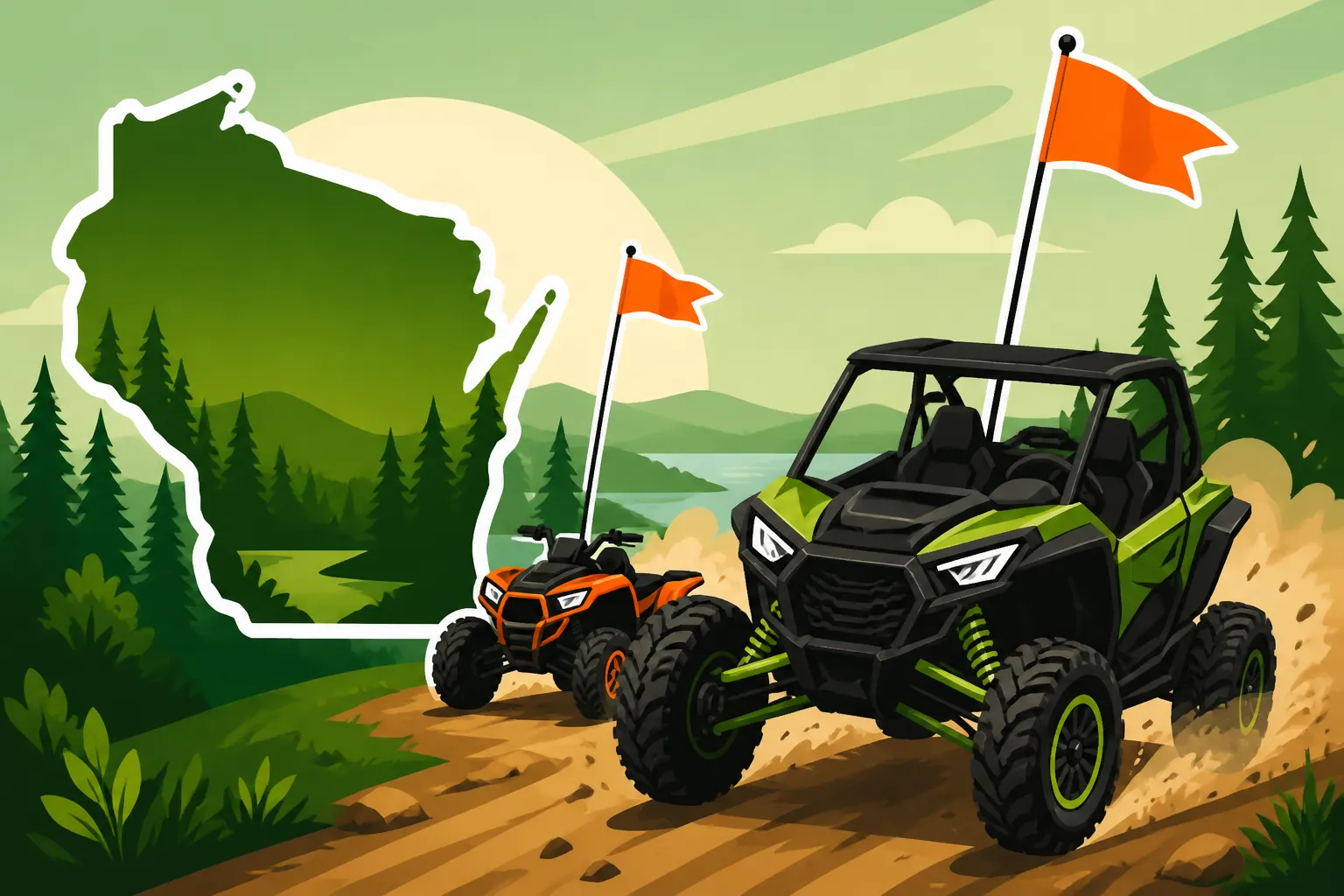
When you're browsing for a whip flag, remember that not all flags are created equal. The most crucial factor is height. For optimal visibility, especially over hills, around large vehicles, or through thick dust, you want a flag that extends significantly above your machine. Generally, a whip flag between 6 to 10 feet tall when mounted is considered effective. Taller is often better, but you also need to consider overhead clearance, like underpasses or low-hanging branches on wooded routes. Think about the types of routes you frequent: do you often encounter [Riding a Wisconsin Route Through a Construction Zone] or dense forest canopies?
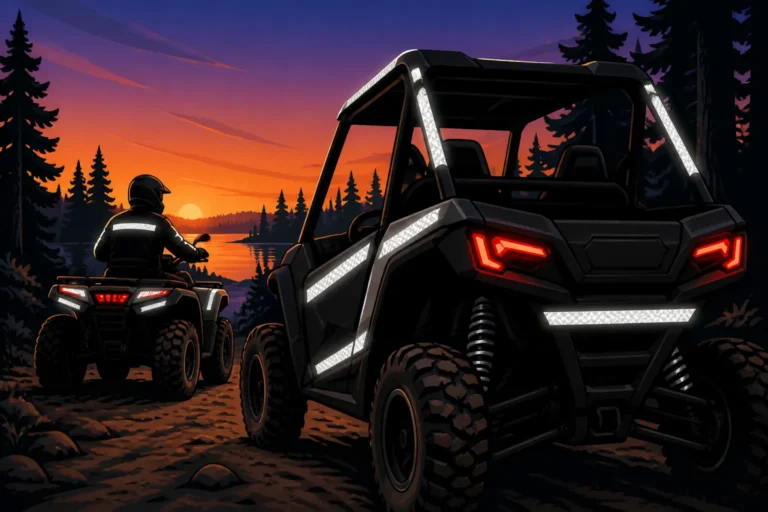
Next, consider flexibility and durability. The flag pole will take a beating from wind, vibrations, and occasionally brushing against foliage. Look for fiberglass or high-quality composite materials that can bend without snapping. Many whip flags, including those from reputable brands like SuperATV, are designed with segmented poles or reinforced bases to handle the stresses of off-road riding. The flag material itself should be brightly colored – think neon orange, yellow, or green – and made from a durable, tear-resistant fabric. Reflective stripes are a huge bonus, especially if you plan on riding towards dusk or even after dark. [Reflective Tape for a Northwoods Dusk Ride] is already a smart move; a reflective flag amplifies that. Finally, the mounting system is critical. You need a secure attachment point that won't come loose on bumpy terrain. Many flags offer quick-release bases, which are incredibly convenient for transport or storage, allowing you to easily remove the whip without tools. Ensure the mount is compatible with your specific machine's roll cage, bumper, or other attachment points.
Proper Placement and Maintenance
Once you have your whip flag, proper placement is key to its effectiveness. The goal is maximum visibility, so the highest point on the rear of your machine is almost always the best spot. This ensures the flag is seen over your own machine and anything you might be hauling. Avoid placing it where it could interfere with your line of sight, impede cargo access, or get snagged too easily on common obstacles. When installing, make sure the mount is tightened securely. Vibration on the trails can loosen bolts over time, so double-check it before each ride. If your flag has wiring for LED lights (a fantastic option for night riding!), route the wires carefully to prevent snags and damage, securing them with zip ties or clips.
Just like any other piece of safety equipment, your whip flag needs regular maintenance. Before each ride, give it a quick once-over. Check the pole for cracks or fraying, especially near the base. Inspect the flag itself for tears, fading, or signs of wear. A faded flag won't provide the same level of visibility, and a torn flag might soon become useless. Keep the flag clean; mud and dust can quickly dull its vibrant color. Many flags can be easily hand-washed with mild soap and water. If you have a quick-release mount, taking the flag off for cleaning and storage is simple, helping to prolong its life. Taking these few minutes for inspection and care ensures your whip flag remains an effective safety tool every time you hit the routes.
Here’s a quick comparison of whip flag features to help you decide:
| Feature | Description | Benefit |
|---|---|---|
| Height | Typically 6-10 feet when mounted. | Maximizes visibility over terrain, dust, and other vehicles. |
| Pole Material | Fiberglass, composite, or reinforced plastic. | Flexible to bend without breaking; durable against trail elements. |
| Flag Material | Bright neon colors (orange, yellow, green); rip-stop nylon or polyester. | High contrast for easy spotting; resists tears and fading. |
| Reflective Striping | Integrated reflective material on the flag. | Enhances visibility in low light, dusk, or foggy conditions. |
| Mounting | Roll cage clamp, bumper bracket, hitch receiver mount; quick-release. | Secure attachment to various points; easy removal for transport/storage. |
| Lighting | Optional LED lighting within or on the pole. | Exceptional visibility for night riding or in extremely low-light conditions. |
Integrating Whip Flags into Your Wisconsin Riding Habits
A whip flag isn't just something you bolt on and forget; it becomes an integral part of your riding strategy, especially when navigating Wisconsin's diverse network of routes and trails. From group etiquette to specific seasonal challenges, a whip flag enhances your experience and safety in more ways than you might initially imagine.
Group Riding and Trail Etiquette
For those of us who love riding in groups, whether it's a casual weekend outing with friends or an organized club event, whip flags are a game-changer. Imagine riding [Blind Approaches on a Wisconsin Route] with several machines. The lead rider's flag can be seen long before their machine clears the corner, giving everyone behind them, and anyone coming the other way, extra precious seconds to react. It's particularly helpful for the "sweep" rider at the back of the pack, allowing the group to quickly verify that no one has fallen behind or taken a wrong turn. [Group Etiquette Through a Northwoods Town] often emphasizes maintaining a safe distance, and a visible flag helps make that spacing much easier to judge.
Beyond the specific act of riding, a flag also acts as a visual cue to residents in [Riding Slowly Past a Farmyard on a Route] or when passing through small communities. It signals your presence in a non-intrusive way, alerting homeowners, pedestrians, or even other recreational users that an off-road machine is approaching. This small gesture of increased visibility can go a long way in fostering good relationships between riders and local communities, helping to ensure these valuable routes remain open for everyone to enjoy.
Beyond the Routes: Other Scenarios for Whip Flag Use
While their primary role is often thought of for open routes, whip flags prove their worth in many other scenarios unique to Wisconsin riding. On those dry summer days, dust can be a serious issue. When you're driving through a cloud of stirred-up dirt, a whip flag cuts above the haze, making your machine visible when nothing else is. This is especially true on [Riding a Gravel Road Into a Northwoods Town] where dust can hang heavy in the air.
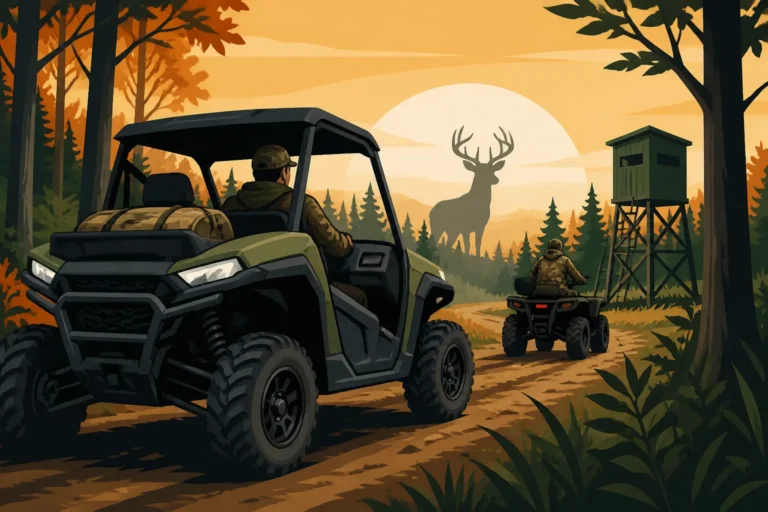
And let's not forget about our glorious Wisconsin winters. [Winter Route Riding in Wisconsin] brings its own set of challenges, from blowing snow reducing visibility to low-angle sunlight creating glare. A brightly colored flag stands out against a white backdrop, helping to ensure you're seen by snowmobilers, cross-country skiers, or even deer hunters moving through the landscape. Speaking of hunting season, if you're using your ATV for accessing deer stands or retrieving game during [Wisconsin ATV Rules During Gun Deer Season], equipping your machine with a blaze orange whip flag provides an extra layer of visibility to other hunters in the area. It clearly marks your position and movement, reducing potential confusion in wooded areas. A robust flag from SuperATV can truly be a year-round safety tool, adaptable to all four seasons of Wisconsin riding, giving you peace of mind whether you're navigating spring mud, summer dust, fall leaves, or winter snow.
Disclaimer
This article is for general informational purposes only and does not constitute professional advice. Laws, prices and regulations vary by location and change over time. Consult a qualified professional for guidance on your specific situation.