Wisconsin Trespass Rules Along Routes
It's an all too common scenario: you're out on a Wisconsin ATV or UTV route, enjoying the beautiful scenery, when suddenly, a small voice in the back of your head pipes up, "Am I actually supposed to be here?" The lines between public routes and private property can feel blurry, especially in areas where trails wind through mixed-use landscapes. This guide is here to untangle those confusing legal threads, walk you through Wisconsin's trespass rules specifically as they pertain to ATV and UTV routes, and empower you to ride confidently and responsibly.
Understanding the Basics of Trespass in Wisconsin
Before we dive into the specifics of ATV/UTV routes, it’s crucial to grasp the fundamental concept of trespassing in Wisconsin. It’s not just about ignoring a "No Trespassing" sign; it's about respecting land ownership and the rights that come with it. Many riders, especially those new to the sport or visiting from out of state, might unintentionally stray, simply because they don't fully understand where public access ends and private land begins.
What Constitutes Trespassing on Private Land?
In Wisconsin, trespassing is generally defined as intentionally entering or remaining on land that belongs to another person without their express or implied consent. This isn't just about driving your machine onto someone's lawn; it can include walking, stopping, or even simply extending a part of your body or vehicle onto private property. The "intent" part is key here – while accidental straying might happen, the law often looks at whether you should have known you were on private land.
Consider a scenario where a designated ATV route makes a sharp turn, but a faint, unofficial path continues straight ahead, seemingly inviting you to explore. If that unofficial path leads onto private property without the owner’s permission, continuing down it, even if you didn't see a sign initially, could be considered trespassing. It's about exercising due diligence and recognizing that land, by default, is owned by someone unless it's clearly marked or legally designated as public access. This extends beyond just riding; even pulling off the route to adjust your gear, take a photo, or eat a snack on what appears to be unowned land can be a trespass if that land is indeed private.
The Role of Posted vs. Unposted Land
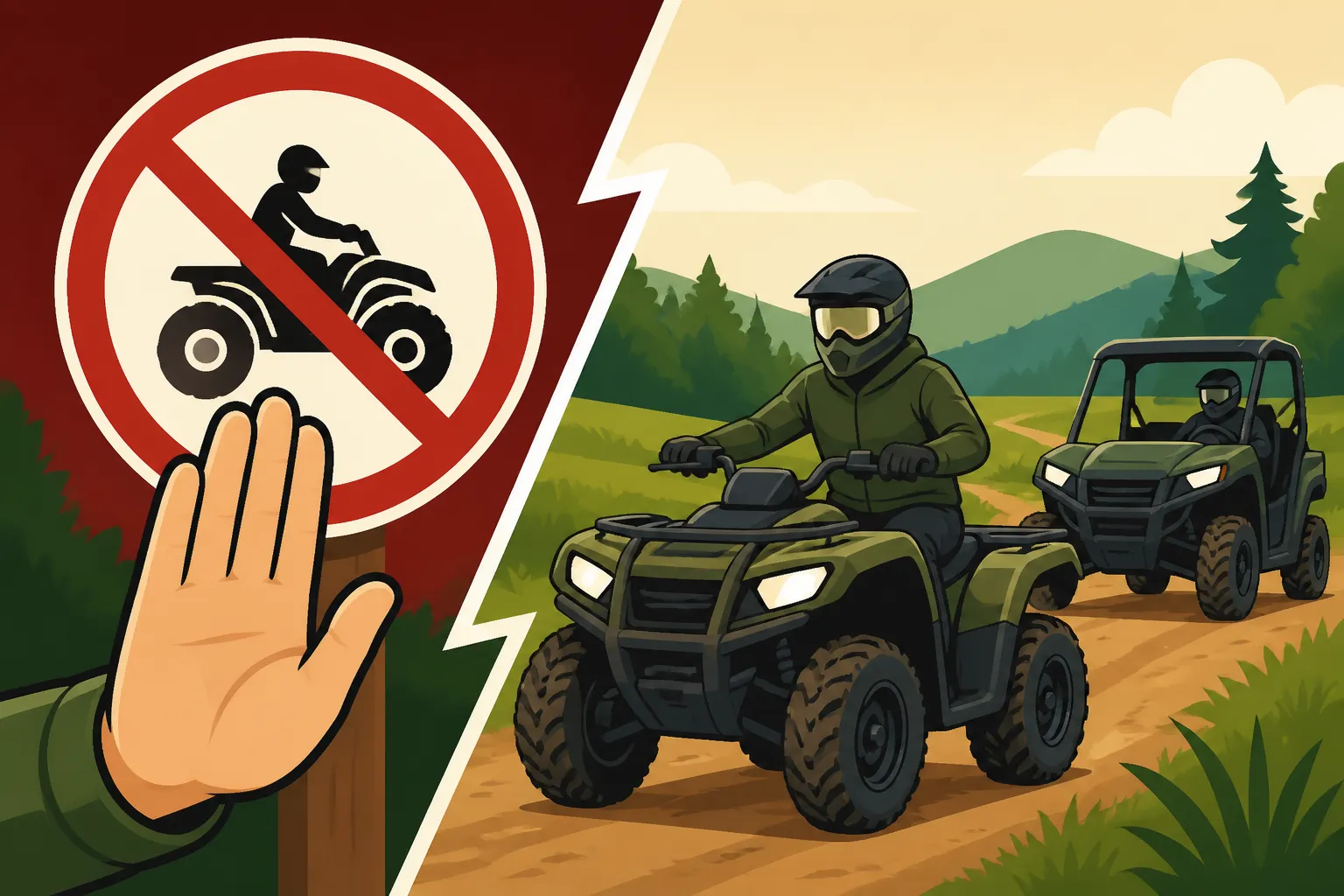
This is where a lot of confusion, and frustration, often creeps in for riders. Many states operate under a "posted land" rule, meaning if there's no sign, you might assume you're okay. Wisconsin, however, largely adheres to the principle that all land is considered private unless specifically designated as public or permission is granted. This means that the absence of a "No Trespassing" sign doesn't automatically grant you permission to ride or even walk on someone's property.
While posting your land with "No Trespassing" signs or purple paint bands certainly helps landowners reinforce their boundaries and makes it easier to prosecute trespassers, the underlying premise remains: if you don't have explicit permission, stay off. Think of it this way: your neighbor doesn't need a sign on their lawn to tell you not to drive your ATV across it. The same logic applies to larger parcels of land adjacent to ATV routes. This is why always staying on the clearly marked route is paramount. Relying on the lack of a sign is a risky gamble that could lead to an uncomfortable confrontation or even a citation.
Common Misconceptions About Public Access
One of the biggest misconceptions is the idea that if a piece of land "looks" wild or unkempt, it must be public and therefore fair game for riding. Nothing could be further from the truth. Even vast tracts of undeveloped forest, wetlands, or fields are almost certainly privately owned in Wisconsin, unless explicitly managed by the state or federal government as a public recreation area or designated forest. Another common myth is the "one-foot rule" or similar notions, where people believe they have a right to step a certain distance off a public thoroughfare without trespassing. This is simply not true; property lines extend directly to the edge of the public easement or right-of-way.
Another misconception is that navigable waterways automatically grant access across adjacent private land. While you might have the right to be on a navigable river or lake, that right doesn't extend to accessing its banks if they are privately owned. For instance, pulling your UTV up to a riverbank along an ATV route for a fishing break might seem harmless, but if that bank is private property, you're trespassing. It’s crucial to understand that public access is generally limited to the designated ATV/UTV route itself, and not necessarily the land immediately surrounding it, no matter how wild it appears.
Navigating Public ATV/UTV Routes and Private Land Boundaries
Wisconsin has an incredible network of ATV and UTV routes, often connecting small towns, offering access to services, and extending the riding season when main trails might be closed. But these routes aren't always like dedicated trails that are entirely on public land. They frequently utilize town roads, county roads, or even private easements, which brings private land into the picture in a very real way.
How Routes Are Established and What They Mean for Riders
Many of Wisconsin's ATV and UTV routes are established by local municipalities (towns, villages, and cities) through ordinances. These ordinances designate specific roads or sections of roads as open to ATV and UTV traffic. For example, a town board might vote to open several miles of town roads, allowing riders to travel between a trailhead, a gas station, and a restaurant. These routes are essentially public roads that have been legally opened for ATV and UTV use, often with specific hours of operation, speed limits, and other rules that mimic regular traffic laws. You can learn more about this process in [How a Wisconsin Town Votes in a Route].
What this means for riders is that while you are legally allowed to operate your machine on the roadway of a designated route, the land on either side of that roadway typically remains private property. You're granted access to the route itself, not the shoulders, ditches, or fields adjacent to it. It's similar to driving a car on a county highway – you're on the public right-of-way, but the farm fields bordering the highway are still private land. This distinction is critical for avoiding accidental trespass.
Identifying Route Edges and Adjacent Private Property
Identifying the exact boundary between a public ATV route and adjacent private property can sometimes be challenging, especially in rural areas where property lines aren't always clearly marked. On town roads, the public right-of-way typically extends a certain distance from the center line, often encompassing the road surface, shoulders, and drainage ditches. However, this distance can vary, and beyond that, it's private.
Look for key indicators: "No Trespassing" signs (when present) are a clear warning, as are fences, gates, or changes in land use (e.g., from managed forest to agricultural fields or residential lawns). Sometimes, you'll see small white posts or flags marking property lines, though these are more common in surveyed areas. Many municipalities provide maps of their designated ATV routes, and some riders find using GPS apps like onX Offroad (though it's not a brand I can directly recommend, general GPS apps are helpful) with overlaid property lines incredibly useful for navigating and staying compliant. If you're on a route that is also a paved or gravel road, treat the shoulders and ditches as potentially private, just as you would with a car.
Crossing Private Land to Access a Route
This is a specific scenario that can cause problems. Sometimes, riders might be staying at a cabin or campground that isn't directly on a designated ATV route, and they think it's okay to cut across a field or a wooded lot to get to the route. Unless you have explicit permission from the landowner, this is unequivocally trespassing. Even if it's a very short distance, and even if there are no signs, you are on private land.
This is a common issue for deer hunters or recreational users who might store their machines at a private hunting lease or family cabin. They need to understand that their right to use the ATV begins and ends on the designated route or on their own private property. If you need to access a route from private land, you must either trailer your machine to a public access point or secure documented permission from any intervening landowners. There are very few, if any, implied easements for ATV travel across private lands in Wisconsin, even if it's the most direct path to the nearest route.
Specific Scenarios and Common Violations Along Routes
The biggest challenge with ATV routes is often the temptation to diverge from them, even slightly. What might seem like a harmless deviation can quickly become a trespass violation, and wardens and local law enforcement are well aware of these common pitfalls. Understanding these specific scenarios can help you avoid unintended trouble.
Riding Off the Designated Route or Shoulder
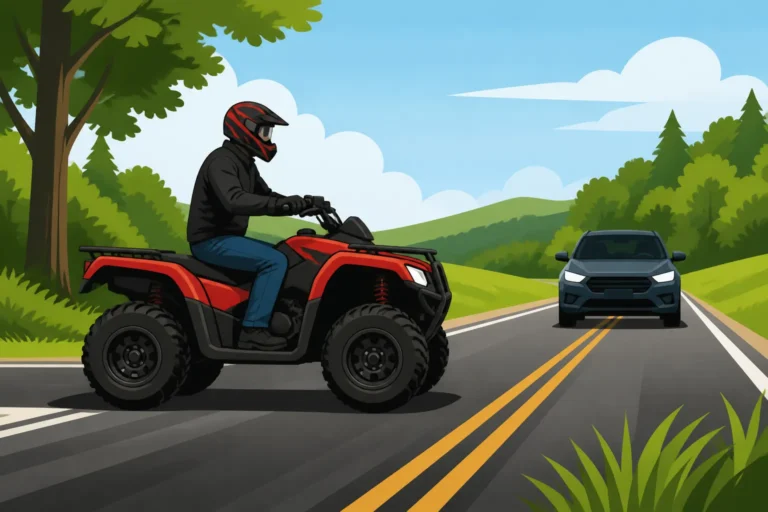
This is perhaps the most frequent form of trespass along ATV routes. A designated route means you are allowed on the roadway itself. This generally does not include the ditch, the shoulder beyond the paved or graveled surface, or certainly not the field or woods next to the road. The public right-of-way for these routes is usually quite narrow.
Picture this: you're riding with a group, and someone ahead of you pulls off the gravel route a bit too far onto the grassy shoulder to let oncoming traffic pass, or perhaps to answer a phone call. If that grassy strip is actually private property, even a small deviation like this is technically trespassing. It becomes a bigger issue if riders intentionally leave the route to explore a cool-looking side path, ride through a farmer's field, or cut corners through someone's yard. Always assume the public access stops at the edge of the maintained road surface, unless signage or a clear designation states otherwise. This includes areas where the road might feel less like a "road" and more like a trail – the legal designation is what matters, not the appearance.
Accessing Lakes, Rivers, or Private Features From a Route
Wisconsin is known for its incredible abundance of lakes and rivers, and many ATV routes wind through areas dotted with these beautiful natural features. It can be incredibly tempting to pull off the route to get a closer look at a serene lake, dip your toes in a river, or even try a quick cast. However, unless the route explicitly leads to a designated public access point (like a boat landing or park), accessing these features from the route often means crossing private land.
For example, a route might run parallel to a stunning river. Pulling your side-by-side (perhaps equipped with some robust aftermarket lighting from SuperATV to ensure visibility even off the beaten path, if you were on public land) down what looks like a faint path towards the water might seem harmless, but if that path leads through private property to a private stretch of riverbank, you are trespassing. Similarly, some routes might pass by old logging camps or abandoned structures. Exploring these off-route areas is almost certainly on private land and constitutes trespass. Always check maps for public access points, and if none are indicated, assume the land between the route and the water, or the route and the interesting old structure, is private.
Entering Private Driveways or Yards From a Route
While it might seem obvious, driving into a private driveway or cutting across a residential yard from an ATV route is a clear case of trespassing. This can happen innocently enough if a rider is trying to turn around, mistakenly believes a driveway is another route, or is simply trying to find a shortcut. However, ignorance of the property line is rarely an excuse.
Imagine a situation where an ATV route makes a sharp turn at an intersection, and a rider, perhaps disoriented or looking for a spot to pull over, turns down what appears to be a gravel road, only to realize it's a long private driveway leading to a secluded home. Even if they immediately turn around, they have technically trespassed. Respect for private residences is paramount. Avoid using driveways for turning around, parking, or accessing anything unless you have explicit permission from the homeowner. This is especially important in smaller towns where routes often pass directly through residential areas.
Enforcement, Penalties, and Rider Responsibilities
Riding an ATV or UTV in Wisconsin is a privilege, and that privilege comes with significant responsibilities. Failing to adhere to trespass rules can lead to serious consequences, not only for the individual rider but also for the reputation of the entire riding community. It’s a collective effort to maintain good relations with landowners and ensure routes remain open.
Wisconsin Wardens and Local Law Enforcement Authority
In Wisconsin, both Department of Natural Resources (DNR) Conservation Wardens and local law enforcement officers (county sheriffs and municipal police) have the authority to enforce ATV and UTV regulations, including trespass laws. These officers are often very familiar with the local routes and the private properties that border them. They receive landowner complaints and frequently patrol areas where trespass is known to occur.
A warden might be conducting routine patrols along a popular route, or they might be responding directly to a landowner's call. If you are found trespassing, they have the authority to issue citations, which can carry significant fines. It's important to remember that these officers are simply doing their job to protect private property rights and ensure the safety and legality of outdoor recreation. Their presence, as discussed in [Warden Enforcement on Wisconsin Routes], is a crucial part of maintaining order on the trails and routes. Cooperation and respect towards these officers go a long way.
Fines and Legal Consequences for Trespassing
The penalties for trespassing on an ATV or UTV in Wisconsin can vary depending on the specific circumstances, including whether the land was posted, the extent of the trespass, and any damage caused. Generally, trespassing is a civil violation, but it can escalate to a misdemeanor criminal offense under certain conditions, such as repeated offenses or if damage is caused to property.
A typical citation for simple trespass can result in a fine, often in the hundreds of dollars, plus court costs. Beyond the immediate financial penalty, a trespass conviction can also affect your record, and in some cases, lead to the temporary suspension of your ATV/UTV operating privileges. If your machine causes damage while trespassing (e.g., tearing up a farmer's field or damaging a private trail), you could also be liable for repair costs and face additional charges. It’s far more expensive to pay a trespass fine and repair damages than it is to simply stay on the designated route.
The Importance of Respectful Riding and Landowner Relations
The continued success and expansion of Wisconsin’s ATV and UTV route system rely heavily on positive relationships between riders and landowners. When riders disrespect private property, it erodes trust and can lead to landowners withdrawing their permission for routes to cross their land, or even advocating for the closure of routes entirely. Many ATV routes exist because local landowners have agreed to allow access.
A single act of trespass by one rider can have negative consequences for the entire riding community. This is why organizations like local ATV clubs actively work to foster good relationships, educate riders, and address issues quickly. Being a respectful rider means staying on the route, being mindful of noise, waving to landowners (if appropriate), and generally acting as a good neighbor. After all, everyone benefits from well-maintained, accessible routes, and that access is contingent on mutual respect.
Preventative Measures and Best Practices for Riders
Avoiding trespass isn't just about knowing the rules; it's about proactively taking steps to ensure you stay on the right side of those rules. There are many tools and habits you can adopt to make sure your ride is legal and enjoyable, without inadvertently causing problems for yourself or landowners.
Utilizing Maps and GPS for Route Adherence
One of the most effective tools for preventing accidental trespass is good navigation. Always carry up-to-date maps of the ATV/UTV routes you plan to ride. Many counties and municipalities publish specific ATV route maps, and the Wisconsin DNR often has resources on their website. These maps clearly show the designated routes and can help you identify public access points and areas where routes run very close to private land.
Beyond paper maps, consider using a GPS device or a smartphone app with GPS capabilities. Many popular outdoor navigation apps allow you to download maps and even overlay property boundaries, which can be invaluable in ambiguous areas. Mount your GPS securely – a rugged SuperATV phone mount can keep your navigation visible and stable – and check it frequently, especially at intersections or when the route seems less clear. This proactive approach significantly reduces the chance of unintentionally straying off course and onto private property.
| Tool Type | Benefit for Trespass Prevention | Key Features |
|---|---|---|
| Paper Maps | Reliable, no battery needed, broad overview of routes | Clear route lines, intersecting roads, some landmarks, public access points |
| GPS Devices | Real-time tracking, precise location, track recording | Satellite imagery, route overlays, property line integration (on some apps), waypoints |
| Smartphone Apps | Convenient, often updated regularly, additional features | GPS navigation, downloadable maps, community trail data, sometimes property lines |
Communicating with Landowners When in Doubt
What happens if you find yourself in a situation where you're truly unsure if you're on public or private land, or if you need to briefly exit a route for an emergency? The best approach, whenever possible, is direct and respectful communication with the landowner. If you can identify the property owner (perhaps through local tax records if you're planning ahead, or by asking a local resident), a quick phone call or in-person conversation can often resolve potential issues.
For instance, if you get a flat tire right on the edge of a farmer's field and need to pull off the road slightly to change it, it's a good idea to knock on their door (if nearby) and explain your situation. Most landowners are reasonable and understanding, especially if you are polite, explain your predicament, and promise to be careful and leave no trace. This proactive communication can turn a potential trespass into a positive interaction, reinforcing the good name of the riding community.
The Role of ATV Clubs in Educating Riders
Local ATV and UTV clubs play a vital role in educating riders about responsible riding practices, including trespass rules. These clubs often work directly with landowners, local governments, and the DNR to maintain trails and routes, develop new connections, and ensure that riders have accurate information. They are often the first to know about local ordinances, route changes, or specific landowner concerns.
Joining a local club is an excellent way to learn the nuances of riding in a particular area. Club members can provide invaluable local knowledge about property boundaries, tricky intersections, and specific areas where caution is needed. They frequently host educational events, group rides, and share updated maps and information that can help you avoid inadvertently trespassing. By supporting and engaging with these clubs, you're not only enhancing your own riding experience but also contributing to the sustainable future of ATV and UTV recreation in Wisconsin.
Disclaimer
This article is for general informational purposes only and does not constitute professional advice. Laws, prices and regulations vary by location and change over time. Consult a qualified professional for guidance on your specific situation.