Golf Carts and Low-Speed Vehicles in Wisconsin
It can be incredibly confusing to understand the patchwork of rules governing golf carts, low-speed vehicles (LSVs), and even your trusty ATV or UTV on Wisconsin's roads. Many riders assume that if a vehicle has wheels and an engine, it can navigate public ways with a wink and a nod, only to find themselves facing fines or, worse, an accident. This guide will clarify the distinct legal definitions, operational requirements, and allowable uses for golf carts and LSVs in Wisconsin, helping you discern when and where these vehicles can share the pavement, and how they differ from your off-road machines.
What Exactly is a Golf Cart in Wisconsin's Eyes?
When you picture a golf cart, you likely think of quiet rounds on the green, perhaps hauling a cooler and a few clubs. And for the most part, that's exactly what Wisconsin law envisions. The state's definition of a golf cart is quite specific, and it doesn't leave much room for interpretation when it comes to public road use. This distinction is crucial because it sets a hard line between recreational use on private property and operating on streets where cars, trucks, and other registered vehicles travel.
Defining a Golf Cart Under Wisconsin Law
Wisconsin statutes define a golf cart as a motor vehicle designed and manufactured for operation on a golf course. This might seem straightforward, but it has significant implications. The key takeaway is "designed and manufactured for operation on a golf course." This means its primary purpose, as determined by its original design, is for use on private, manicured grounds, not public roads. These vehicles typically have a top speed that rarely exceeds 20 mph, are not built to withstand impacts with heavier traffic, and lack many of the safety features required for road-going vehicles. They are generally seen as slow-moving recreational devices, and their use on public roads is highly restricted and almost always subject to local municipal ordinances. Without specific local permission, a golf cart belongs firmly on private land or a golf course.
Common Modifications and the Law
It's common to see golf cart owners make modifications—lifting kits, bigger tires, added lights, even custom paint jobs. Many owners invest in accessories from places like SuperATV to enhance their cart's appearance or utility on their property. While these modifications might make a golf cart look more like a rugged utility vehicle, they absolutely do not change its legal classification in Wisconsin. Adding turn signals, a horn, or even a windshield doesn't magically transform a golf cart into a street-legal vehicle. The law still sees it as a golf cart, designed for the golf course. Even if it looks like it could tackle a light trail or cruise down a country road, its legal status remains unchanged. Attempting to operate a modified golf cart on a public road without an explicit local ordinance allowing it can result in citations, as it's still fundamentally an unregistered and unapproved vehicle for that environment.
Deciphering Low-Speed Vehicles (LSVs) in Wisconsin
While golf carts are largely confined to private property or specific local routes, low-speed vehicles (LSVs) represent a class of vehicles specifically designed and regulated for limited public road use. This is where the lines start to blur for many people, as an LSV might look a lot like a golf cart, but its legal standing and required equipment are vastly different. Understanding LSVs is key for anyone considering a small, electric vehicle for short trips around their community.
LSV Standards and State Regulations
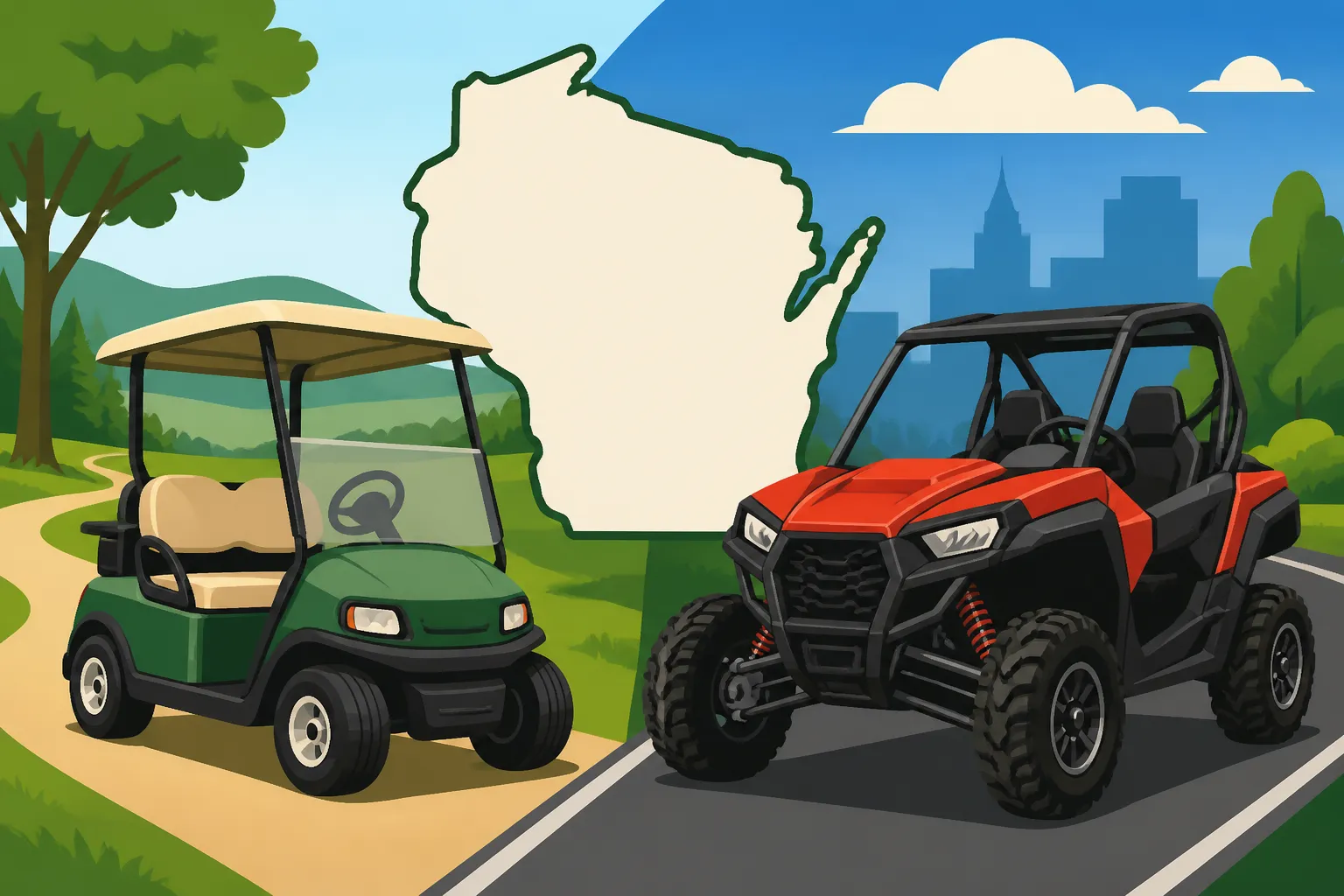
In Wisconsin, a Low-Speed Vehicle (LSV) is defined as a four-wheeled vehicle whose top speed is more than 20 mph but not more than 25 mph. This speed range is critical. If it goes slower, it's a golf cart. If it goes faster, it's a standard car or truck requiring full automotive safety standards. LSVs must also weigh less than 2,500 pounds. Unlike golf carts, LSVs are intended for street use, but with significant restrictions. They are generally only allowed on roads with a posted speed limit of 35 mph or less. This means you won't be taking an LSV on a state highway or any major thoroughfare. [Wisconsin Rules for a Golf Cart on a Street] often touch on these distinctions, highlighting that an LSV meets a higher bar of safety and operational capability than a golf cart.
The Certification Process for an LSV
Because LSVs are designed for road use, they must meet specific federal safety standards set by the National Highway Traffic Safety Administration (NHTSA) for low-speed vehicles. This isn't something a golf cart can achieve through aftermarket modifications. An LSV must come from the manufacturer with specific features, including headlamps, tail lamps, stop lamps, turn signals, reflex reflectors, an exterior mirror on the driver’s side and an interior mirror or an exterior mirror on the passenger side, a parking brake, a VIN, and a windshield that meets specific safety glazing standards. Furthermore, it must be equipped with seat belts for all occupants. These requirements are extensive and are part of the original manufacturing process. You cannot simply upgrade a golf cart with a new windshield or some LED lights and call it an LSV. It needs to be certified as an LSV from the factory. Once certified, it can then be registered with the Wisconsin Department of Transportation, much like a regular car, albeit with specific LSV plates. [Registering a Low-Speed Vehicle in Wisconsin] outlines the exact steps for this process.
The Big Differences: Golf Cart, LSV, ATV, and UTV
For many people who ride ATVs or UTVs, the array of small, motorized vehicles can be bewildering. What makes a UTV different from an LSV, or an ATV from a golf cart? While they all share some common traits, like engines and wheels, their legal classifications, intended uses, and allowable operating environments in Wisconsin are vastly distinct. Mixing them up can lead to serious legal consequences or safety hazards.
Speed, Size, and Purpose: A Core Comparison
Let's break down the key characteristics that set these vehicles apart:
-
Golf Cart:
- Speed: Typically less than 20 mph.
- Size: Small, lightweight, seats 2-4 people, often open-sided.
- Purpose: Designed exclusively for golf courses and private property. Minimal safety features.
- Road Use: Generally prohibited on public roads unless specifically authorized by local ordinance, and then usually for very limited purposes (e.g., crossing a street to get to another part of a golf course, or specific low-speed routes).
-
Low-Speed Vehicle (LSV):
- Speed: More than 20 mph but not more than 25 mph.
- Size: Similar size to a golf cart but built to higher safety standards.
- Purpose: Intended for limited public road use on roads with speed limits of 35 mph or less.
- Road Use: Permitted on certain public roads with specific registration, safety equipment, and driver licensing requirements. It's a true road-legal vehicle, albeit with speed and road type restrictions.
-
All-Terrain Vehicle (ATV):
- Speed: Varies widely, can be very fast.
- Size: Designed for a single operator or operator plus one passenger (tandem ATVs). Open-air, straddle seating.
- Purpose: Primarily off-road recreation, utility tasks on farms, hunting.
- Road Use: Generally prohibited on highways, but can be operated on designated ATV trails, routes, and certain road shoulders, subject to specific Wisconsin DNR regulations, local ordinances, and often a valid [Wisconsin ATV Safety Certificate Requirement]. They are not street-legal in the same way an LSV or car is.
-
Utility Terrain Vehicle (UTV):
- Speed: Varies widely, can be very fast.
- Size: Side-by-side seating, steering wheel, foot pedals, roll-over protection structures (ROPS), cargo bed. Typically larger and heavier than ATVs.
- Purpose: Off-road recreation, heavy-duty utility, work on farms, construction sites, etc.
- Road Use: Similar to ATVs, they are generally restricted from highways but allowed on designated UTV trails, routes, and specific road shoulders. They are not street-legal vehicles for general road travel. Many riders use accessories from SuperATV to enhance their UTV's utility and safety, but these don't change its fundamental legal classification for road use.
Why the Distinction Matters to You
Understanding these distinctions is not just about avoiding a ticket; it's about safety and liability. Operating a vehicle on roads for which it was not designed, or without the proper registration and safety equipment, puts you and others at significant risk. An ATV, for instance, has a much higher center of gravity than a car and is designed to lean into turns off-road, which can be disastrous on pavement. Its tires are meant for dirt, not asphalt, reducing grip and increasing stopping distances. [Wisconsin Road Rules Riders Get Wrong] often stem from a lack of clarity on these classifications.
If you're planning to use a small vehicle for errands in a small town, an LSV might be the appropriate choice, provided the local speed limits are low enough. If you want to hit the trails, an ATV or UTV is your go-to. If you just need to get across your private property or play a round of golf, a golf cart is fine. Trying to force one vehicle into another's legal role is a recipe for trouble, potentially leading to fines for operating an unregistered vehicle or [Wisconsin Penalties for an Unregistered ATV], or even worse, an accident where your insurance may not cover you. Always check local ordinances, as they can add further layers of complexity to these state-level definitions.
Where Can You Actually Drive Them in Wisconsin?
The biggest question most owners have after learning the distinctions is, "Okay, so where can I actually take this thing?" This is where Wisconsin's approach gets particularly granular, relying heavily on local government for specific permissions, especially for golf carts and ATVs/UTVs on public roads. It's not a one-size-fits-all answer, and riders must do their homework.
Local Control: Municipal Ordinances and Routes
For golf carts, their use on public roads is almost entirely at the discretion of local municipalities (cities, villages, towns). There is no statewide blanket permission. A town might pass an ordinance allowing golf carts on specific streets within its jurisdiction, perhaps to connect a community to a golf course, or for very limited purposes like traversing a short stretch to a lake. These ordinances will lay out specific rules, such as hours of operation, required safety equipment (even if it doesn't make it a true LSV), and designated routes. If your town doesn't have such an ordinance, your golf cart is generally not allowed on public roads, period.
For ATVs and UTVs, the situation is similar but generally more widespread. While prohibited from state and federal highways, many Wisconsin counties, towns, and villages have opened roads or created dedicated routes for ATV/UTV use. These are not open-ended permissions, however. Routes are specifically designated, often with signage, and come with their own set of rules, including speed limits, times of day allowed, and sometimes even local insurance requirements. Many riders will find accessories like light bars from SuperATV useful for night riding on approved routes, but they must still comply with all lighting regulations. [How a Wisconsin Town Opens an ATV Route] or [Wisconsin Towns With Miles of Open Roads] can provide more detail on this process. It's crucial to consult a current county or town map and their local ordinances before riding, as rules can vary from one community to the next.
Prohibited Areas and Penalties
There are certain places where golf carts, LSVs, ATVs, and UTVs are strictly prohibited across the board. For golf carts and ATVs/UTVs, this typically includes:
- State and Federal Highways: These are generally off-limits due to speed and safety concerns.
- Interstate Highways: Absolutely no motorized recreational vehicles are allowed.
- Private Land Without Permission: This is a fundamental trespass rule.
- Designated Non-Motorized Trails: Many trails are reserved for hikers, bikers, or equestrians.
LSVs have their own set of restrictions:
- Roads with Posted Speed Limits Above 35 MPH: This is a hard limit for LSVs.
- Highways and Freeways: Like golf carts and ATVs/UTVs, LSVs are not permitted on these faster, higher-volume roads.
Violating these restrictions can lead to a range of penalties. For ATVs and UTVs, this could mean [Wisconsin Fines for Illegal Road Riding], impoundment of your machine, or even the loss of your riding privileges. For golf carts, it could be a citation for operating an unregistered vehicle or a vehicle not approved for highway use. For LSVs, operating outside their designated speed zones or on prohibited roads could lead to traffic violations. Always err on the side of caution and verify local rules.
Navigating the Road: Registration, Equipment, and Driver Requirements
Once you understand what kind of vehicle you have and where it might be allowed, the next step is to ensure you meet all the legal requirements for operation. This includes everything from registering the vehicle to having the correct safety gear and holding the right kind of license. Skipping these steps can lead to severe penalties and safety risks.
Registration and Licensing for LSVs
This is where LSVs truly differentiate themselves from golf carts and recreational ATVs/UTVs. Because an LSV is a road-legal vehicle (albeit with speed and road type limitations), it must be registered with the Wisconsin Department of Transportation (DOT) and carry a valid license plate. This is the same process that applies to cars, trucks, and motorcycles. The vehicle will have a Vehicle Identification Number (VIN) that is verified during registration.
As for the operator, anyone driving an LSV on a public road in Wisconsin must possess a valid driver's license. A simple permit or an ATV safety certificate is not sufficient; it requires a standard Class D driver's license, just as if you were driving a car. This is a critical point that many people overlook when they mistake an LSV for a beefed-up golf cart. Without proper registration and a valid driver's license, operating an LSV on public roads is illegal and can lead to significant fines and penalties.
Required Safety Equipment for Road Use
The safety equipment requirements are another area of significant difference:
-
Golf Carts: Generally, no specific statewide safety equipment is mandated for public road use, unless a local ordinance dictates it. If a town allows golf carts on certain streets, they might require things like slow-moving vehicle (SMV) signs, headlights, taillights, or even seat belts. These are local additions, not state requirements for the vehicle class itself.
-
Low-Speed Vehicles (LSVs): As detailed earlier, LSVs must meet federal safety standards from the factory. This includes:
- Headlamps
- Tail lamps
- Stop lamps (brake lights)
- Turn signals
- Reflex reflectors (typically amber on the sides, red on the rear)
- Exterior mirror on the driver's side and either an interior mirror or an exterior mirror on the passenger side
- A parking brake
- A Vehicle Identification Number (VIN)
- A windshield made of safety glazing material
- Seat belts for all seating positions.
These are non-negotiable for an LSV to be legally operated on public roads.
-
ATVs and UTVs on Designated Routes: While not street-legal vehicles, ATVs and UTVs operating on designated trails and routes in Wisconsin also have equipment requirements. This includes working headlights and taillights, spark arresters, and mufflers that meet sound limits. If riding after dark, additional lighting requirements might apply. While not strictly mandated by the state for adults, many riders choose to equip their machines with items like full windshields, mirrors, and even turn signal kits from SuperATV for enhanced safety and visibility, especially when traversing road routes. However, these additions do not make an ATV or UTV a street-legal vehicle like an LSV.
Driver Qualifications and Age Limits
The age and qualification rules are crucial for compliance:
- Golf Carts: Since golf carts are largely restricted to private property, there are no statewide age limits for operation on private land. However, if a local ordinance allows golf carts on public roads, it will typically require the operator to possess a valid driver's license, meaning they must be at least 16 years old.
- Low-Speed Vehicles (LSVs): Because an LSV requires a valid driver's license, the operator must be at least 16 years old. There are no exceptions for younger drivers with permits, as the LSV is treated like any other road-going vehicle in this regard.
- ATVs and UTVs: Wisconsin has specific age requirements for ATV and UTV operators. Generally, riders born on or after January 1, 1988, must complete an ATV safety course to operate on public trails or routes. For UTVs, the minimum age to operate on public routes is 16, and again, a safety course is often required for younger operators or those born after the cutoff date. Children under 12 have very limited operating privileges, typically only on private land. These rules are distinct from those for road-legal vehicles. [Wisconsin's Rule for Riders Aged 12 to 15] provides more context on youth operator requirements.
| Feature | Golf Cart | Low-Speed Vehicle (LSV) | ATV | UTV |
|---|---|---|---|---|
| Top Speed | < 20 mph | 20-25 mph | Varies widely | Varies widely |
| Primary Purpose | Golf course, private property | Limited public road use (35 mph roads or less) | Off-road recreation, utility | Off-road recreation, utility |
| Statewide Road Use | Generally Prohibited (local exceptions) | Permitted (registered, specific roads/speeds) | Designated trails/routes, no highways | Designated trails/routes, no highways |
| Registration | Not typically required for public road use | Required (WI DOT, license plate) | Required (WI DNR, decals) | Required (WI DNR, decals) |
| Driver's License | Often required by local ordinance if on road | Required (valid Class D) | Not required (safety cert. often needed) | Not required (safety cert. often needed, 16+) |
| Mandatory Safety Features | Minimal (varies by local ordinance) | Head/tail/brake/turn lights, mirrors, windshield, seatbelts, VIN | Headlights, taillights, spark arrester, muffler | Headlights, taillights, spark arrester, muffler, ROPS, seatbelts |
| Federal Standards | No | Yes (NHTSA for LSVs) | No (manufacturer standards) | No (manufacturer standards) |
Common Misconceptions and Cost Considerations
The world of small, motorized vehicles on Wisconsin roads is ripe with misunderstandings. Many owners make assumptions based on how other vehicles are treated or on anecdotal information, which can lead to costly mistakes. Beyond the legalities, there are also financial considerations that vary significantly between these vehicle types, from initial purchase to ongoing upkeep and insurance.
"My Golf Cart is Street Legal" – The Reality
One of the most persistent myths is that a golf cart can easily be made "street legal" by adding a few accessories. The reality in Wisconsin is that a golf cart, by its fundamental definition and design, is not a street-legal vehicle under state law for general public road use. As we've discussed, adding features from SuperATV or any other aftermarket supplier—like turn signals, a horn, or mirrors—does not change its legal classification. It might make it look more like a road-ready vehicle, but it doesn't meet the rigorous federal manufacturing and safety standards required of a true Low-Speed Vehicle (LSV).
The only way a golf cart can legally operate on a public road in Wisconsin is if a specific municipal ordinance (from a city, village, or town) explicitly allows it. Even then, these permissions are usually highly restricted: to certain streets, during certain hours, and often with requirements for a valid driver's license for the operator. These local allowances are typically for very short distances or specific community functions, not for general transportation. Mistaking these limited local permissions for widespread "street legal" status can lead to tickets and fines for operating an unregistered or unapproved vehicle on public roadways. [Wisconsin Fines for Illegal Road Riding] might seem harsh, but they are in place for safety.
Understanding the Investment: From Basic to Road-Ready
The financial outlay for these different vehicle types also varies significantly:
- Golf Carts: These are generally the most affordable to purchase, especially used models. However, if you plan to modify one to attempt street legality, the costs can quickly add up for lights, turn signals, mirrors, and safety glass, without actually achieving true LSV status. Ongoing costs are relatively low if used primarily on private land, mostly for battery maintenance (for electric) or fuel and basic engine care (for gas). Insurance, if carried, is often through a homeowner's policy as an add-on.
- Low-Speed Vehicles (LSVs): LSVs are more expensive than golf carts upfront because they are built to higher safety and manufacturing standards. They come from the factory equipped with all the necessary street-legal features. Beyond the purchase price, you'll have annual registration fees, and you'll need a dedicated auto insurance policy. The maintenance for an LSV is more akin to a small car, though often less complex. Fuel (or electricity) costs are generally low, given their limited speed and range.
- ATVs and UTVs: The purchase price for new ATVs and UTVs can range from several thousand dollars for entry-level models to well over twenty thousand for high-performance or specialized utility models. Used models can offer significant savings. Beyond the purchase, you'll have:
- Registration: Annual or biennial DNR registration fees.
- Trail Passes: If you ride public trails and are not a Wisconsin resident or don't have a registered machine that qualifies for free access. [Wisconsin's Non-Resident Trail Pass] is a common expense for visitors.
- Insurance: While not always mandated by the state for private trail riding, [Insuring an ATV in Wisconsin] is highly recommended, and some local ordinances for road routes do require liability insurance.
- Maintenance: These machines require regular maintenance (oil changes, belt replacements, tire wear, suspension care), especially with heavy off-road use. Aftermarket parts and accessories from companies like SuperATV are popular for enhancing performance, protection, or utility, adding to the overall investment.
- Fuel: Off-road machines can be thirsty, especially larger UTVs.
- Safety Courses: The cost of a required ATV or UTV safety course.
Understanding these cost structures helps you make an informed decision about which type of vehicle truly fits your needs and budget, beyond just the initial sticker price.
Disclaimer
This article is for general informational purposes only and does not constitute professional advice. Laws, prices and regulations vary by location and change over time. Consult a qualified professional for guidance on your specific situation.