Single File on a Wisconsin Route
One of the most common misunderstandings and sources of frustration for ATV and UTV riders hitting Wisconsin's growing network of road routes revolves around group riding. While it's natural to want to cruise alongside your buddies, especially if you're out exploring the beautiful Northwoods, the rules of the road—specifically the single file rule—often catch riders off guard. This guide aims to clear up the confusion and explain why riding single file is not just a suggestion, but a crucial safety measure and a legal requirement on many of Wisconsin's ATV and UTV routes.
Understanding the Single File Rule on Wisconsin Routes
Picture this: you've loaded up your rig, maybe a capable Polaris Ranger or a sporty Can-Am Maverick, and you're heading out with a group of friends for a long weekend of riding in Bayfield County. You pull onto a designated ATV/UTV route, excited to start your adventure. Naturally, you might fall into formation, two or even three abreast, chatting and enjoying the scenery. However, this common practice, so ingrained in off-road trail riding, often clashes with the specific regulations governing ATV and UTV use on public road routes in Wisconsin.
The core problem arises from the unique dual nature of these routes. While they are indeed open to your off-road machines, they are still, fundamentally, public roads. This means they share many characteristics and rules with traditional vehicle traffic. When you're driving your truck down a two-lane road, you wouldn't expect to see two cars side-by-side taking up both lanes, right? The same principle applies here. These routes are often shared with cars, trucks, farm equipment, bicycles, and even pedestrians. The single file rule is primarily designed to ensure everyone's safety and maintain predictable traffic flow in these mixed environments. It's not about stifling your fun, but about keeping everyone, including your riding group and other road users, safe.
Why Single File Matters for Safety and Compliance
The mandate to ride single file on Wisconsin's designated ATV and UTV road routes isn't just an arbitrary rule created to make your group rides less social. It's a critical safety measure, first and foremost. Imagine coming around a blind corner on a gravel road, and suddenly, you're faced with two ATVs riding side-by-side, taking up the entire lane. That split second of surprise can be the difference between a near miss and a serious collision. This is especially true on narrower town roads or older county roads that weren't designed for high-speed traffic or wide-lane use by multiple vehicles.
Furthermore, adhering to the single file rule is about compliance with the law. Wisconsin's regulations are clear: when riding on an ATV or UTV route that is a public highway (which includes town roads, some county roads, and municipal streets opened for ATV/UTV use), you are generally expected to operate in a manner consistent with other vehicles, which means single file. Diverging from this can lead to citations from wardens or local law enforcement. It’s part of a broader set of guidelines covered in topics like [Wisconsin Road Rules Riders Get Wrong] and [What a Wisconsin ATV Route Actually Is]. Riders also need to be mindful of speed limits on a Wisconsin route, which, like the single file rule, contribute to overall safety.
Differentiating Trail Riding from Route Riding
One of the biggest sources of confusion stems from the difference between dedicated off-road trails and the road routes. On many multi-use trails within county forests or national forests, riding side-by-side might be perfectly acceptable, and in some cases, even the norm, if the trail width allows and local ordinances permit. These trails are specifically designed with wider corridors or designated passing zones.
However, once you transition from a forest trail onto a road route – whether it's a paved town road, a gravel county road, or a residential street – the rules change dramatically. These routes often connect trail systems, allow access to fuel and food in small towns, or simply provide a way to get from one section of private land to another. When on these "connector" roads, your machine is operating as a vehicle on a public highway, not just as a recreational vehicle on an exclusive path. This distinction is crucial. It means you must yield to other traffic, follow posted speed limits, and, yes, ride single file to maintain safe and predictable traffic patterns. It's a key part of understanding [Where Wisconsin ATV Registration Money Goes] and how these routes are funded and managed for mixed use.
Practical Implications and Safety for Riders
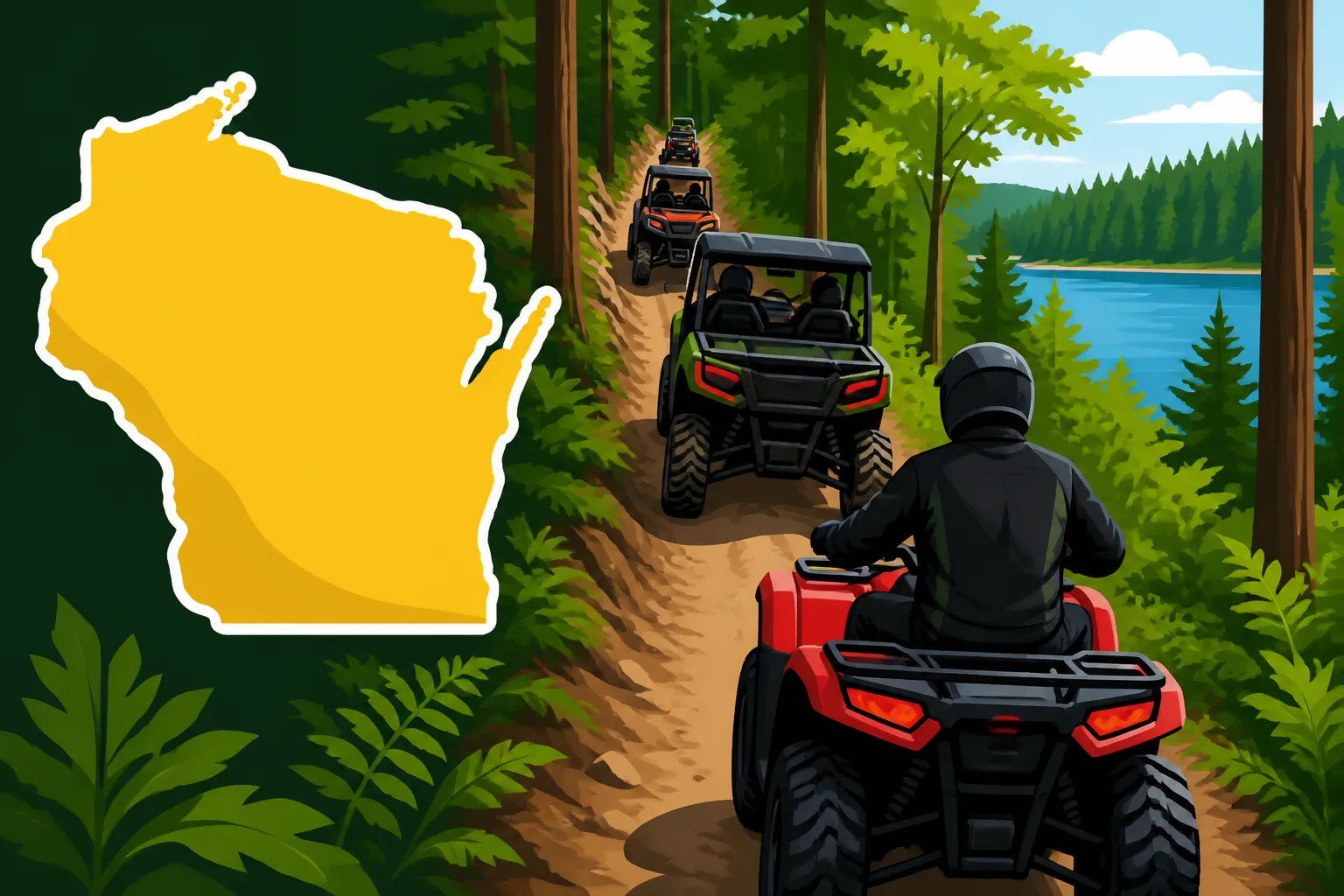
Riding single file might feel restrictive, especially if you're used to chatting with your riding partner beside you. However, embracing this rule actually enhances your safety and the safety of your entire group. It forces riders to maintain appropriate following distances, improves visibility for oncoming traffic, and makes your group's presence on the road more predictable for other users. Think about how much easier it is for a car to pass a single line of vehicles versus a staggered, wider formation.
For those riding side-by-sides, which are inherently wider than most ATVs, the single file rule is even more critical. A UTV already takes up a significant portion of a lane, especially on older, narrower roads common in many rural parts of Wisconsin. Riding two UTVs abreast is simply not feasible or safe on most road routes and could easily lead to a serious incident with oncoming traffic or even forces other vehicles off the road.
Group Riding Etiquette and Spacing
When riding in a group on a Wisconsin road route, adopting proper single file etiquette is key. This means maintaining a safe following distance between machines, typically several machine lengths, to allow for quick stops and evasive maneuvers. It also means being mindful of dust, especially on gravel roads, and adjusting your speed and spacing accordingly to maintain visibility. A good rule of thumb is to be able to see the tires of the machine in front of you.
Communication within the group becomes paramount. Instead of yelling across machines, rely on hand signals, two-way radios, or even pre-arranged stops for group discussions. Many riders invest in helmet communication systems to make these interactions seamless while maintaining focus on the road. Remember, the goal is to ride safely and respect other road users, even when riding with a pack. Understanding [Group Etiquette Through a Northwoods Town] is about more than just noise levels; it's about respectful operation.
Enhancing Visibility for Safer Route Riding
Operating single file inherently improves your group's visibility to other vehicles, both from the front and the rear. When machines are staggered or spread out, it can be harder for a driver to accurately judge the number of vehicles in your group or their precise position on the road. A clear, single line makes your presence unambiguous. To further boost this, especially at dawn, dusk, or in less-than-ideal weather, consider extra lighting or reflective elements on your machine and gear. Brands like SuperATV offer a range of aftermarket LED light bars and whips that can significantly enhance your visibility without blinding other drivers, ensuring you're seen clearly.
It's also important to ensure your machine's factory lighting (headlights, taillights, brake lights) is in perfect working order. Many municipal ordinances in Wisconsin specify lighting requirements, especially for night riding. The more visible you are, the safer everyone is on the road.
Common Misconceptions and Enforcement
It's easy to assume that because an ATV/UTV route is designated for off-road vehicles, traditional road rules don't fully apply. This is a significant misconception that can lead to fines and, more importantly, accidents. Wisconsin wardens and local law enforcement actively patrol these routes, and they are well-versed in the specific regulations governing ATV and UTV operation on them. They aren't just looking for speeding; they're looking for safe operation, which absolutely includes adherence to the single file rule.
A common scenario that riders often lament is being pulled over for riding two abreast when they felt the road was wide enough. While a road might appear ample, the legal definition of a "lane" and safe operation dictates single file. Ignorance of the rule is rarely an acceptable defense. You might find more detail on [Warden Enforcement on Wisconsin Routes] and [Wisconsin Fines for Illegal Road Riding].
What a Warden Asks For on a Route
If a Wisconsin warden or sheriff's deputy spots your group riding unsafely, including riding abreast when single file is required, they will likely initiate a stop. Beyond explaining the infraction, they'll check for several other things. Expect to be asked for your valid registration, which is distinct for public use, as outlined in [Wisconsin's Public Use ATV Registration]. They'll also verify you have the appropriate [Wisconsin's ATV Safety Certificate Requirement] if you were born on or after January 1, 1988, or if you are under the age of 16. Furthermore, they will check for compliant helmets if you're under 18, as detailed in [Wisconsin Helmet Rules for Riders Under 18], and proof of insurance in some municipalities that mandate it.
They may also check for machine compliance, such as the [Wisconsin's 96-Decibel Exhaust Limit] and the presence of a spark arrester. Remember, these stops are not just about checking paperwork; they are about ensuring the safety of all road users and preserving access to the routes for everyone.
Avoiding Penalties and Promoting Responsible Riding
The best way to avoid penalties and contribute to the positive image of ATV/UTV riders in Wisconsin is to know and follow the rules. Before heading out, especially if you're visiting a new area, familiarize yourself with the specific ordinances of the towns and counties you'll be riding through. Many towns have specific hours of operation or other unique rules, as covered by [Municipal Ordinances Wisconsin Riders Must Read].
Educate your entire riding group about the single file rule and other regulations. Leading by example goes a long way. When you see others riding unsafely, a friendly wave and reminder can sometimes make a difference, though it's never your place to enforce the law. Ultimately, responsible riding ensures that these valuable road routes remain open for years to come, allowing everyone to enjoy the incredible network that Wisconsin has built. By adhering to guidelines like riding single file and respecting traffic laws, we help foster positive relationships with local communities and other users of these shared spaces.
| Riding Scenario | On Designated Off-Road Trails | On Designated Public Road Routes |
|---|---|---|
| Single File | Often preferred for safety, especially on narrow sections; generally not strictly enforced unless specified. | Legally required for safety and traffic flow; treated like other vehicles on a public road. |
| Side-by-Side | Permitted if trail width allows and local rules don't prohibit; common for social riding. | Generally prohibited; unsafe and illegal, can lead to fines and accidents with oncoming traffic. |
| Group Size | No specific limit usually, but good etiquette suggests smaller, manageable groups. | Manageable groups are best; requires disciplined single-file formation and communication. |
| Speed Limits | Often lower, trail-specific, or dictated by conditions. | Follow posted road speed limits, just like a car; can vary by municipality. |
| Visibility | Important for avoiding collisions with other trail users or obstacles. | Crucial for being seen by cars, trucks, and other road users; use lights, reflective gear. |
Disclaimer
This article is for general informational purposes only and does not constitute professional advice. Laws, prices and regulations vary by location and change over time. Consult a qualified professional for guidance on your specific situation.