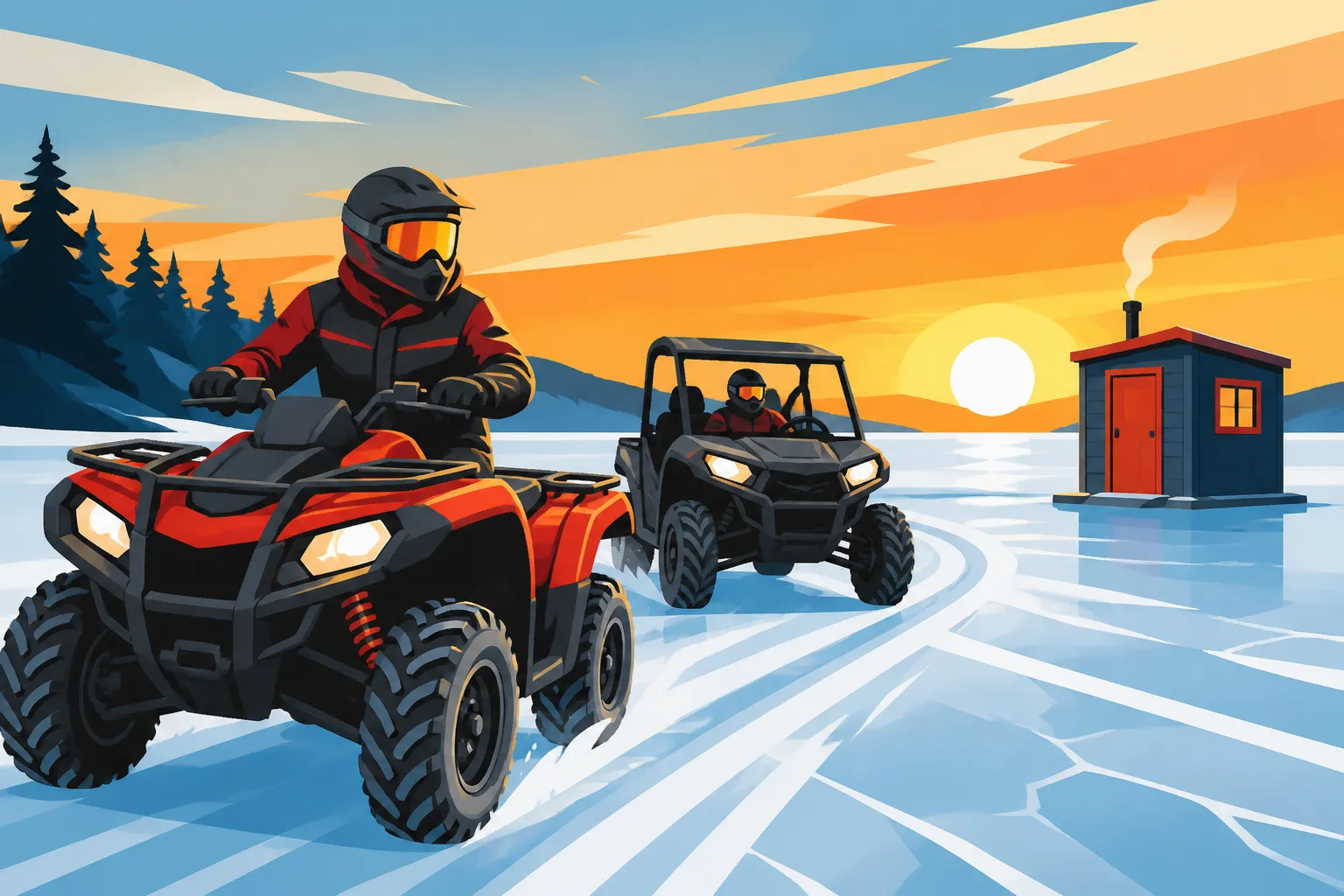
Riding Out to a Wisconsin Ice Shanty
There’s nothing quite like the crisp air, the quiet solitude, and the thrill of pulling a big one through the ice on a frozen Wisconsin lake. But getting your gear, your friends, and especially that cozy ice shanty out onto the expansive white landscape can be a real headache. Hauling everything by hand or with a cumbersome sled is just plain exhausting and time-consuming, eating into your precious fishing hours. This guide is all about making your ice fishing expeditions easier and more enjoyable by leveraging the power of your ATV or UTV, covering everything from essential regulations to machine prep and on-ice safety for a successful season.
The Lure of the Ice Shanty and Your ATV/UTV in Wisconsin
The ritual of ice fishing, especially from a comfortable shanty, is a quintessential Wisconsin winter experience. For generations, folks dragged their gear by hand or snowmobile. But let’s be real – modern ATVs and UTVs have changed the game entirely. They offer an incredible blend of power, utility, and comfort, making them the ultimate companions for those long treks across a frozen lake to your favorite fishing spot. No more breaking your back hauling a heavy shanty through snow drifts; now you can pack in all the comforts of home.
The Unbeatable Convenience of Machine Access
Imagine this: a fresh blanket of snow has fallen overnight, and your secret walleye spot is a mile out from the access point. Before your quad or side-by-side, that might have meant a grueling hike, pulling a heavy sled, and arriving winded before you even drill your first hole. Now, you simply load up your machine, hit the electric start, and within minutes, you're at your destination, fresh and ready to fish. This convenience isn't just about saving energy; it’s about maximizing your time on the ice, which, as any angler knows, translates directly into more opportunities to catch fish. It also means you can explore more of the lake, hitting multiple spots quickly if one isn’t producing.
Having an ATV or UTV also drastically reduces setup and teardown time. Instead of multiple trips back and forth for gear, everything can be consolidated. From the auger and bait bucket to heaters, chairs, and even a portable grill, your machine becomes your mobile base camp. This frees you up to focus on what really matters: enjoying the tranquility and the sport. And when the fish aren't biting in one spot, moving is no longer a monumental task; it's a simple hop back on your machine and a quick ride to the next promising area.
What You Can Haul on the Ice
The hauling capacity of today’s ATVs and UTVs is truly impressive, far exceeding what a snowmobile might offer in terms of sheer volume and weight. A robust ATV, especially one equipped with a sturdy front and rear rack, can easily carry an auger, a couple of five-gallon buckets for bait and fish, a portable heater, and a tackle box or two. Many riders add a small utility sled hitched to the back to further expand their carrying capacity for things like firewood or additional chairs.
UTVs, or side-by-sides, take this to another level. With their cargo beds, they can comfortably transport even large, pop-up ice shanties, multiple augers, coolers, power sources, and enough gear for a full day – or even an overnight stay – for several people. Think about being able to bring along a larger, more comfortable portable shanty, a more powerful heater, and even a small generator to run lights or electronics. This ability to bring more creature comforts transforms a potentially chilly, minimalist outing into a truly enjoyable and comfortable experience. Brands like SuperATV offer a range of cargo boxes, racks, and utility trailers that can further enhance your machine's hauling prowess, ensuring you never have to leave essential gear behind.
Essential Wisconsin Rules for Ice Riding
While the freedom of riding on a vast frozen lake is exhilarating, it’s crucial to remember that you’re still operating a motorized vehicle on public (or sometimes private) property, and there are specific rules and safety guidelines to follow. Wisconsin takes ATV and UTV safety seriously, especially when it comes to riding on frozen waters. Ignoring these can lead to fines, accidents, or even tragedy, so understanding the regulations is paramount before you ever hit the ice.
Registration Requirements on Frozen Wisconsin Lakes
First and foremost, your ATV or UTV must be properly registered to operate on frozen public waters in Wisconsin. This is no different than riding on designated trails or routes. If your machine is primarily used for recreation on public lands, you'll need a [Wisconsin's Public Use ATV Registration]. This registration ensures that your machine is recognized by the state and contributes to the funding of trail maintenance and safety programs. For those using their machines primarily on private land but occasionally venturing onto frozen lakes for fishing, the public-use registration is still what you'll need if that lake is considered public water.
It's a common misconception that if you're just driving straight out to a shanty and not "trail riding" on the ice, registration might be optional. This is incorrect. Any motorized recreational vehicle operating on navigable public waters – which includes most frozen lakes – must be registered. Keep your registration card with you, as wardens do patrol the ice and can ask for proof. Remember that [Wisconsin Public Use Registrations Expire March 31], so make sure your decals are current for the season. If you're from out of state, you'll need to obtain a non-resident trail pass and ensure your home state's registration is valid, or you'll need to register your machine in Wisconsin. For specifics, check out [Wisconsin Registration for an Out-of-State Machine].
Wisconsin's Ice Thickness Guidelines and Safety
This is arguably the most critical aspect of ice riding. The phrase "no ice is 100% safe" is absolutely true, and Wisconsin DNR provides crucial [Ice Thickness Before You Ride Out] guidelines to help riders make informed decisions. These are recommendations, not guarantees, and conditions can change rapidly due to currents, springs, or temperature fluctuations.
Here’s a general guideline for carrying vehicles:
| Ice Thickness | Recommended Use |
|---|---|
| 2 inches | STAY OFF! |
| 4 inches | Ice fishing or other activities on foot |
| 5-7 inches | Snowmobile or ATV |
| 8-12 inches | Car or small truck (light passenger vehicle) |
| 12-15 inches | Medium truck |
Always check local conditions before you venture out. Talk to bait shops, local wardens, or other experienced anglers. Never assume ice is safe because others are out there. They might be lighter, know a specific safe path, or simply be taking an unnecessary risk. Avoid areas with obvious cracks, pressure ridges, or slush. When in doubt, don't go out. It’s also wise to check [Wisconsin Rules on Frozen Lakes] for any specific regulations that might apply to a particular body of water or municipality. The DNR website and local sheriff’s departments often have real-time updates on ice conditions in popular areas.
Headlights, Taillights, and Reflectors on the Ice
Safety on the ice isn't just about preventing falling through; it's also about visibility. Whether you're riding in broad daylight or heading out before dawn, your machine needs to be seen. Wisconsin law requires ATVs and UTVs operating on public lands (including frozen lakes) to have working headlights and taillights. This is especially vital in low-light conditions, during blizzards, or in the whiteout conditions that can occasionally plague a vast, flat lake surface.
Ensure your lights are clean and fully functional before each trip. Consider adding auxiliary lights for better visibility if your machine’s stock lighting feels inadequate, especially if you have a cab enclosure that might cast shadows. Reflective tape on your machine or shanty can also dramatically increase your visibility to other riders and vehicles, especially if you park your shanty for an extended period. Many experienced ice anglers also use a bright flag on an extendable pole attached to their shanty, which helps others see their stationary setup from a distance, preventing accidental collisions, especially during periods of reduced visibility.
Preparing Your Machine and Gear for Wisconsin Ice
Winter in Wisconsin is no joke, and neither should be your machine preparation. The cold, snow, and ice put unique stresses on ATVs and UTVs. Proper maintenance and specialized gear are not just about comfort; they're about ensuring reliability and safety when you're miles from shore with plummeting temperatures. Breaking down on a frozen lake is a situation no one wants to experience.
Winterizing Your ATV or UTV for the Freeze
Even if you ride your machine year-round, preparing it specifically for ice fishing means going beyond the basics. Think about how much colder it gets on open ice with the wind whipping. First, ensure your battery is in peak condition. Cold weather severely diminishes battery performance, so a healthy battery is crucial for reliable starts. Consider a battery tender or charger to keep it topped off, especially if your machine sits between trips. For a full rundown, check out [Winterizing a Machine in Wisconsin].
Check all fluid levels – oil, coolant, brake fluid. Make sure your coolant system is topped off with the correct antifreeze mixture for extreme cold. Inspect all hoses and belts for cracks or wear; cold weather can make rubber brittle. A cracked hose or a failing belt can quickly put an end to your fishing trip. Ensure your tires are properly inflated, as temperature drops will cause pressure to decrease. Finally, clean and protect electrical connections with dielectric grease to prevent corrosion from moisture and road salt if you trailer your machine.
Traction and Flotation: Tires, Tracks, and Beyond
Traction on ice and snow is paramount. Standard ATV/UTV tires, while capable in many conditions, can struggle on slick ice or deep, fresh powder. For serious ice anglers, specialized options can make a huge difference. Studded tires are a popular choice, offering significantly improved grip on icy surfaces. They bite into the ice, reducing slips and slides, which is critical when navigating an uneven frozen lake or climbing snow-covered banks at access points.
For the ultimate in winter mobility and flotation, consider a track system. Brands like SuperATV offer robust track kits that convert your wheeled machine into a veritable tank, allowing it to glide over deep snow and maintain excellent traction on ice. While an investment, tracks can provide unparalleled access to remote fishing spots that would be impossible with tires, especially after heavy snowfalls. They also distribute the machine's weight over a larger area, which can be an added safety measure on ice, though it never negates the need for safe ice thickness. Whichever option you choose, ensure your tires or tracks are in good condition and designed for the specific challenges of winter riding.
What to Pack for a Day on the Ice
Beyond your fishing gear and shanty, there’s a distinct list of essentials for ice riding:
-
Safety Gear:
- Ice Picks: Essential for self-rescue if you fall through. Wear them around your neck.
- Rope: At least 50 feet of sturdy rope for rescue or recovery.
- First-Aid Kit: Comprehensive and easily accessible.
- Whistle/Air Horn: For signaling for help.
- GPS/Map: Even on a lake, whiteout conditions can disorient you. [Carrying a Paper Map on a Northwoods Ride] is a good backup.
- Working Cell Phone (and charger): Though cell service can be spotty in the [Cell Dead Zones in Northern Wisconsin].
- Headlamp/Flashlight: Even if you plan to be back before dark, delays happen.
- Warm Clothing: Layers are key, including a waterproof outer shell.
-
Machine-Specific Gear:
- Shovel: For digging out of snowdrifts or clearing ice.
- Winch: Invaluable for self-recovery or helping others. Check out [What a Winch Runs] for options. Many riders also carry a small recovery strap or tow rope.
- Small Tool Kit: Basic tools for minor repairs, like spark plugs, tire repair kit, and zip ties.
- Jump Starter/Cables: For battery issues.
- Fuel Stabilizer: If your machine sits for extended periods.
-
Comfort & Convenience:
- Portable Heater (and extra fuel): For your shanty.
- Warm Drinks/Food: Thermoses are your friend.
- Sunscreen/Lip Balm: Sun reflecting off snow and ice can cause burns.
- Portable Power Bank: To charge phones or other small electronics.
Always tell someone your plan – where you’re going, when you expect to be back. This simple step can be a lifesaver if something unforeseen happens.
Navigating the Ice and Setting Up Your Shanty
Once your machine is prepped and your gear packed, it's time to hit the ice. But getting to your spot and setting up your shanty safely requires a smart approach. The ice itself presents a unique environment with its own set of challenges, and respecting it is paramount.
Reading the Ice and Avoiding Hazards
Driving on ice is not like driving on land. Speed and sudden movements are your enemies. Always drive at a moderate, consistent speed. Avoid abrupt braking, acceleration, or sharp turns, as these can cause you to lose traction and slide. When approaching a new area, observe it carefully. Darker spots might indicate thinner ice, while areas with slush could mean water on top of the ice, which can be deceivingly dangerous.
Look for areas where other vehicles have been, as these paths might indicate safer routes, but don't blindly follow them. Always use your spud bar or auger to check ice thickness as you go, especially when venturing into new territory or away from established tracks. Be particularly wary around inlets, outlets, bridges, or areas with current, as these spots are almost always weaker. Pressure ridges – raised areas where ice sheets have buckled – can be treacherous to cross, often hiding cracks or open water. Approach them slowly and at an angle, assessing their stability. For detailed information, consult [Riding a Frozen Wisconsin Lake].
Smart Shanty Placement and Ice Anchoring
Once you've found your prime fishing spot, choosing where to place your shanty is more than just about where the fish are biting. It's about safety and stability. Try to set up on solid, consistent ice, away from pressure ridges or areas of suspected thinness. If you’re using a larger, permanent shanty, ensure it’s well clear of any vehicle access lanes that other riders might use.
Anchoring your shanty securely is critical, especially on larger, open lakes where winds can be fierce. Even a strong gust can send an unanchored shanty skidding across the ice or, worse, flip it. Use sturdy ice anchors that screw deep into the ice at each corner of your shanty. If you have a pop-up style shanty, make sure the skirts are flush with the ice to prevent drafts and keep snow from blowing in. Always leave enough space between your shanty and others to maintain privacy and safe egress, especially if you or your neighbors are running noisy generators or heaters. Think about how you'll get your machine and gear back off the ice too, so park it in a way that makes for an easy departure.
Recovery Gear: When Things Go Wrong
Even with the best preparation, things can go awry on the ice. Your machine could get stuck in deep snow, break through thin ice, or simply refuse to start. Having the right recovery gear is vital. A good winch, mounted on the front of your ATV or UTV, is an absolute lifesaver. Paired with a tree strap (if you can find a suitable anchor point) or a robust ice anchor, a winch from a company like SuperATV can pull your machine out of many sticky situations. Remember to always use gloves when handling winch cable and follow safe winching procedures. [Recovery Gear for Wisconsin Mud] offers some general tips that apply to snow and ice too.
In addition to a winch, always carry a sturdy tow strap or recovery rope. This allows another rider to pull you out if your winch isn't enough or you don't have an anchor. A shovel is also invaluable for digging out tires stuck in slush or snow. Consider carrying traction boards (sometimes called sand ladders), which can be placed under spinning tires to give them something to grip. Finally, if you're venturing far out, a portable jump starter or spare battery can be the difference between getting home and being stranded in the cold. A small hatchet or ice chisel can also be useful for clearing ice from around tires or breaking up problematic chunks.
| Essential Ice Riding Gear | Purpose |
|---|---|
| Ice Picks | Self-rescue from falling through ice |
| Rope (50 ft+) | Rescue, towing, anchoring |
| Winch / Recovery Strap | Machine recovery from snow or partial ice |
| Shovel | Digging out stuck machines |
| GPS / Map | Navigation in whiteout conditions |
| Headlamp / Flashlight | Visibility after dark or in low light |
| Warm, Layered Clothing | Protection from extreme cold |
| First-Aid Kit | Addressing injuries on the ice |
| Ice Anchors | Securing shanties against wind |
| Communication Device | Emergency contact, check-ins |
Disclaimer
This article is for general informational purposes only and does not constitute professional advice. Laws, prices and regulations vary by location and change over time. Consult a qualified professional for guidance on your specific situation.