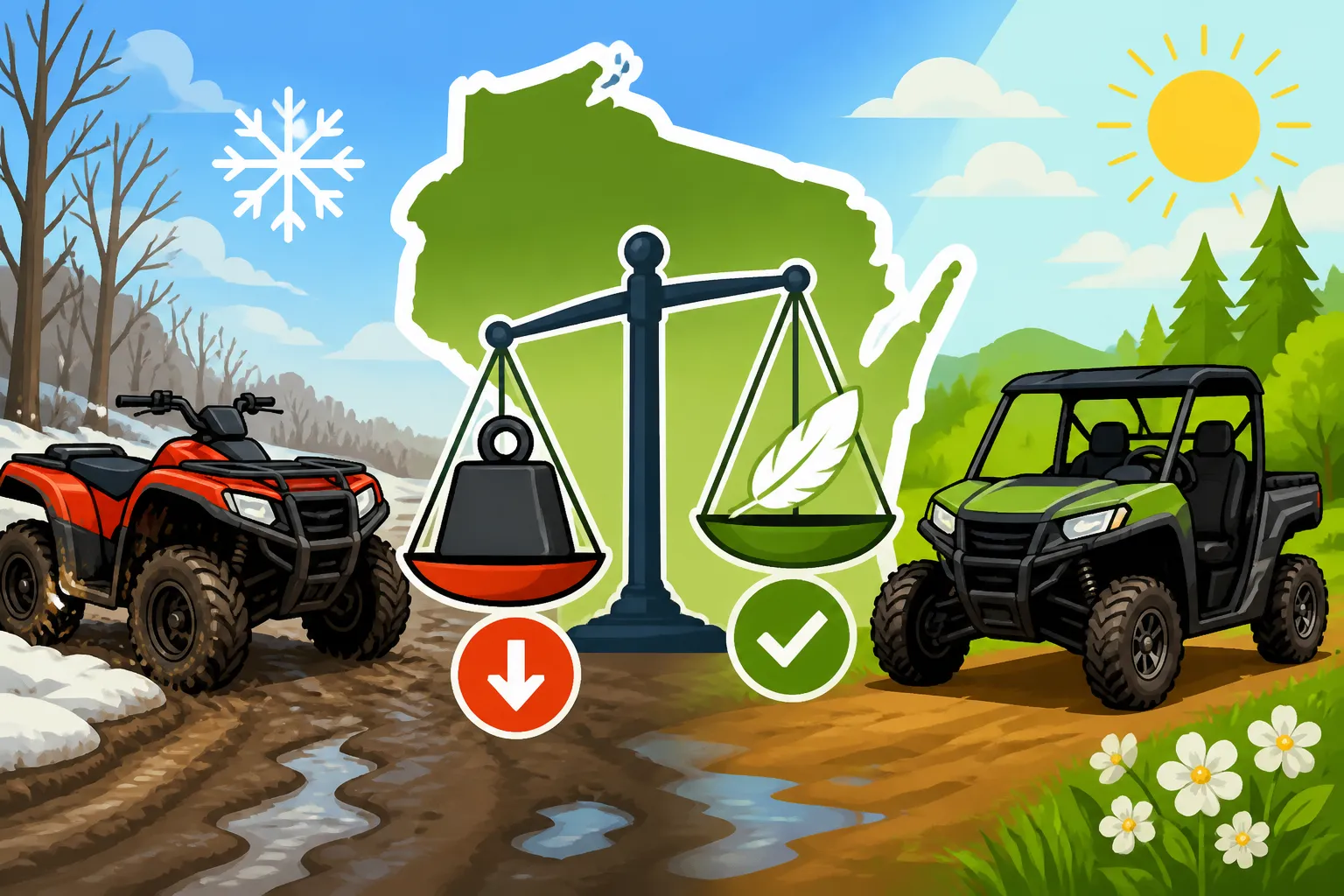
Wisconsin Weight Limits During Spring Thaw
Ah, spring in Wisconsin! The snow finally melts, the days get longer, and the trails start calling your name. But for ATV and UTV riders, that beautiful thaw often comes with a frustrating catch: weight limits on the very roads and routes you rely on. It feels like Mother Nature is playing a cruel joke, doesn't it? One day you're cruising, and the next, you're wondering if your machine is suddenly too heavy for the local town road. This guide is all about helping you understand these spring thaw weight restrictions, why they exist, and how you can navigate them to keep your riding adventures going without running afoul of local ordinances.
Why Spring Thaw Weight Limits Exist in Wisconsin
You might wonder why a perfectly good road suddenly becomes off-limits to heavier vehicles just because the snow is gone. It's not about being restrictive just for the sake of it; it's a critical measure to protect our infrastructure, particularly the many town and county roads that serve as vital links in our ATV and UTV route networks. The simple truth is that roads, especially those not built to interstate highway standards, are incredibly vulnerable during the freeze-thaw cycle that defines a Wisconsin spring.
The Vulnerability of Wisconsin Roads
Imagine a sponge that's been frozen solid, then starts to thaw. As the ice turns back into water, the structure temporarily weakens, becoming soft and mushy. That's a pretty good analogy for what happens to the ground beneath our roads in spring. During the cold Wisconsin winter, the ground freezes deeply. When warmer temperatures arrive, the top layers of soil and asphalt begin to thaw, but the deeper layers might still be frozen, trapping moisture. This trapped water cannot drain away, turning the roadbed into a saturated, unstable mess.
This is especially true for the vast network of gravel roads, unpaved routes, and even some of the older blacktop town roads that crisscross rural Wisconsin. These surfaces aren't designed to withstand the stress of heavy weights when their foundation is compromised. A single pass from a heavy vehicle, including large UTVs fully loaded with gear and passengers, can cause significant damage like potholes, ruts, and even complete road breakdown. It's a temporary but very real structural weakness that needs to be respected.
Preventing Costly Damage
The damage caused by heavy vehicles on thawing roads isn't just an inconvenience; it represents a huge financial burden for local municipalities. Filling potholes, repaving sections, and repairing shoulders costs taxpayer dollars, and those funds are often stretched thin. When a road is significantly damaged during spring thaw, it might require more than just a quick patch-up; it could need extensive reconstruction. This isn't just about smooth riding surfaces for ATVs and UTVs; it's about preserving essential transportation arteries for residents, farmers, and businesses.
By imposing temporary weight limits, local governments are trying to prevent this expensive damage before it happens. It's a proactive measure that saves money in the long run and helps ensure the longevity of our road infrastructure. While it might feel frustrating in the moment, it's ultimately for the greater good of the community and helps keep those roads open for enjoyment during the rest of the year. Understanding this economic reality can help us appreciate the reasoning behind what can feel like an arbitrary rule.
Understanding the Weight Limit Regulations
So, you understand why they exist, but what about the specifics? How do you know what the limits are and where they apply? This is where it gets a little more localized, as these regulations are often set at the county or town level, rather than being a blanket state law. It requires a bit of homework on your part, but it's essential for avoiding fines and contributing to road preservation.
Posted Limits and Municipal Ordinances
The most important thing to remember is that these spring thaw weight limits are primarily a local affair. While the Wisconsin Department of Transportation (WisDOT) might issue general guidance or recommendations for state highways, the specific weight limits affecting ATV and UTV routes on town roads and county roads are almost always dictated by the local municipality. This means that a town road in northern Wisconsin might have different restrictions than a similar road just across the county line, or even in a neighboring town.
You'll typically see these limits announced in a few ways: often, temporary signs will be posted at the entrances to affected roads, indicating the maximum weight allowed. This could be a numerical limit (e.g., "Weight Limit 6 Tons") or a general statement about seasonal restrictions. Additionally, local town halls or county highway departments will usually issue press releases or post notices on their websites. It's always a good idea to check the specific [Municipal Ordinances Wisconsin Riders Must Read] for the areas you plan to ride in, especially during the spring, as this will give you the most accurate information. These ordinances outline when and where such limits are enforced.
How Weight is Measured for ATVs and UTVs
When a weight limit sign says "Maximum 6,000 lbs" or "Gross Vehicle Weight 3 tons," what does that mean for your ATV or UTV? For these purposes, "weight" refers to the gross vehicle weight, which includes the machine itself (its curb weight), plus all its cargo, passengers, and any attached accessories. So, if you're riding a larger side-by-side that weighs, say, 1,800 pounds dry, and you add a passenger (180 lbs), a cooler full of drinks (50 lbs), a full tank of fuel (around 20 lbs), and perhaps a heavy-duty winch or a substantial cargo box from a company like SuperATV (adding another 50-100 lbs), you can quickly see how your operational weight climbs.
It's crucial not to just consider the base weight of your machine. Every piece of gear, every passenger, and even the fuel in your tank adds to that total. If you have a plow attachment still on from winter, that's another significant addition. The goal is to stay well under the posted limit, as wardens and local authorities will be looking at the overall loaded weight of your machine. Being over the limit, even by a small margin, can still lead to citations and contribute to road damage.
Impact on ATV and UTV Riders
For those of us who live for the trails, these spring weight limits can throw a real wrench in our riding plans. One day you're planning an epic route through a beloved region, and the next you find key sections suddenly off-limits. It's a common spring dilemma for Wisconsin riders, forcing us to be more adaptable and informed.
Restricted Access to Road Routes
The most immediate and noticeable impact of spring thaw weight limits is the restriction or closure of specific [Wisconsin Road Route] sections. Many of our fantastic riding areas rely on town and county roads to connect trail segments, provide access to services, or allow for scenic touring. When these roads are under a weight restriction, it means those sections are effectively closed to your ATV or UTV if your loaded machine exceeds the limit. You might find yourself having to reroute, turn back, or even completely scrap a planned ride because a critical link is temporarily unavailable.
This can be particularly frustrating in areas known for extensive road routes, such as some of the [Wisconsin Towns With Miles of Open Roads] in the Northwoods. Imagine planning a trip to a favorite tavern or restaurant along a route, only to discover that the road leading there has a weight restriction you can't meet. It highlights the importance of checking ahead, not just for trail conditions but also for the status of any public roads you intend to use as part of your ride. Ignorance of the rules isn't an excuse, and wardens do patrol these areas to ensure compliance.
Planning Your Spring Rides
Given these unpredictable spring conditions, planning your ATV or UTV rides in Wisconsin requires a bit more foresight and flexibility. You can't just assume that a route that was open last week, or last fall, will be open and unrestricted today. This is where a proactive approach really pays off. Before you even load up your rig, make it a habit to do a quick check on local conditions.
Start by looking up the county highway department or town clerk's website for the area you're heading to. Many will post specific advisories regarding spring weight limits. Additionally, checking [Checking Wisconsin Trail Status Before You Drive] is crucial, as some trail systems might also have associated road routes that are affected. Consider planning rides that stick to designated trails, if possible, which are often built to withstand more diverse conditions, or choosing routes that you know primarily use more heavily constructed county or state highways, which are less likely to have temporary limits. Be prepared with alternative routes and destinations, just in case your first choice is impacted by restrictions.
Practical Advice for Navigating Thaw Restrictions
While spring thaw limits can be a pain, they don't have to completely derail your riding season. With a little planning and smart choices, you can still enjoy the beautiful Wisconsin landscape on your ATV or UTV. Here are some practical tips to help you navigate this challenging but temporary period.
Lightening Your Load
One of the most direct ways to comply with weight restrictions is, quite simply, to make your machine lighter. This might seem obvious, but it's often overlooked. Before you head out, think about what you really need for that particular ride. Do you need a huge cooler full of ice for a short afternoon trip? Can you leave the heavy recovery gear at home if you're sticking to known, easy trails? Are there any unnecessary heavy accessories from brands like SuperATV that you can temporarily remove for the duration of the thaw restrictions?
For instance, if you still have your heavy plow system attached from winter, now is definitely the time to take it off. Every pound counts. If you're riding with passengers, consider if everyone absolutely needs to go on a specific route that has strict limits, or if part of your group can ride different, unrestricted trails. Carrying less fuel if you know there are gas stations along your route can also shave off a few pounds. It's all about minimizing your gross vehicle weight to stay within the legal and safe limits.
Alternative Riding Options
When your favorite [Wisconsin County Forest Trail Systems] and road routes are under restrictions, it's time to explore alternative riding options. Often, not all routes or trails are affected equally. Some designated ATV trails, especially those built on firmer ground or with engineered foundations, might remain open even when connecting roads are restricted. Focus on these true off-road trail systems rather than routes that heavily rely on town roads.
You might also consider sticking to areas with more substantial road infrastructure. While weight limits are common on town and county roads, state highways rarely have these seasonal restrictions. If your ride can be structured to use these more robust roads for transport to less affected trailheads, that might be an option. Also, keep an eye out for [Wisconsin Trails Open in May], as many trails open up more fully once the thaw is complete and conditions improve, providing an end-date to the restrictions. Sometimes, just postponing your more ambitious rides until later in the spring is the best solution.
Knowing Your Machine's Weight
It's truly important to know the dry weight of your specific ATV or UTV. This information is usually in your owner's manual or on the manufacturer's website. From there, you can estimate your loaded weight. Add the weight of each passenger, a typical amount for fuel, and any usual cargo or accessories. This gives you a baseline for comparison against posted limits. You might be surprised at how quickly your 1,000-pound ATV or 2,000-pound UTV can approach a 3,000-pound or 4,000-pound limit once loaded up.
If you frequently ride in areas with weight restrictions, it might even be worth taking your fully loaded machine to a truck scale (available at many truck stops or recycling centers) once to get an accurate reading. This knowledge empowers you to make informed decisions and avoids the unpleasant surprise of a citation. Remember that knowing your weight is as important as understanding [Speed Limits on a Wisconsin Route] or knowing [What a Wisconsin Warden Asks a Rider For] if you want to ride responsibly and legally during the spring thaw.
Here's a quick look at how different road types react to spring thaw:
| Road Type | Typical Vulnerability During Thaw | Common Weight Limit Application | Rider Strategy |
|---|---|---|---|
| Gravel/Dirt Roads | Very High | Most Frequent & Stringent | Avoid if possible; check local postings |
| Paved Town Roads | Moderate to High | Common | Check local town ordinances carefully |
| County Highways (Paved) | Moderate | Less Frequent | Often better for connecting routes |
| State Highways (Paved) | Low | Very Rare | Generally safe for transport |
| Designated ATV Trails | Varies by construction | Usually less affected by road limits | Best bet for continuous riding |
Understanding these differences can help you make more informed decisions when planning your spring rides. For instance, if you're looking for [Wisconsin Trails That Suit a 50-Inch Machine], these narrower, often purpose-built trails might be less impacted by general road weight limits than wider routes shared with vehicle traffic.
Ultimately, respecting Wisconsin's spring thaw weight limits isn't just about avoiding a fine; it's about being a responsible rider and contributing to the upkeep of the very infrastructure that allows us to enjoy our sport. By staying informed, planning ahead, and making smart choices, you can still have a fantastic and safe spring riding season in the Badger State. Remember that even though it's not directly related to weight, always follow [Wisconsin Helmet Rules for Riders Under 18] and ensure your machine has proper [Wisconsin ATV Registration Explained] to ensure a legal and enjoyable ride.
Disclaimer
This article is for general informational purposes only and does not constitute professional advice. Laws, prices and regulations vary by location and change over time. Consult a qualified professional for guidance on your specific situation.