Does a Trailered Machine Need a Trail Pass?
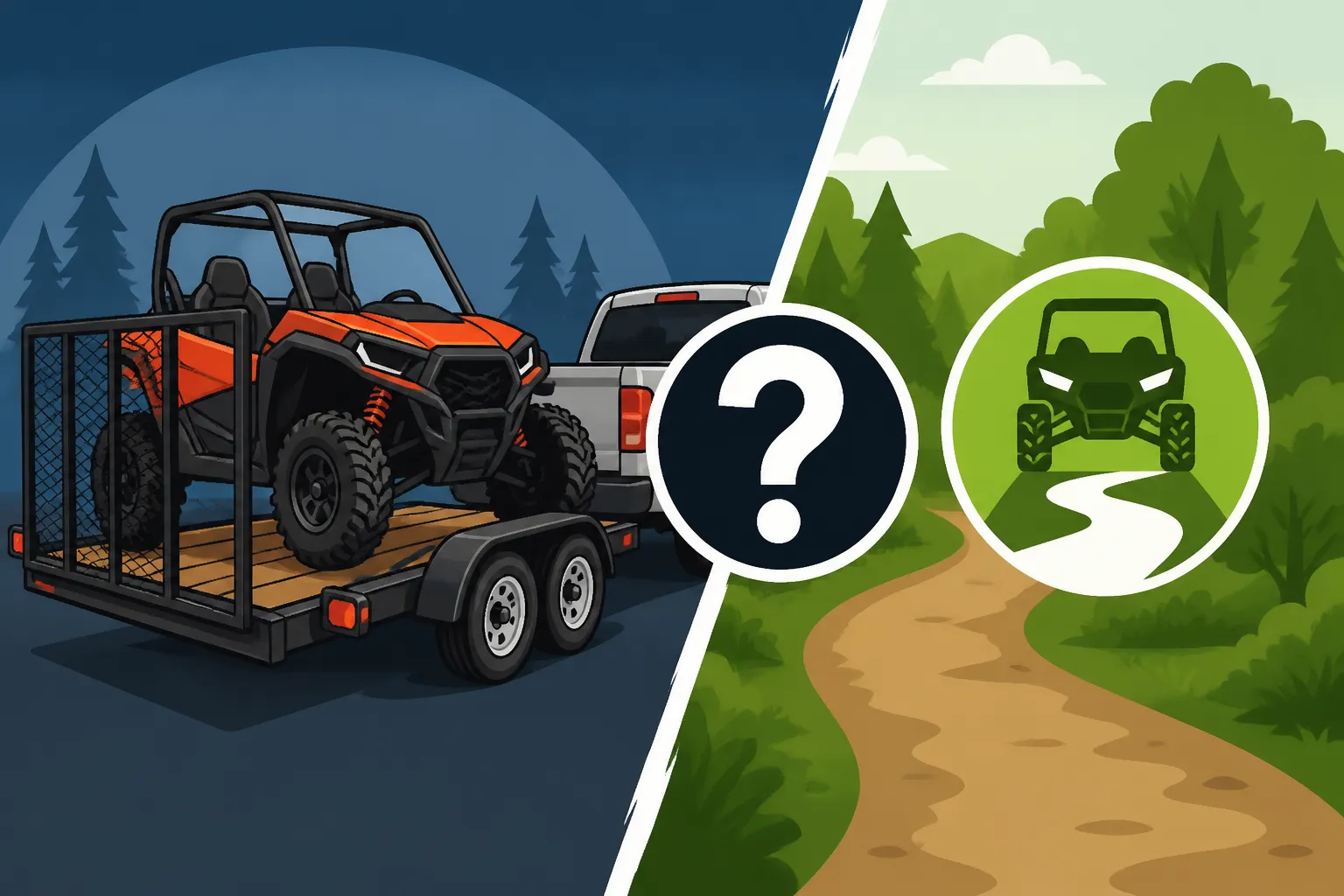
If your ATV or UTV is secured on a trailer, it is being transported—not ridden on a trail—so the trail-pass question usually waits until you unload. The confusing part is what happens next: Wisconsin requirements depend on where you ride and how the machine is registered. Here’s how to separate transit from trail use and avoid arriving without the paperwork or pass you need.
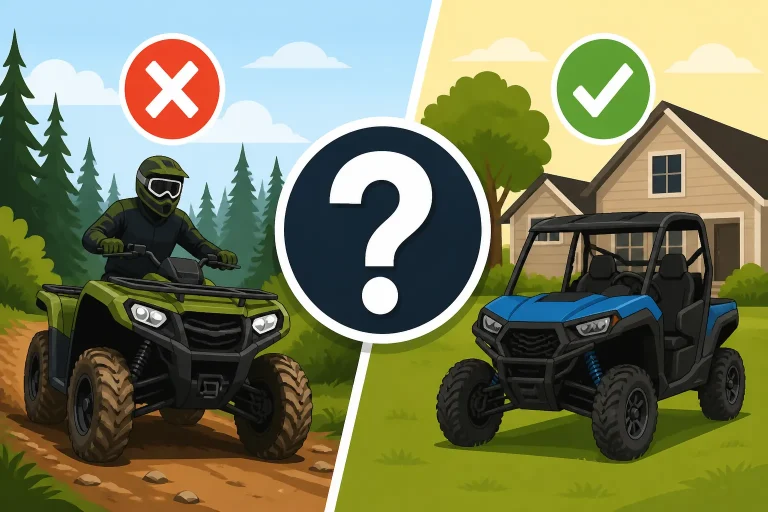
A trailered machine does not need a pass while it is being transported
A Wisconsin ATV or UTV trail pass is for operating a machine on covered public trails. It is not a permit for the trailer, and a machine does not need a trail pass just because it is strapped to a trailer on the way to a riding area.
Once you unload, the answer may change. If you plan to ride on a public trail, check whether the machine’s registration and pass status allow that use. The key details are the machine’s registration—not simply the state where the owner lives—and whether your route includes public trails.
Keep the trailer’s paperwork separate from the machine’s. Trailer registration requirements, where applicable, are different from ATV or UTV registration and trail-pass rules. A trail pass for the machine does not satisfy trailer requirements, and trailer registration does not authorize riding the machine on a trail.
A simple way to think about it:
| Situation | Does the machine need a trail pass for this activity? | What else to check |
|---|---|---|
| Secured on a trailer while traveling | No, not for being transported | Trailer requirements and safe loading |
| Unloaded on private property | Usually not for the private-property ride itself | Permission to ride and any applicable registration rules |
| Operated on a Wisconsin public ATV trail | Possibly; it depends on registration and pass rules | Machine registration, pass eligibility and trail status |
| Driven on a road route | The trail-pass question may not apply in the same way as on a public trail | Registration, route access and local rules |
| Trip that combines roads and public trails | A pass may be needed for the trail portions | Requirements for every part of the planned ride |
The table is a starting point, not a substitute for checking the rules for the exact trail or route. A ride can move between different land types and access systems within one trip.
What matters after you unload in Wisconsin
Public trails and road routes are not interchangeable
A trail pass is associated with riding on covered public trails. A road route is different: it is a public road or roadway segment that a local government has opened to ATV or UTV use under its rules. The pass requirement for a trail does not automatically answer whether you may use a particular road, and permission to ride a route does not necessarily authorize you to enter a public trail.
This distinction matters when planning a weekend that starts in town and continues into a trail system. Check the map and signage to see whether the planned connection is a road route, a trail, or both. For route-specific requirements, see Riding an ATV on a Wisconsin Road Route and What a Wisconsin ATV Route Actually Is.
If your trip includes public trail segments, find out whether your machine needs a pass for those segments even if you expect to spend most of the day on roads. A machine being trailered to a route or trail does not change the requirements once it is unloaded and operated there.
The machine’s registration status matters
Wisconsin distinguishes between machines registered for public use and those registered for private use. Do not assume that a registration suitable for use only on private land automatically allows riding on public trails. Before leaving home, confirm that the machine’s registration is appropriate for the kind of riding you intend to do. Wisconsin’s Public Use ATV Registration explains the public-use option, while Wisconsin’s Private Use ATV Registration covers the private-use distinction.
For a machine registered outside Wisconsin, check the state’s nonresident trail-pass rules before riding on covered public trails. The requirement depends on the machine’s status and intended use, not merely on whether the person towing it is a Wisconsin resident. Review Wisconsin’s Non-Resident Trail Pass and Wisconsin Registration for an Out-of-State Machine if you are bringing a machine registered elsewhere.
Wisconsin registration and a nonresident trail pass are not interchangeable terms. A pass does not necessarily resolve every registration requirement, and having registration does not automatically mean that every type of public riding is allowed. Use Machines Registered in Wisconsin and the Pass to check how those requirements fit together.
Private property is a separate question
A trail pass generally concerns public trail use, not simply owning or transporting a machine. If you unload on private land and ride there with the owner’s permission, a public trail pass may not be relevant to that ride. But permission and pass rules are separate issues: permission to ride on private land does not grant access to a neighboring public trail, road route or parcel.
Registration requirements can also differ from pass requirements. Before relying on a private-land exception, confirm what applies to the machine and the specific property. Do You Need Registration on Your Own Wisconsin Land? addresses the registration question; it does not mean that a machine can move from private land onto a public trail without meeting the public-use requirements.
How to check before towing the machine
A short check before you load can prevent a frustrating discovery at the trailhead. Use this process:
-
Identify where you intend to ride. Write down the trail system, route or property, rather than relying only on a town name or general area. A planned ride can cross between public trails, roads and private land.
-
Check whether the plan includes public trails. Look for trail-system maps and current access information. If you will ride only on a road route, check that route’s local rules separately. If the map shows both trails and roads, treat them as separate parts of the trip.
-
Check the machine’s registration. Note where it is registered and whether its registration allows the intended public use. If it has private-use registration or was registered outside Wisconsin, do not assume that it qualifies for every trail.
-
Confirm whether a pass is required. Use current Wisconsin DNR information for the machine’s registration category and the type of riding planned. The pass rules may differ from the rules for registration, and requirements can change.
-
Check the trail’s current status. A valid pass does not mean a trail is open. Closures, seasonal conditions and local restrictions can affect access. Check Checking Wisconsin Trail Status Before You Drive before setting out.
-
Make sure required proof is available. Carry or display the registration and pass information as required for the machine. Check the current instructions for where a pass must be placed and what information riders should have with them.
If you are unsure how a particular machine is classified, ask the Wisconsin DNR or an authorized registration agent before the trip. Give them the machine’s registration state and type, and describe exactly where you intend to ride. “I’m taking it to Wisconsin” is not enough detail to settle whether it needs a pass.
Common assumptions that cause problems
“The machine is on a trailer, so I need a pass before I leave home.”
No. The pass question is about operating the machine on covered trails, not transporting it on a trailer. You may still need to obtain a pass before unloading and riding, so sort it out before you reach the trail.
“I’m a Wisconsin resident, so my out-of-state machine is treated like a Wisconsin-registered machine.”
Do not rely on the owner’s address alone. The machine’s registration status is important. Check the rules for an out-of-state registration and the exact public use you plan.
“I have a pass, so registration does not matter.”
A trail pass and vehicle registration serve different purposes. Check both. A pass should not be treated as a replacement for registration that authorizes the machine’s use.
“The route I’m riding is open, so I can also use any nearby trail.”
Access to a road route does not automatically give access to every trail it touches. Follow signs and maps, and confirm requirements for each segment.
“The machine is allowed on private land, so it can continue onto a public trail.”
Private-property permission ends at the property boundary. Public trail access has its own requirements, including any applicable registration and pass rules.
The practical answer is straightforward: no trail pass is needed just to transport an ATV or UTV on a trailer. Before you unload, confirm the rules for the public trails, routes or private property where you plan to ride. The machine’s registration and the type of access matter more than the fact that it arrived on a trailer.
Disclaimer
This article is for general informational purposes only and does not constitute professional advice. Laws, prices and regulations vary by location and change over time. Consult a qualified professional for guidance on your specific situation.