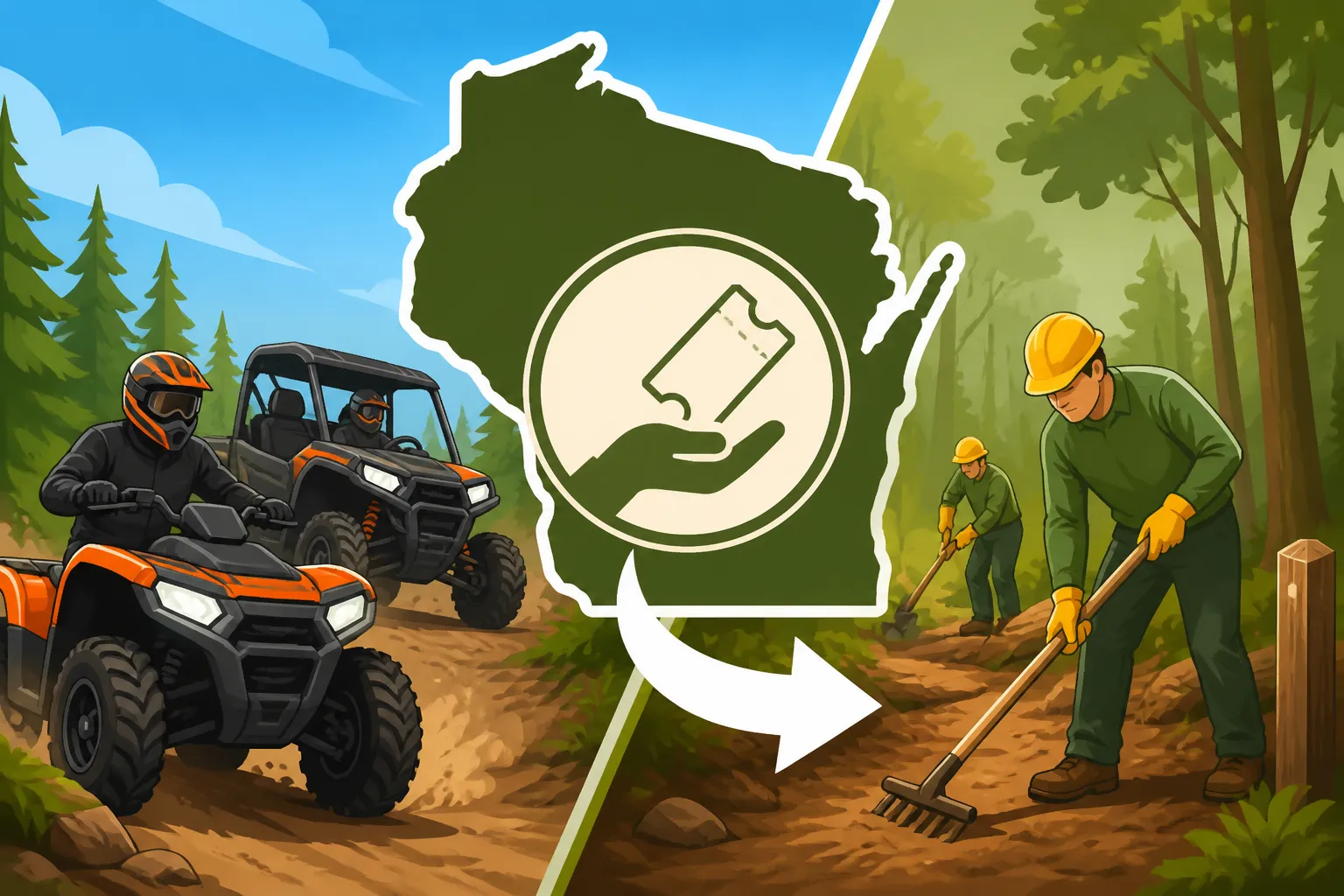
Wisconsin Trail Crews Paid From Pass Fees
Wisconsin trail crews keep routes rideable through brushing, grading, drainage work, sign repairs and other maintenance. If you buy a trail pass, it’s reasonable to wonder whether that payment goes straight to the people doing the work. The short answer: pass revenue supports Wisconsin’s ATV trail system through public funding programs, but it does not usually go directly from one pass purchase to a particular crew.
How pass fees support Wisconsin trails
Wisconsin’s ATV trail system relies on organized public funding, not a direct payment from each rider to a trail worker. Pass revenue is one part of the funding picture. Registration revenue and other program resources also help support trail development and maintenance.
The important distinction is that money generally moves through a program and grant process. It is not handed to a local crew at the point of sale, nor does buying a pass guarantee that the trails you ride will receive an equivalent amount of maintenance funding. The state program distributes aid to eligible local sponsors, which can include public entities responsible for trails. Those sponsors then plan and pay for approved work.
That work can involve more than clearing branches. A trail sponsor may need to maintain the riding surface, repair signs, address drainage, fix trail structures, or manage other tasks that keep a route usable and safe. The needs differ by location and season. A wet stretch may need drainage attention, while another area may need grading or repairs after heavy use.
For a fuller explanation of the funding pathway, see How Wisconsin’s ATV Trail Aids Grants Fund Trails. The related overview Wisconsin Trail Aids and Registration Revenue explains why registration and pass revenue should be understood as parts of a larger program rather than as individual payments assigned to a specific trail.
| What riders pay toward | How the money is handled | What it can mean on the ground |
|---|---|---|
| A Wisconsin ATV trail pass, when required | Collected into the relevant public program and distributed through its funding process | Supports eligible trail-system work through grants and sponsor budgets |
| Wisconsin ATV registration | Contributes to the broader ATV program funding structure | Helps sustain trail and riding opportunities beyond a single trip |
| Local sponsor resources | Combined with available public aid and planned through local budgets | Pays for approved maintenance, improvements, and operations |
| Volunteer effort | Contributes work outside the fee-payment process | Can help with brushing, cleanup, reporting, or organized work days |
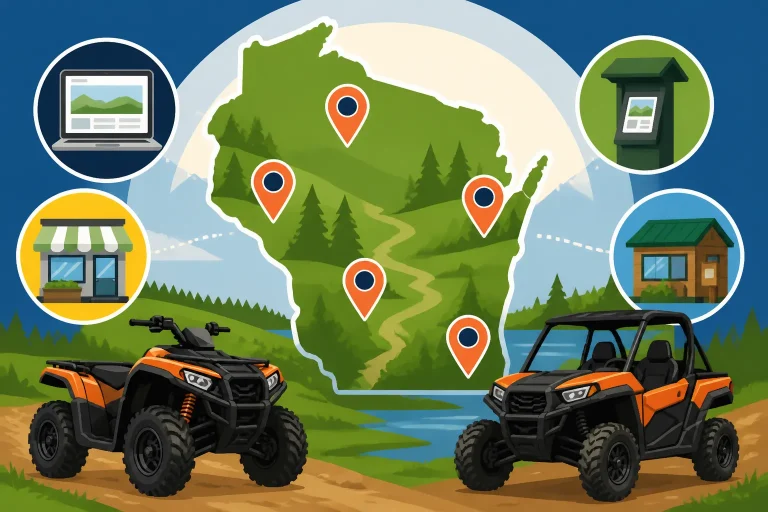
The table is a useful way to keep expectations realistic: a pass supports the system, but it is not a trail-specific service charge. For details on who needs a pass, start with Wisconsin’s Non-Resident Trail Pass and Which Wisconsin Trails Require a Pass. Requirements depend on the machine and the place you intend to ride, so check the current rules before heading out.
Why fees do not go straight to a trail crew
A trail crew may be employed by a county, municipality, contractor, or another organization involved in maintaining a route. A club may also help with certain work, sometimes through volunteer days or an arrangement with the public trail sponsor. Because these responsibilities are divided among different organizations, the people working on a trail are not necessarily paid by the state directly.
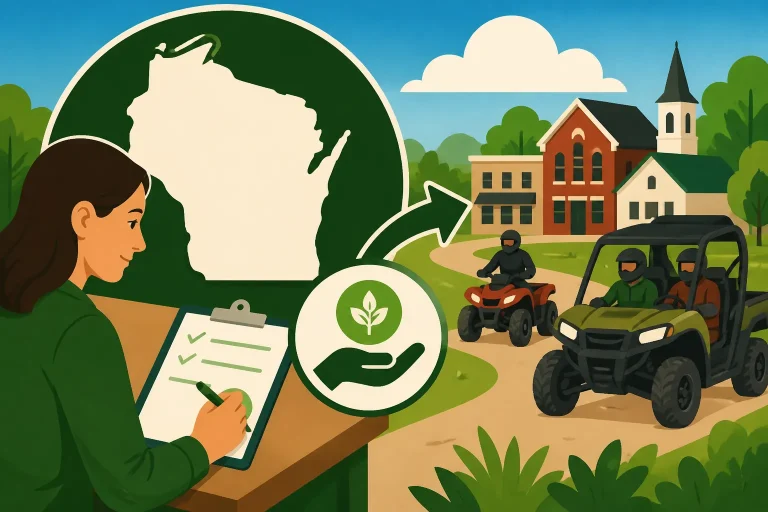
The funding process usually has several steps:
- Revenue is collected. Riders pay applicable fees, including trail-pass or registration charges, according to the rules that apply to their machines.
- Program funding is administered. Public funds are managed through the state ATV program and its established funding processes.
- Eligible sponsors apply for aid. Local entities responsible for trail systems seek funding for approved work.
- Work is planned and carried out. The sponsor budgets for maintenance, improvements, or other eligible activities. Crews may be paid staff or contractors, while volunteers may help with suitable tasks.
- The trail sponsor manages the project. Local responsibilities include arranging the work and maintaining the route within the applicable program requirements.
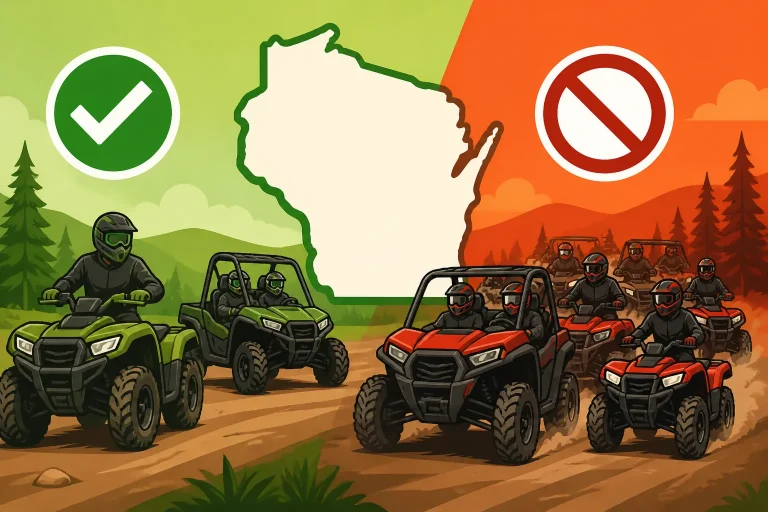
That chain explains why a rider can pay for a pass and still find a rough, closed, or temporarily impassable section. The fee is not a promise that every trail will be maintained to the same standard, at the same time, or by a dedicated crew. Funding must be planned, approved, and used for eligible purposes. Local conditions, staffing, weather, use levels, and repair priorities all affect when work can happen.
It also explains why it can be hard to answer, “How much of my pass paid that worker?” A pass is part of program revenue, not an individual invoice for a particular worker’s hours. The exact funding path and project budget depend on the program rules and the local sponsor’s work plan. For an overview of where funds are spent across the system, see Where Wisconsin Trail Pass Money Goes.
What trail crews may do with supported funding
When riders see crews at work, the visible task is often only one part of a larger maintenance plan. A crew may clear brush from the trail edge, repair a sign, reshape a worn section, or fix a drainage problem that would otherwise lead to erosion. Other projects may involve structures or longer-term improvements. The work can be routine, urgent, or part of a planned upgrade.
Maintenance is especially dependent on conditions. Heavy rain can damage a trail surface or create standing water. Spring thaw can make some routes vulnerable to rutting, which is one reason seasonal closures matter. A crew may need to wait until the ground can support equipment without causing additional damage. In other places, the immediate priority may be a fallen tree, a damaged sign, or a hazard that affects access.
The funding process can support the work, but it does not eliminate local constraints. A sponsor may have to set priorities among many needs, coordinate contractors, obtain approvals, and work around seasonal access limits. If a route is closed, do not assume the closure is just an inconvenience or that a pass entitles you to ride it. Closures protect the trail and can prevent damage that would take more time and money to repair.
Different trail systems may also use different local arrangements. One sponsor might handle routine maintenance with its own staff and bring in contractors for specialized repairs. Another may coordinate with clubs or volunteers for appropriate tasks. Club members can provide valuable labor, but volunteer help is not a substitute for every kind of work, such as heavy equipment operation or structural repairs. Club Work Days on a Wisconsin Trail covers how volunteer efforts fit into the broader maintenance picture.
If you want to help beyond paying required fees, report damaged signs, blocked routes, or unsafe conditions to the local trail authority. A clear location and a concise description are more useful than a general complaint. Reporting Trail Damage in Wisconsin offers practical guidance on what to report and how to make the information actionable.
What riders can reasonably expect
A pass helps support the Wisconsin ATV trail system, but riders should think of it as a contribution to a shared public program rather than a ticket that buys a guaranteed level of maintenance. The quality and condition of a route can change across a county, and even a well-maintained trail may develop problems after storms, busy weekends, or seasonal changes.
Before a ride, check whether the trails you plan to use are open and confirm that your machine and pass meet the applicable requirements. Trail-pass rules are not identical to registration rules, and having one form of documentation does not automatically satisfy every requirement. Wisconsin’s Public Use ATV Registration explains a separate piece of the system, while Which Wisconsin Trails Require a Pass can help clarify where a pass applies.
For route conditions, closures, maps, and other local details, consult the responsible county or trail authority. A map helps with navigation, but it may not show a same-day closure or a newly reported hazard. County Forestry Offices and Trail Maps is a useful starting point for finding local trail information.
When you encounter maintenance crews, slow down, follow directions, and give workers room. Equipment may block a narrow section, and workers may not be able to hear an approaching machine. If the route is closed for work, turn around rather than trying to pass the crew or ride around a barrier. Respecting temporary restrictions helps protect both the workers and the trail.
A practical way to understand your payment is this: the applicable fee supports the public system that makes organized riding possible, while local sponsors decide how approved work is delivered. The trail crew’s paycheck may come from a local budget or contractor arrangement that receives support through the program, rather than from your individual pass purchase. That is less direct than many riders expect, but it allows funding to be planned across trail networks and prioritized according to local needs.
Frequently Asked Questions
Does my Wisconsin trail pass pay a trail crew directly?
Usually, no. Pass revenue supports the ATV program through a public funding process. Eligible trail sponsors can receive aid and budget for approved work, including paid labor where appropriate.
Does every trail receive the same amount of maintenance funding?
No. Local needs, project plans, available funding, and sponsor priorities differ. A pass does not guarantee identical maintenance or conditions across all trails.
Are trail crews always government employees?
No. Depending on the project and local arrangement, work may be done by public employees, contractors, or other workers. Volunteers may also contribute to suitable tasks.
What should I do if I find a blocked or damaged trail?
Do not ride around a closure or hazard. Report the location and issue to the local trail authority, and check for updated conditions before returning.
Disclaimer
This article is for general informational purposes only and does not constitute professional advice. Laws, prices and regulations vary by location and change over time. Consult a qualified professional for guidance on your specific situation.