Club Work Days on a Wisconsin Trail
A trail can look ride-ready from the parking area and still have a washed-out crossing, a blocked culvert, or a sign hidden by brush farther along. Wisconsin trail work days help clubs and land managers tackle those problems, but showing up without knowing the plan can create extra work. This guide explains how to find a work day, prepare, contribute safely, and report trail issues between events.
What Happens at a Wisconsin Trail Work Day
The kinds of work volunteers may do
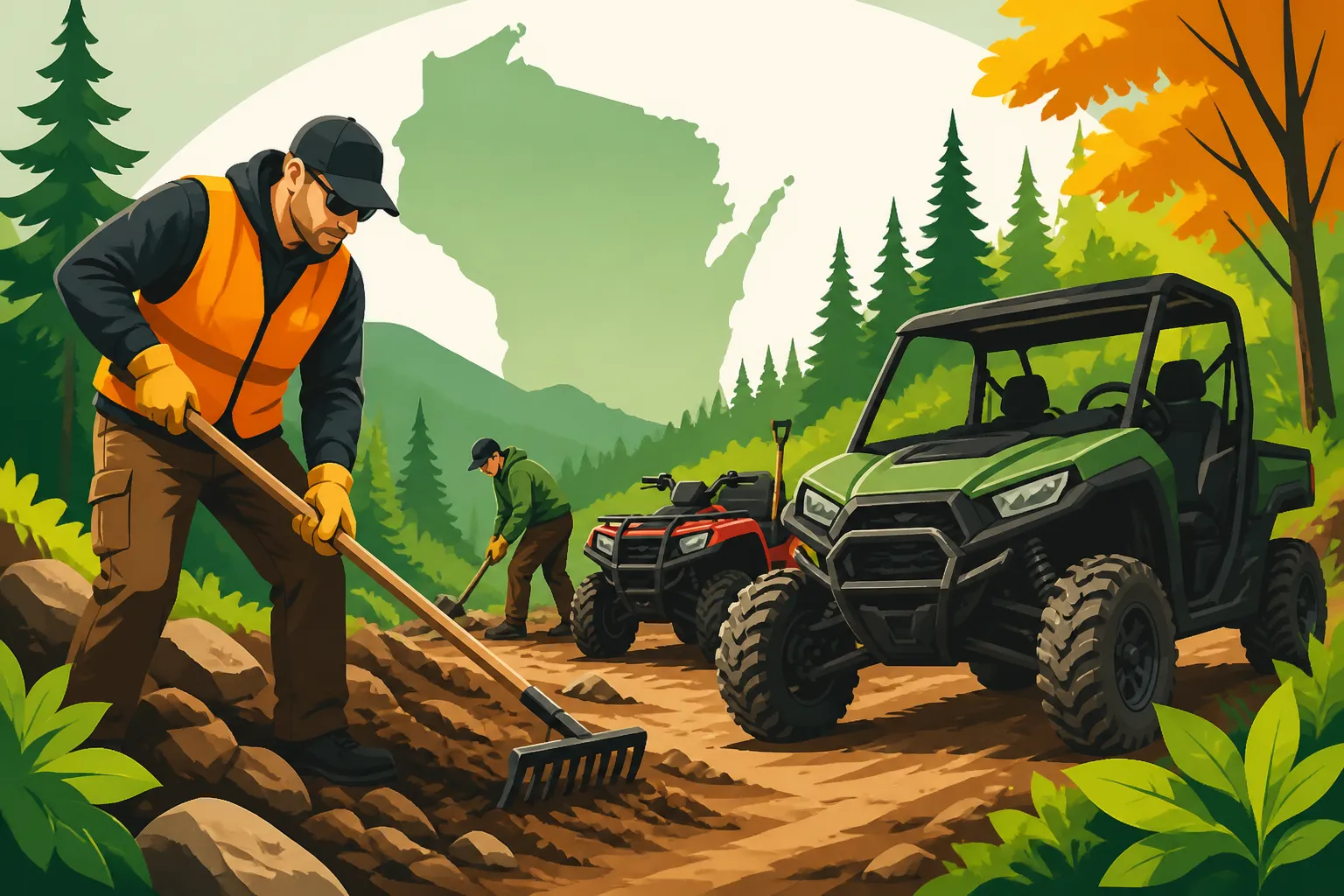
A work day is usually a planned effort to maintain or improve a section of trail. The work can be as simple as picking up litter and trimming brush around signs, or as involved as clearing fallen limbs, repairing trail markers, and helping with drainage improvements. The exact tasks depend on the location, recent weather, available equipment, and the land manager’s priorities.
In the Northwoods, a heavy rain can leave water pooled across a low spot, while winter winds may drop branches across a route. In a forested section near Eagle River or Rhinelander, volunteers might be asked to clear vegetation so riders can see an intersection sign before they reach it. Elsewhere, the priority may be checking a bridge approach or helping make a staging area tidier.
Not every task is suitable for every volunteer. Some jobs require training, tools, or supervision, and work involving machinery, chainsaws, bridges, or heavy materials should be left to people authorized and equipped to handle it. A useful volunteer is not necessarily the one who takes on the biggest job. It is the person who follows the coordinator’s instructions and finishes the assigned work safely.
Who organizes the work and sets the limits
Wisconsin trail maintenance may involve local ATV or UTV clubs, county forestry staff, town or county officials, and other land managers. The organizer can tell you where volunteers should meet, which section is approved for work, what tasks are planned, and whether tools or protective gear are supplied. Those details matter: a trail may cross different ownership or management areas, and permission to work in one place does not automatically apply elsewhere.
A club work day is also different from an informal ride where someone decides to move a branch or adjust a sign along the way. Signs, drainage features, gates, and trail surfaces may be managed according to specific standards. Don’t dig a ditch, cut a tree, move a marker, or bring a vehicle onto a closed section unless the organizer has clearly approved it.
If you’re new to the area, start with Joining a Wisconsin ATV Club or look into Wisconsin ATV Clubs and the Trails They Keep. A club can explain how its volunteer days work and whether a particular event is open to members, prospective members, or the broader community. Expectations vary, so confirm before you make the drive.
How to Find and Prepare for a Work Day
Confirm the details before leaving home
Start by checking with the club or land manager responsible for the section you want to help maintain. Ask for the meeting location, start time, expected finish time, the type of work planned, and who to contact if you’re delayed. A trailhead, town hall, or nearby parking area may be the meeting point, but don’t assume that the nearest trail access is the right place to gather.
Ask what to bring and what will be provided. Some work days may have shared tools and a designated safety briefing; others may ask volunteers to bring basic items such as work gloves, eye protection, water, or sturdy footwear. Don’t bring power tools or equipment unless the organizer requests them and confirms that you’re qualified to use them. If you have a physical limitation or need a task with less lifting or walking, say so in advance. Organizers can often suggest an appropriate role, but it’s easier to plan before the group spreads out.
Check trail status as well as the event announcement. A work day may be postponed, moved, or adjusted because of rain, spring thaw, fire risk, or a land-management decision. The same closures that affect riding can affect access for volunteers, so don’t drive around a barrier or enter a closed trail to reach a work site. For more on seasonal access, see Wisconsin Trail Closures in April and Checking Wisconsin Trail Status Before You Drive.
Pack for the task and the terrain
A practical kit starts with clothing that can handle brush, mud, changing weather, and insects. Wear sturdy closed-toe footwear, work gloves, and clothes you don’t mind getting dirty. Eye protection is important when trimming or working near branches, but use only the tools and protective equipment appropriate for the task you’ve been assigned. Bring drinking water, a snack, and any personal medication you may need during the day.
A phone can be useful for contacting the group or checking a map, but don’t depend on reliable reception in a remote forest. Before heading out, save the meeting location or route details in a way you can access offline. Some volunteers use onX Offroad to orient themselves and keep track of nearby roads or access points; it can be a helpful navigation aid, but it does not replace the organizer’s directions or permission to enter a work area. If the group provides a map or specific route instructions, follow those first.
| Before the work day | Why it matters |
|---|---|
| Confirm the meeting place and contact person | Prevents confusion at trailheads and remote access points |
| Ask what work is planned | Helps you bring suitable clothing and know what to expect |
| Check closures and weather | Avoids entering restricted areas or arriving after a change of plan |
| Bring water and personal essentials | Keeps you prepared if the work site is away from services |
| Use only approved tools | Reduces injury risk and avoids unauthorized trail changes |
| Tell the coordinator about access or task limitations | Helps the group assign a suitable job |
For first-time volunteers, the biggest worry is often not knowing whether they’re fit enough or skilled enough to help. You don’t have to arrive as a trail-building expert. Be honest about your experience, listen closely, and ask before attempting an unfamiliar task. If you’re unsure whether a tool or technique is appropriate, pause and check with the coordinator rather than guessing.
Work Safely and Leave the Trail Better
Follow the briefing and stay with the group
Before work begins, pay attention to the safety briefing. Find out who is leading the crew, how volunteers will communicate, where the group will work, and what to do if someone gets hurt or separated. In a wooded area, people can lose sight of one another quickly, especially when brush or terrain blocks visibility. Stay within the agreed work zone and let the coordinator know before leaving it.
Use tools only after you have been shown how they should be handled, and keep a safe distance from anyone cutting, lifting, or moving material. Don’t step into a work area while another person is operating a tool. When lifting branches, posts, or supplies, ask for help if an item is awkward or heavy. A volunteer day is not a good time to prove you can manage a risky task alone.
Conditions can change during the day. Mud, slick roots, standing water, heat, and cold can all affect footing and energy. Take breaks when needed and speak up if a task feels unsafe. If the group is working near a road, vehicle, water crossing, or steep edge, follow any extra boundaries or traffic-control instructions set by the leader.
Respect signs, closures, and the trail surface
The goal is to make a trail safer and more usable without creating new damage. Stay on approved access routes, park where directed, and avoid driving heavy vehicles over soft or wet ground unless the land manager has authorized it. A shortcut through vegetation can damage the trail corridor, and driving around a closure can widen the disturbed area or undermine the reason the section was closed.
Don’t move or replace a trail sign simply because it looks crooked or hard to see. The sign may be positioned according to a route plan, and changes may need approval. If you notice a damaged marker, confusing intersection, or blocked path while riding or volunteering, make a note of the location and report it to the responsible club or land manager. Wisconsin Trail Signs and Markers can help explain why consistent placement and clear markers matter to riders.
Drainage problems deserve particular care. A puddle may be a sign of a larger issue, but digging a new channel or redirecting water without approval can harm the trail or nearby land. Let the coordinator know what you saw rather than trying an improvised fix. For more on how volunteer work connects to larger maintenance efforts, see Trail Crews and Bridge Repairs.
Keep Helping Between Work Days
Report problems clearly
You don’t need to wait for a scheduled event to flag a problem. If you find a fallen tree, damaged sign, erosion, a blocked crossing, or a hazard that could affect riders, report it to the club or land manager responsible for that area. Include a clear description of the issue, the nearest trail junction or access point, and the direction of travel. A photo can help if it is safe to take one without stepping into traffic, unstable ground, or a closed section.
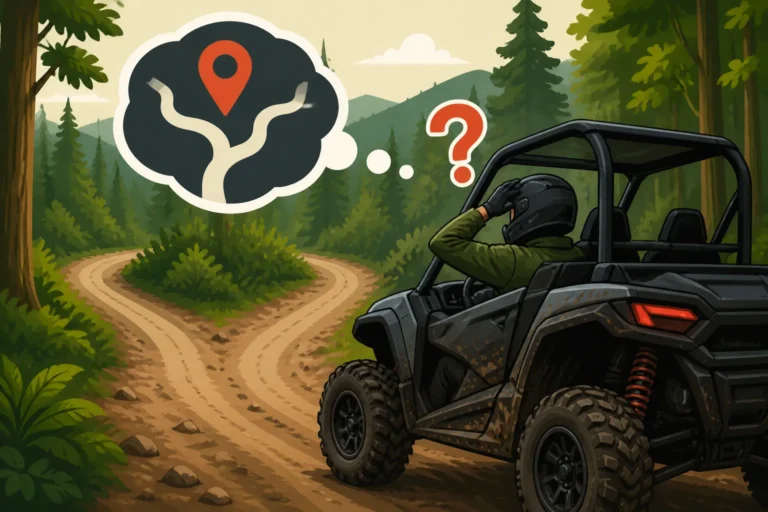
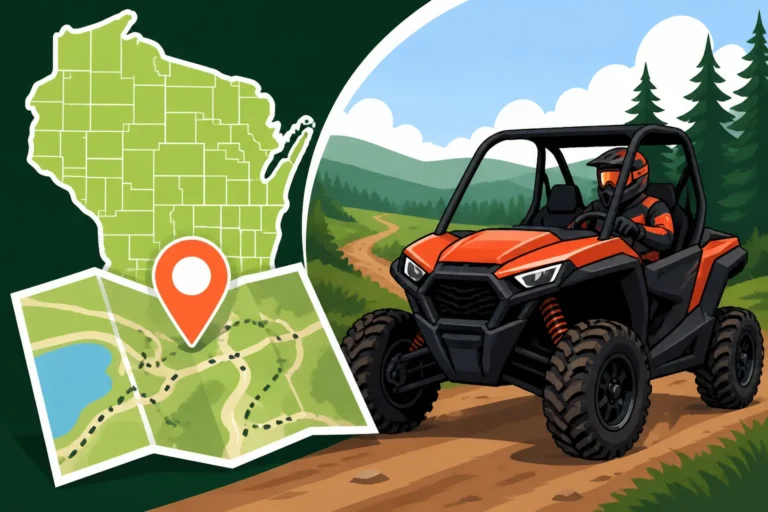
A map pin can make a report easier to act on. If you use onX Offroad or another mapping tool, share the location in a way the recipient can open, and also include plain-language landmarks in case the pin is difficult to interpret. For example, note that the issue is just beyond a marked intersection or near a named road crossing. Mapping tools are useful for orientation, but a club’s own trail map or the land manager’s directions should guide where you go.
Use Reporting Trail Damage in Wisconsin as a reference for what information can make a report useful. Avoid posting an exact location publicly if it could encourage riders to enter a closed or sensitive area. Report the concern through an appropriate channel and let the responsible group decide whether it needs immediate attention, a work crew, or a closure.
Make volunteering part of responsible riding
Work days are one way to give back, but responsible riding also helps protect trails. Check the route status before you go, stay on marked trails, respect gates and closures, and avoid creating ruts when the ground is soft. If you ride with friends, make sure everyone understands that a closed section is not an invitation to find a workaround.
A little preparation can also help you make a useful contribution. Look over County Forestry Offices and Trail Maps to understand who manages an area and where the official access points are. When using digital navigation, onX Offroad can help you keep your bearings, but don’t treat a line on a screen as permission to travel across private property or beyond a signed route. Confirm boundaries and access with the responsible organization.
After a work day, thank the coordinator and ask how the club shares future dates or reports needed repairs. You might be more comfortable with sign checks than brush clearing, or prefer a short task close to the staging area. That’s fine. Consistent, well-coordinated help—matched to your abilities and the site’s needs—is far more valuable than taking on a job that isn’t safe or approved.
Disclaimer
This article is for general informational purposes only and does not constitute professional advice. Laws, prices and regulations vary by location and change over time. Consult a qualified professional for guidance on your specific situation.