Wisconsin Helmet Law for Riders Over 18
Many seasoned riders, and especially those new to the off-road scene in Wisconsin, might assume that once you're over 18, the helmet law simply doesn't apply to you on an ATV or UTV. It's a common misconception, born from partial information or perhaps comparing it to other vehicle laws. But the truth is, while adult riders do have more flexibility, there are crucial situations where even a seasoned veteran absolutely needs to buckle up their lid. This guide will cut through the confusion, explaining exactly when a helmet is required for adult ATV and UTV riders in the Badger State, and why it's always a smart move to wear one.
The Common Misconception: Why Many Adults Think No Helmet is Needed
It’s easy to get confused about Wisconsin’s helmet laws, especially if you’re new to riding or coming from a state with different regulations. Many adult riders, those 18 years of age and older, often believe they're entirely exempt from wearing a helmet when operating an ATV or UTV in Wisconsin. This belief isn't entirely unfounded, as there are specific contexts where it holds true, but it's far from a universal rule. The problem arises when riders don't fully understand the nuances, leading them to ride unprotected in situations where the law, and common sense, demand a helmet.
What the Law Actually Says for Adults
For the majority of public ATV/UTV trails that crisscross Wisconsin's beautiful landscapes, and certainly when you're enjoying a ride on private property, the law does not mandate helmet use for operators and passengers who are 18 years of age or older. This is the piece of information that often sticks with riders and contributes to the widespread misconception. You can be out on a county forest trail, deep in the Northwoods, feeling the wind in your hair (if you have any left!), and as long as you're an adult, you're not breaking the law by going helmet-free in that specific environment. It's a freedom many riders appreciate, and it’s a significant difference from the rules governing younger riders.
However, this freedom comes with a very important caveat: it only applies to these specific off-road or private land scenarios. It does not extend to all riding situations, and understanding this distinction is crucial for both legal compliance and, more importantly, your safety. While the law might grant you the choice in some instances, that doesn't necessarily mean it's the safest choice.
The "Over 18" Clause and Where It Applies
The "over 18" clause in Wisconsin's ATV and UTV helmet law essentially creates two tiers of riders: those under 18 and those 18 and over. For anyone under the age of 18, the rule is crystal clear and non-negotiable: a DOT-approved helmet is required at all times, no matter where they are riding, be it on a trail, private land, or a designated route. This is a crucial safety measure for younger, often less experienced, riders and something every parent needs to understand. If you're riding with younger family members, you'll need to be fully aware of [Wisconsin Helmet Rules for Riders Under 18]. The rationale is simple: younger bodies and developing brains are more vulnerable to injury.
For adults, the clause grants that freedom on non-road contexts. This means if you're exploring the extensive trail systems of counties like Marinette, Clark, or Oneida, or perhaps just traversing your own property, and you're 18 or older, the legal obligation to wear a helmet is lifted. It's this distinction that often leads riders to believe they never need a helmet, forgetting that the moment their tires touch a public road or designated route, the rules shift dramatically. It's a common oversight that can lead to unexpected fines and, more critically, put riders at unnecessary risk. Even seasoned riders who have been hitting the trails for years can fall prey to this misunderstanding, especially when venturing into new areas or riding scenarios they're less familiar with.
When a Helmet is Required, Even if You're Over 18
Now that we’ve cleared up the common misunderstanding, let’s dive into the critical situations where a helmet is absolutely non-negotiable, even for adult riders over 18 in Wisconsin. This is where many riders get tripped up, often because they’re simply unaware of the specific regulations governing different types of riding environments. Failing to understand these rules can not only lead to citations but also dramatically increase your risk of serious injury.
Riding on Public Roads, Routes, and Highways
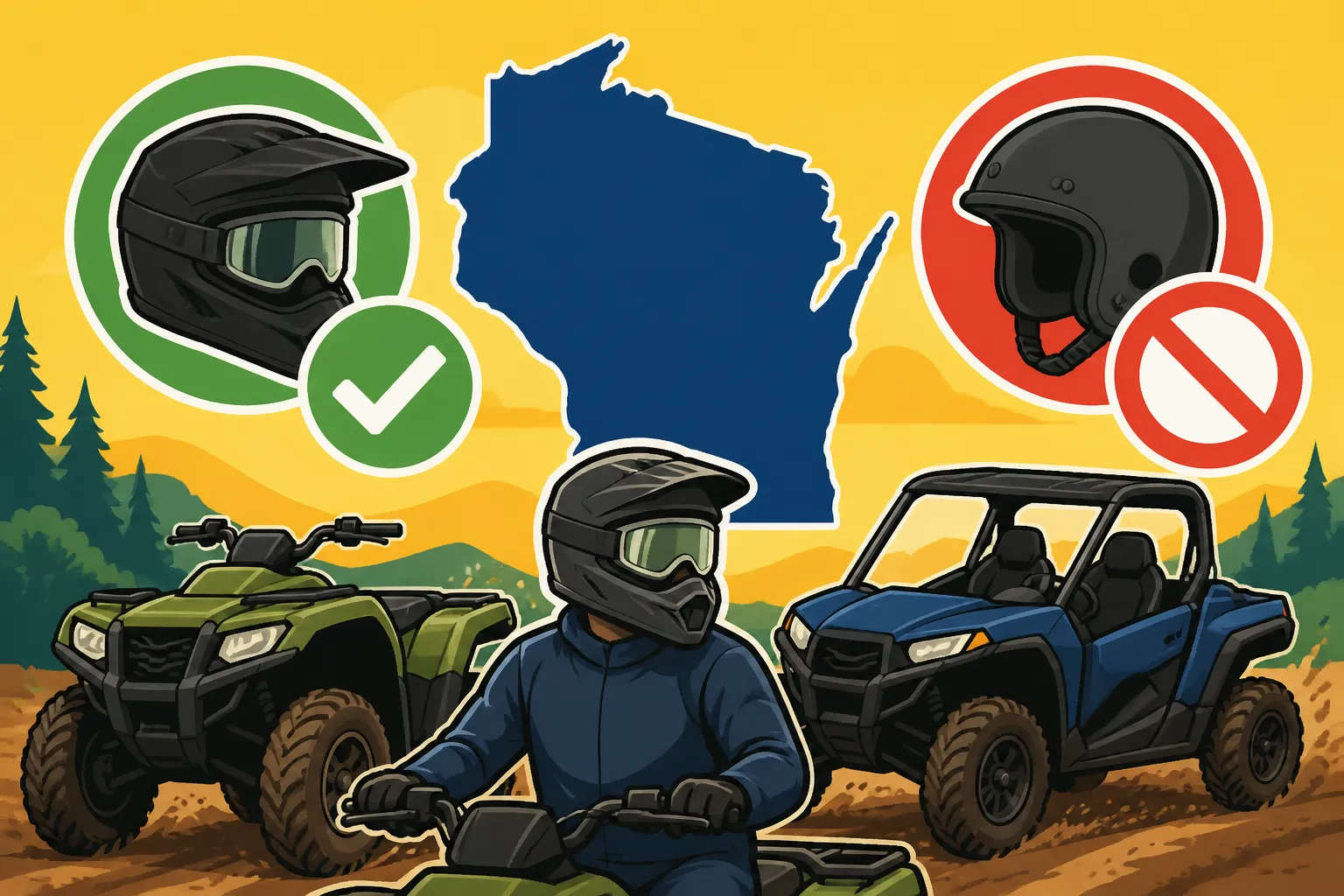
This is the big one, folks, and where the helmet law for adults suddenly becomes very real. If you’re riding an ATV or UTV on any public road, designated ATV/UTV route, or crossing a state highway in Wisconsin, you must wear a DOT-approved helmet, regardless of your age. This includes town roads, county roads, and any other public thoroughfare that has been legally designated for ATV or UTV use. Many towns and counties across Wisconsin have embraced off-road recreation by opening up their roads as designated routes, allowing riders to travel between trails, access fuel, food, and lodging, or simply enjoy a scenic ride. However, this convenience comes with the responsibility of adhering to specific safety regulations, with helmet use being a primary one.
Think about it: when you're on a public road, even a quiet town road, you're sharing that space with other vehicles – cars, trucks, sometimes even farm equipment. The speeds are often higher than on a tight trail, and the potential for severe accidents increases exponentially. This is why the law is so strict in these environments. It's not about taking away your freedom; it's about protecting you in situations where the risks are elevated. You might be enjoying [Riding an ATV on a Wisconsin Road Route] through a quaint Northwoods town, heading to a gas station, or simply crossing a county line on a designated route, and in all these scenarios, that helmet needs to be on your head and properly secured.
It’s easy to get caught out, especially if you pull off a trail that didn't require a helmet and immediately enter a public route without thinking to put yours on. Wardens and local law enforcement are well aware of these rules and frequently patrol these designated routes to ensure rider safety and compliance. A common mistake riders make is thinking that because a road feels "remote" or "unpaved," it's somehow exempt from the helmet rule. If it's a publicly maintained road and part of a designated route system, the helmet rule applies. Familiarize yourself with [Wisconsin Road Rules Riders Get Wrong] to avoid any unpleasant surprises.
The Importance of Eye Protection, Regardless of Helmet Use
While the helmet law for adults has its specific situational requirements, there's another piece of safety gear that is almost universally recommended, and often legally required, even when a helmet isn't: eye protection. In Wisconsin, if you are not wearing a helmet that has a fixed face shield, you are generally required to wear eye protection while operating an ATV or UTV. This applies to all riders, regardless of age, and regardless of whether they are on a trail, private land, or a designated route.
The reason for this is glaringly obvious (pun intended!). When you're riding an ATV or UTV, you're constantly exposed to the elements and whatever the tires kick up. Dust, dirt, small rocks, sand, mud, insects, low-hanging branches, and even rain can impair your vision in an instant. A sudden impact to the eye from a piece of debris can cause immediate pain, temporary blindness, and lead to a loss of control, potentially resulting in a serious accident. Even a minor speck of dust can be incredibly distracting and irritating, making it difficult to focus on the trail ahead.
Whether you're wearing an open-face helmet, a motocross helmet with separate goggles, or no helmet at all on an exempt trail, always ensure your eyes are properly shielded. This means wearing goggles specifically designed for off-road use, or a helmet with an integrated face shield. Regular sunglasses, while better than nothing, often don't provide adequate protection from impacts or full peripheral coverage. Prioritizing [Eye Protection on a Wisconsin Route Ride] is a simple, inexpensive way to prevent a potentially vision-threatening injury and keep your ride safe and enjoyable. You wouldn’t ride a bicycle without looking where you’re going, and the stakes are much higher on an ATV or UTV.
Beyond the Law: The Practical Reasons to Always Wear a Helmet
While understanding the legal requirements is certainly important for avoiding fines and staying on the right side of the law, the conversation around helmets for ATV and UTV riders really shouldn't start and end there. Beyond the mandates, there are profoundly practical and deeply personal reasons why choosing to wear a helmet every single time you ride, regardless of whether the law requires it, is simply the smartest decision you can make. This isn't just about compliance; it's about self-preservation, protecting your loved ones, and ensuring you can continue to enjoy this exhilarating sport for years to come.
Protecting Yourself from Unforeseen Accidents
Let's be realistic: off-road riding, while incredibly fun, carries inherent risks. Even the most experienced riders encounter unexpected situations. A hidden rut, a loose patch of gravel, a sudden encounter with wildlife, or even just a momentary lapse in concentration can lead to a quick tip-over, a rollover, or an ejection from the machine. These incidents don't discriminate based on your age or skill level, and they can happen at any speed, even on what seems like an easy, familiar trail. You might be navigating a tight turn through the woods or simply traversing a flat, sandy path, and an unforeseen event can send you tumbling.
A helmet acts as the crucial last line of defense for your most vital organ: your brain. Even a low-speed fall can result in a concussion, skull fracture, or more severe traumatic brain injury if your head makes contact with the ground, a rock, a tree, or even the machine itself. Consider a UTV ride: while seatbelts offer protection, a sudden jolt or rollover can still cause your head to strike the roll bar or another part of the vehicle's interior. A helmet can absorb and disperse that impact energy, significantly reducing the severity of the injury. It’s not just about avoiding a head-on collision; it’s about mitigating the impact of a simple slip or a branch snapping back at an inopportune moment. Thinking you're "too good" or "too careful" for an accident is a dangerous mindset in any off-road activity.
The "What If" Scenario: Long-Term Consequences
Beyond the immediate injury, we need to talk about the "what if" scenarios and the long-term consequences of a severe head injury. Brain injuries are not like a broken arm that heals and is good as new. They can lead to lifelong cognitive impairments, personality changes, memory loss, chronic pain, and a dramatically reduced quality of life. Imagine not being able to remember your favorite trails, struggling with basic tasks, or losing the ability to interact with your family in the same way. These are the very real, devastating outcomes that can result from a seemingly minor head trauma.
Consider the impact not just on yourself, but on your family and friends. A severe head injury can turn your life, and theirs, upside down. The emotional toll, the financial burden of long-term medical care, and the loss of independence are immense. A helmet is a relatively small investment when you consider what it's protecting. It's a choice to safeguard your future, your memories, and your ability to continue enjoying the things you love, like exploring Wisconsin's incredible outdoors. While we always want to avoid accidents, being prepared for the worst-case scenario with proper gear like a helmet is a profound act of responsibility. Moreover, while no one wants to think about it, legal proceedings after an accident or injury, such as [Wisconsin ATV Injury Claims], can become far more complicated if you weren't wearing a legally required helmet, adding another layer of stress to an already difficult situation.
Choosing the Right Helmet and Gear for Wisconsin Riding
So, you’ve decided to prioritize your safety and wear a helmet every time you ride, which is truly the best approach. Now comes the important step of choosing the right helmet and complementary gear for your Wisconsin ATV or UTV adventures. Just like you wouldn't buy the cheapest tires for your machine, you shouldn't skimp on the gear that protects your most vital asset. The market offers a wide range of options, and understanding what to look for will ensure you get the protection and comfort you need for countless miles on the trail or route.
DOT-Approved Helmets: What to Look For
The first and most crucial thing to look for when purchasing a helmet is that it is DOT-approved. This stands for the U.S. Department of Transportation, and their certification means the helmet has met minimum safety standards for impact absorption, penetration resistance, and retention. Any helmet you consider should proudly display the DOT sticker on the back. While some helmets might also carry Snell or ECE certifications (often considered more rigorous), DOT is the legal minimum for road-going use in Wisconsin and a solid baseline for all riding. Make sure you check out [DOT Helmet Ratings Wisconsin Accepts] to understand what those certifications mean for your safety.
Beyond certification, consider the type of helmet that best suits your riding style and the Wisconsin climate.
| Helmet Type | Best Use Case in Wisconsin | Pros | Cons |
|---|---|---|---|
| Full-Face Helmet | Trail riding, road routes, cold weather, protection from debris | Maximum protection for head and face, integrated face shield (often) | Can be warm in summer, can feel restrictive for some riders |
| Modular/Flip-Up | Versatile riding, touring, road routes, frequent stops | Convenience of lifting chin bar, good protection when closed | Heavier than full-face, more complex mechanism, generally pricier |
| Open-Face (3/4) | Casual riding, slower speeds, farm use, hot weather | Lighter, more airflow, wider field of vision | Less facial protection, requires separate eye protection |
| Off-Road/Motocross | Aggressive trail riding, warm weather, racing, mudding | Excellent ventilation, designed for goggles, lightweight, good visibility | Requires separate goggles, chin bar often extended |
When you're trying on helmets, prioritize a snug fit without being uncomfortably tight or causing pressure points. It shouldn't shift easily on your head, even when you shake it. Proper ventilation is also key, especially during Wisconsin's humid summers, to prevent fogging and keep you comfortable. Remember, a comfortable helmet is one you'll actually wear. You'll find that brands across the board offer quality options, and while SuperATV might be your go-to for machine upgrades like lift kits and heavy-duty axles, they'll also agree that investing in top-tier personal safety gear from reputable helmet manufacturers is paramount for the ultimate riding experience.
Other Essential Safety Gear Beyond the Helmet
While the helmet is undeniably the most critical piece of safety gear, it’s just one part of a comprehensive safety ensemble. Riding an ATV or UTV is an active and dynamic sport, and protecting the rest of your body is equally important for preventing injuries and ensuring an enjoyable ride.
Here’s a rundown of other essential gear you should always consider:
- Eye Protection (Goggles or Face Shield): As discussed, this is critical. Whether integrated into your helmet or separate, good goggles will protect you from dust, debris, insects, and branches. Look for anti-fog and scratch-resistant lenses.
- Gloves: Proper riding gloves protect your hands from blisters, abrasions, and impacts from branches. They also improve your grip on the handlebars, which is crucial for control.
- Long-Sleeved Shirt and Long Pants: This isn't just about warmth; it's about protecting your skin from scrapes, cuts, and sun exposure. Even on warm days, lightweight, breathable fabrics can offer protection without overheating.
- Sturdy Boots: Over-the-ankle boots with good tread are vital. They protect your feet and ankles from impacts, provide grip on footpegs, and can help prevent injuries if your foot slips off the machine. Avoid open-toed shoes or low-cut sneakers.
- Chest Protector (Optional but Recommended for Aggressive Riding): If you're riding aggressively, tackling challenging terrain, or even just doing a lot of faster trail riding, a chest protector can offer vital protection against impacts from branches, rocks, or even contact with the handlebars during a sudden stop or jolt.
- Hydration Pack: Especially during warmer months or on longer rides, staying hydrated is crucial to prevent fatigue and maintain focus. Many off-road packs are designed to carry water along with essential tools.
Investing in quality safety gear is an investment in your well-being and longevity in the sport. It's about being prepared for the unexpected and ensuring that every ride, whether it’s a quick spin on your own land or a full day exploring a multi-county trail system, is as safe as it is thrilling. Beyond just the gear, make sure you're properly trained; for new riders, understanding [Wisconsin Safety Certificate Requirements] is also a critical step.
Disclaimer
This article is for general informational purposes only and does not constitute professional advice. Laws, prices and regulations vary by location and change over time. Consult a qualified professional for guidance on your specific situation.