Why a 15-Year-Old Cannot Drive a UTV on a Route
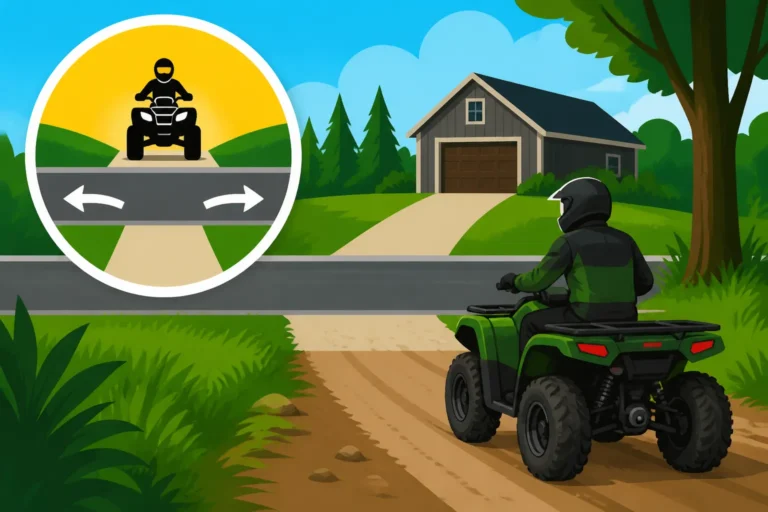
It’s a scenario many Wisconsin families face: your 15-year-old is a seasoned ATV rider, has taken all the necessary safety courses, and has proven themselves responsible on the trails. They’ve graduated from a smaller quad to a full-size machine, and you’re comfortable letting them navigate designated routes with you supervising. But then, you bring home a new side-by-side, a UTV, and suddenly the rules feel like they’ve completely changed. That capable 15-year-old, who can confidently handle an ATV, is now legally prohibited from driving the UTV on a public route. This can be incredibly frustrating and confusing, but there’s a clear reason behind these seemingly inconsistent regulations, and understanding them is crucial for safe and legal riding in our beautiful state.
Unpacking Wisconsin's Age Requirements for ATVs and UTVs on Public Routes
Wisconsin has specific laws governing who can operate all-terrain vehicles (ATVs) and utility terrain vehicles (UTVs) on public routes, and the distinction between these two types of machines is where much of the confusion lies, especially for younger riders. While both fall under the umbrella of off-highway vehicles, the state treats them differently when it comes to age and road access.
The Fundamental Difference: ATV Versus UTV
Before diving into the age restrictions, it’s vital to understand how Wisconsin differentiates an ATV from a UTV. An ATV, or all-terrain vehicle, is typically designed for a single operator, sometimes with a passenger, and features handlebars for steering and a saddle-straddle seat. Think of it as a motorized motorcycle with four wheels. UTVs, or utility terrain vehicles (often called side-by-sides), are quite different. They are designed for multiple passengers, have a steering wheel, foot pedals for acceleration and braking, and often come equipped with roll-over protective structures and seatbelts, much like a small car. These differences in design and function directly influence how the law views their operation, particularly for minors.
This distinction isn't just a technicality on paper; it profoundly impacts how a young rider can experience Wisconsin's incredible network of trails and routes. While both types of machines offer unparalleled access to the outdoors, the shift from a handlebar-steered ATV to a steering wheel-operated UTV changes the perception of the vehicle's complexity and how it integrates with other traffic, even on designated routes. For instance, a quick search for aftermarket parts, say from a company like SuperATV, will show a vast array of accessories for both, but the core design remains distinct, influencing everything from handling to how states regulate their use.
Age Requirements for ATVs on Designated Routes
For ATVs, Wisconsin law offers a path for younger, certified riders to access public routes. A rider who is 12 years old but not yet 16, and has obtained an ATV safety certificate, can operate an ATV on a designated public route. However, there's a critical caveat: they must be accompanied by a parent or guardian, or by an adult who is at least 18 years old and has been authorized by the parent or guardian. This means a 15-year-old with a safety certificate can indeed ride their ATV alongside an authorized adult on many of Wisconsin's open town roads and trail connectors. This provision acknowledges that with proper training and supervision, younger riders can safely enjoy ATV access.
The idea here is to provide supervised learning experiences, allowing young riders to gain confidence and experience in a controlled environment. Imagine a family weekend up north in a trail-friendly town; your 15-year-old, having completed their safety course, can legally participate in the group ride, following behind an adult. This fosters responsibility and skill development, preparing them for independent riding once they turn 16. It's a progressive approach that recognizes the developing capabilities of young riders while prioritizing safety through adult oversight. For more details on this, you can look up [Wisconsin's Rule for Riders Aged 12 to 15].
Why UTV Age Requirements are Stricter for Routes
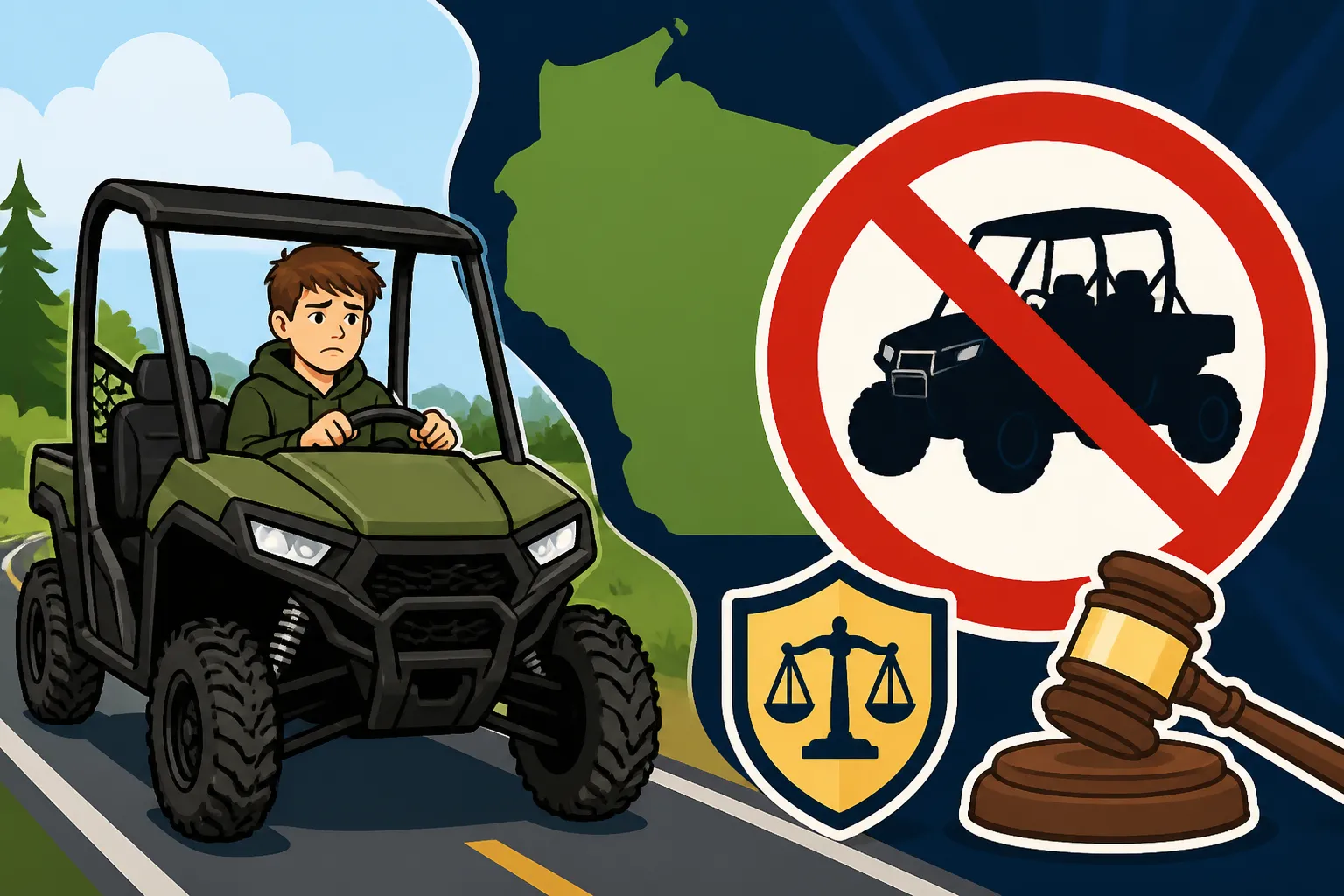
Here’s where the UTV situation becomes different and, for many, more restrictive. In Wisconsin, to operate a UTV on a designated public route, you must be at least 16 years old. There is no provision for a 12- to 15-year-old to operate a UTV on a public route, even with a parent or guardian present and even if they possess an ATV safety certificate. The same 15-year-old who can legally drive an ATV with supervision is explicitly prevented from driving a UTV on the same route. This is a common point of confusion and frustration, but the reasons are rooted in perceived safety and the nature of the vehicle itself.
This restriction is not arbitrary; it stems from a combination of factors related to the vehicle's design and its operational characteristics. Wisconsin's regulations draw a distinct line, viewing UTVs as requiring a higher level of maturity and driving experience due to their inherent qualities. Understanding these underlying reasons can help clarify why this rule, which can feel unfair to a capable young rider, is in place.
The Logic Behind the UTV Age Restriction
The disparity in age requirements for ATVs and UTVs on public routes isn't just about the number of wheels or the type of steering. It's deeply ingrained in how these vehicles are designed, how they perform, and the potential risks they pose, especially when mixing with other forms of traffic on public ways.
UTVs: More Car-Like, More Responsibility
One of the primary reasons for the stricter UTV age requirement is that these machines are inherently more "car-like" than ATVs. UTVs typically feature a steering wheel, bench or bucket seating, seatbelts, and a roll cage, mimicking many aspects of an automobile. This design often leads to them being seen as vehicles that operate more closely to traditional cars and trucks, even if they are smaller and designed for off-road use. When a UTV is on a public road or route, even if it's a gravel road, it's expected to integrate with other vehicle traffic in a manner more akin to a car than an ATV. The cognitive leap from a "play vehicle" to a "mini-car" implies a greater need for mature decision-making, spatial awareness, and adherence to traffic laws.
The experience of driving a UTV, whether it's a basic utility model or a high-performance sport machine outfitted with advanced SuperATV suspension, is significantly different from riding an ATV. The enclosed nature, the ability to carry multiple passengers, and the sheer weight of a UTV all contribute to this perception. Legislators and safety experts often view the operation of a steering-wheel equipped, multi-passenger vehicle on public access points as demanding the same fundamental level of judgment and responsibility typically associated with driving a car, hence the age synchronization with a standard driver's license eligibility.
Weight, Complexity, and Passenger Capacity
UTVs are generally heavier and more complex than ATVs. Their weight translates to greater inertia, which affects braking distance and handling, especially in emergency situations. The presence of multiple passengers introduces an additional layer of responsibility. An operator is not just responsible for themselves but for everyone in the vehicle. This increased passenger capacity, coupled with the potential for higher speeds and more varied terrain, elevates the risk profile of UTVs on public thoroughfares.
Consider a scenario where a UTV, carrying three passengers, encounters an unexpected obstacle on a gravel road route. The combined weight, the dynamics of multiple bodies shifting, and the increased momentum all demand a quick, decisive, and experienced response from the driver. These factors are quite different from a solo rider on an ATV. This is precisely [Why UTVs Are Treated Differently on Routes]. The laws are designed to mitigate these elevated risks by requiring operators to be at least 16 years old, a point at which many states also begin to allow supervised automobile driving.
| Feature | ATV (All-Terrain Vehicle) | UTV (Utility Terrain Vehicle) |
|---|---|---|
| Steering | Handlebars | Steering Wheel |
| Seating | Saddle-straddle style (1-2 riders) | Bench or Bucket seats (2+ passengers) |
| Control | Thumb throttle, foot shift (often) | Foot pedals (accelerator, brake) |
| Rollover Protect | None to minimal (roll bars for sport ATVs) | Roll-Over Protective Structure (ROPS) standard |
| Safety Belts | Not common | Seatbelts (often 3-point harnesses) standard |
| Minimum Age on WI Route (Supervised) | 12 (with safety cert and adult supervision) | 16 (no exceptions for supervised minors) |
| Minimum Age on WI Route (Unsupervised) | 16 (with safety cert) | 16 (with safety cert) |
| Typical Use | Sport, recreation, light utility | Utility, recreation, transport, heavy work |
This table highlights the fundamental distinctions that drive the regulatory differences.
Navigating the Rules and Ensuring Compliance
Understanding the "why" is one thing; navigating the practicalities and ensuring your family stays compliant with Wisconsin law is another. It’s not just about avoiding fines; it’s about fostering a culture of safety and responsibility, especially for our younger riders.
The Role of Safety Certification and Age
For any rider under 16, possessing a valid ATV safety certificate is non-negotiable for riding on public trails and routes, even on their own property if they are engaging in public use. For UTVs, while a safety certificate is still highly recommended for all operators, the age requirement of 16 for public route access means that the specific "12-15 with supervision" clause simply doesn't apply. It's a hard age limit. This means a 15-year-old with a [Wisconsin ATV Safety Certificate Requirements] can ride their quad on a designated route with you, but that same certificate doesn't grant them permission to drive a UTV there.
The safety course, whether taken online or in person, provides invaluable knowledge about responsible riding, environmental awareness, and adherence to rules. While it's a fantastic foundation for all riders, it doesn't override the age restrictions set forth for specific vehicle types on specific access points. Parents should emphasize that these rules are about safety, not about questioning their child's riding ability. For any rider born on or after January 1, 1988, an ATV safety certificate is mandatory for operating on public trails and routes. You can find out more about [The January 1988 Birthdate Rule].
Supervision Requirements for Younger ATV Riders
The concept of "parent or guardian supervision" for 12- to 15-year-old ATV riders is specific and important. This isn't just about being in the general vicinity; the supervising adult needs to be immediately available to assist and guide the younger rider. This level of supervision is seen as a critical safety buffer, allowing young riders to develop skills while an experienced adult can intervene if necessary. This very provision, which works so well for ATVs, is conspicuously absent for UTVs on public routes, reinforcing the state's stance on the increased responsibility associated with side-by-sides.
This distinction highlights the state's intent to allow structured learning for ATVs, where a younger rider can gradually build experience under direct observation. For instance, if you're riding with a 15-year-old on an ATV, you'd be nearby, easily able to communicate and provide guidance. This direct interaction is what facilitates the development of safe riding habits. For more on the specifics of this, refer to [Supervising a Wisconsin Youth Rider].
Consequences of Non-Compliance
Ignoring these age restrictions carries significant consequences, ranging from fines to potential safety hazards. Operating an unregistered or illegally operated UTV on a public route can lead to citations from law enforcement, including wardens who patrol Wisconsin's trails and routes. These penalties can be substantial, and beyond the financial hit, there's the very real risk of accidents. An accident involving an underage, unauthorized UTV operator could lead to severe legal liabilities, including potential injury claims and insurance complications. It’s simply not worth the risk. [Wisconsin Fines for Illegal Road Riding] can put a real damper on a family outing.
Beyond legal ramifications, allowing an underage driver to operate a UTV on a public route puts them and others at risk. While a 15-year-old might be incredibly skilled, the rules are in place for broader safety reasons that consider the vehicle's characteristics and the environment it's operating in. It’s about ensuring that everyone using Wisconsin’s shared spaces does so safely and legally. When a Wisconsin warden asks a rider for their credentials, they are checking for compliance with all these rules, not just registration. You can learn more about [What a Wisconsin Warden Asks a Rider For].
Alternative Riding Options for Younger Riders
While the news about UTVs on public routes might be disappointing for your 15-year-old, it doesn't mean their riding adventures in Wisconsin are over. There are still plenty of ways for them to enjoy off-roading safely and legally.
Riding on Private Land
One of the most straightforward solutions is to restrict UTV operation for your 15-year-old to private land. On private property, the state's age restrictions for operating ATVs and UTVs often do not apply, provided the land is not used for public access. This offers a safe and controlled environment for your teenager to practice their UTV driving skills without running afoul of public route laws. Many families with large properties or access to private hunting land find this to be a practical solution. Always ensure you have permission to ride on private land that isn't your own, and respect the landowner's rules.
This scenario allows a 15-year-old to become very proficient with a UTV, honing their driving, braking, and terrain negotiation skills in a low-pressure environment. It’s an ideal setting for them to get comfortable with the larger size and different handling characteristics compared to an ATV. For those wondering about the nuances of property rights, [Wisconsin Rules on Private Land] provides important context.
Focus on Designated ATV Trails
Wisconsin boasts an incredible network of designated ATV trails, and these remain fully accessible to your 15-year-old with their safety certificate and appropriate adult supervision. Many popular trail systems, especially in the northern counties, have hundreds of miles specifically for ATVs. This offers a fantastic opportunity to explore and enjoy the outdoors without the UTV route restrictions. This could also be a great time to focus on developing advanced ATV skills, like navigating challenging terrain or mastering trail etiquette.
Remember, a UTV is a different beast entirely, but there are countless adventures to be had on an ATV. Many of Wisconsin’s most scenic trails are perfectly suited for ATVs. Think of it as an opportunity to truly appreciate the agility and unique experience of riding a quad. You can always plan trips that specifically target [Riding an ATV on a Wisconsin Road Route] sections that connect to these expansive trail systems, allowing your 15-year-old to lead the way on their ATV.
The Patience of Waiting Until 16
Ultimately, the most straightforward solution for a 15-year-old who yearns to drive a UTV on Wisconsin's public routes is simply to wait until they turn 16. That birthday unlocks a whole new level of freedom and compliance. At 16, with a valid safety certificate (if born after January 1, 1988), they can operate both ATVs and UTVs independently on designated public routes. This waiting period can be challenging, but it ensures full legal compliance and reinforces the importance of following rules designed for everyone’s safety.
This period of waiting can be used constructively. Perhaps your 15-year-old can take an additional UTV-specific safety course, if available, or spend more time developing their driving skills on private property. The anticipation of that 16th birthday can be a powerful motivator, ensuring they are not only legal but also thoroughly prepared for the responsibilities that come with operating a UTV on shared public spaces. It's an investment in their safety and future enjoyment of Wisconsin's trails and routes.
Disclaimer
This article is for general informational purposes only and does not constitute professional advice. Laws, prices and regulations vary by location and change over time. Consult a qualified professional for guidance on your specific situation.