Riding to Supper in a Wisconsin Trail Town
There's nothing quite like a long day of hitting the trails in Wisconsin's Northwoods, the hum of your machine a familiar companion, the dust or mud telling the story of your adventure. But as the sun starts to dip below the pines, a different kind of craving kicks in: a hearty supper and maybe a cold drink in a real trail town. The problem is, many riders aren't entirely sure if they can legally take their ATV or UTV off the dirt and onto paved streets to reach that welcoming tavern or supper club. This guide is all about demystifying the rules, helping you understand how to safely and legally ride your machine into a Wisconsin trail town for that well-deserved meal, and what you need to know to be a good guest.
Understanding Wisconsin's ATV/UTV Road Routes
Navigating the roads in Wisconsin on your ATV or UTV isn't like driving your car; it's a patchwork of specific rules and local ordinances. You can't just pick any street and assume it's open for off-road vehicle traffic. It takes a bit of planning and understanding to ensure your ride to supper doesn't end with a citation.
What Exactly is a Wisconsin ATV/UTV Route?
First off, let's clarify what we're talking about when we say "route." In Wisconsin, an ATV or UTV route isn't just any paved road. It's a specific segment of a town, village, or city street that has been designated by a local governmental unit for ATV and UTV use. These aren't state highways or major thoroughfares; they're typically local roads, often connecting to existing trail systems, designed to allow riders to access services like gas stations, restaurants, or lodging within a community. Think of it as an extension of the trail, purposefully created to integrate motorized recreation into local economies.
The intention behind these routes is fantastic: they bridge the gap between exhilarating trail riding and the conveniences of civilization. Without them, you'd be stuck loading your machine onto a trailer just to go a mile for a burger. These routes allow a seamless flow from trail to town, enhancing the overall riding experience. They're usually marked with specific signage, so keep your eyes peeled. Remember, these routes are created through a local process. You can learn more about this by reading [How a Wisconsin Town Opens an ATV Route].
The Local Ordinance: Your Key to Trail Town Access
This is perhaps the most crucial piece of the puzzle. Every single ATV or UTV route in Wisconsin exists because a local town, village, or city board passed a specific ordinance to open those roads. This means the rules can, and often do, vary from one municipality to the next. What's perfectly legal in Eagle River might have slightly different hours or speed limits in St. Germain, even if those towns are practically neighbors.
Before you plan to ride into a town for supper, it's absolutely essential to check that specific town's ordinance. Many communities that embrace ATV/UTV tourism will have this information readily available on their municipal websites or posted at local trailheads. Sometimes, even the Wisconsin Department of Natural Resources (DNR) website will have links or summaries. Don't just rely on hearsay; confirm the rules for yourself. This isn't just about avoiding a ticket; it's about being a respectful visitor. Local residents have made a choice to open their roads to riders, and adhering to their specific rules helps maintain that privilege for everyone. Ignoring the ordinance can quickly sour the relationship between riders and residents, leading to stricter rules or even route closures. The more you understand the local rules, the more confidently you can ride. It’s definitely worth looking up [Municipal Ordinances Wisconsin Riders Must Read] before your next trip.
Navigating the Rules of Riding to Supper
Once you've confirmed that the town you're heading to has open ATV/UTV routes, you still need to make sure your machine and your riding habits comply with Wisconsin state law and any additional local regulations. It's not just about getting there, but getting there safely and legally.
Essential Gear and Machine Requirements for Route Riding
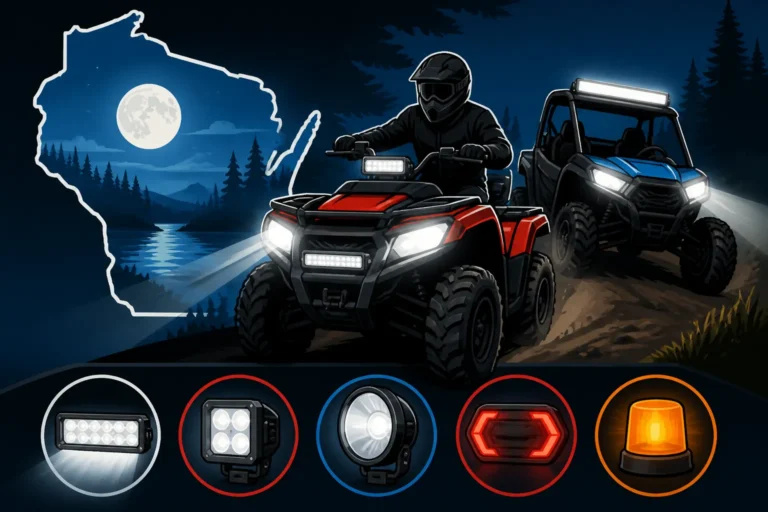
Riding on designated road routes means you're sharing the road with cars, trucks, and sometimes even pedestrians. This requires your machine to be equipped for road safety. First and foremost, proper lighting is non-negotiable, especially if you're riding after sundown. Your ATV or UTV must have at least one headlight and one taillight, both operational. For UTVs, brake lights are also critical. While not always mandated by state law for all machines on routes, it's wise to ensure your turn signals are working if your UTV has them, as they make your intentions clear to other drivers. Many riders upgrade their lighting for better visibility, and aftermarket options from brands like SuperATV can significantly improve your setup, making you more visible to others on the road, particularly around dusk or dawn. You can find detailed requirements in [Lighting Rules for Wisconsin Night Riding].
Beyond lighting, your machine must also meet noise regulations. Wisconsin has a 96-decibel exhaust limit for ATVs and UTVs. While it might sound cool to have a roaring exhaust out on the trails, it can quickly become a nuisance—and a violation—in a quiet residential area or when pulling up to a restaurant. Ensure your muffler and spark arrestor are in good working order. Additionally, all Wisconsin ATVs and UTVs operated on public routes must be registered, and your registration decals must be properly displayed. And don't forget your Wisconsin ATV safety certificate if you were born on or after January 1, 1988. This is a critical requirement for operating on public trails and routes.
Who Can Ride and Where: Age, Passengers, and Speed Limits
Wisconsin has specific rules about who can operate an ATV or UTV on public routes, and these rules often come with age and supervision requirements. For ATVs, a rider must be at least 12 years old and have a safety certificate to ride on public routes. For UTVs, the operator must be at least 16 years old and hold a valid driver's license. If you're riding with a younger passenger, special rules apply. For example, any ATV or UTV passenger under the age of 18 must wear a DOT-compliant helmet. Even if you, as an adult operator, choose not to wear a helmet (which is your right if you're 18 or older), your minor passenger absolutely must be protected. You can read more about this in [Wisconsin Helmet Rules for Riders Under 18].
Speed limits are another critical aspect. On designated ATV/UTV routes, you must adhere to the posted speed limits for other vehicles, or a lower speed limit if specifically designated for ATVs/UTVs. Many towns will set a general ATV/UTV speed limit, often around 10 to 15 mph, particularly in residential or business districts. Always assume the lowest reasonable speed when navigating through a town. You are sharing the road with cars, bicycles, and pedestrians, so caution is paramount. And speaking of sharing the road, remember that most Wisconsin ATV/UTV routes are on town or county roads, not state highways. While you may be able to cross a state highway safely and directly, riding on one is generally prohibited. Knowing these rules is essential for a safe and enjoyable trip into town. A quick glance at [Wisconsin Speed Limits on a Wisconsin Route] can help you prepare.
Trail Town Etiquette and Practicalities
Riding into a Wisconsin trail town for a meal is a fantastic experience, but it comes with responsibilities. Being a good guest ensures that these routes remain open and welcoming for all riders, preserving the very culture of trail riding and small-town hospitality that makes Wisconsin so special.
Parking, Fueling, and Respecting Locals
Once you've made it into town, the practicalities of parking and fueling come into play. Many trail towns are acutely aware of the needs of ATV and UTV riders and will have designated parking areas for machines, or at least plenty of space where you can safely park without obstructing traffic or business access. Look for signs, or ask a local if you're unsure. Never block sidewalks, fire hydrants, or store entrances. If you're riding a larger side-by-side, consider its footprint when parking; a machine with a SuperATV lift kit might need a little extra room, for example. The goal is to be as unobtrusive as possible, just as you would be if you were driving a car.
When fueling up, use common sense. Turn off your engine, avoid spills, and be mindful of other customers at the gas station. Remember, these are public places, and showing courtesy goes a long way. But beyond the logistics, respecting the local community is paramount. This means minimizing noise, especially during evening hours, and being mindful of dust if the route transitions from gravel to pavement. Slow down when passing homes or businesses, wave to pedestrians, and always yield to other traffic. Think of it as leaving a good impression, because every interaction shapes how local residents view ATV and UTV riders as a whole. Nobody wants to be the reason a town decides to close its routes.
Finding the Best Supper Spots and Planning Your Ride
The best part of riding into a trail town? The food! Wisconsin's trail towns are often home to fantastic supper clubs, family diners, and cozy taverns that serve up delicious, hearty fare perfect after a day on the trails. Many of these establishments actively welcome riders, sometimes even offering ATV/UTV-specific parking or special deals. How do you find them? Often, local trail maps or visitor guides will highlight "rider friendly" businesses. Word of mouth from other riders is also a great resource. You can often spot them by the ATV/UTV parking out front, or even a local club sticker in the window.
Planning your specific route into town is crucial. Use your GPS or a good old-fashioned map to identify the designated routes that lead directly to the areas with restaurants and amenities. Don't assume you can just cut across private property or undesignated streets to save a few minutes. Stick to the marked routes. Consider the time of day, too. Riding during peak dinner hours might mean more traffic, both vehicular and pedestrian, so be extra vigilant. And if you're looking for specific recommendations, you'll be happy to know that many resources exist for [Wisconsin Trails That Reach a Tavern]. It’s a highlight of the Wisconsin riding experience!
Potential Pitfalls and Avoiding Them
Even with the best intentions, it's easy to make a mistake when riding on road routes, especially if you're unfamiliar with the local rules. Being aware of the common pitfalls can help you avoid problems and ensure a smooth, enjoyable experience from trail to table and back again.
Common Mistakes Riders Make on Town Routes
One of the biggest mistakes riders make is assuming all roads are open, or that the rules in one town apply everywhere. As we've discussed, local ordinances are key, and ignoring them can lead to unexpected fines. Another common pitfall is speeding. It’s easy to get comfortable on a straight stretch of road, but remember you’re often in residential or business areas, and excessive speed is not only dangerous but a major source of complaints from locals. Keep your speed in check.
Open intoxicants are another serious issue. While you might enjoy a cold beverage with your supper, never operate your ATV or UTV with an open container of alcohol or while under the influence. Wisconsin’s OWI (Operating While Intoxicated) laws apply to ATVs and UTVs just as they do to cars, and the penalties are severe. This includes even small amounts of alcohol that could impair your judgment. Don't risk your safety, your license, or your machine. Finally, riding off-route, even for a short cut or to check out an interesting spot, is almost always considered trespassing unless you have explicit permission from the landowner. Stick to the designated routes and public lands. This issue is expanded upon in [Wisconsin Trespass Rules Along Routes].
Enforcement and Penalties
Wisconsin's DNR wardens and local law enforcement take ATV and UTV route enforcement seriously. They are often highly visible in trail towns, especially during busy riding seasons, and they know the local ordinances inside and out. Don't be surprised if you see them patrolling routes or staged at popular spots. Their presence isn't meant to spoil your fun, but to ensure everyone's safety and compliance with the law. They are often a great resource for questions, too, so if you're ever unsure about a rule, don't hesitate to ask a warden.
If you are found to be in violation of any state or local ATV/UTV law on a route, the consequences can range from warnings to significant fines. Fines can quickly add up, especially for violations like unregistered machines, operating without a safety certificate, speeding, or OWI. In some cases, repeated violations or serious offenses could even lead to suspension of riding privileges. It’s a lot easier – and much cheaper – to simply follow the rules. Being educated about potential penalties, such as those discussed in [Wisconsin Fines for Illegal Road Riding], can be a strong motivator to ride responsibly.
| Rule Category | Specific Guideline | Key Considerations |
|---|---|---|
| Routes | Only ride on designated, signed ATV/UTV routes. | Local ordinances vary; check town rules. |
| Machine Equip. | Headlight, taillight(s), brake light (UTV), spark arrester. | Aftermarket options (e.g., from SuperATV) can improve visibility. |
| Noise | 96-decibel limit. | Ensure muffler is in good condition; avoid aftermarket exhausts that exceed limits. |
| Registration | Current Wisconsin registration decals displayed. | Always keep your registration card with you or on the machine. |
| Safety Cert. | Required for riders born on or after Jan. 1, 1988. | Carry proof of certification. |
| Helmets | Required for all passengers and operators under 18. | DOT-compliant helmets only. |
| Age Limits | 12+ for ATV, 16+ with driver's license for UTV. | Supervision rules apply for younger riders. |
| Speed Limits | Adhere to posted road limits, or lower ATV/UTV specific limits. | Be extra cautious in residential and business areas. |
| Alcohol | No open containers; OWI laws apply. | Never operate under the influence. |
| Parking | Use designated areas; do not obstruct traffic/access. | Be mindful of machine size; respect private property. |
Riding your ATV or UTV into a Wisconsin trail town for supper is an absolute joy that adds so much to the adventure of exploring our state. With a little bit of planning, a keen eye for signage, and a respectful attitude toward local communities and their rules, you can enjoy all the delicious food and small-town charm Wisconsin has to offer, all while making sure these incredible riding opportunities remain open for years to come.
Disclaimer
This article is for general informational purposes only and does not constitute professional advice. Laws, prices and regulations vary by location and change over time. Consult a qualified professional for guidance on your specific situation.