Lighting Rules for Wisconsin Night Riding
There’s nothing quite like hitting the trails or cruising a designated route after the sun dips below the horizon in Wisconsin. The air gets cooler, the sounds of the woods change, and the experience takes on a whole new dimension. But that magic moment can quickly turn into a nightmare if your machine isn't properly lit for the dark. Navigating Wisconsin's lighting rules for ATVs and UTVs, especially when you're riding at night, can feel like trying to find a black cat in a coal bin. This guide is here to shed some light on what you need to know to stay safe, visible, and on the right side of the law when the stars come out.
Why Lighting Matters for Wisconsin Night Riding
Riding an ATV or UTV in Wisconsin after dark isn't just about fun; it's about serious responsibility. The visibility limitations, both for you and for others, amplify every risk on the trail or road. Understanding why proper lighting is so crucial is the first step toward a safe and enjoyable night ride.
Safety on Dark Trails and Roads
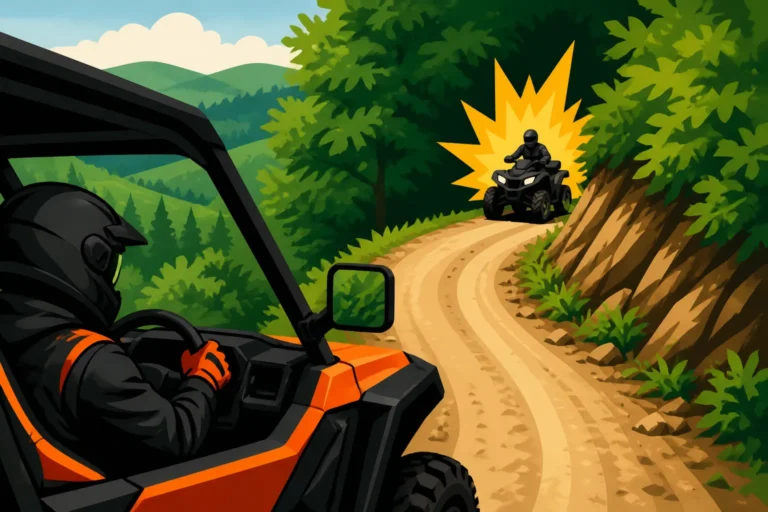
Imagine cruising a winding trail, the woods pressing in on either side, when suddenly a deer bolts across your path. Or perhaps you're on a shared road route, and an oncoming car doesn't see your silhouette against the dim background until the last second. These aren't just hypothetical scenarios; they're very real dangers that riders face every night. Inadequate lighting means you can't see obstacles like fallen branches, washouts, or unexpected turns until it's too late. It also means other vehicles, pedestrians, or even wildlife have less time to react to your presence. A good lighting setup isn't just a convenience; it's a vital piece of your safety equipment, helping you spot hazards and allowing others to spot you. The unforgiving nature of Wisconsin's varied terrain, from dense forests to open fields, means that every ounce of visibility counts when daylight fades.
Legal Obligations for Night Operation
Beyond personal safety, Wisconsin has clear legal requirements for operating ATVs and UTVs during hours of darkness or when visibility is limited. These aren't suggestions; they are laws designed to protect everyone on and around our trails and routes. Ignoring these rules can lead to hefty fines and, more importantly, put you and others in harm's way. When a warden pulls you over and your machine isn't up to snuff, "I didn't know" isn't a valid excuse. The state mandates specific types of lights, their functionality, and even when they need to be on. Riders often get caught out by these details, especially if they're used to riding during the day or coming from states with different regulations. Understanding and complying with these obligations is a fundamental part of being a responsible rider in the Badger State.
Visibility for You and Other Riders
Think about the chain of visibility: you need to see where you're going, and everyone else needs to see you coming. On a dark trail, your headlights cut through the gloom, revealing the path ahead, but your taillights and reflectors are equally important for riders behind you. On road routes, this becomes even more critical, as you're sharing space with cars, trucks, and even pedestrians. A flickering taillight or a missing reflector could mean the difference between a smooth ride and a serious incident. Being clearly visible helps prevent rear-end collisions, gives other drivers time to adjust their speed, and alerts everyone to your presence. It's about creating a predictable environment where everyone knows what to expect, minimizing surprises in low-light conditions.
Mandatory Lighting for ATVs and UTVs in Wisconsin
Wisconsin's regulations for ATV and UTV lighting are specific, especially concerning operation during low-light conditions. These aren't optional accessories; they are non-negotiable requirements that every rider must meet to be legal and safe.
Front-Facing Illumination
When you're out riding your ATV or UTV in Wisconsin, especially when it's dark or visibility is poor, you absolutely must have a white headlight visible from the front. This isn't just a suggestion; it's the law. The headlight needs to be on and illuminating the path ahead at least a half-hour after sunset and a half-hour before sunrise, or anytime conditions like fog, rain, or snow reduce visibility to less than 500 feet. The purpose of this headlight is twofold: to allow you to see where you're going and to make you visible to anyone approaching from the front. It needs to be bright enough to serve both functions effectively, cutting through the darkness and warning others of your presence. A dim, flickering, or improperly aimed headlight can be almost as dangerous as no headlight at all, as it gives a false sense of security while failing to provide adequate illumination or warning.
Rear Visibility Essentials
Just as important as seeing where you're going is ensuring you're seen by those behind you. Wisconsin law mandates that ATVs and UTVs must be equipped with a red taillight visible from the rear for at least 500 feet during the same low-light conditions that require a headlight. This taillight is your beacon to anyone approaching from behind, preventing potential collisions. Many riders focus so much on the forward light that they overlook the condition of their taillight, but it's equally critical, especially on shared trails or when traversing road routes. Beyond the taillight, a red reflector must be mounted on the rear of the machine, even if your taillight is functioning perfectly. This reflector provides an added layer of safety, reflecting light from other vehicles' headlights and ensuring some visibility even if your taillight fails. When inspecting your machine before a night ride, always check both the taillight and the reflector.
Side Markers and Reflectors
While headlights and taillights grab most of the attention, don't forget about side visibility. Wisconsin law requires that ATVs and UTVs operating at night or during limited visibility conditions have at least one amber reflector on each side, visible from the side. These might seem like minor details, but they play a crucial role in preventing accidents, especially when you're crossing intersections or moving between lanes on a designated road route. A vehicle approaching from the side might not see your front or rear lights, but the side reflectors catch their headlights, making your machine's profile apparent. Imagine pulling out of a staging area onto a trail or route; those side reflectors could be the only thing that alerts an oncoming rider or driver to your presence. Regular checks to ensure these are clean, intact, and properly positioned are part of thorough pre-ride preparation. For more on what wardens look for, check out [Warden Enforcement on Wisconsin Routes].
Specific Requirements for Headlights
Your machine's headlights are your eyes in the dark, and Wisconsin has specific rules about when and how they should be used to ensure both your safety and that of others.
The "When" and "Where" of Headlight Use
Knowing when to flip on your headlights is just as important as having them. In Wisconsin, the rule of thumb is straightforward: your headlights must be on if you're operating your ATV or UTV between one-half hour after sunset and one-half hour before sunrise. This also applies anytime visibility is limited to 500 feet or less due to weather conditions like fog, rain, or heavy snow. This "when" applies universally, whether you're cruising a county road route or traversing a forested trail. Ignoring this simple rule not only makes you harder to see, but it also leaves you open to a citation. Many riders underestimate how quickly twilight fades into true darkness, or how a sudden fog bank can reduce visibility dramatically. Always err on the side of caution and turn your lights on early, rather than waiting until it's too late. The legal specifics for operating on routes are further detailed in [Riding a Wisconsin Route After Sundown].
Brightness and Beam Pattern
It's not enough to simply have a headlight; it needs to be effective. Wisconsin law generally requires headlights to illuminate objects at least 200 feet ahead of the machine. This means your headlight needs to be sufficiently bright, and its beam pattern designed to spread light effectively across your path. A focused spot beam might be great for seeing far down a straight section, but it won't help you spot a deer darting in from the side or a deep rut directly in front of your tires. Conversely, a beam that's too wide might not reach far enough. The ideal headlight offers a balance, providing good forward visibility while also illuminating the immediate surroundings. Many stock ATV and UTV headlights do a decent job, but some riders find that an aftermarket upgrade dramatically improves their night vision. Just be mindful that overly bright lights, particularly on road routes, can blind oncoming traffic, creating another hazard.
Aiming Your Headlights Properly
Even the best headlights are useless if they're not aimed correctly. A headlight pointed too high will blind oncoming riders and drivers without adequately lighting your immediate path. One pointed too low will illuminate only the ground directly in front of your tires, leaving you blind to distant obstacles. Proper aiming ensures that the light is concentrated where you need it most: on the trail or road ahead, without scattering excessively into the sky or directly into the eyes of others. Most machines have adjustment screws that allow you to fine-tune the angle. A good rule of thumb is to park your machine on a level surface about 25 feet from a wall. Your low beam should project a clear cutoff line that falls slightly below the height of the light itself. If you've recently installed a lift kit or changed tire sizes, it's especially important to re-check your headlight aim, as these modifications can drastically alter the stock beam pattern.
Understanding Taillight and Reflector Rules
While your headlights guide your way, your taillights and reflectors are your silent guardians, signaling your presence to those behind you. Wisconsin law has clear stipulations for these crucial components.
Ensuring Your Machine is Seen from Behind
The red taillight on your ATV or UTV is paramount for ensuring you're seen by anyone approaching from the rear. Wisconsin law states that this taillight must be visible from a distance of 500 feet. This isn't just for trails; it's especially critical on shared road routes where other vehicles are traveling at higher speeds. A functioning taillight provides a consistent visual cue of your presence and position, allowing other operators to react and adjust. A common mistake is assuming that if your brake lights work, your taillight is fine. While often integrated, the running taillight should be steadily lit whenever your headlights are on. Always double-check this before heading out after dark. A burnt-out bulb or a loose connection can leave you dangerously invisible, and subject to fines for non-compliance. These details are part of the broader [Taillight Requirements on a Wisconsin Machine].
The Role of Red Reflectors
Beyond the active taillight, passive red reflectors are also a mandatory part of your machine's rear visibility in Wisconsin. These reflectors don't require power; they simply bounce back light from other sources, such as an approaching vehicle's headlights. They are a critical backup system, providing some degree of visibility even if your taillight fails due to electrical issues or a broken bulb. Wisconsin law requires at least one red reflector mounted on the rear of your ATV or UTV. Many machines come with these built-in, but they can get damaged, dirty, or fall off over time. It's easy to overlook these small but mighty safety devices during a pre-ride check. Make sure they are clean, intact, and free from obstructions. On road routes, especially, these reflectors help provide visibility from multiple angles, an essential component of road safety. More on passive visibility can be found in [Reflectors for a Wisconsin Route Ride].
Keeping Your Lights Clean and Functional
Even the brightest, most perfectly aimed lights are useless if they're caked in mud, obscured by snow, or damaged. Wisconsin trails and routes can get incredibly messy, and it's your responsibility to ensure all your lights and reflectors remain clean and functional throughout your ride, especially when operating at night. Before every ride, give your headlights, taillights, and reflectors a quick wipe down. During longer rides, particularly in wet or dusty conditions, it's a good habit to periodically check them and clean them as needed. A cracked lens can scatter light inefficiently, and a loose wire could cause intermittent failures. Carrying a small cleaning cloth and a spare bulb or two (if your machine uses them) can be a lifesaver. This proactive approach to maintenance ensures consistent visibility, reduces the risk of mechanical failure, and keeps you compliant with Wisconsin's lighting requirements.
Accessory and Aftermarket Lighting
Many riders want to enhance their night riding experience beyond what stock lighting offers, especially for challenging trails. While aftermarket lighting can greatly improve visibility, it's crucial to understand Wisconsin's rules regarding these additions, particularly on public roads and designated routes.
Popular Add-Ons and Their Purpose
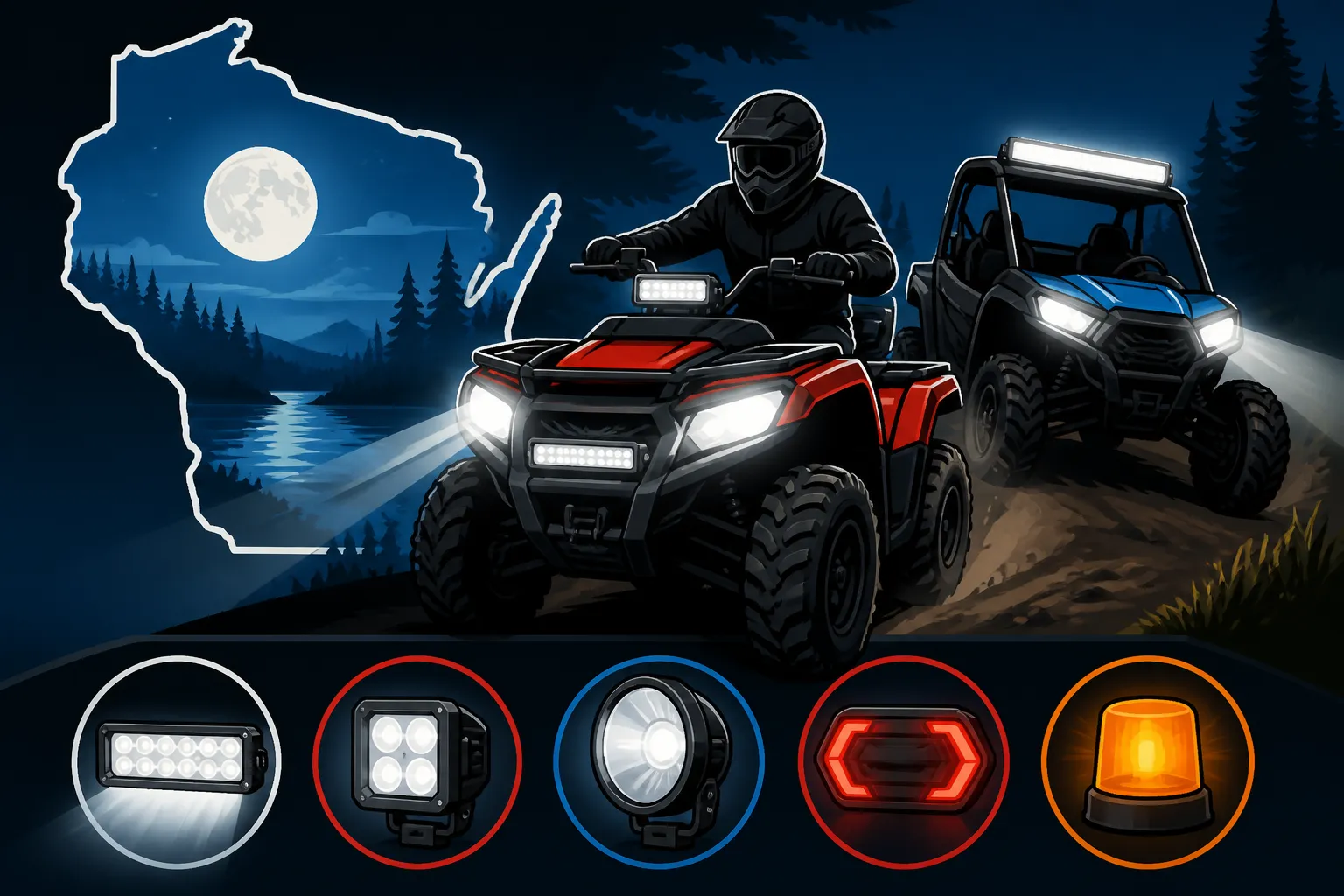
The world of aftermarket lighting for ATVs and UTVs is vast, offering everything from powerful LED light bars to small accent lights. Riders often add auxiliary lights like LED light bars, cube lights (or "pods"), and ditch lights to supplement their stock headlights, especially for serious trail riding. These lights are designed to provide a wider beam, a longer throw, or a more intense flood of light, helping illuminate the sides of the trail, spot obstacles far ahead, or cut through thick dust or fog. Some riders also install rock lights for crawling over technical terrain, or colorful accent lights for aesthetics. For those exploring more technical trails in Wisconsin's county forests, having a robust lighting setup can make all the difference, revealing every rock and root. Companies like SuperATV offer a wide range of these aftermarket lighting solutions designed to withstand the rigors of off-road use.
Legality of Extra Lights on Public Ways
Here's where it gets tricky: while extra lights are fantastic for off-road use, their use on public roads and designated ATV/UTV routes in Wisconsin is heavily restricted. Generally, any auxiliary lighting that is not a standard white headlight or red taillight must be covered or turned off when operating on a public road or route. The primary concern is that these high-intensity lights can blind oncoming traffic or other riders, creating a significant safety hazard. You might have an incredibly powerful light bar from SuperATV that turns night into day on a private logging road, but if you're riding a designated town road route, that light bar needs to be off and possibly even covered. Fines can be imposed for improper use of auxiliary lighting on public ways. It’s always best to check the local municipal ordinances for specific road route rules, as some towns might have unique regulations beyond state law.
Smart Upgrades for Trail Riding
For dedicated trail riders, especially those exploring the deeper woods of the Chequamegon-Nicolet National Forest or the extensive county forest systems, smart lighting upgrades can transform the night experience. Instead of just adding the biggest, brightest light bar you can find, consider a balanced approach. A good quality LED light bar, perhaps a 30-inch or 40-inch model, mounted on the roof can provide excellent forward and peripheral vision for trails. Supplementing this with smaller LED pods mounted on the A-pillars or bumper can help illuminate blind spots or provide focused light for specific tasks. When choosing upgrades, prioritize durability and weather resistance, as Wisconsin's varying conditions can be tough on electronics. Brands like SuperATV offer robust, waterproof light bars and pods built for exactly these types of demanding environments. Remember, the goal is enhanced visibility without becoming a hazard to others or drawing unwanted attention from wardens when you transition to a public route.
| Light Type | Mandatory in Wisconsin? | Purpose | Usage on Public Routes (Generally) | Usage on Trails (Generally) |
|---|---|---|---|---|
| Headlight (White) | Yes | Illumination of path, forward visibility | Required after dark | Required after dark |
| Taillight (Red) | Yes | Rear visibility, indicates presence | Required after dark | Required after dark |
| Rear Reflector (Red) | Yes | Passive rear visibility | Required at all times | Required at all times |
| Side Reflectors (Amber) | Yes (each side) | Passive side visibility | Required at all times | Required at all times |
| Brake Lights (Red) | Yes (if equipped) | Indicates braking | Required at all times | Required at all times |
| Auxiliary Light Bars | No | Enhanced forward/peripheral illumination | Must be off/covered | Permitted, enhances visibility |
| LED Pods/Ditch Lights | No | Focused spot/flood lighting for specific areas | Must be off/covered | Permitted, enhances visibility |
| Accent/Underglow Lights | No | Aesthetic lighting | Generally not permitted/must be off | Permitted on private land/some trails |
Consequences of Non-Compliance and Best Practices
Ignoring Wisconsin's lighting rules for your ATV or UTV isn't just a minor oversight; it carries real risks, from fines to serious accidents. Knowing the consequences and adopting best practices can keep you safe and legal.
Fines and Citations for Inadequate Lighting
Let's be real: no one wants to get pulled over, especially not for something that could have been easily prevented. Operating an ATV or UTV with inadequate or improper lighting in Wisconsin can lead to fines and citations. A warden on patrol, particularly during dawn, dusk, or nighttime hours, is specifically looking for machines that don't meet the legal requirements. You could be cited for everything from a burnt-out taillight to using an auxiliary light bar on a public road route. These fines aren't just a slap on the wrist; they add up, taking away from your fun and your riding budget. Beyond the financial hit, a citation can also put a damper on your entire riding trip. It’s an unnecessary headache that can be avoided with a few minutes of inspection before you head out. For more on what to expect if you're not compliant, refer to [Wisconsin Fines for Illegal Road Riding].
The Real Dangers of Poor Visibility
Beyond the legal penalties, the most severe consequence of poor lighting is the heightened risk of an accident. On dark trails, unseen obstacles like fallen trees, hidden rocks, or sudden washouts can cause you to lose control, resulting in serious injuries to yourself or your passengers. On road routes, an improperly lit machine is a phantom to other drivers, increasing the likelihood of a collision with a car or truck, which is almost always devastating for the ATV or UTV rider. Wildlife encounters are also far more dangerous when you can't see them coming. A clear night ride shouldn't involve white-knuckle panic because you can't see what's five feet in front of you. Prioritizing proper lighting is an investment in your safety and peace of mind.
Pre-Ride Checks and Maintenance Habits
The best way to avoid fines and stay safe is to make a routine of pre-ride checks and maintain good habits. Before every night ride, or even any ride where conditions might turn dim, walk around your machine. Turn on all your lights—headlights (low and high beam), taillights, and brake lights—and visually confirm they are all working. Check your reflectors to ensure they are clean and intact. If you have auxiliary lights, confirm they are off or covered when you're on public roads or routes. Carry spare bulbs if your machine uses them, and know how to change them. Keep your lenses clean from mud, dust, and snow. By making these checks a regular part of your riding routine, you significantly reduce your risk of running afoul of the law or, more importantly, running into something you couldn't see.
Disclaimer
This article is for general informational purposes only and does not constitute professional advice. Laws, prices and regulations vary by location and change over time. Consult a qualified professional for guidance on your specific situation.