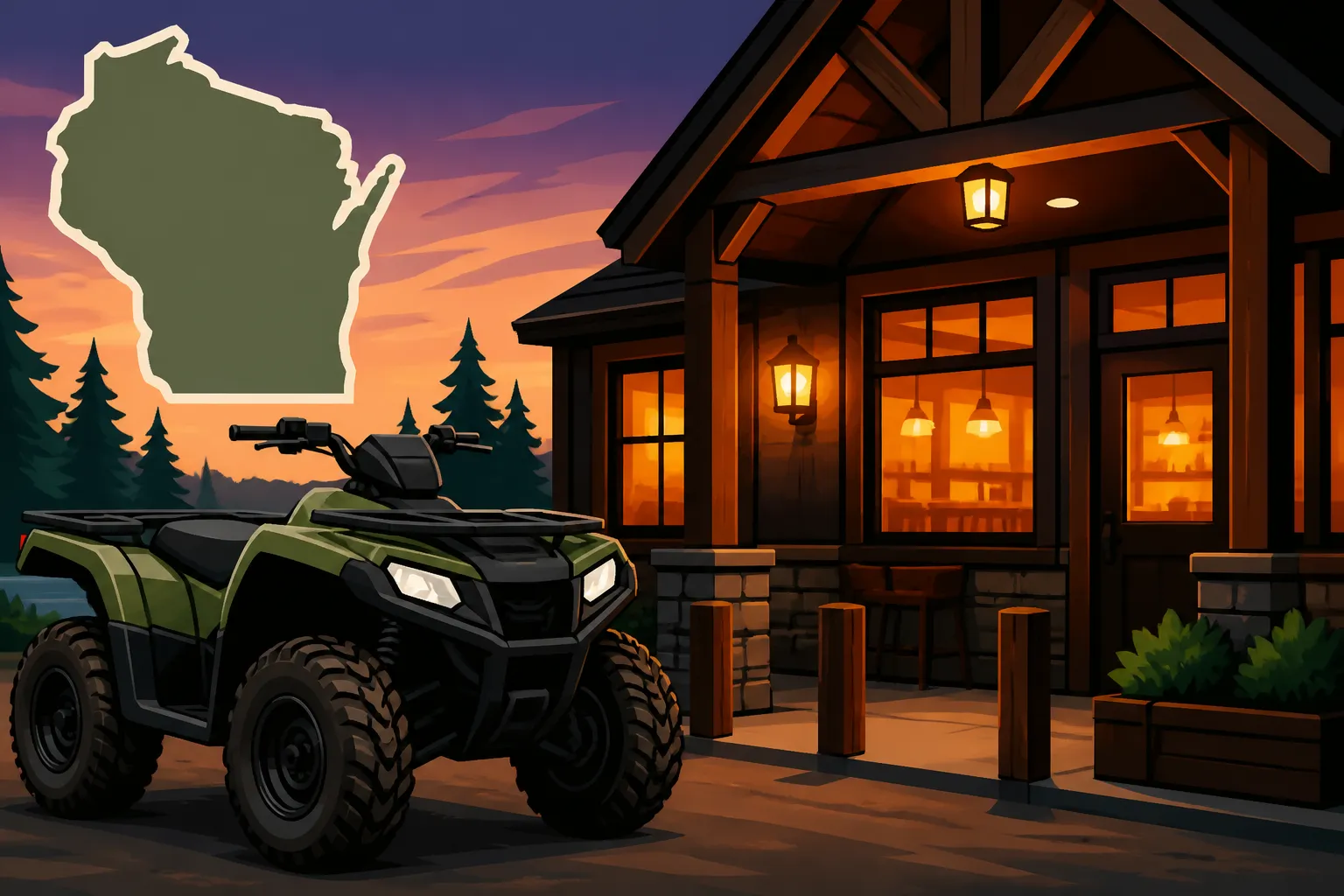
Parking an ATV Outside a Wisconsin Tavern
There's nothing quite like a day of tearing through Wisconsin's trails, feeling the fresh air, and then rolling right into a charming Northwoods town for a bite to eat or a refreshing beverage. It's part of the quintessential Wisconsin ATV/UTV experience. But here’s the rub that often catches riders off guard: while many towns welcome our machines on their designated routes, knowing where to actually park that quad or side-by-side outside your favorite tavern can be surprisingly tricky. You don’t want a great day on the trails to end with a parking ticket, or worse, your machine being towed. This guide is all about helping you understand the nuances of parking your ATV or UTV outside a Wisconsin tavern, ensuring your pit stops are as stress-free as your rides.
The Allure of a Trailside Tavern Stop in Wisconsin
Let's be honest, part of the magic of riding in Wisconsin is the ability to connect trails with small towns, allowing you to fuel up both your machine and yourself. There’s a distinct sense of community that forms when riders congregate, sharing stories from the trail and enjoying the local hospitality.
Why Riders Love These Stops
Picture this: you've just conquered a challenging section of the [Black River State Forest ATV Riding] trails, dust-covered and exhilarated. The thought of a cold drink and a warm meal in a cozy tavern is incredibly appealing. These establishments often become unofficial trailheads, places where you can meet up with friends, get local tips on conditions, or simply unwind. It's about more than just convenience; it's about the social fabric of the riding culture here in Wisconsin. Stopping at a tavern isn't just a pit stop; it's an extension of the adventure, a chance to immerse yourself in the local flavor of places like Eagle River, St. Germain, or Arbor Vitae. You'll find many taverns and restaurants strategically located along or very close to [Wisconsin Trails That Reach a Tavern].
The Legal Framework for Road Use
Wisconsin has made significant strides in embracing ATV and UTV tourism, with many towns and counties establishing [Wisconsin Rules for a Road Route] that allow machines on specific roads, often connecting trail systems or providing access to services. This is fantastic, as it means you can legally [Riding an ATV Into Eagle River] or other trail towns. However, the permission to ride on these routes doesn't automatically grant you carte blanche for parking wherever you please. Just like driving your car into town, your ATV or UTV is subject to the same general parking regulations once you leave the moving lane of traffic. This distinction is crucial and often where riders encounter unexpected issues. The fact that you're operating a recreational vehicle, rather than a car, doesn't exempt you from municipal parking rules.
Understanding Parking Rules for ATVs and UTVs
Navigating the parking landscape in Wisconsin trail towns can feel like a riddle sometimes. You're allowed on the roads, but then what? It boils down to understanding a few core principles and the frustrating reality of local variations.
General Principles of Parking in Wisconsin Municipalities
When you pull off a designated ATV/UTV route and aim for a parking spot, remember that your machine, regardless of its off-road nature, is now essentially acting as a vehicle on a public roadway or parking area. This means standard traffic laws regarding parking generally apply. Think about it: you can't just leave your truck in the middle of an intersection, right? The same logic extends to your quad.
This typically includes:
- No Parking Zones: Areas marked with "No Parking" signs, yellow curbs, or those that would obstruct traffic flow or visibility (like within a certain distance of an intersection or fire hydrant).
- Time Limits: Some areas, especially in busier downtowns, might have time-limited parking, even if it's less common for an ATV/UTV than a car.
- Accessibility: You can't block handicapped ramps or parking spaces unless you have a valid permit displayed.
- Private Property: You generally cannot park on private property without the owner's permission. While most taverns implicitly grant permission by having a parking lot, it’s not universal.
The overarching principle is that you must park safely, legally, and without impeding traffic or access. This can sometimes be a challenge when you're pulling into a popular spot on a busy weekend.
Specific Ordinances and Local Variations
Here's where it gets particularly tricky and often leads to confusion. While state law provides the framework for ATV/UTV use, individual cities, towns, and villages in Wisconsin have the authority to create their own [Municipal Ordinances Wisconsin Riders Must Read]. These local ordinances can dictate everything from hours of operation for routes to specific parking regulations.
What's perfectly fine in one town might lead to a ticket in the next. For instance, some towns might have dedicated ATV/UTV parking areas, especially near popular trailheads or business districts. Others might treat ATVs just like cars for parking purposes, requiring them to fit into standard car-sized spots. Still others might have very strict "no parking on the street" rules, forcing you onto private lots.
The frustrating part is that these local rules aren't always clearly marked, especially for visitors. You might ride into a small community that has recently opened up its roads to ATVs, but hasn't yet caught up with clear signage for parking. This makes it essential to do your homework or be extra vigilant upon arrival. Finding a town's specific rules can sometimes involve digging through their website or calling the local clerk's office, which is a step many riders simply don't have time for when they're ready to hit the trails. [Finding a Wisconsin Town's ATV Ordinance] is a real skill.
Private Property vs. Public Right-of-Way
This distinction is crucial for understanding where you can legitimately park.
- Private Property: This includes the parking lot of the tavern itself, a gas station, a resort, or any other business. If you park on a tavern's private lot, you are generally covered by the implied permission granted to patrons. Most taverns are happy for your business and provide space. However, it's always good practice to park considerately, perhaps in designated "ATV/UTV" areas if available, or in spots that don't take up prime car parking during busy times. If the lot is small, ask a staff member where they prefer you park. Remember, even on a private lot, blocking fire lanes or access points is a definite no-go.
- Public Right-of-Way: This refers to public streets, shoulders, or municipal parking areas. When parking here, you are fully subject to local ordinances and state traffic laws. This is where you'll encounter potential issues with "no parking" signs, time limits, or general traffic flow rules. Unless explicitly allowed, parking on the shoulder of a road route that isn't designated as a parking area can also be risky.
Always default to parking on the tavern's private property if space is available and you're confident you're not causing an obstruction. It's almost always the safer bet.
Practical Considerations and Best Practices for Tavern Parking
So, you're planning your ride and want to include a stop at that great little place in town. How do you make sure you park without a hitch? A little foresight and common sense go a long way.
Before You Ride: Researching Local Ordinances
I know, I know. It's supposed to be fun, not homework. But trust me, a quick check can save you a lot of hassle. Before you head out, especially if you're exploring a new area, try to do a little research on the specific town you plan to visit.
- Check the town or village website: Many municipalities will have their ATV/UTV ordinances posted online, sometimes under the police department or public works section. Look for sections on "parking" or "ATV/UTV regulations."
- Call ahead: If you have a specific tavern in mind, a quick phone call to ask about parking for ATVs and UTVs can clarify things immediately. They'll appreciate you asking and can give you the local scoop.
- Consult local rider groups or forums: Fellow riders often have the best up-to-date information on local quirks and popular spots. They might know which places have ample UTV parking or which towns are sticklers for certain rules.
- Check DNR resources: While the DNR focuses more on trail conditions and registration, they sometimes link to county or municipal resources that can be helpful. This is similar to how you would [Checking Wisconsin Trail Status Before You Drive] to avoid unexpected closures.
On-Site Observation and Common Sense
Even with research, sometimes you arrive in a town, and things look a little different than expected. This is where your good judgment comes into play.
- Look for signage: Obvious, right? But sometimes in small towns, signs can be less prominent. Keep an eye out for "No Parking," "ATV Parking," or general parking regulation signs.
- See what others are doing: Observe how other ATVs and UTVs are parked. Are they all in one designated area? Are they mixed with cars? While not always a guarantee of legality, it offers a strong clue about local customs. If everyone else has parked their machines along the street, it’s a good indicator it’s allowed, but still use caution.
- Don't block anything: This is the golden rule. Don't block driveways, fire hydrants, pedestrian crossings, dumpsters, or other vehicles. If you have a larger side-by-side, be mindful of how much space it takes up. Parking your UTV across two car spots in a busy lot on a Saturday afternoon is probably not going to win you any friends, even if it's technically allowed.
- Consider the size of your machine: A small ATV is easier to tuck away than a full-size side-by-side. If you're in a UTV, try to find an end spot or an area where you won't hinder the movement of other vehicles or people.
Securing Your Machine
Once you've found a spot, don't forget about securing your machine. It's a sad reality, but ATVs and UTVs can be targets for theft, especially when left unattended for a period.
- Lock it up: Use a sturdy cable lock to secure your machine to a fixed object if possible (though often difficult in a parking lot). A disc lock on a wheel can also be a deterrent.
- Remove valuables: Don't leave your wallet, phone, GPS, or other tempting items in plain sight. Take them with you or secure them in a locked storage compartment. This is part of the general advice on [What to Carry on a Northwoods Ride].
- Consider a kill switch or alarm: Some riders install aftermarket kill switches or alarm systems for added peace of mind.
- Park in well-lit, visible areas: Avoid parking in dark, secluded corners if possible. Choose spots where there's foot traffic or surveillance.
Courtesy and Neighborly Riding
Remember, when you're riding into a small town, you are a guest. How you ride and park reflects on the entire ATV/UTV community.
- Minimize noise: Be mindful of engine noise, especially when idling or slowly maneuvering into a spot. Revving your engine loudly in a small town is a surefire way to generate complaints. [The 96-Decibel Sound Test in Wisconsin] exists for a reason, but common courtesy goes further.
- Control dust: If you're coming off a dry trail, try to approach town slowly to minimize kicking up excessive dust, particularly near businesses or homes.
- Keep routes clear: Don't hang out in the middle of a road route. Move your machine quickly and efficiently into a legal parking spot.
- Support local businesses: Your stops are vital to the economies of these small towns. Be a good customer, and you'll likely find taverns and businesses welcoming you back.
By being considerate and informed, you help foster a positive relationship between riders and the communities that host us, ensuring these fantastic trailside stops remain open and welcoming for years to come.
Navigating Common Challenges and Avoiding Citations
Despite your best efforts, sometimes you encounter situations that test your parking prowess. Knowing how to recognize and avoid potential pitfalls can save you from a frustrating encounter with a local law enforcement officer.
The "No Parking" Zone
These seem obvious, but can sometimes be missed, especially when you're focused on finding a spot. A "No Parking" sign means exactly that – no parking, regardless of whether you're in an ATV, UTV, car, or truck. These zones are usually established for safety, to maintain clear visibility, or to ensure access. Common "no parking" areas include:
- Within a certain distance of an intersection: To allow drivers a clear view of cross-traffic.
- Near fire hydrants: Emergency services need unhindered access.
- In front of private driveways: Respect property owners' access.
- Loading zones or bus stops: These are designated for specific purposes and often have time limits or are entirely restricted.
Even if you only plan to run in for "just a minute," parking in a "No Parking" zone is an open invitation for a citation. These rules are in place for a reason, and wardens, deputies, or local police will enforce them, especially in towns that experience high volumes of recreational traffic.
Understanding Time Limits and Metered Parking
While less common for ATVs and UTVs than for cars, some busier Wisconsin towns might have time-limited parking, even for general spaces. This could be 30 minutes, 1 hour, or 2 hours. If you're planning a longer stop for a meal, it's something to be aware of. Similarly, metered parking, though rare for ATV/UTV specific spots, could apply if your machine is parked in a general public parking area that uses meters. Always read any signs carefully. Don't assume that because your machine is smaller or different, these rules don't apply. They often do.
Consequences of Illegal Parking
Getting a parking ticket is a frustrating end to an otherwise great day of riding. The consequences for illegal parking of an ATV or UTV in Wisconsin can vary, but generally include:
- Fines: These can range from relatively minor to surprisingly hefty, depending on the severity of the infraction and the local ordinance. Don't be surprised by [Wisconsin ATV Ticket Amounts] that might seem high for a simple parking violation.
- Towing: In more serious cases, especially if your machine is blocking traffic, creating a hazard, or parked in a restricted zone for an extended period, it could be towed. Getting your machine back from an impound lot is a major headache, involving significant fees (towing, storage) and a lot of lost riding time.
- Negative community perception: Consistent illegal parking by riders can lead to negative sentiments in the community, potentially resulting in stricter enforcement, changes to route access, or even the closure of routes. Being a responsible rider helps keep these privileges open for everyone.
Dealing with Limited Space and Crowds
On a beautiful summer weekend or during a popular festival, Northwoods towns can become incredibly busy. You might arrive at your desired tavern only to find the parking lot completely full, with no obvious place to park your ATV or UTV.
Here are a few strategies for navigating crowded situations:
- Have a backup plan: Identify a couple of taverns or restaurants in the area you're visiting. If one is too crowded, you can easily pivot to another.
- Look for municipal lots: Some towns have public parking lots that might be a short walk from your destination. While it adds a few steps, it's better than a ticket.
- Park further away: Sometimes, the best strategy is to park a block or two away from the main hub, where parking might be less competitive. Just ensure it’s a legal spot, and if it’s on private property, that it’s acceptable.
- Consider sharing spots: If you're riding with a group, sometimes you can coordinate to park multiple machines in a way that minimizes space usage, if allowed. Be smart about this and don't block access for others.
- Ask for guidance: If you're truly stuck, politely ask a tavern employee or even a local for advice on where to park. They often know the hidden gems or acceptable overflow areas.
The key is to remain patient and prioritize legal, safe parking over convenience. A little extra effort upfront can save you a lot of grief later on.
Equipment and Accessories for Secure Parking
Beyond the rules and etiquette, having the right gear can significantly enhance your peace of mind when leaving your ATV or UTV outside a Wisconsin tavern. Think of it as an investment in protecting your fun.
Security Measures
The unfortunate truth is that recreational vehicles can be targets for theft, especially in public parking areas. A few key security items can act as excellent deterrents.
- Cable Locks: A heavy-duty cable lock is a simple yet effective tool. You can often thread it through a wheel, frame, or even secure your machine to a sturdy, immovable object like a light pole (if allowed and not obstructing anything). Look for cables that are cut-resistant.
- Disc Locks: These small, compact locks attach to the brake disc of your ATV, preventing the wheel from turning. They are easy to carry and provide a visible deterrent. Some even come with an alarm feature that sounds if the machine is tampered with.
- GPS Trackers: For higher-value machines, a hidden GPS tracker can be invaluable. If your ATV or UTV is stolen, a tracker greatly increases the chances of recovery. Many models offer real-time tracking via a smartphone app.
- Kill Switches/Battery Disconnects: An aftermarket kill switch or a simple battery disconnect can prevent someone from easily starting your machine, even if they defeat other locks. These are often hidden and require specific knowledge to bypass.
- Alarms: Standalone alarms, similar to those for motorcycles, can be installed on your ATV or UTV. They typically feature motion sensors and a loud siren to alert you and deter thieves.
While no security system is foolproof, layering these measures makes your machine a much less attractive target than an unsecured one.
Reflective Gear and Lighting
While parking, the focus is less on active riding and more on visibility. If you end up parking your machine on a public right-of-way, even if it's a designated parking spot, ensuring it's visible, especially around dusk or after dark, is paramount. This can prevent accidents involving other vehicles or pedestrians.
- Reflective Tape: Applying reflective tape to various parts of your machine – fenders, bumpers, or storage boxes – significantly increases its visibility to headlights. Brands like SuperATV offer a variety of accessories, including storage solutions and bumpers, which could be customized with reflective tape.
- Auxiliary Lights: If your machine has auxiliary lights, consider leaving them on a low setting or flashing, if safe and legal, to make it more noticeable. However, be mindful of draining your battery or creating an annoyance for others.
- Proper Use of Machine Lights: Ensure your ATV/UTV's standard headlights and taillights are functioning correctly, especially if you anticipate returning to your machine after dark. Remember the [Lighting Rules for Wisconsin Night Riding] apply to operation, but good lighting is always a plus for visibility while parked.
The Right Accessories for Peace of Mind
Beyond direct security, certain accessories can indirectly contribute to secure parking or simply make the experience better.
- Storage Boxes/Bags: Lockable storage boxes or soft bags (like those from SuperATV) allow you to secure smaller items that you don't want to carry into the tavern. This keeps valuables out of sight and lessens the risk of snatch-and-grab thefts.
- Machine Covers: A basic cover, even a lightweight one, can deter casual theft by obscuring what kind of machine you have. Out of sight, out of mind, sometimes works.
- Winch: While primarily for recovery on trails, a winch can indirectly offer a sense of security. Knowing you can pull your machine out of a tricky situation (e.g., if you accidentally park in a soft spot) reduces anxiety about leaving it.
Investing a little in security and visibility equipment is a small price to pay for the peace of mind that comes with knowing your machine is safe while you're enjoying your well-deserved break at a Wisconsin tavern.
Here's a quick summary of common parking scenarios and best practices:
| Scenario | Location Type | Best Practice | Things to Avoid |
|---|---|---|---|
| Tavern Parking Lot | Private Property | Park in an empty spot, preferably away from prime car spaces. Inquire if designated ATV/UTV parking exists. Secure machine. | Blocking driveways, fire lanes, accessibility ramps. Taking up excessive space. |
| Public Street Parking | Public Right-of-Way | Look for "P" signs, check for time limits. Park parallel if required, within marked lines. Secure machine. | "No Parking" zones, fire hydrants, intersections, blocking traffic. |
| Shoulder of a Road Route | Public Right-of-Way | Only if explicitly allowed and safe. Ensure machine is entirely off the traveled way. | Obstructing visibility, parking where not permitted, creating a hazard. |
| Crowded Situations | Both | Have a backup tavern. Consider parking a block or two away. Look for municipal lots. Be patient. Secure machine. | Parking illegally due to frustration. Blocking others. |
| Overnight Parking (Rare) | Both | Never leave your machine overnight on a public street. Arrange for secure, private storage with permission. | Leaving machine exposed and unsecured on public land. |
Disclaimer
This article is for general informational purposes only and does not constitute professional advice. Laws, prices and regulations vary by location and change over time. Consult a qualified professional for guidance on your specific situation.