Milwaukee County Tax on a Machine
Buying an ATV or UTV in Wisconsin is an exciting venture, full of dreams of hitting the trails or getting work done around the property. But let's be real, navigating the paperwork and understanding all the associated costs, especially sales tax, can feel like trying to cross a muddy bog on a two-wheel drive machine – a real headache! This guide is here to untangle the specifics of sales tax, particularly when you're dealing with a machine purchased in or destined for Milwaukee County, ensuring you understand exactly what you need to pay and how.
Navigating Sales Tax on Your Wisconsin ATV or UTV
When you're looking at a new or used ATV or UTV in Wisconsin, one of the first things that often throws people for a loop is the sales tax. It's not just a flat fee; there are state-level taxes, and then some counties add their own slice to the pie. It's easy to overlook this detail when you're focused on the machine itself, but understanding it upfront can save you a big surprise down the road, especially when it comes time to register your rig.
The Foundation: Wisconsin's State Sales Tax
Every ATV and UTV purchased in Wisconsin, whether new from a dealer or used from a private seller, is subject to the statewide sales tax. This percentage is set by the state and applies uniformly across all 72 counties. It's a significant part of the overall cost, and it's collected to fund various state services. For most folks, this is the most straightforward part of the tax equation – you know it's coming, and it's pretty consistent.
However, even with the state sales tax, many buyers get confused about how and when to pay it, especially in private sales. Dealers typically roll it right into the purchase price, handling all the remittance for you. But if you're buying from a buddy or a listing online, that responsibility shifts to you, the buyer, to report and pay the tax directly to the Wisconsin Department of Revenue. This is a crucial step that needs to be completed before you can finalize your registration. Missing this step is a common pitfall that can lead to delays and frustration when you're trying to get your new-to-you machine out on the [Wisconsin Trails That Reach a Tavern].
The Twist: Local Sales Tax Add-Ons
Beyond the statewide sales tax, many counties in Wisconsin impose an additional "county sales tax" or "county use tax." These are usually smaller percentages, but they add up and are designed to fund local initiatives and services within that specific county. Not every county has one, which is where the confusion often kicks in. You might buy a machine in one county with no local tax, but if you live or register it in a county that does have one, you might still be on the hook for that local portion. It's a complex system, and it's exactly why understanding your specific situation, like being in Milwaukee County, is so important.
This county-specific tax means that the "final price" for an ATV or UTV can vary depending on where the transaction occurs or where you, the buyer, reside. It's not always about the sticker price; it's about the full financial picture that includes these local add-ons. You'll want to be familiar with [County Sales Tax on a Wisconsin Machine] if you're traveling around the state looking for your next ride.
Understanding Milwaukee County's Specific Sales Tax
Now, let's get down to brass tacks about Milwaukee County. It's one of the areas in Wisconsin that does indeed have its own local sales tax, and understanding this is key to budgeting for your ATV or UTV purchase there. This isn't just an obscure detail; it directly impacts your out-of-pocket costs and what you'll owe before you can legally ride.
The Milwaukee County Rate: What to Expect
Milwaukee County imposes an additional sales tax rate on top of the state's general sales tax. This rate is usually a fraction of a percent, but it applies to the full purchase price of your ATV or UTV. While the state sales tax is uniform, this extra percentage is specific to transactions occurring within Milwaukee County. So, if you're buying from a dealership in Milwaukee or a private seller whose transaction officially takes place within the county lines, you'll be paying this additional amount.
It's important to remember that tax rates, both state and local, can change. While I can't give you the exact current percentages, you should always verify the latest rates with the Wisconsin Department of Revenue or a reputable local dealer before finalizing your purchase. This diligence will prevent any unexpected costs. The core idea, however, is that there is an additional tax layer in Milwaukee County that you need to factor in.
How State and County Taxes Add Up
To give you a clearer picture, let's break down how these two tax components combine. Imagine you're eyeing an ATV with a price tag of, say, X dollars. First, you'll calculate the statewide sales tax percentage on X. Then, you'll calculate the Milwaukee County sales tax percentage on that same X. You add these two tax amounts together, and that's your total sales tax burden.
Let's illustrate with a hypothetical scenario:
| Component | Calculation Example (Hypothetical) |
|---|---|
| ATV Purchase Price | $8,000 |
| Wisconsin State Sales Tax | State Rate % of $8,000 |
| Milwaukee County Sales Tax | Milwaukee Rate % of $8,000 |
| Total Sales Tax Due | Sum of State + County Tax |
This combined figure is what you'll need to pay before you can move forward with registering your machine. It's easy to just focus on the machine's price, but many new owners in Milwaukee County have been surprised when the final tax bill is a bit higher than they initially anticipated because they forgot about that local add-on.
Who Pays and When: The Buyer's Responsibility
Ultimately, the responsibility for paying these taxes falls on the buyer. When you purchase from a licensed ATV or UTV dealer in Milwaukee County, they will typically collect both the state and county sales tax from you at the point of sale. They handle all the remittance to the proper authorities, which simplifies things immensely for you. You pay them, and they take care of the rest, giving you the necessary paperwork to prove payment.
However, if you're buying from a private individual in Milwaukee County, the situation changes. The seller isn't typically equipped or legally obligated to collect sales tax. This means you, the buyer, are responsible for calculating, reporting, and paying both the state and Milwaukee County sales tax directly to the Wisconsin Department of Revenue. This must happen within a specified timeframe, usually when you go to register the machine. Many people find this part confusing, often wondering if they can just skip it. Trust me, you can't. The Wisconsin DNR will require [Proof of Sales Tax Wisconsin Requires] before they issue your registration.
Paying Your Dues: Dealer vs. Private Sales in Milwaukee County
The process of actually remitting sales tax for your ATV or UTV varies significantly based on whether you buy it new from a dealer or used from a private seller. Understanding these distinct pathways is crucial to ensure you don't run into any roadblocks when trying to get your machine registered and ready for the trails.
Dealer Purchases: Streamlined and Simple
When you buy a new or used ATV or UTV from a licensed dealer located in Milwaukee County, they act as the intermediary for tax collection. This is by far the easiest route for buyers when it comes to sales tax. The dealer will calculate the purchase price, add on the state sales tax, and then factor in the Milwaukee County sales tax. All of these charges will be clearly itemized on your purchase agreement.
You pay the total amount, including all applicable taxes, directly to the dealer. They then remit those funds to the Wisconsin Department of Revenue on your behalf. As part of the transaction, the dealer will provide you with paperwork, often a copy of the sales invoice or a specific form, that serves as your official proof that sales tax has been paid. This document is absolutely essential when you head to a registration agent or the Wisconsin DNR to [Registering an ATV in Wisconsin]. Without it, you'll face delays and likely be required to pay the tax again. Dealers are typically very good about explaining this process and providing all the necessary documentation.
Private Party Sales: Your Direct Responsibility
This is where many buyers encounter the most confusion and potential for missteps. When you purchase an ATV or UTV from a private seller in Milwaukee County, the sales tax responsibility falls squarely on your shoulders. The seller will usually just quote you a price for the machine, and that price does not include any sales tax. It's up to you, the buyer, to calculate the correct state sales tax and the additional Milwaukee County sales tax on the agreed-upon purchase price.
You'll then need to report and pay this sales tax directly to the Wisconsin Department of Revenue. This is typically done when you apply for your ATV or UTV registration. You'll fill out specific forms provided by the DNR or a registration agent, declaring the purchase price and remitting the sales tax. It's a critical step that must be completed. Forgetting or trying to avoid this payment will result in your registration application being denied. To make sure you have everything buttoned up, you'll want a solid [What a Wisconsin ATV Bill of Sale Should Carry] document for your purchase. Many riders turn to resources like LawDepot for reliable templates to ensure all the necessary details, including the purchase price for tax calculation, are accurately recorded.
Avoiding Surprises: Common Questions About Milwaukee County ATV Tax
Understanding the rules is one thing, but real-world scenarios often throw curveballs. Buyers frequently have specific questions that go beyond the general guidelines, especially when dealing with county-specific taxes like those in Milwaukee. Let's tackle some of these common inquiries to help you avoid any last-minute surprises.
What if I Buy My ATV Outside Milwaukee County But Live There?
This is a really common scenario and it often causes the most confusion. If you're a Milwaukee County resident and you purchase an ATV or UTV from a dealer or private seller located in a different Wisconsin county (especially one without its own local sales tax), you might wonder if you still owe Milwaukee County's tax.
For dealer sales, the general rule in Wisconsin is that sales tax is collected based on the location of the sale. So, if you buy from a dealer in, say, Waukesha County (which has no county sales tax), the dealer would only collect the statewide sales tax from you. You would typically not owe Milwaukee County's sales tax if the transaction physically occurred outside Milwaukee County.
However, for private sales, when you go to register the machine, you're reporting the purchase to the state. The Wisconsin Department of Revenue expects the state sales tax to be paid. Whether the Milwaukee County sales tax applies can depend on where the machine will be "stored, used, or consumed" by the resident. It's generally tied to the point of sale for most transactions, but always confirm with the DNR if you're unsure about your specific situation, especially with private party sales across county lines. It is always wise to complete [Transferring a Wisconsin Registration Within Ten Days] to ensure all tax obligations are met promptly.
Getting Credit for Tax Paid to Another State
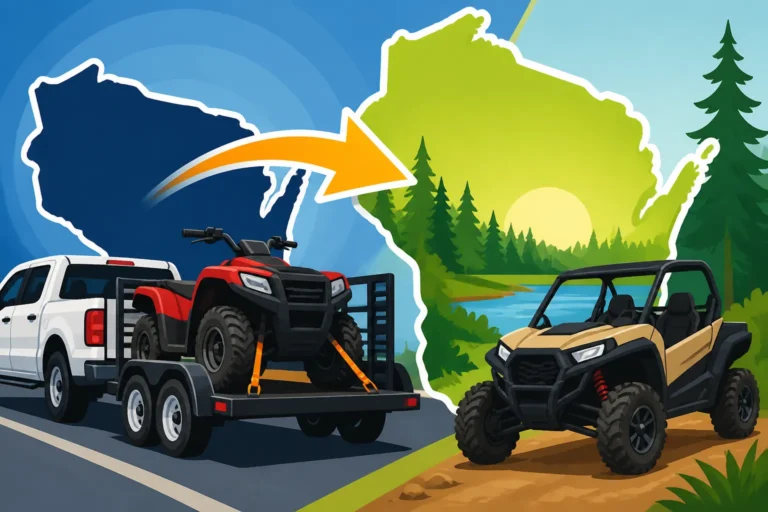
Sometimes, you might find a fantastic deal on an ATV or UTV just over the border in Illinois, Michigan, or Minnesota. If you buy a machine in another state and then bring it back to Wisconsin to register and ride, you'll still be subject to Wisconsin's sales tax. However, Wisconsin does offer a credit for sales tax legally paid to another state. This means you generally won't pay double tax on the same purchase.
To claim this credit, you'll need official proof that you paid sales tax to the other state. This would typically be a sales invoice or receipt from the seller clearly showing the sales tax collected. You'll present this documentation when you apply for your Wisconsin registration. If the tax you paid in the other state was equal to or greater than what Wisconsin would charge (state + any applicable county tax for where you reside), you might owe nothing more to Wisconsin. If the other state's tax was less, you'd owe the difference. It's an important consideration for anyone bringing a machine into the Badger State from elsewhere; make sure you understand [Credit for Tax Paid to Another State]. You'll still need to register it once it's here, and [Wisconsin Registration for an Out-of-State Machine] can guide you through that process.
The Importance of Good Documentation
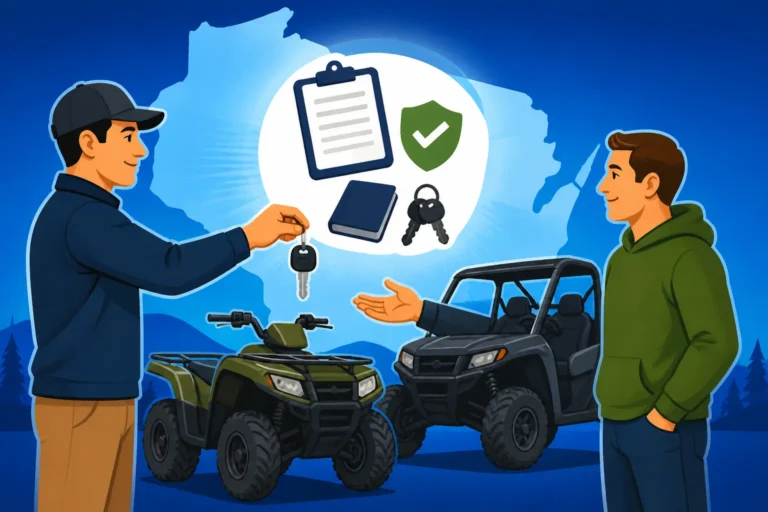
No matter if you're buying from a dealer or a private party, solid documentation is your best friend when it comes to sales tax and registration. For a dealer purchase, keep your itemized sales invoice safe. For a private sale, a clear, comprehensive bill of sale is absolutely critical. This document should explicitly state:
- The full names and addresses of both the buyer and seller.
- The date of the sale.
- A detailed description of the ATV or UTV, including make, model, year, and most importantly, the Vehicle Identification Number (VIN).
- The agreed-upon purchase price.
- A statement that the seller certifies they are the legal owner and the machine is free of liens (if applicable).
This bill of sale is your primary proof of the transaction and the amount paid, which directly impacts your sales tax calculation. Don't skip this step! Using a template from a service like LawDepot can help ensure you don't miss any vital information. This helps the Wisconsin DNR when you apply for your [Wisconsin DNR ATV Registration Explained] and clarifies whether your machine will be used for [Public Use Versus Private Use in Wisconsin]. Having accurate paperwork helps ensure a smooth process and avoids any disputes or confusion down the line, especially regarding tax liability.
Disclaimer
This article is for general informational purposes only and does not constitute professional advice. Laws, prices and regulations vary by location and change over time. Consult a qualified professional for guidance on your specific situation.