County Tax Rates Across Wisconsin
It's incredibly frustrating when you're looking to purchase an ATV or UTV, you've done all your research on the machine itself, you've even budgeted for the state sales tax, and then suddenly, there's another layer: county sales tax. It feels like the goalposts keep moving, and it can make a big difference to your final out-the-door price. This guide is here to demystify the county sales tax across Wisconsin, helping you understand where it applies, how it's calculated, and what it means for your next off-road vehicle purchase.
Understanding Wisconsin's Sales Tax Layers for Your ATV or UTV
When you're shelling out for a new or used ATV or UTV in Wisconsin, you're always going to encounter the statewide sales tax. That's a given, and it's something every resident buying within the state, or bringing a machine in from out-of-state, has to factor in. But here's where it gets a little more complex and, frankly, a bit annoying if you haven't budgeted for it: many counties in Wisconsin also levy their own sales tax. This isn't just a minor blip; it can add a noticeable chunk to your overall cost, and it's definitely something you want to be aware of before you sign on the dotted line or hand over cash in a private sale.
The Standard State Sales Tax You Can't Avoid
Let's start with the baseline. Every single sale of an ATV or UTV in Wisconsin, whether it's brand new from a dealership or a trusty used machine from a private seller, is subject to the state's uniform sales tax rate. This tax is collected by the seller (if they're a registered dealer) or paid directly by the buyer to the Department of Revenue when registering the vehicle (for private sales or out-of-state purchases). The key here is "statewide." No matter if you're buying in Milwaukee, Minocqua, or Monticello, that state portion of the tax remains consistent. It's usually based on the purchase price of the machine, after any trade-in credits if you're dealing with a dealership. For anyone looking for a deeper dive into the state's expectations, we've got a whole guide on [Wisconsin Sales Tax on an ATV Purchase].
When Counties Add Their Own Percentage
Beyond the state's rate, many — though not all — counties in Wisconsin have adopted an additional county sales tax. This is typically a smaller percentage than the state tax, but it's applied on top of the state rate, increasing your total tax burden. These county taxes are usually put in place to fund local services, infrastructure projects, or sometimes to help maintain local trail systems, though that's not always a direct correlation. It's a way for local governments to generate revenue specific to their area. The crucial part for you as a buyer is knowing which county you're making the purchase in, because that determines whether this extra tax applies. If you're wondering, "Is my county one of them?" then you're asking the right question, and we'll break down how to find that out.
Identifying Counties With Additional ATV Sales Tax
Navigating which counties charge an additional sales tax can feel like a guessing game if you don't have the right information. You might assume all counties do, or none do, but the reality is a mix. It’s important to remember that this county-level tax is applied at the point of sale, or at the point of registration if it's a private transaction. So, if you live in a county without the extra tax but buy your machine in a county that does, you'll typically pay that county tax. Conversely, if you live in a county with the tax but buy your machine in one that doesn't, you won't pay the county tax from your home county at the time of purchase.
Counties That Levy an Extra Sales Tax
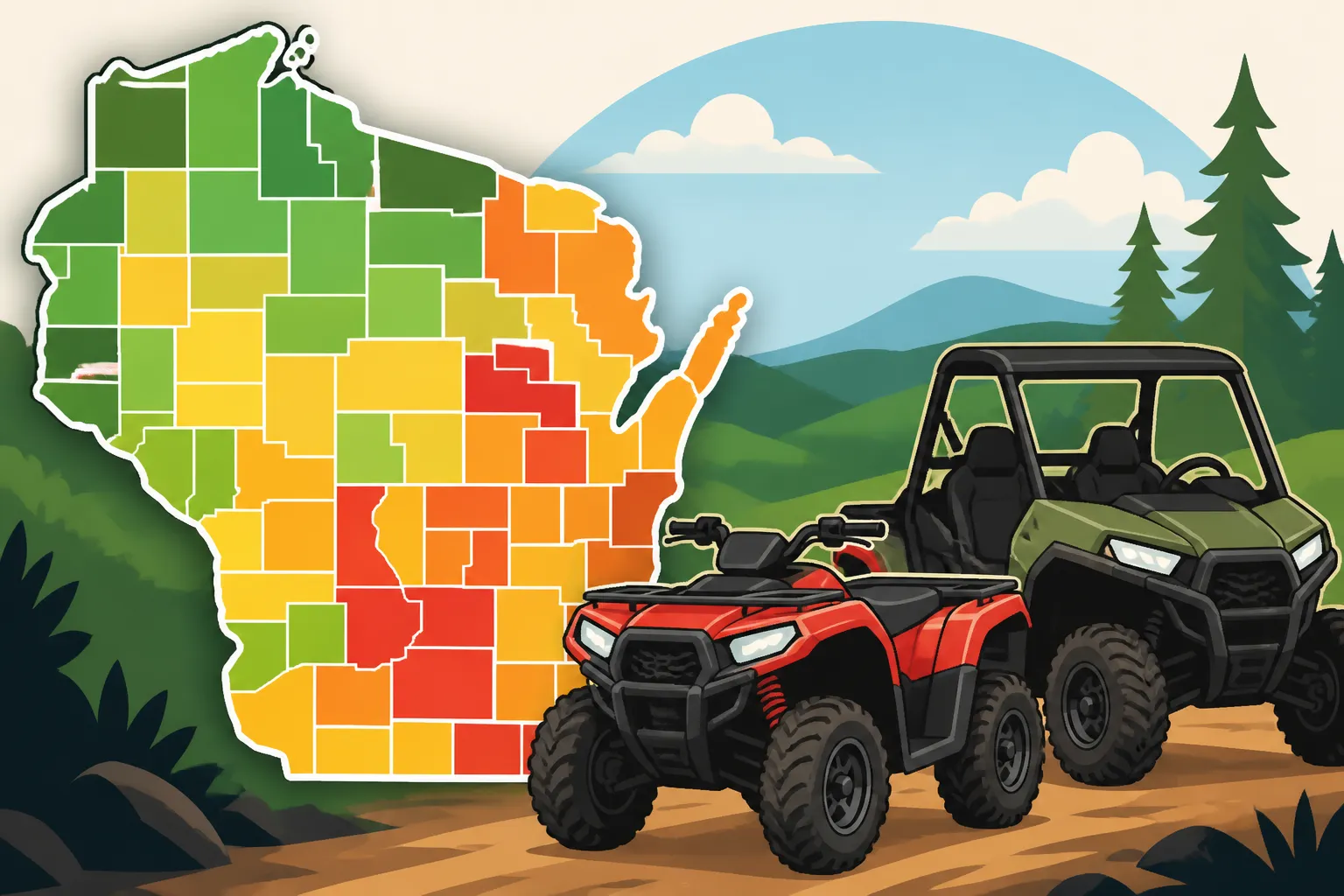
Many of Wisconsin's counties have opted to add a county sales tax. This means that when you buy an ATV or UTV in one of these counties, whether from a dealer or a private party, an additional percentage will be added to the state's sales tax. This additional percentage will apply to the purchase price of your machine. It’s always best to check the Wisconsin Department of Revenue’s official list or consult directly with your dealer if you’re buying new, or factor it in if you’re buying used. To give you a clearer picture, here's a table listing some of the counties that typically impose an additional sales tax:
| County Name | Additional Sales Tax Applies? |
|---|---|
| Adams County | Yes |
| Ashland County | Yes |
| Barron County | Yes |
| Bayfield County | Yes |
| Brown County | Yes |
| Columbia County | Yes |
| Dane County | Yes |
| Door County | Yes |
| Douglas County | Yes |
| Dunn County | Yes |
| Eau Claire County | Yes |
| Fond du Lac County | Yes |
| Forest County | Yes |
| Green County | Yes |
| Jefferson County | Yes |
| Juneau County | Yes |
| Kenosha County | Yes |
| Kewaunee County | Yes |
| La Crosse County | Yes |
| Langlade County | Yes |
| Lincoln County | Yes |
| Manitowoc County | Yes |
| Marathon County | Yes |
| Marinette County | Yes |
| Milwaukee County | Yes |
| Monroe County | Yes |
| Oconto County | Yes |
| Oneida County | Yes |
| Outagamie County | Yes |
| Ozaukee County | Yes |
| Pepin County | Yes |
| Pierce County | Yes |
| Polk County | Yes |
| Portage County | Yes |
| Price County | Yes |
| Racine County | Yes |
| Richland County | Yes |
| Rock County | Yes |
| Rusk County | Yes |
| St. Croix County | Yes |
| Sauk County | Yes |
| Sawyer County | Yes |
| Shawano County | Yes |
| Sheboygan County | Yes |
| Taylor County | Yes |
| Trempealeau County | Yes |
| Vernon County | Yes |
| Vilas County | Yes |
| Walworth County | Yes |
| Washburn County | Yes |
| Washington County | Yes |
| Waukesha County | Yes |
| Waupaca County | Yes |
| Waushara County | Yes |
| Winnebago County | Yes |
| Wood County | Yes |
Please note: This table lists many counties that typically have a county sales tax. Tax laws and rates can change, so always verify the current status with the Wisconsin Department of Revenue or your local county office.
For a more specific look at one of the state's most populous counties, check out our article on [Milwaukee County Tax on a Machine].
Counties That Charge No Local Tax
While many counties have implemented their own sales tax, there are still a good number that do not. In these counties, when you buy an ATV or UTV, you will only pay the statewide sales tax. This can be a pleasant surprise for buyers who happen to make their purchase in one of these areas. It’s a bit of a relief to know that your budget won’t be stretched by an unexpected local levy. Knowing which counties are "tax-free" at the local level can sometimes even influence where you decide to make a purchase, although the availability of the right machine or a trusted seller usually takes precedence. We also have a resource dedicated to [Counties That Charge No Local Tax].
How County Tax Affects Your ATV or UTV Purchase
Understanding that county sales tax exists is one thing, but knowing how and when it actually impacts your purchase is another. It's not just about the extra money; it's about the process of collection and ensuring you're paying the correct amount, whether you're at a dealership or shaking hands on a private deal. This is where things can get a bit confusing, especially for first-time buyers or those who are used to only dealing with state-level sales tax.
When Buying From a Wisconsin Dealer
When you buy a brand-new or used ATV or UTV from a licensed dealer in Wisconsin, they are responsible for collecting both the state and any applicable county sales tax. The county tax that applies will be based on the location of the dealership. So, if the dealer is located in a county that levies an additional sales tax, that tax will be added to your total bill, regardless of which county you, the buyer, reside in. Dealers are typically well-versed in these regulations and will include all taxes in your purchase agreement. They'll handle remitting these funds to the state, making the process relatively seamless for you, the buyer. You’ll see it broken out on your final sales invoice, typically as a line item showing state sales tax and then another for county sales tax.
Paying County Tax in a Private Sale
Private sales are where the sales tax process can sometimes trip people up. When you buy an ATV or UTV from another individual, that private seller typically doesn't collect sales tax from you. Instead, you, the buyer, are responsible for paying the sales tax directly to the Wisconsin Department of Revenue when you register your machine. This is where the county tax comes into play for private sales. The county sales tax that applies will be based on your primary residence address. So, if you live in Milwaukee County, which has a county sales tax, you'll pay both the state and Milwaukee County sales tax when you go to register your privately purchased ATV, even if you bought it from someone living in a county without the extra tax.
It's super important to accurately report the purchase price, as this is what the sales tax calculation will be based on. Some buyers and sellers might be tempted to undervalue the machine on a bill of sale to save on taxes, but this can lead to issues with the Department of Revenue. For guidance on accurately documenting a private sale, consider using resources like LawDepot to create a clear bill of sale that reflects the true transaction. A well-drafted bill of sale is crucial for [Sales Tax on a Private Quad Sale in Wisconsin] and serves as your proof of purchase.
Impact on Out-of-State Purchases
What if you bought your dream machine in another state and are now bringing it into Wisconsin? This scenario also has specific tax implications. When you register an out-of-state ATV or UTV in Wisconsin, you'll generally be required to pay Wisconsin sales tax (both state and any applicable county tax for your residence) if you haven't already paid a sales tax in the state of purchase that is equal to or greater than Wisconsin's combined rate. Wisconsin does offer a credit for sales tax paid to another state, which can help offset your tax burden here. This avoids double taxation, which is a relief! However, if the tax you paid out-of-state was less than Wisconsin's rate, you'll owe the difference. For more details on this, you might find our article on [Paying Wisconsin Tax on a Machine Bought in Illinois] particularly helpful, as well as information on [Credit for Tax Paid to Another State].
Practical Tips for Navigating ATV and UTV Sales Tax
Navigating the various layers of sales tax for your ATV or UTV purchase can feel like a chore, but with a bit of foresight and understanding, you can avoid any nasty surprises. Being prepared means knowing your numbers and what documentation you'll need. Don't let tax complexities overshadow the excitement of getting your new ride out on the trails!
Always Confirm the Total Cost
Before you commit to a purchase, especially with a private seller, always confirm the total sales tax you'll be responsible for. If buying from a dealer, their invoice should clearly break down the state and county sales tax. For private sales, you'll need to calculate this yourself based on your county of residence and the agreed-upon purchase price. Don't just budget for the sticker price; add the estimated sales tax amount (state + county, if applicable) to your budget to get a realistic final figure. This step can save you from a major headache later when you go to register your machine.
Keep Meticulous Records
Whether you're buying from a dealer or a private party, keep all your purchase paperwork in a safe place. This includes the bill of sale, any receipts, and especially the official registration documents. This proof is crucial not only for tax purposes but also for proving ownership, especially since Wisconsin does not title ATVs. For a private sale, a detailed bill of sale is essential. You can find templates online, or use a service like LawDepot to ensure you have a comprehensive document for [What a Wisconsin ATV Bill of Sale Should Carry]. This document will show the purchase price, which is the basis for your sales tax calculation, and it will be your key piece of [Proof of Sales Tax Wisconsin Requires].
Understand Registration and Tax Payment Deadlines
After a private sale, you typically have a limited window to register your ATV or UTV with the Wisconsin Department of Natural Resources (DNR). During this registration process, you'll also pay any applicable sales tax that wasn't collected by a dealer. Missing this deadline can lead to complications or even penalties. So, once you've secured your machine, make it a priority to gather all the necessary documentation and complete the registration and tax payment process promptly. It's often easier to get this done sooner rather than later, so you can focus on enjoying your new ride.
Disclaimer
This article is for general informational purposes only and does not constitute professional advice. Laws, prices and regulations vary by location and change over time. Consult a qualified professional for guidance on your specific situation.