Counties That Charge No Local Tax
Navigating the world of ATV and UTV ownership in Wisconsin can feel like a maze, especially when it comes to understanding all the fees and taxes involved. Many folks get caught off guard by the varying sales tax rates, wondering if they'll pay more depending on where they buy their machine. This guide is here to clear up the confusion around Wisconsin's sales tax, specifically focusing on which counties don't add extra local taxes to your purchase, helping you budget accurately and avoid unwelcome surprises.
Decoding Wisconsin's ATV/UTV Sales Tax: State vs. Local
When you're looking to buy an ATV or UTV in Wisconsin, whether it's a shiny new side-by-side from a dealer or a pre-loved quad from a private seller, sales tax is almost certainly part of the equation. It's one of those non-negotiable costs that often gets overlooked in the excitement of a new ride, but understanding how it's calculated is crucial for your budget. The key is knowing that Wisconsin has a statewide sales tax, and then some — but not all — counties can add their own little slice to that pie.
The Foundation: Wisconsin's Statewide Sales Tax
At the heart of it all is Wisconsin's state sales tax. This is a consistent rate that applies across the entire state, no matter which county you're in. This percentage is set by the state legislature, and it's the baseline for almost every taxable purchase you make, including your new or used off-road machine. When you're dreaming of hitting the trails, remember that this state sales tax will be applied to the purchase price of your ATV or UTV. It’s important to understand this fundamental charge, as it will always be present, unlike potential county taxes. For a deeper dive into this primary tax, you can read more about [Wisconsin's 5 Percent State Sales Tax].
Understanding the County Sales Tax Surcharge
Beyond the statewide sales tax, some counties in Wisconsin have the authority to impose an additional local sales tax. This is often referred to as a "county sales tax" or "county tax," and it's typically a much smaller percentage added on top of the state rate. The purpose of these local taxes can vary, often funding specific county services or infrastructure projects.
The crucial thing to remember is that this isn't a universal charge. Only a select number of counties have chosen to implement this additional tax. If you buy your machine in one of these counties, your total sales tax bill will be slightly higher than if you purchased it in a county that doesn't have this surcharge. This is where the confusion often comes in for buyers, as they might have paid one rate in their home county for a different purchase, only to find a different total when buying an ATV in another part of the state. It really pays to do your homework ahead of time. To clarify the ins and outs of this specific charge, check out [County Sales Tax on a Wisconsin Machine].
Identifying Wisconsin Counties with No Additional Local Sales Tax
The good news for most prospective ATV and UTV owners in Wisconsin is that the majority of counties across the state do not levy an additional local sales tax. This means that if you make your purchase in one of these many counties, you'll only be responsible for the statewide sales tax rate, keeping your overall cost a little lower.
The Common Scenario: Just the State's 5 Percent
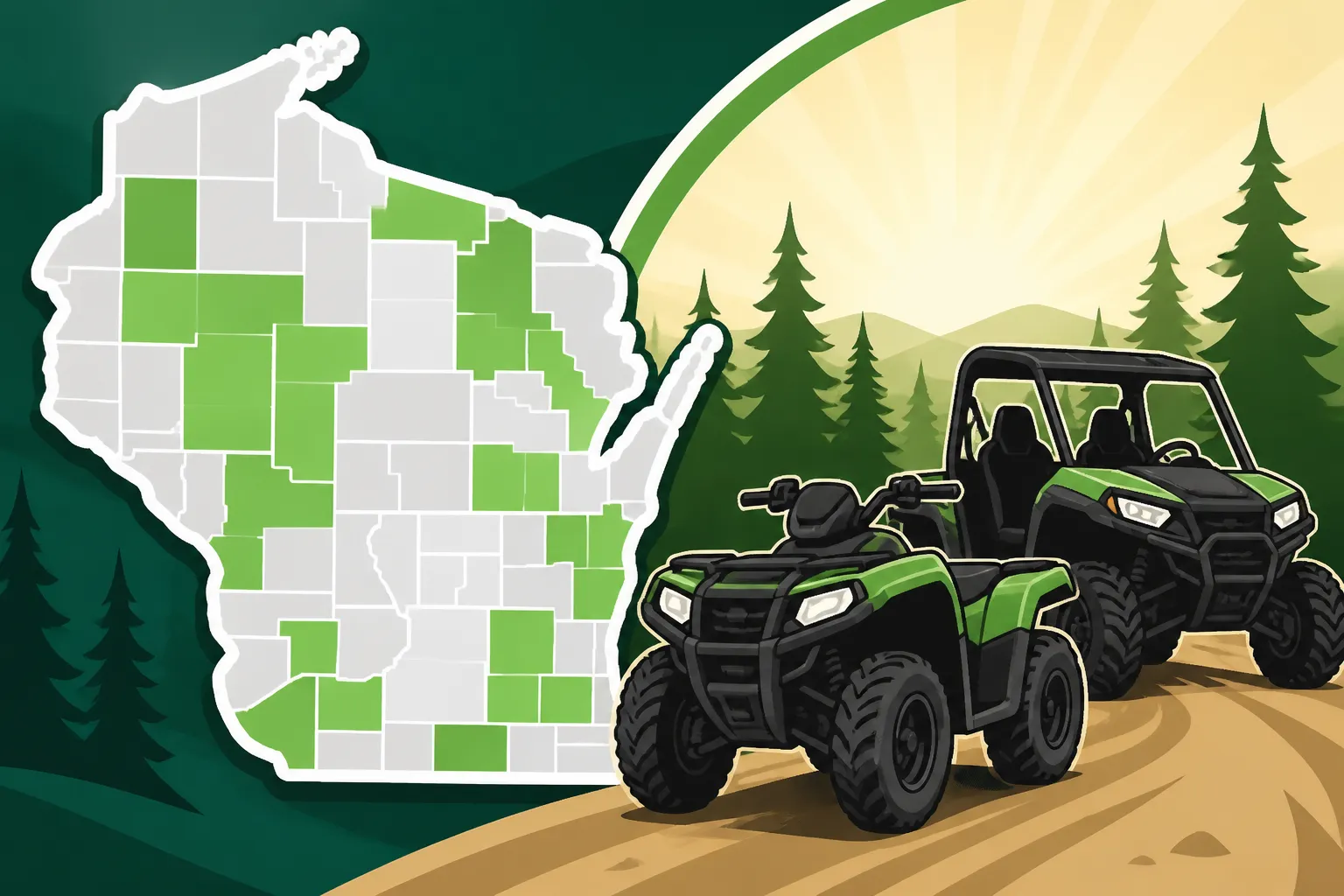
For most of Wisconsin, when you buy an ATV or UTV, you will only pay the 5% statewide sales tax. This is the prevailing situation in the vast majority of Wisconsin's 72 counties. So, if you're shopping for a machine in, say, Vilas County up north, or Juneau County in the central part of the state, or even Rock County down south, you're generally only looking at that standard 5% state sales tax.
This is a significant detail, especially for those planning to travel a bit to find the perfect deal. While the purchase price of the machine itself is often the biggest factor, knowing that you might save a little on sales tax by buying in a particular county can definitely influence your decision. It's not usually a deal-breaker, but every dollar counts, especially when you're also factoring in registration fees and other accessories.
Here's a quick overview of how the sales tax typically breaks down in Wisconsin, illustrating the most common scenario versus the exceptions:
| Tax Type | Applies To | Rate (Typical) | Notes |
|---|---|---|---|
| Wisconsin State Sales Tax | All taxable purchases statewide | 5% | Standard rate applied to the purchase price of ATVs/UTVs. |
| County Sales Tax | Select counties only | 0.5% | An additional tax, applicable only in certain counties. Most have none. |
How to Verify Local Sales Tax Rates in Wisconsin
While it's true that most Wisconsin counties don't have an additional local sales tax, it's never a bad idea to double-check, especially if you're making a significant purchase like an ATV or UTV. Tax laws can change, and you want to be sure you have the most current information for your specific transaction.
The best way to verify the local sales tax rate for any given county is to consult the Wisconsin Department of Revenue (DOR) website. They maintain up-to-date lists of all counties that impose a local sales tax. A quick search on their site for "Wisconsin county sales tax" should get you to the right place. Alternatively, if you're working with a dealer, they are required to charge the correct sales tax for their location, so they should be able to tell you upfront what the total percentage will be. For private sales, the responsibility falls more squarely on you, the buyer, to understand the tax implications of the county where the transaction takes place.
Remember, this local county tax is separate from any city or municipal taxes you might encounter on other items; for ATV/UTV sales tax purposes, it's usually just the state plus the potential county surcharge. Always verify before you make that final decision to ensure you're budgeting correctly for your new ride.
Navigating Your Purchase: Sales Tax for Dealers and Private Sales
Understanding where and how sales tax applies is just one piece of the puzzle. The way that sales tax is handled can differ significantly depending on whether you're buying from a licensed dealer or an individual seller in a private transaction. Both scenarios have their own set of rules and responsibilities, and knowing what to expect can save you a lot of hassle.
Buying from a Wisconsin Dealer: What to Expect
When you purchase an ATV or UTV from a licensed dealer in Wisconsin, the process for sales tax is usually straightforward. The dealer is responsible for calculating, collecting, and remitting the correct sales tax to the state. This means they will apply the 5% statewide sales tax, plus any applicable county sales tax, to the purchase price of your machine. This total amount will be clearly listed on your bill of sale or purchase agreement.
Dealers are typically well-versed in the local tax laws for their area, so you shouldn't have to worry about calculating it yourself. However, it’s always a good practice to review the numbers and ask questions if anything looks unclear. They'll handle all the paperwork related to the tax, which simplifies things considerably for you. They may even offer to process your initial registration with the Wisconsin DNR, which can be a real time-saver. You can learn more about this process by reading [What a Wisconsin Dealer Files for You].
Sales Tax on Private ATV/UTV Transactions
Private sales are where things can get a little more complicated, and it's also where people sometimes misunderstand their obligations. If you buy an ATV or UTV from an individual seller (not a licensed dealer) in Wisconsin, you, the buyer, are still responsible for paying the sales tax directly to the state. The seller does not collect the sales tax from you in a private transaction.
Instead, when you go to register your machine with the Wisconsin DNR, you will declare the purchase price, and the DNR will collect the sales tax from you at that time. This includes the 5% statewide sales tax and any applicable county sales tax based on your residence, or sometimes the location of the sale, depending on specific circumstances. It’s crucial to be honest about the purchase price, as misrepresenting it can lead to penalties. The DNR has systems in place to assess fair market value if the declared price seems unusually low. For more details on this, especially for private transactions, see [Sales Tax on a Private Quad Sale in Wisconsin].
Essential Documentation for Your Purchase
Whether you buy from a dealer or a private seller, having the right documentation is key. For any ATV or UTV purchase, a detailed bill of sale is essential. This document should clearly state the buyer's and seller's names and addresses, the date of sale, the purchase price, the machine's make, model, year, and its Vehicle Identification Number (VIN).
For private sales, a well-drafted bill of sale is especially critical, as it serves as your proof of purchase and the agreed-upon price for sales tax purposes. You can find templates for these documents online; many riders find online resources like LawDepot helpful for generating these types of essential legal forms to ensure all the necessary information is included. This document will be presented to the DNR when you register your machine and pay the sales tax. Having everything in order will make the registration process much smoother and demonstrate [Proof of Sales Tax Wisconsin Requires]. For an even closer look at what this crucial document should contain, check out [What a Wisconsin ATV Bill of Sale Should Carry].
Beyond Sales Tax: Other Costs of Wisconsin ATV/UTV Ownership
While sales tax is a significant upfront cost, it's by no means the only financial consideration when you become an ATV or UTV owner in Wisconsin. To truly get a handle on your budget, it's important to factor in the ongoing expenses that come with enjoying the trails and scenery. These additional costs contribute to the full picture of what it means to be a responsible and ready rider in the Badger State.
Registration, Permits, and Future Renewals
Once you've paid your sales tax, the next step is registering your ATV or UTV with the Wisconsin Department of Natural Resources (DNR). This is a mandatory step if you plan to ride on any public trails or designated routes. There are different types of registrations, such as public use and private use, each with its own fee and renewal schedule.
The fees for registration are typically annual or biennial, and they contribute to the maintenance and development of Wisconsin's extensive trail system. It's vital to stay on top of these renewals to avoid fines for riding an unregistered machine. Beyond the initial registration, out-of-state riders will also need a non-resident trail pass, which is another permit to budget for. Understanding these fees is just as important as knowing your sales tax obligations. To understand the various registration fees, including what you'll pay annually, refer to [Wisconsin ATV Registration Fee for Public Use]. You can also get a broader understanding from [Registering an ATV in Wisconsin] or [Wisconsin DNR ATV Registration Explained].
The Importance of ATV/UTV Insurance
While Wisconsin doesn't universally mandate ATV or UTV insurance for all riders, it is highly recommended and, in some specific instances, may be required by local ordinances or for certain types of riding. For instance, if you're riding on certain road routes opened by municipalities, they might require proof of insurance. Even if not legally required, comprehensive insurance can protect you financially in case of an accident, theft, or damage to your machine.
Many riders find that their existing auto or homeowners insurance policies don't adequately cover their off-road vehicles, making a dedicated ATV/UTV policy a wise investment. The cost of insurance can vary widely based on the machine's value, your riding habits, and your claims history, but it's an essential line item in your overall budget for responsible ownership. Don't let the excitement of a new machine overshadow the need for proper protection. To learn more about securing your ride, explore [Insuring an ATV in Wisconsin].
Disclaimer
This article is for general informational purposes only and does not constitute professional advice. Laws, prices and regulations vary by location and change over time. Consult a qualified professional for guidance on your specific situation.