Seasonal Residents and Wisconsin Registration
Bringing your beloved ATV or UTV to Wisconsin for extended stays, whether it's for deer camp, summer weekends at the cabin, or just enjoying the changing seasons, can feel like navigating a maze of paperwork. Many folks assume their out-of-state registration covers them entirely, only to find themselves scratching their heads when confronted with local rules. This guide is here to untangle the confusion, helping seasonal residents understand exactly what they need to do to legally and confidently ride their machines on Wisconsin's fantastic trails and routes.
Understanding Wisconsin's Stance on Out-of-State ATVs for Seasonal Stays
It's a common scenario: you have a cabin up north, or you spend a few months each year enjoying Wisconsin's natural beauty, and you want to bring your ATV or UTV along. Naturally, you’ve already registered your machine in your home state, so you might think you're good to go. However, Wisconsin has its own set of rules, and they primarily focus on how and where you'll be riding your machine within the state. The idea of a "seasonal resident" isn't a specific classification the Wisconsin DNR uses for registration purposes, but rather a description of how you're using the machine while you're here. The key question isn't how long you visit, but how long your machine essentially takes up residence and whether it touches public land.
The "Primary Residence" Principle for Your Machine
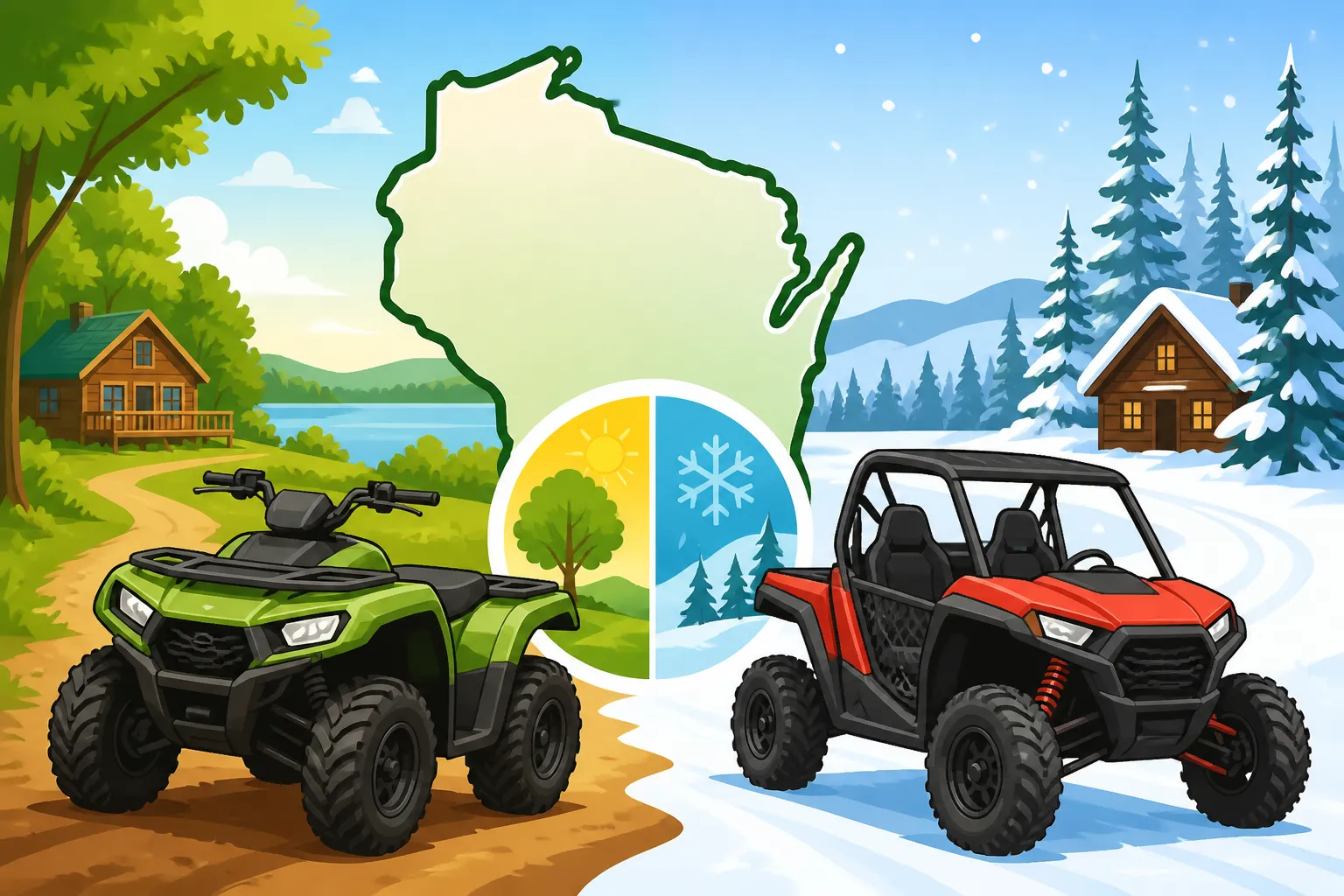
Think about your ATV or UTV having a "primary residence" too. If your machine spends the majority of its time in Wisconsin, even if you don't, then Wisconsin considers it to be a Wisconsin-based machine. This often applies to folks who keep their machines at a second home, hunting cabin, or even stored with a friend year-round, only visiting themselves periodically. This distinction is crucial because if Wisconsin becomes its de facto home, then Wisconsin's registration rules will apply, even if it's still technically registered in another state. It's not unlike how vehicles are handled; if your car is primarily garaged in Wisconsin, the state expects it to be registered here.
For example, if you live in Illinois and keep your side-by-side at your cabin in Bayfield County from May through October every year, then technically, that machine has a long-term residency in Wisconsin. While you might only be there on weekends, the machine itself is here for an extended period, making it subject to Wisconsin's public use registration requirements if you plan to ride it on trails. This is different from someone who trailers their machine up for a single weekend trip and then takes it right back home.
Reciprocity and Temporary Use Exemptions
Wisconsin does offer some reciprocity for out-of-state machines, but it's important to understand the limits. Generally, if your ATV or UTV is legally registered in another state, you can ride it on Wisconsin's public trails and routes for short, temporary visits. This is designed for tourists and visitors who are passing through or coming for a quick vacation. The operative words here are "short" and "temporary." There isn't a specific number of days defined in the statutes, which can lead to some ambiguity, but the spirit of the law implies a limited duration, not a seasonal residency.
For instance, if you're coming from Minnesota for a long weekend trip to ride the trails near Minocqua, your Minnesota registration is typically sufficient. You're a visitor, and your machine is temporarily in the state. However, if that "long weekend trip" turns into keeping your machine at a Wisconsin cabin for six months out of the year, that temporary status quickly becomes a seasonal residency, and the expectations shift. In such cases, while your out-of-state registration might still be current, the Wisconsin DNR expects you to also obtain a Wisconsin public use registration if you're going to use it on public lands. [Wisconsin Registration for an Out-of-State Machine] goes into more detail on how this applies.
When Your Out-of-State Machine Needs Wisconsin Registration
This is where many seasonal residents find themselves in a bind. The general rule is clear: if you plan to operate your ATV or UTV on any public trails, routes, or areas open to ATV/UTV use in Wisconsin, and your machine is primarily kept in Wisconsin for an extended period, you're expected to have a valid Wisconsin public use registration. It doesn't matter if you already have a valid registration from another state; the Wisconsin registration is in addition to it.
Public Use vs. Private Use for Seasonal Owners
Wisconsin distinguishes between "public use" and "private use" registrations. For seasonal residents, this distinction is key:
- Public Use Registration: This is what most people need if they intend to ride on designated ATV trails, road routes, or any public land managed by the state or counties. This registration type funds the maintenance and expansion of these trails, so it's a critical component of Wisconsin's ATV program. If your machine lives in Wisconsin for months at a time and you plan to hit the trails, this is the registration you'll need.
- Private Use Registration: This type of registration is specifically for machines that never leave private property. If you only plan to use your ATV or UTV for chores around your Wisconsin cabin, on your own undeveloped land, or on a friend's private property with permission, and it will never touch a public trail or road route, then a private use registration might suffice. However, be extremely careful here. Even crossing a public road to get from one private parcel to another, or briefly riding on the shoulder of a town road that isn't a designated ATV route, can constitute public use and require a public registration. [Public Use Versus Private Use in Wisconsin] explains these differences in more depth.
The implications for seasonal residents are significant. If your intent is to store your machine at your Wisconsin property for an entire season (e.g., spring through fall) and enjoy the extensive trail networks, then purchasing a Wisconsin public use registration is essential. This is separate from the non-resident trail pass, which is typically for out-of-state machines not primarily garaged in Wisconsin.
The Consequences of Not Registering Properly
Ignoring Wisconsin's registration requirements can lead to more than just a stern warning from a DNR warden. The penalties for an unregistered ATV or UTV, or for riding with an expired registration, can include significant fines. Imagine getting pulled over on a beautiful Saturday afternoon, miles from your cabin, only to find out your out-of-state registration isn't considered sufficient for your long-term Wisconsin use. It's a quick way to spoil a trip, incur a financial hit, and potentially have your riding privileges curtailed.
Beyond the fines, there's the broader issue of supporting the trails you love. Wisconsin's registration fees directly contribute to the maintenance and development of the very trail systems that draw so many riders to the state. By properly registering your machine, you're not just complying with the law; you're actively contributing to the resources that make Wisconsin a premier ATV/UTV destination. [Penalties for an Unregistered ATV in Wisconsin] offers more detail on the potential consequences.
Navigating the Wisconsin Registration Process for Seasonal Residents
Alright, so you've determined your out-of-state machine needs a Wisconsin registration for your seasonal stays. Don't worry, the process isn't overly complicated, especially if you have all your paperwork in order. The Wisconsin Department of Natural Resources (DNR) manages these registrations, and they've made it relatively straightforward.
What You'll Need to Register Your Machine
When you go to register your machine, whether in person or online, you'll generally need the following:
- Proof of Ownership: Since Wisconsin does not title ATVs, proof of ownership usually comes in the form of a manufacturer's statement of origin (MSO) for a new machine, or a bill of sale for a used machine. If your machine is already registered in another state, your current registration card can often serve as proof of ownership, as it shows you as the legal owner.
- Vehicle Identification Number (VIN): This is critical for identifying your specific machine. Make sure you have the correct VIN, as any discrepancies can cause delays.
- Your Personal Information: Name, address (your primary out-of-state address is fine, but you'll need a Wisconsin address for where the machine is primarily kept, if applicable, or for mailing purposes), and contact details.
- Payment for Fees: There will be a registration fee, and potentially a small agent fee if you register in person. The specific amount can vary, so it's always best to check the current rates on the DNR website. [Wisconsin ATV Registration Fee for Public Use] breaks down the costs involved.
For those situations where a bill of sale is needed, perhaps if you recently acquired the machine, you can find reliable templates for sale agreements and other legal documents through services like LawDepot. Having proper documentation protects both buyer and seller and ensures a smooth registration process.
Where and How to Register
There are a few convenient ways for seasonal residents to register their ATVs or UTVs in Wisconsin:
- Online Through the DNR Website: This is often the easiest and quickest method. You can access the DNR's Go Wild system, enter your machine's details, pay the fee, and your decals and registration card will be mailed to you. This is particularly handy if you're still at your primary residence and want to get things squared away before heading up to Wisconsin. [Renewing a Wisconsin Registration Online] covers the steps for online registration.
- In Person at a DNR Service Center or Authorized Agent: Wisconsin has numerous authorized agents, often sporting goods stores, bait shops, or even municipal offices, that can process ATV/UTV registrations. This is a great option if you're already in Wisconsin and prefer to handle things face-to-face, or if you have questions that are easier to ask in person. You'll walk out with a temporary operating receipt, allowing you to ride immediately while awaiting your permanent decals and card in the mail.
- By Mail: While less common now with online options, you can also mail in your registration application. Be sure to include all necessary documentation and payment.
Once registered, you'll receive registration decals, which must be affixed to your machine in the designated locations, and a registration card, which you should carry with you whenever you're riding. This card acts as your official proof of registration. [Wisconsin DNR ATV Registration Explained] offers a comprehensive overview of the entire process.
Common Questions and Pitfalls for Seasonal ATV/UTV Owners in Wisconsin
Even with the best intentions, navigating the nuances of ATV/UTV registration as a seasonal resident can throw up some unique questions and potential traps. Understanding these can save you a lot of hassle.
What if I Only Ride on My Own Land?
This is a frequently asked question, and it's a critical one for seasonal residents who own significant acreage. If your machine never leaves your private property in Wisconsin—and by "never leaves," we mean it doesn't even briefly touch a public road, cross a public easement, or enter a designated public trail from your property—then you generally do not need to register it for public use. In this scenario, a [Private Registration That Never Expires] might be an option, but even that is typically for machines that are genuinely confined to private land with no intent of ever being used publicly.
However, the "private use only" exception has a very high bar. Many private properties border or include easements that are technically public. Even driving your machine to a nearby gas station on a public road, or crossing a town road to access another part of your property, shifts it from private to public use. It's often safer and less stressful to simply get the public use registration if there's any chance your machine will venture beyond truly private, unencumbered land. [Registering a Machine That Never Leaves Your Land] provides further details.
What About the Wisconsin Non-Resident Trail Pass?
The non-resident trail pass is a separate permit required for out-of-state machines that are not primarily kept in Wisconsin but wish to ride on Wisconsin's public trails and routes. If you are truly a temporary visitor, bringing your machine for a week-long vacation, then your out-of-state registration plus a non-resident trail pass is what you need.
However, if your machine is primarily housed in Wisconsin for an extended period, as discussed earlier for seasonal residents, then you need the full Wisconsin public use registration, not just the non-resident trail pass. Think of it this way: the non-resident trail pass is for visitors, while Wisconsin public use registration is for machines that have effectively become "Wisconsin residents," even if their owner isn't a full-time resident. Don't confuse the two, as a warden might quickly point out the difference if you have the wrong permit. [Wisconsin's Non-Resident Trail Pass] details this permit.
Keeping Your Registration Current and Up-to-Date
Wisconsin public use registrations typically expire on March 31st, regardless of when you initially registered it. This can be a bit tricky for seasonal residents who might register in July but then see the registration expire in March of the following year. It's not a full year from your purchase date; it's a fixed annual renewal cycle. The DNR typically sends out renewal reminders, but it's ultimately your responsibility to keep track. If your machine is stored at your Wisconsin property year-round, make sure you have a system to remember that March 31st deadline. [The March 31 Expiration Every Wisconsin Rider Learns] is a great resource for understanding this cycle.
If you change your out-of-state address, or if the physical location where your machine is primarily kept in Wisconsin changes (e.g., you move it from one cabin to another), it's important to update your information with the DNR. While not always strictly enforced for address changes on ATVs, having current contact information ensures you receive renewal notices and any other important communications.
Selling Your Machine While It's in Wisconsin
If, as a seasonal resident, you decide to sell your ATV or UTV while it's stored at your Wisconsin property, you'll need to follow Wisconsin's rules for transferring ownership. Since Wisconsin doesn't title ATVs, the primary document for transfer is a properly executed bill of sale, along with handing over the current registration card. Make sure the bill of sale includes all necessary details, such as the VIN, purchase price, and names and addresses of both buyer and seller. Tools from services like LawDepot can be invaluable for generating a comprehensive and legally sound bill of sale. This ensures the new owner has clear proof to register the machine in their name. [What a Wisconsin ATV Bill of Sale Should Carry] provides a detailed checklist.
Seasonal residency offers a wonderful opportunity to explore Wisconsin's vast trail networks. By understanding and adhering to the registration requirements, you can ensure your time on the trails is stress-free, legal, and contributes to the continued health of the state's motorized recreation areas.
Disclaimer
This article is for general informational purposes only and does not constitute professional advice. Laws, prices and regulations vary by location and change over time. Consult a qualified professional for guidance on your specific situation.