Wisconsin State Sales Tax on a Quad
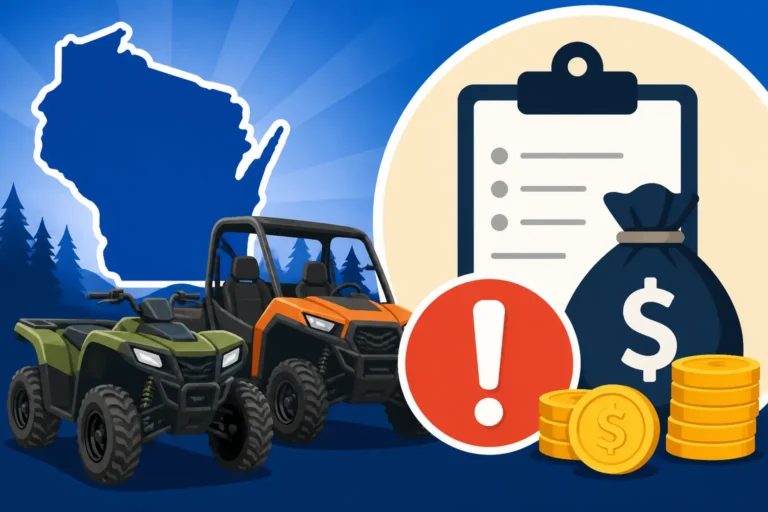
Buying an ATV or UTV in Wisconsin, whether it's a brand-new side-by-side from a dealer or a well-loved quad from a private seller, often comes with a bit of sticker shock beyond the purchase price itself. One of the biggest surprises for many first-time buyers, or even those just new to the state, is navigating the complexities of Wisconsin state sales tax. This guide will meticulously break down everything you need to know about sales tax on your off-road machine, from understanding the rates to ensuring you've paid up correctly so you can hit the trails without a hitch.
Understanding Wisconsin's Sales Tax on Your Quad Purchase
It’s easy to get caught up in the excitement of a new machine – thinking about all the trails you’ll conquer, the chores it will lighten around the property, or the ice shanty it will tow. But before you get too far ahead, it’s crucial to understand the financial realities, and Wisconsin sales tax is a significant one. This isn't just an extra line item; it's a mandatory part of the purchase that has direct implications for whether you can legally register and ride your new pride and joy.
The Basics: Why Sales Tax Matters for Your ATV or UTV
Sales tax isn't just a nuisance; it's a fundamental part of how states fund their operations and public services. For recreational vehicles like ATVs and UTVs, it's often applied to the sale price, much like it would be for a car, truck, or even a new television. In Wisconsin, this tax ensures that even if you're not buying a machine to drive on public roads, you're still contributing to the state's coffers. It’s a transaction tax, meaning it's levied at the point of sale. Failing to account for it, or to pay it, can lead to headaches down the line, particularly when you try to get your machine legally registered with the Wisconsin Department of Natural Resources (DNR).
Many folks assume that if they buy from a private seller, they might be able to skirt around sales tax. This is a common misconception that can lead to big problems. Wisconsin law is clear: sales tax is generally due on the purchase of an ATV or UTV, regardless of whether you bought it from a licensed dealer or an individual. The state wants its share, and they've made sure there are mechanisms in place to collect it for both types of transactions. Ignoring this can delay your ability to get [Registering an ATV in Wisconsin], which means you're stuck in the driveway instead of on the trail.
Beyond the immediate financial impact, sales tax ties directly into the administrative process of owning an ATV or UTV in Wisconsin. When you go to register your machine, one of the key pieces of information the DNR or a registration agent will be looking for is proof that sales tax has been paid. Without this, your registration application can be denied, leaving you unable to legally operate your machine on public trails or designated routes. It's a critical step that often gets overlooked in the thrill of the purchase.
Wisconsin's State Sales Tax Rate on Off-Road Vehicles
So, what's the magic number? The statewide sales tax rate in Wisconsin that applies to ATVs and UTVs is 5 percent. This percentage is applied to the purchase price of the machine. It sounds straightforward, but understanding what constitutes the "purchase price" can sometimes be tricky. Generally, it's the agreed-upon price you pay the seller, before any trade-in credits are applied, but we'll dive into that more later.
This 5 percent state sales tax is non-negotiable and applies uniformly across all sales of ATVs and UTVs in Wisconsin, whether they're new or used. It’s important to budget for this amount when you’re planning your purchase. For instance, if you’re looking at a $10,000 side-by-side, you're going to owe $500 in state sales tax, on top of the purchase price. It’s not insignificant, and often comes as a surprise to buyers who only focused on the sticker price.
This state tax is the baseline. It’s what everyone pays, everywhere in Wisconsin, regardless of county. However, as we’ll explore in the next section, some areas add another layer of tax on top of this, which can increase your total out-of-pocket expense. Always calculate the 5 percent first, as it’s the constant in a potentially variable equation. Understanding this base rate is the first crucial step in accurately forecasting the total cost of bringing your new quad home.
Navigating Local Sales Tax and Total Costs
Just when you think you have the 5 percent state sales tax figured out, Wisconsin throws in another wrinkle: local sales taxes. While not every county imposes an additional sales tax, many do, and it’s absolutely critical to know if your purchase location (or where you're bringing the machine) is one of them. This can add a significant amount to your overall cost, and it’s something you definitely want to factor into your budget from the very beginning.
The Added Layer: County Sales Tax in Wisconsin
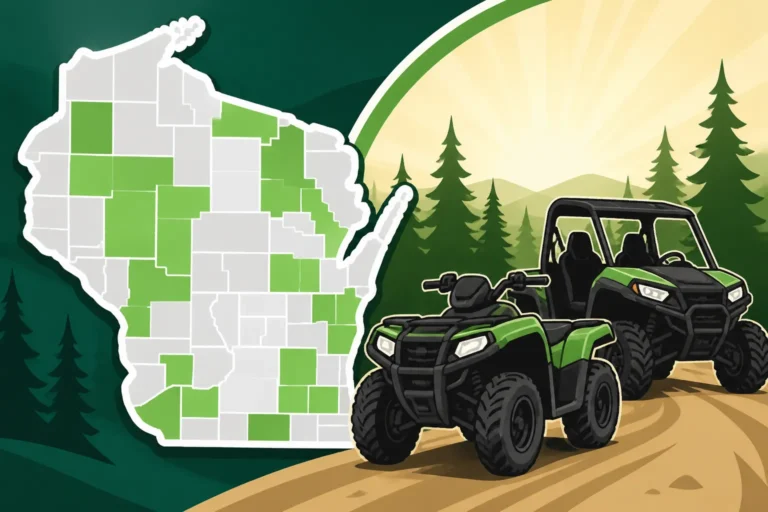
Beyond the statewide 5 percent, many counties in Wisconsin impose an additional county sales tax. This is typically an extra 0.5 percent (that's half a percent) that gets added to the state sales tax. So, in these counties, your total sales tax burden on an ATV or UTV purchase becomes 5.5 percent. It might not sound like much, but when you're talking about a multi-thousand-dollar machine, that extra half a percent can quickly add up to another fifty or a hundred dollars.
The county sales tax is generally collected based on where the sale takes place. So, if you buy your quad from a dealer in a county that has a county sales tax, you'll pay that extra 0.5 percent at the dealership. If you buy from a private seller, and you're the one responsible for remitting the sales tax, the county tax applies based on the county where you, the buyer, reside or register the machine. This detail can be confusing, but the principle is that the county where the transaction's tax obligation arises wants its cut. Some counties in Wisconsin do not have a county sales tax, which can lead to slight variations in total tax owed depending on where you make your purchase or reside.
It’s easy to get caught off guard by this extra layer. Imagine you’ve saved up diligently for a $12,000 UTV. The state tax alone is $600. But if you’re in a county with an additional 0.5 percent, that’s another $60, bringing your total sales tax to $660. This is why knowing your specific county’s rules is paramount. This information is readily available from the Wisconsin Department of Revenue, or you can often find it by simply asking a local dealer or registration agent.
How to Determine Your Total Sales Tax Burden
To figure out your exact total sales tax, you first need to identify the purchase price of the ATV or UTV. This is typically the agreed-upon value before any discounts or trade-ins. Next, you apply the state sales tax rate of 5 percent. Then, you need to check if your county (or the county where the dealer is located if you're buying new) has an additional 0.5 percent sales tax. Add that to the 5 percent, and you have your total sales tax rate.
For example, if you're buying a quad for $8,000 in a county that does have the additional 0.5 percent sales tax, your calculation would look like this:
- State Sales Tax: $8,000 x 0.05 (5%) = $400
- County Sales Tax: $8,000 x 0.005 (0.5%) = $40
- Total Sales Tax: $400 + $40 = $440
If you're buying in a county that does not have an additional 0.5 percent sales tax, your total would simply be the $400 for the state sales tax. This difference, while sometimes small, is important for accurate budgeting. You don't want to show up to the registration agent only to find you're short on the required tax payment.
To make this easier, here’s a quick reference for calculating your sales tax:
| Purchase Price | State Sales Tax (5%) | County Sales Tax (0.5%) | Total Sales Tax (5.5%) (If Applicable) |
|---|---|---|---|
| $2,500 | $125 | $12.50 | $137.50 |
| $5,000 | $250 | $25.00 | $275.00 |
| $7,500 | $375 | $37.50 | $412.50 |
| $10,000 | $500 | $50.00 | $550.00 |
| $12,500 | $625 | $62.50 | $687.50 |
This table clearly illustrates how the county sales tax adds to the overall cost. Always confirm the specific county sales tax rate for your area or the dealer's area before finalizing your purchase plans. Being prepared with the correct amount ensures a smooth process when it comes time to register your machine.
Paying Sales Tax: Dealer, Private Sale, and Out-of-State Purchases
The method by which you pay sales tax on your ATV or UTV purchase can differ significantly depending on where and from whom you buy the machine. Understanding these different scenarios is crucial for ensuring you fulfill your tax obligations correctly and avoid any surprises when you go to register. The state has various systems in place to ensure that 5 percent (or 5.5 percent) finds its way into its coffers.
Sales Tax When Buying From a Wisconsin Dealer
When you purchase a new or used ATV or UTV from a licensed dealer in Wisconsin, the process for sales tax is usually very straightforward and convenient. The dealership is responsible for collecting the sales tax directly from you at the time of purchase and then remitting it to the state. This means the sales tax amount will be clearly itemized on your purchase agreement and invoice. You'll pay it along with the price of the machine, any destination fees, documentation fees, and other charges. The dealer essentially acts as an agent for the state, making sure the tax is collected upfront.
This method is generally the simplest for buyers because you don't have to worry about calculating the tax yourself or remembering to send a separate payment to the Department of Revenue. The dealer handles all the paperwork and ensures the tax is paid. They will then provide you with a bill of sale or purchase agreement that shows the sales tax was collected. This document will serve as your proof of payment when you go to [Registering an ATV in Wisconsin]. Most dealers also handle the initial registration paperwork for you, submitting it to the DNR within a few days of the sale. This makes the entire process incredibly seamless for the buyer.
Make sure you keep all your purchase documents safe, especially the ones detailing the sales tax payment. Even if the dealer handles the registration, having your own records is always a good practice. This documentation is your proof that you’ve met this critical requirement. If you ever lose these documents, getting [Replacing Lost Wisconsin Decals] or dealing with other registration issues can become more complicated without a clear record of your sales tax payment.
Handling Sales Tax in a Private Party ATV Sale
Buying a used ATV or UTV from a private individual in Wisconsin introduces a different dynamic for sales tax. In this scenario, the private seller is generally not responsible for collecting sales tax from you. Instead, the responsibility falls squarely on the buyer to calculate and pay the sales tax directly to the Wisconsin Department of Revenue. This is a crucial point that many private party buyers overlook, often leading to issues when they attempt to register their newly acquired machine.
You'll pay the sales tax when you apply for your ATV or UTV registration. When you submit your registration application to the Wisconsin DNR, either online, by mail, or through a [Wisconsin Registration Agents and Where They Are], you will be required to declare the purchase price of the machine. The DNR will then calculate the sales tax due based on that declared price and the applicable state and county sales tax rates. You'll typically pay this tax directly to the DNR or the agent at the time of registration. This is the state's primary mechanism for collecting sales tax on private sales.
It's vital that the purchase price you declare is accurate. Intentionally understating the purchase price to reduce your sales tax obligation is illegal and can lead to penalties if discovered. A well-written bill of sale is incredibly important in a private sale. Resources like LawDepot offer templates for a Wisconsin ATV Bill of Sale, which can help ensure you have proper documentation of the agreed-upon purchase price, protecting both buyer and seller. This documentation is essential not just for proving ownership but also for accurately reporting the sales tax due. Remember, the DNR will ask for [What a Wisconsin ATV Bill of Sale Should Carry] as part of the registration process.
What Happens When You Buy Out-of-State and Bring it to Wisconsin
The rules get a bit more complex when you purchase an ATV or UTV outside of Wisconsin and then bring it into the state for use. If you bought the machine from a dealer in another state, you likely paid sales tax to that state. Wisconsin has a provision to give you credit for sales tax paid to another state, preventing you from being double-taxed. This is known as a "use tax" provision. Essentially, if you paid sales tax in another state, and that state's rate was equal to or greater than Wisconsin's combined state and county rate, you likely won't owe any additional sales tax to Wisconsin.
However, if the sales tax rate you paid in the other state was less than Wisconsin's rate, you would owe Wisconsin the difference. For example, if you bought a quad in a state with a 3 percent sales tax and brought it to a 5.5 percent tax county in Wisconsin, you would owe Wisconsin the remaining 2.5 percent difference. This scenario often catches people by surprise, so it's essential to be aware of it if you're [Registering a Minnesota Quad in Wisconsin] or any other out-of-state machine.
If you bought the machine from a private seller out-of-state and did not pay sales tax to that state (which is common, as many states don't require sales tax on private party sales), then you will owe the full Wisconsin sales tax (5% state + any applicable 0.5% county tax) when you register the machine in Wisconsin. The state sees this as a "use tax" obligation, meaning you're using the machine in Wisconsin, and therefore owe Wisconsin sales tax on its purchase price. Make sure to have documentation of your out-of-state purchase, such as a bill of sale, when you go to register. This ensures you can either claim credit or properly pay the Wisconsin use tax.
Minimizing Your Sales Tax Obligations Legally
While sales tax is a non-negotiable part of purchasing an ATV or UTV, there are a couple of legitimate ways to legally reduce the amount you owe. These methods are built into Wisconsin's tax code and are important for buyers to understand, as they can save you a significant amount of money.
The Trade-In Credit: Reducing Your Taxable Amount
One of the most common and effective ways to reduce your sales tax obligation is by trading in an existing machine when you purchase a new one. Wisconsin law allows the value of a trade-in to reduce the taxable amount of your new purchase. This means you only pay sales tax on the difference between the price of the new machine and the value of your trade-in, rather than on the full price of the new machine. This can result in substantial savings, especially on higher-priced ATVs and UTVs.
For example, let's say you're buying a new UTV for $15,000, and you're trading in your old ATV for $5,000. Instead of paying sales tax on $15,000, you would only pay sales tax on $10,000 ($15,000 – $5,000). At a 5.5% combined sales tax rate, that's a difference of $275 in tax ($825 vs. $550). This credit applies whether you're trading in another ATV, a UTV, or sometimes even a car or truck, as long as it's part of the same transaction with a licensed dealer.
This trade-in credit is typically handled by the dealer at the time of sale. They will itemize the trade-in value on your purchase agreement, showing how it reduces the taxable amount. This is a key advantage of buying from a dealer if you have an old machine to move. Always ensure the trade-in value is clearly documented to prove the reduced tax base. It’s a perfectly legal and smart way to save some money on your overall purchase.
Claiming Credit for Sales Tax Paid to Another State
As briefly touched upon earlier, if you purchased your ATV or UTV in another state and paid sales tax there, Wisconsin generally allows you to claim a credit for the tax you've already paid. This prevents double taxation and is part of the state's use tax provisions. The credit applies dollar-for-dollar up to the amount of Wisconsin's sales tax.
To claim this credit, you'll need clear documentation from the out-of-state seller showing the purchase price and the amount of sales tax you paid to that state. This is typically an invoice or bill of sale from a dealer. When you go to register your machine with the Wisconsin DNR, you'll present this documentation. If the sales tax you paid to the other state is equal to or greater than the Wisconsin sales tax you would owe (5% state + any applicable county tax), you typically won't owe any additional sales tax to Wisconsin.
However, if the tax rate in the other state was lower than Wisconsin's, you'll owe Wisconsin the difference. For instance, if you bought a quad for $10,000 in a state with a 4% sales tax (you paid $400) and brought it to a Wisconsin county with a 5.5% total rate (you'd owe $550), you would still owe Wisconsin $150 ($550 – $400). It's crucial to have that proof of sales tax paid, or the DNR will assume no tax was paid and charge you the full Wisconsin amount. Understanding [Credit for Tax Paid to Another State] is vital for new Wisconsin residents or those who frequently buy vehicles across state lines.
The Link Between Sales Tax and Wisconsin Registration
It cannot be stressed enough: paying sales tax on your ATV or UTV isn't just a financial obligation; it's a gatekeeper to legally operating your machine in Wisconsin. The state has made a direct and undeniable link between proving sales tax payment and successfully registering your vehicle. Without that proof, your plans to hit the trails will likely be stalled.
Why Proof of Sales Tax Payment is Essential for Registration
The Wisconsin DNR, or any authorized registration agent, will absolutely require proof that sales tax has been paid before they will process your ATV or UTV registration. This is a non-negotiable step. Whether you're registering a brand-new machine from a dealership or a used one from a private seller, the documentation of sales tax payment (or that it was otherwise accounted for) must be presented. This is how the state ensures it collects the appropriate revenue from vehicle sales.
If you bought from a dealer, your bill of sale or purchase agreement, clearly showing the sales tax collected, will serve as this proof. The dealer often forwards this information directly to the DNR as part of their registration filing process. If you bought from a private seller, you will typically pay the sales tax directly to the DNR or the agent when you submit your [Wisconsin DNR ATV Registration Explained]. In this case, your payment itself is the proof. If you bought out-of-state and claimed a credit, the out-of-state sales invoice will be your proof.
Failing to provide this proof will result in your registration application being rejected. This means no decals, no legal right to ride on public trails, and a whole lot of frustration. You'll be sent back to figure out the tax issue before you can proceed. This crucial step is why proper record-keeping, like using a detailed bill of sale template from LawDepot for private sales, is so important. You need to be able to demonstrate clearly that the sales tax requirement has been met.
Common Pitfalls and How to Avoid Them
One of the biggest pitfalls buyers encounter is simply being unaware that sales tax is due on private party sales. Many assume it's like a garage sale, where no tax is collected. This can lead to an unwelcome surprise at the registration counter when they're told they owe hundreds of dollars they hadn't budgeted for. To avoid this, always factor in the sales tax for any purchase, new or used, when setting your budget.
Another common mistake is understating the purchase price on a private sale bill of sale to reduce the sales tax. This is illegal and can lead to fines and penalties. While the DNR may not scrutinize every single bill of sale, if a declared price seems unusually low for the type of machine, it can raise red flags. Be honest and accurate. A clear and legitimate [What a Wisconsin ATV Bill of Sale Should Carry] is your best defense against future issues.
Lastly, some buyers from out-of-state neglect to bring their original sales tax documentation when moving to Wisconsin. Without this proof, the DNR will assume no tax was paid elsewhere and charge you the full Wisconsin sales tax, even if you already paid it in your home state. Always keep meticulous records of your purchase, regardless of where it took place, so you can successfully navigate [Wisconsin Registration for an Out-of-State Machine]. Being prepared with all the correct paperwork will make your registration process smooth and prevent any unnecessary delays or unexpected costs.
Disclaimer
This article is for general informational purposes only and does not constitute professional advice. Laws, prices and regulations vary by location and change over time. Consult a qualified professional for guidance on your specific situation.