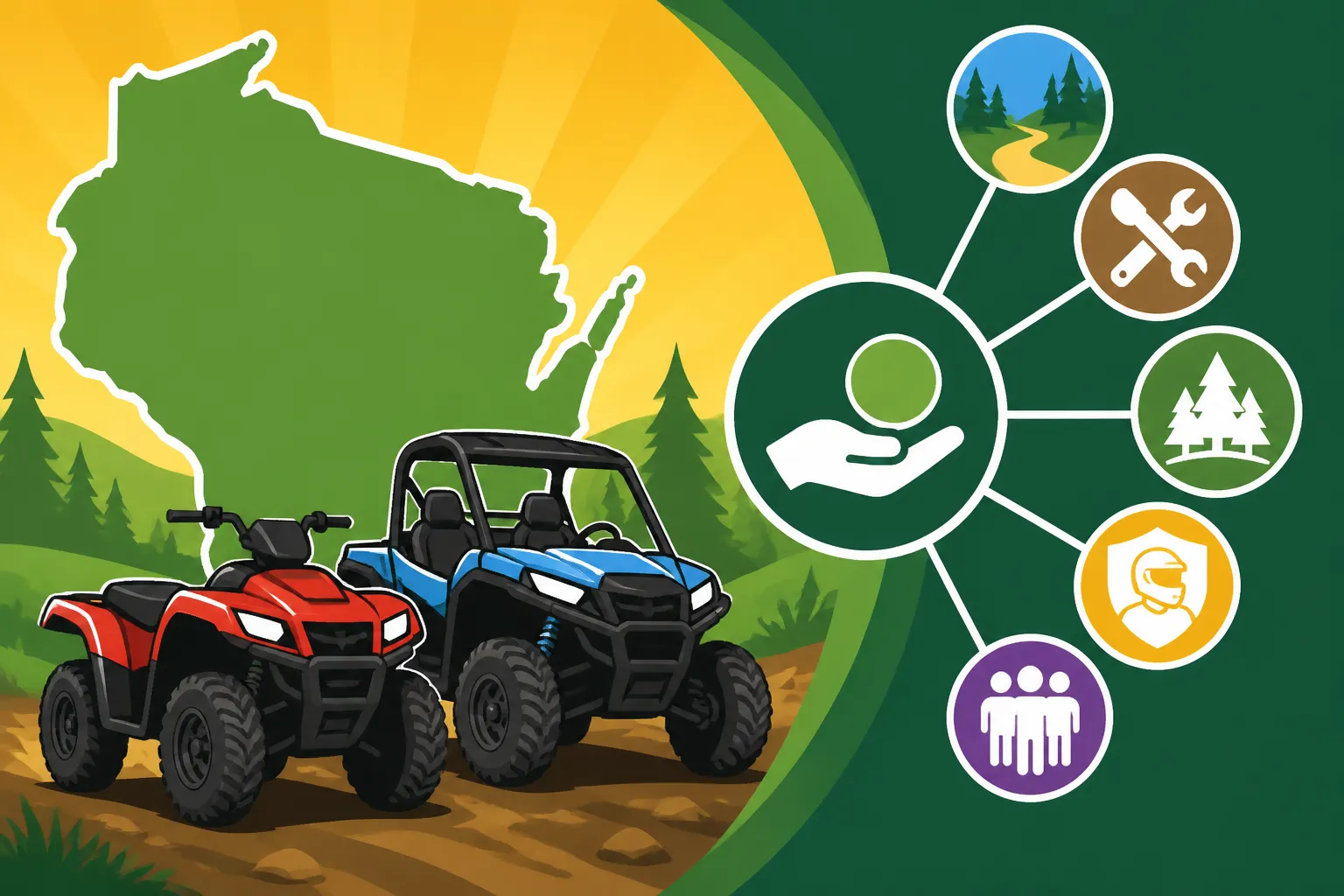
Where Wisconsin ATV Registration Money Goes
It's a common question, isn't it? You dutifully pay your Wisconsin ATV or UTV registration fee year after year, sometimes feeling a slight pinch in your wallet, and you might find yourself wondering, "Where does this money actually go?" It's a valid curiosity, especially when you're shelling out your hard-earned cash. This guide is here to pull back the curtain and show you exactly how those registration dollars are put to use, directly impacting your riding experience across the Badger State.
Understanding the Wisconsin ATV/UTV Trail Aids Program
When you register your ATV or UTV for public use in Wisconsin, a significant portion of that fee doesn't just disappear into a general state fund. Instead, it's earmarked for a very specific and crucial purpose: the Wisconsin ATV/UTV Trail Aids Program. This program is the lifeblood of our state's vast and impressive trail network. It's designed to provide financial assistance to local governmental units—think counties, towns, villages, and cities—and qualified ATV/UTV clubs to develop, maintain, and enhance the public trails we all love to ride.
Imagine pulling up to a trailhead in, say, Marinette County, seeing fresh gravel on the parking lot, sturdy bridges crossing streams, and clear, well-maintained signage pointing the way. A lot of that good work, from the routine grooming of the trails to the major repairs after a storm, is directly supported by these funds. Without this dedicated revenue stream, many of the trails we enjoy so much simply wouldn't exist or wouldn't be nearly as well-kept. It's a direct investment by riders, for riders. The state recognizes the importance of these recreational opportunities, and this program is a testament to that commitment.
How Registration Fees Fuel Local Trail Systems
The mechanism is quite ingenious. Your registration fee, especially for public use, is primarily funneled into this grant program. Local clubs and governmental entities then apply for these grants, outlining their projects and needs. These could range from purchasing new trail grooming equipment to covering the costs of land leases that allow trails to cross private property. It's a partnership between the state, local communities, and dedicated volunteers. Many of our smaller towns, especially those "up north" that rely heavily on outdoor tourism, simply wouldn't have the resources to maintain their trail systems without this financial boost.
Think about a county like Vilas, with its extensive network of trails connecting towns like St. Germain and Eagle River. The maintenance required to keep those trails safe and enjoyable year-round is immense. Everything from repairing washouts, clearing downed trees after a windstorm, to ensuring all signage is clear and legible for riders, costs money. The fees from registrations directly contribute to making these efforts possible. So, when you pay that fee, you're essentially becoming a shareholder in the continued excellence of Wisconsin's ATV and UTV trails. For a deeper dive into the overall system, you might want to read [Wisconsin DNR ATV Registration Explained].
What Trail Aids Grants Typically Cover
The Trail Aids Program is quite comprehensive in what it covers, and it's all about improving the riding experience. These grants are not just for building new trails; they’re primarily focused on sustaining existing ones and making them better.
Common uses for grant money include:
- Trail Development and Maintenance: This is the big one. It covers everything from brushing back overgrown vegetation, repairing culverts, grading trail surfaces, and fixing erosion damage.
- Land Acquisition and Leases: Sometimes, to connect trail segments or create new routes, the state or a club needs to secure access to private land. Grant money can cover the costs of purchasing easements or paying annual lease fees to private landowners.
- Signage: Clear and consistent signage is crucial for rider safety and navigation. Funds are used to purchase, install, and maintain route markers, informational signs, and safety warnings.
- Bridges and Structures: Building or repairing bridges over streams, wetlands, or ravines is a major expense. The grants help ensure safe crossings throughout the trail system.
- Trailhead Facilities: Improving staging areas, parking lots, and access points can also be supported, making it easier for riders to unload and begin their adventures.
- Equipment Purchases: Funds can help clubs and municipalities purchase essential equipment like groomers, excavators, or even smaller tools needed for trail work.
It's a really practical application of your registration dollars. When a club in, say, Clark County, applies for funding to replace a crumbling bridge along their trail, that application goes through a process, and if approved, the money comes directly from the pool generated by registration fees and other sources. To understand more about the application process, take a look at [How a Wisconsin Town Applies for Trail Aids]. For a broader perspective on how these funds contribute, check out [Wisconsin's ATV Trail Aids Program].
Beyond the Trails: Other Destinations for Your Registration Dollars
While the Trail Aids Program is certainly the largest and most direct beneficiary of your registration fees, it's not the only place your money goes. The Wisconsin Department of Natural Resources (DNR), which manages the registration process and the ATV/UTV program, has administrative costs and other responsibilities that are also supported, at least in part, by these funds. Think of it as supporting the infrastructure that keeps the entire system running smoothly.
There's a lot of work that goes on behind the scenes to ensure that Wisconsin remains a premier destination for ATV and UTV enthusiasts. This includes everything from maintaining the online registration system to fielding questions from riders and clubs. It's not just about turning dirt; it's about managing a comprehensive recreational program that serves thousands of riders annually.
Supporting DNR Administration and Operations
The Wisconsin DNR has a dedicated team that oversees the entire ATV and UTV program. This includes processing all those registrations, issuing decals, and keeping accurate records of every machine registered in the state. Imagine the sheer volume of paperwork and data management involved! Your registration dollars contribute to covering the salaries of these staff members, the costs of maintaining the computer systems, and even the printing and mailing of renewal notices. It's the less glamorous, but absolutely essential, side of keeping the program afloat.
This also extends to updating rules and regulations, conducting studies on trail usage, and coordinating with various stakeholders, including local governments, clubs, and landowner groups. It’s a complex logistical operation, and a portion of those fees ensures the DNR has the resources to perform these vital administrative functions effectively. When you're trying to figure out if you've missed the ten-day transfer window for a newly purchased machine, knowing there's a competent DNR staff to help clarify the situation is a big relief.
Investing in Safety and Education
Another critical area that sees support from registration funds is ATV and UTV safety and education. Wisconsin is committed to promoting safe riding practices, and this involves more than just having wardens on the trails. It encompasses a robust system of safety training and public awareness campaigns. A portion of the registration revenue helps fund these initiatives.
For instance, the ATV safety certificate program, which is mandatory for many riders, incurs costs for developing course materials, training instructors, and managing the certification process. These aren't insignificant expenses. The goal is to reduce accidents and ensure that all riders, especially younger ones, understand the rules of the trail and how to operate their machines safely. These funds contribute to making these programs accessible and effective. If you're wondering about the requirements, you might want to look into [Wisconsin ATV Safety Certificate Requirements]. It's all about making the trails safer for everyone, and that's an investment we can all get behind.
Enforcement and Responsible Riding
Let's be honest, not everyone always follows the rules. That's where enforcement comes in. Wisconsin DNR conservation wardens play a crucial role in ensuring compliance with registration laws, trail rules, and safety regulations. A portion of the funds from registrations helps support their efforts. This isn't just about handing out tickets; it's about maintaining order on the trails, protecting natural resources, and ensuring a positive experience for all riders.
Wardens patrol the trails, respond to complaints, and educate riders on best practices. Their presence helps deter illegal activity and promotes responsible riding. Whether it's checking for proper registration, ensuring machines have spark arresters, or investigating accidents, their work is essential for the integrity of the trail system. Knowing that there are dedicated professionals out there upholding the rules provides peace of mind for responsible riders. This also ties into how many local ordinances are formed and enforced, often with the support of wardens. For more details on this, see [Warden Enforcement on Wisconsin Routes].
The Rider's Investment: What Your Registration Means for You
It's easy to view a registration fee as just another tax, an unavoidable expense. However, when it comes to Wisconsin ATV and UTV registrations, it's genuinely an investment. Your annual fee isn't just a hurdle; it's a direct contribution to the very experience you seek when you hit the trails. Every time you register your machine for public use, you're helping to ensure that the vast network of trails across Wisconsin remains open, safe, and enjoyable for years to come.
Without these collective contributions, many of the scenic routes through state forests, county lands, and privately leased properties would simply fall into disrepair or cease to exist. It's the difference between a rough, impassable route and a smoothly groomed trail that lets you truly enjoy the beauty of the Northwoods. When you understand where your money goes, it transforms the payment from a chore into a conscious act of stewardship for the sport you love.
The Value of Public Use Registration
For those who venture beyond their own private property, public use registration is paramount. It opens up access to hundreds, if not thousands, of miles of designated trails and routes across Wisconsin. This isn't just about avoiding a fine; it's about actively participating in the system that makes these recreational opportunities possible. The fees collected are directly reinvested into the trails you ride, creating a sustainable model for the future of ATV and UTV recreation in the state.
Think about the feeling of cruising through the Black River State Forest or exploring the vast county forest trails in Bayfield County. These experiences are facilitated by the funds that flow from your registration dollars into the Trail Aids Program. It ensures that the signs are there to guide you, the bridges are sturdy beneath your tires, and the trails are maintained to a high standard. It’s a small annual fee for access to an incredible outdoor playground. For more on the different types of registration, you can check out [Wisconsin's Public Use ATV Registration] and [Wisconsin Private Use ATV Registration].
| Fund Recipient | Primary Use of Funds | Benefit to Riders |
|---|---|---|
| DNR ATV/UTV Trail Aids Program | Grants for trail maintenance, development, leases, signage, equipment | Well-maintained, safe, and accessible public trails |
| DNR Administration | Staffing, computer systems, record keeping, program management | Efficient registration process, responsive program oversight |
| Safety & Education | Course development, instructor training, public awareness campaigns | Safer riding environment, knowledgeable riders |
| Enforcement | Warden patrols, investigations, compliance checks | Orderly trails, protection of resources, deterrence of illegal activity |
The Collective Impact of Rider Fees
The power of your registration fee lies in its collective impact. One fee alone might not build a bridge, but thousands of fees, pooled together through the Trail Aids Program, certainly can. This collective funding mechanism allows for large-scale projects and ongoing maintenance that would be impossible for individual riders or even small clubs to undertake.
It's a testament to the community of Wisconsin riders. By fulfilling your registration obligations, you're not just complying with the law; you're contributing to a shared resource that benefits everyone who loves to explore Wisconsin's natural beauty on an ATV or UTV. Whether you're a casual rider or an avid trail enthusiast, your registration plays a vital role in keeping the gears turning and the trails open. And if you're ever involved in group efforts, like forming a club or negotiating land access, formalizing agreements can be made easier with tools from resources like LawDepot, ensuring everything is legally sound. This can be especially helpful when considering special use permits on county forest land or developing formal agreements between parties for trail use.
The Role of Clubs and Volunteers in Maximizing Funds
While your registration money flows through official channels, it's crucial to understand that a significant portion of its effective use is driven by the tireless efforts of local ATV and UTV clubs and their volunteers. These clubs are often the boots on the ground, applying for the grants, organizing work parties, and directly performing the maintenance that your fees help fund. They are the true stewards of the trails.
Imagine a group of volunteers, armed with chainsaws and rakes, clearing storm damage after a rough winter. Their labor, combined with the financial support from the Trail Aids Program, is what transforms impassable sections into rideable trails. These clubs leverage the grant money, sometimes matching it with their own fundraising efforts and volunteer hours, to achieve remarkable results. They often have the local knowledge to know exactly where improvements are most needed, ensuring that the funds are spent efficiently and effectively.
How Clubs Secure and Administer Grants
Local ATV and UTV clubs are incredibly active in the grant application process. They spend countless hours identifying trail needs, developing project proposals, and submitting detailed applications to the DNR. This is a rigorous process, requiring clear plans, budgets, and sometimes even formal agreements with landowners. They work closely with county forestry departments and other local governmental units to ensure their projects align with broader recreational plans.
Once a grant is awarded, the club then takes on the responsibility of administering the funds and executing the project. This involves managing finances, coordinating volunteers, purchasing materials, and overseeing the actual trail work. It's a massive undertaking that often relies on the dedication of a few key individuals within the club. They are the ones turning your registration dollars into tangible improvements on the trails. When dealing with formal agreements, especially those involving land use or easements for trail corridors, some clubs find templates from services like LawDepot invaluable for ensuring all legal aspects are covered correctly before submitting their grant applications.
The Power of Volunteer Labor
The economic impact of volunteer labor cannot be overstated when it comes to maximizing the value of your registration dollars. For every dollar of grant money received, local clubs often contribute several dollars' worth of volunteer hours. These hours include everything from planning and administrative work to physically maintaining trails, building bridges, and installing signage.
Without this army of volunteers, the amount of trail work that could be accomplished with registration funds alone would be significantly less. The volunteers provide the muscle and expertise, stretching every dollar further and allowing for more extensive improvements across the state. So, next time you see a group of volunteers working on a trail, remember that their sweat equity, combined with your registration fees, is what makes our Wisconsin ATV and UTV trail system truly exceptional.
Disclaimer
This article is for general informational purposes only and does not constitute professional advice. Laws, prices and regulations vary by location and change over time. Consult a qualified professional for guidance on your specific situation.