Why Many Wisconsin Adults Skip the Helmet
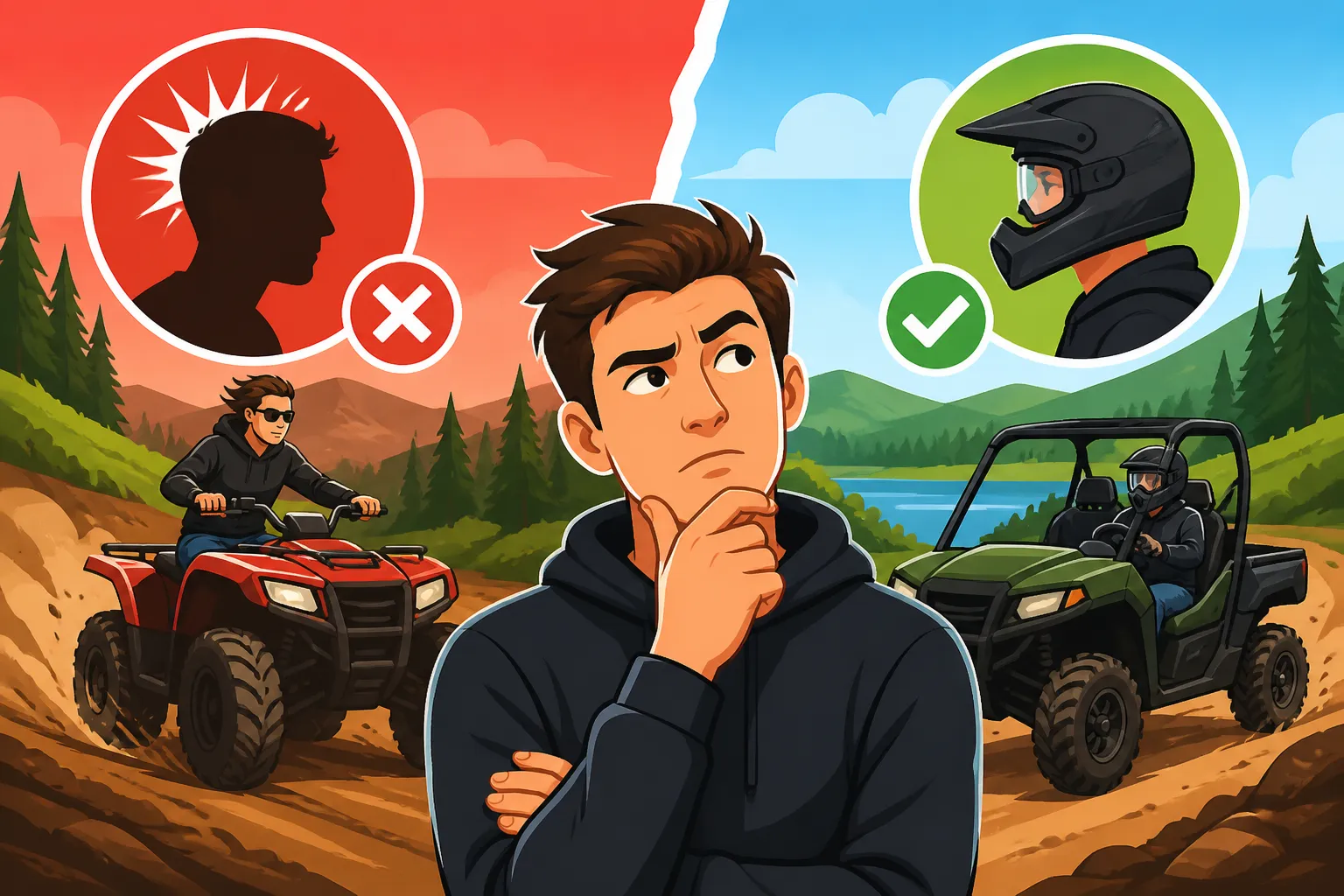
Wisconsin adults often ride without helmets because they believe the law allows it, find helmets hot or uncomfortable, or expect a slow ride close to home. Those reasons are common, but they do not remove the risk of a head injury. Here’s how to think through the legal questions, the practical trade-offs and the helmet features that matter on a Wisconsin ride.
Why adults leave the helmet behind
The most straightforward reason is that many adult riders are not subject to the same helmet rules as younger riders. When a helmet is not legally required for a particular adult, machine and riding area, wearing one becomes a personal decision. That can make it easy to treat a helmet as optional gear rather than basic protection.
Comfort is another factor. A helmet can feel hot in summer, press against glasses, fog eye protection or become annoying over a long day. Riders who make short trips, work around their property or travel at lower speeds may feel that the inconvenience is greater than the benefit. A helmet that fits poorly only strengthens that impression.
Some adults also rely on experience. A rider who has spent years on an ATV or UTV without a serious crash may feel confident managing familiar trails and terrain. But experience cannot control every variable: loose gravel, a rut, a hidden branch, another rider’s mistake or a sudden need to brake can turn an ordinary trip into a fall or collision.
There is also a social element. If the group normally rides bareheaded, one person putting on a helmet can feel out of place. That pressure may be stronger on a relaxed ride with friends or family, when the trip feels more like a short errand than a recreational outing.
These are understandable reasons, but they are not all equally strong. Heat and fit can often be improved by choosing different gear. Confidence, familiarity and the belief that a ride is too short for an accident are less reliable ways to manage risk. A crash does not wait for a rider to be on a long, challenging trail.
| Why an adult may skip a helmet | What to consider instead |
|---|---|
| It feels hot or heavy | Look for a suitable fit, ventilation and weight; try it on before relying on it |
| The trip is short or nearby | A short ride still includes exposure to traffic, uneven ground and unexpected obstacles |
| The rider has years of experience | Experience helps with decisions but cannot prevent every collision or machine rollover |
| Adults are not always legally required to wear one | Check rules for the machine, location and local route before riding |
| Other riders go without helmets | Set a group expectation that everyone wears appropriate protective gear |
What the rules do and do not settle
Wisconsin’s helmet requirements depend on who is riding and where. State rules place particular requirements on younger riders, while adults may not face a blanket helmet mandate in the same way. That does not mean every adult can assume a helmet is optional in every situation. Machine type, riding location and local requirements can affect what applies.
For a more detailed discussion of the adult question, see Wisconsin Helmet Law for Riders Over 18. Younger riders have separate rules, covered in Wisconsin Helmet Requirements Under 18. Adults supervising a young rider should not assume that the adult’s own legal obligations tell the whole story for the passenger or child.
The distinction between an ATV and a UTV matters, too. Riders sometimes use “helmet law” as if one rule covers every machine and setting. Before heading out, confirm the requirement for the exact vehicle and the place it will be operated. A trail, road route, public riding area and private property may not share the same rules. A town or other land manager may also set requirements that go beyond a general state rule. Municipal Ordinances Wisconsin Riders Must Read is a useful starting point for understanding why checking local rules matters.
A helmet rule is a legal minimum, not a measure of how much protection a rider needs. If the law does not require an adult to wear a helmet, that only answers the compliance question. It does not mean that riding without one is equally safe. The same distinction applies to other protective gear: being legally allowed to ride without it is not the same as having no reason to wear it.
When in doubt, check current official guidance for the area and ask the relevant land manager or local authority. Do not rely only on what a friend remembers, what a seller says, or what another rider is wearing. Rules can differ across locations, and an informal group habit is not a reliable substitute for checking.
What a helmet can and cannot do
A helmet is intended to help protect the head in a crash or impact. It cannot prevent a collision, make an unsafe speed safe or eliminate the risk of injury. It may, however, add a layer of protection in a situation where a rider’s head strikes the ground, the machine or another object.
That risk is not limited to aggressive riding. A trail can change under the wheels, especially after rain or when loose material covers a hard surface. A rider may also meet an unexpected obstacle or need to react quickly to someone ahead. On a road route, other traffic adds risks that a rider cannot fully control. A familiar route is still an active riding environment, not a guarantee of a predictable outcome.
Helmets also have limitations. A poorly fitting helmet can shift, distract the rider or fail to provide its intended protection. A helmet that has been damaged, is badly worn or is not appropriate for the type of riding may be a poor choice. Head protection should be part of a broader safety routine that includes riding within skill level, using machine restraints and protective equipment where appropriate, and staying alert to conditions.
A helmet is only one part of a rider’s gear. Eye protection helps keep dust, debris and insects out of the eyes, while suitable clothing, gloves and footwear can provide other practical benefits. For more on that side of riding, see Eye Protection on a Wisconsin Route Ride. If a rider is choosing a helmet for public riding, it is also worth understanding Wisconsin Helmet Standards and Bicycle Helmets and Why a Bicycle Helmet Does Not Count. The label, construction and intended use matter; a bicycle helmet should not be treated as automatically suitable for ATV or UTV riding.
Making a helmet easier to wear
If discomfort is the reason an adult skips a helmet, start with fit rather than trying to simply put up with an unsuitable one. A helmet should feel secure without creating painful pressure points. It should not rock freely or slide around when the rider moves their head. Fit can vary substantially across models, so a familiar brand name or a good-looking design is not enough to confirm that a helmet suits an individual rider.
Try a helmet on with any glasses or other equipment normally worn while riding. Check that the helmet does not push glasses out of place or interfere with a comfortable view. Consider ventilation if heat is the main complaint, and check that the helmet’s shape and fastener feel manageable with gloves. A lightweight helmet may feel easier over a long outing, but it still needs to meet the applicable standard and fit securely.
When shopping, look for clear information about the helmet’s intended activity and safety certification. If buying online, including through Amazon, check the product details carefully and confirm the return policy before ordering; fit is difficult to judge from a product photo. Avoid treating a low price, a familiar logo or a “helmet” label as proof that the product is suitable for ATV or UTV riding.
A practical way to build the habit is to make the helmet part of the pre-ride routine. Store it with the riding gear, inspect it before setting out and put it on before starting the machine. That removes the need to decide at the trailhead, when the group may already be ready to leave. If a helmet is shared, make sure it fits the person wearing it and is clean and in good condition.
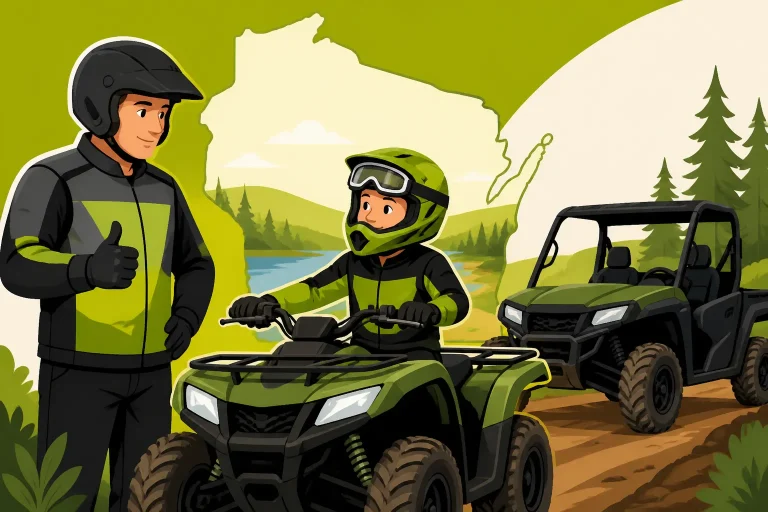
For group rides, agree on gear expectations before meeting up. It is easier to make a consistent choice at home than to change plans after seeing that everyone else has arrived without a helmet. Parents and other adults supervising young riders can set a useful example by wearing one themselves, even when the adult is not legally required to do so.
A practical decision for each ride
Rather than deciding once that helmets are either always necessary or never necessary, consider the ride in front of you. A slow trip on private property may feel different from a day on unfamiliar trails, a busy route or a surface that has recently become rough. But “different” does not mean “risk-free.” The decision should account for both the route and the possibility that conditions will change.
Before riding, ask a few simple questions:
- What are the rules here? Confirm requirements for the machine, riders and location, including any local rules.
- What conditions will the ride involve? Consider traffic, visibility, trail surface, weather and whether the route is familiar.
- Does the helmet fit and suit the ride? If it moves, causes pain or interferes with vision, address that before setting out.
- Is the group making a sound choice? A group decision to skip helmets does not make the ride safer.
- What other protective gear is needed? Eye protection and appropriate clothing can matter alongside head protection.
Adults may skip helmets for convenience, comfort, habit or because the law does not require one in their situation. Those reasons help explain the choice, but they do not change the consequences a head impact can have. Checking the applicable rules is essential. Beyond that, wearing a properly fitting, appropriate helmet is a straightforward way to add protection, particularly when the route, surface or other traffic is hard to predict.
Disclaimer
This article is for general informational purposes only and does not constitute professional advice. Laws, prices and regulations vary by location and change over time. Consult a qualified professional for guidance on your specific situation.