Supervising a Wisconsin Youth Rider
Supervising a young ATV or UTV rider in Wisconsin means more than staying nearby. Age, safety certification, where the machine is being ridden, and whether it is an ATV or UTV can all affect what’s allowed. This article explains the key distinctions and offers practical ways to supervise a youth rider without treating legal minimums as a substitute for good judgment.
Start With the Rules for the Rider and the Machine
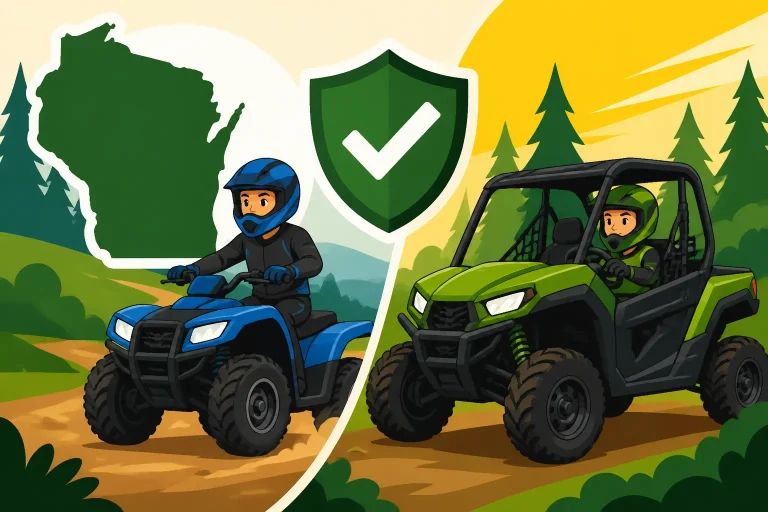
Wisconsin’s rules distinguish between ATVs and UTVs, and a youth rider’s age matters. A rider who may operate an ATV in one setting may not be old enough to operate a UTV or ride in another setting. Before handing over the controls, check the current requirements for the specific machine and the place you plan to ride.
For public trails and routes, Wisconsin generally sets a minimum age of 12 to operate an ATV and 16 to operate a UTV. Youth riders who fall within the applicable age group may also need a Wisconsin ATV safety certificate and adult accompaniment. The details can depend on the machine and riding location, so check the current rules before you go. Wisconsin Age Rules for ATVs and UTVs and Twelve for an ATV, Sixteen for a UTV explain the age distinctions in more detail.
A parent or guardian’s permission does not override a minimum age, certification, or supervision requirement. It also does not make a public trail open to a machine or rider that otherwise cannot use it. If a family is riding on private property, the rules and responsibilities may differ, but permission from the landowner is still essential. Private land is not automatically risk-free, and the family should establish clear limits for where and how a child may ride.
ATV and UTV are not interchangeable
A youth rider may be physically capable of handling one machine and not another. ATVs are generally operated by straddling the seat and steering with handlebars. UTVs have a different seating and control arrangement, often with a steering wheel and occupant restraints. Their size and weight can also make them less forgiving when a driver misjudges a slope, corner, or stopping distance.
Use the vehicle’s intended age guidance and the manufacturer’s instructions when deciding whether a child can manage a particular model. A machine that seems manageable in a driveway may behave differently on loose gravel, uneven ground, or a hillside. For public riding, also check the rules that apply to the machine category; do not assume that an ATV age rule applies to a UTV. Wisconsin’s Rule for Riders Aged 12 to 15 provides more context for younger ATV operators.
Check certification before planning the ride
A Wisconsin ATV safety certificate may be required for youth operating on public riding areas. Course completion is not a replacement for adult supervision when supervision is required, and an adult’s experience does not replace a youth rider’s required certificate. Keep the certificate information accessible and confirm what documentation the rider should carry. Wisconsin’s ATV Safety Certificate Requirement and Wisconsin Safety Courses Online and In Person explain the certification rules and course options.
Requirements can depend on the rider’s age, birthdate, machine, and location. Verify the current details with the Wisconsin DNR before the ride, especially if the rider has a certificate from another state or the group plans to use roads as well as trails. Route access can involve additional rules set by state law or local ordinance.
| Situation | What to check before riding | A cautious supervision approach |
|---|---|---|
| Youth operating an ATV on a public trail or route | Minimum age, safety certificate, adult-accompaniment requirements, and local access rules | Ride close enough to observe the youth and respond promptly |
| Youth operating a UTV | Minimum age, certification, seat and restraint requirements, and route rules | Confirm the youth can control the machine and use its restraints correctly |
| Riding on private land | Landowner permission, boundaries, hazards, and any applicable rules | Set a defined riding area and stay in direct contact |
| Riding with an adult on a separate machine | Youth eligibility, certificate, and accompaniment requirements | Keep the group together and avoid letting the youth ride beyond view |
| Riding as a passenger | Whether the machine is designed for a passenger and has an appropriate seat and restraints | Never carry a child on a machine or seat not designed for that use |
Make Supervision Active, Not Just Present
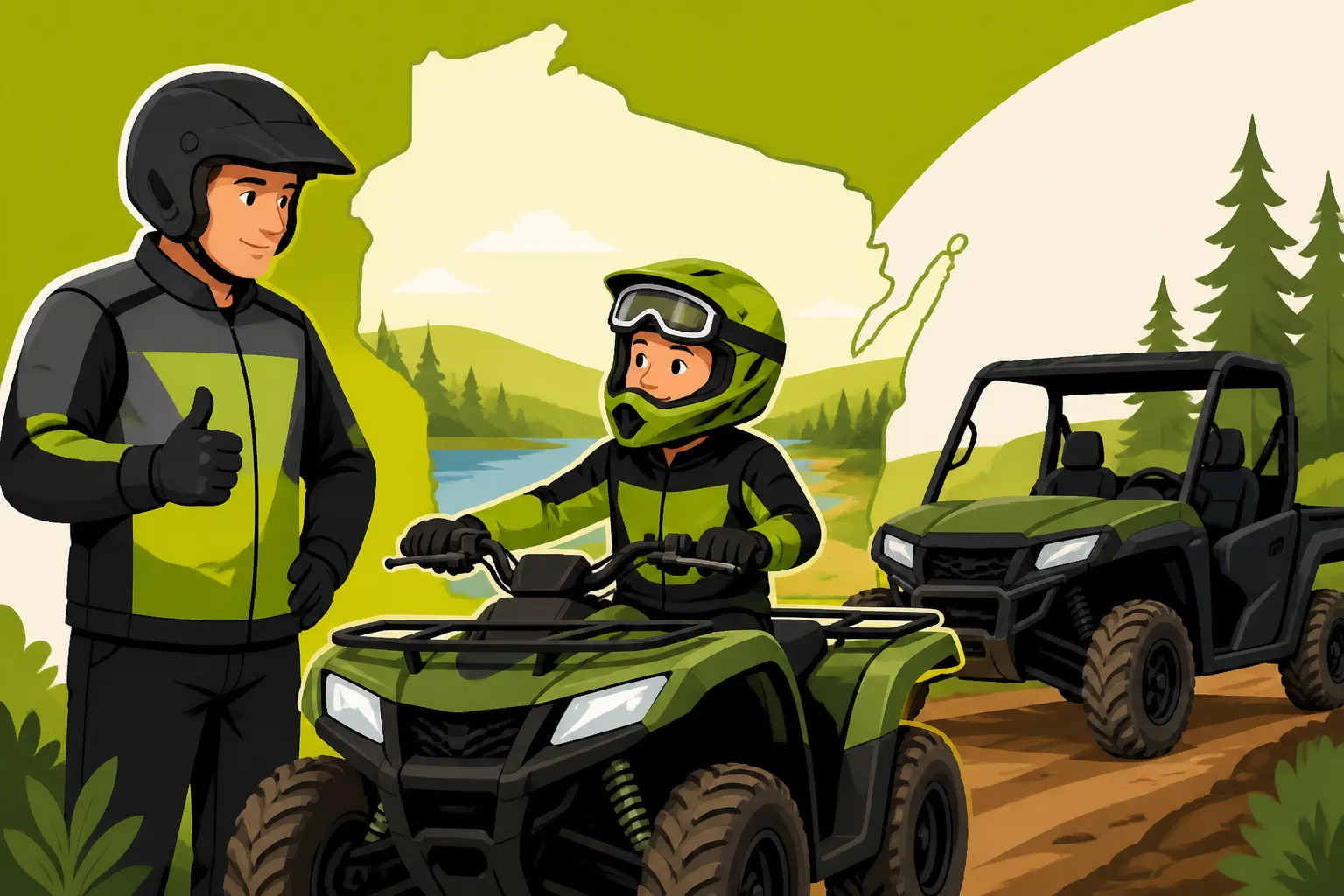
Adult accompaniment is a legal requirement in some circumstances, but good supervision calls for more than being somewhere on the same trail. The adult should be able to see how the youth is riding, communicate clearly, and intervene if the situation changes. If the adult is too far ahead, distracted, or separated by terrain, the youth may effectively be riding without meaningful supervision.
Before setting out, agree on a simple plan. Tell the young rider where the group is going, what signals to use, where to stop, and what to do if they lose sight of the adult. For a first ride, choose a route with room to stop and turn around rather than a narrow, crowded, or unfamiliar trail. Riding Wisconsin Trails With Kids offers additional planning considerations for family rides.
Keep the pace set by the least experienced rider. An adult who races ahead and expects a child to keep up can encourage poor decisions, such as speeding, cutting corners, or following too closely. Leave enough space between machines for safe stopping and visibility, but stay close enough to maintain contact. On a narrow trail, ride single file and stop in a safe place if the group needs to regroup.
Set boundaries before starting the engine
Explain which areas are allowed and which are off limits. Boundaries might include no riding near roads, water, steep banks, equipment, or other people unless an adult gives permission. On private property, point out driveways, blind corners, livestock, work areas, and changes in terrain. On public land, explain that riders must stay on authorized routes and trails rather than taking shortcuts.
Agree on rules that are easy to remember:
- Stop when an adult gives the signal.
- Do not pass the lead adult or ride out of sight.
- Leave space between machines.
- Slow down near people, animals, buildings, and trail intersections.
- Stop and wait if the group becomes separated.
- Do not carry a passenger unless the machine is designed for one and the rider is allowed to do so.
These rules work best when adults follow them too. A youth rider will notice if adults ignore speed, spacing, protective gear, or trail boundaries.
Match the ride to the child’s ability
Age is only one part of readiness. Consider the child’s size, coordination, attention, experience, and ability to follow directions when tired or excited. A youth rider should be able to reach and operate the controls comfortably, understand how to stop, and recognize when the machine feels unstable. If they cannot do those things reliably in a controlled area, a public trail is not the place to learn.
Start in a flat, open area away from traffic and obstacles. Teach starting, stopping, turning, and checking the surrounding area before introducing uneven terrain or group riding. Keep practice sessions short. Fatigue can make a young rider less attentive and more likely to overcorrect or overlook hazards.
Do not treat a safety certificate or a few successful practice laps as proof that a child is ready for every trail. Confidence can grow faster than judgment. Increase the difficulty gradually, and turn back if the rider is uncomfortable, distracted, or struggling to keep control.
Prepare the Rider, the Machine, and the Group
Supervision works best when the whole ride is planned around the youth rider. Check the route status and local rules, choose terrain that matches the child’s ability, and make sure the machine is in good condition. A family ride can become stressful quickly if the group discovers a closure, unsuitable trail, or mechanical problem after setting out.
Before riding, check the tires, brakes, throttle, steering, lights, and fuel or battery level. Make sure the machine is appropriate for the rider and that the controls work smoothly. For a UTV, review seat belts, doors or nets, and any other occupant restraints. A youth passenger should use a proper passenger seat and restraint system; never improvise a seat or carry someone where the machine is not designed to carry them.
Protective gear should fit correctly and be suitable for the activity. A properly fitted helmet is essential, and Wisconsin has specific helmet requirements for riders under 18 in relevant riding situations. Check the rule that applies to the planned location and machine rather than assuming one requirement covers every setting. Wisconsin Helmet Requirements Under 18 explains the youth rules. Eye protection, gloves, sturdy footwear, long sleeves, and long pants can also help protect against debris, branches, and contact with the machine.
If buying gear online, including through Amazon, check sizing carefully and confirm that a helmet meets the applicable standard. A low price or a product description that says “youth” does not establish that it fits the rider or is appropriate for the intended use. A helmet should sit level, feel secure, and stay in place when fastened. Replace damaged gear, and follow the manufacturer’s guidance after an impact.
Keep the adult role clear
The accompanying adult should be sober, alert, and prepared to give the youth rider full attention. Avoid splitting the group so that one adult is responsible for multiple riders in different locations. If the group has several young riders with different skill levels, consider adding another capable adult or choosing a route that keeps everyone together.
Before departure, confirm that everyone knows who is leading and who is bringing up the rear. Decide where the group will stop and what to do if a machine has a problem. Carry a charged phone, but do not rely on cell coverage in remote areas. Tell someone who is not riding where the group plans to go and when it expects to return.
If a youth rider makes repeated unsafe choices, stop the ride. A warning is useful only if the adult follows through when the boundary is crossed. The safest decision may be to end the ride, move to an easier area, or have the youth ride as a passenger only if the machine and rules allow it.
Avoid Common Supervision Mistakes
Several mistakes can make a ride riskier even when an adult is present. One is assuming that a young rider can safely operate a machine because they have ridden before. Familiarity with a yard or farm does not necessarily prepare a child for public trails, changing surfaces, other riders, or road crossings.
Another is allowing the child to follow a group of faster adults. Youth riders may try to close the gap rather than admit they are falling behind. Keep the pace slow enough that the young rider does not feel pressured, and stop if the group becomes stretched out.
Avoid riding too close to roads or treating an ATV route like a private driveway. Where road use is allowed, the rider may need to meet specific age, certification, equipment, and local ordinance requirements. A road route is not permission to ride on every road. Check the route and local rules before using it, and do not send a youth rider onto a road simply because an adult is riding nearby.
Do not rely on verbal permission alone when the group is using private land. Confirm the boundaries with the landowner and identify hazards such as ditches, fences, machinery, water, and hidden obstacles. A youth rider should know what to do if they encounter someone else on the property or see a hazard.
Finally, do not treat protective equipment as a substitute for supervision. A helmet and appropriate clothing can reduce some risks, but they cannot prevent a collision or make an unsuitable machine suitable. The best protection is a rider who is legally eligible, properly equipped, prepared for the terrain, and supervised closely by an attentive adult.
Before each ride, check the Wisconsin DNR’s current guidance and any local rules for the area. If the requirements are unclear, choose a riding location and plan that do not depend on assumptions. For more on the legal age distinctions, see Wisconsin Rules for Riders Aged 12 to 15 and Parent-Approved Adult Means.
Disclaimer
This article is for general informational purposes only and does not constitute professional advice. Laws, prices and regulations vary by location and change over time. Consult a qualified professional for guidance on your specific situation.