Riding a Wisconsin Quad in Iowa
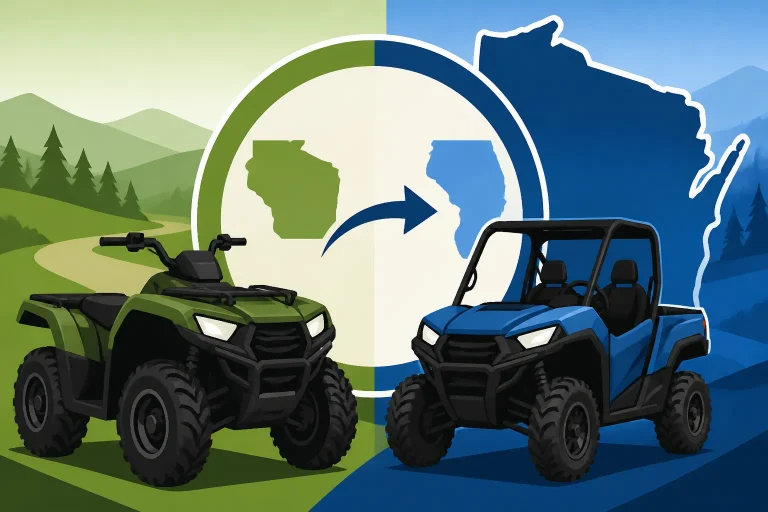
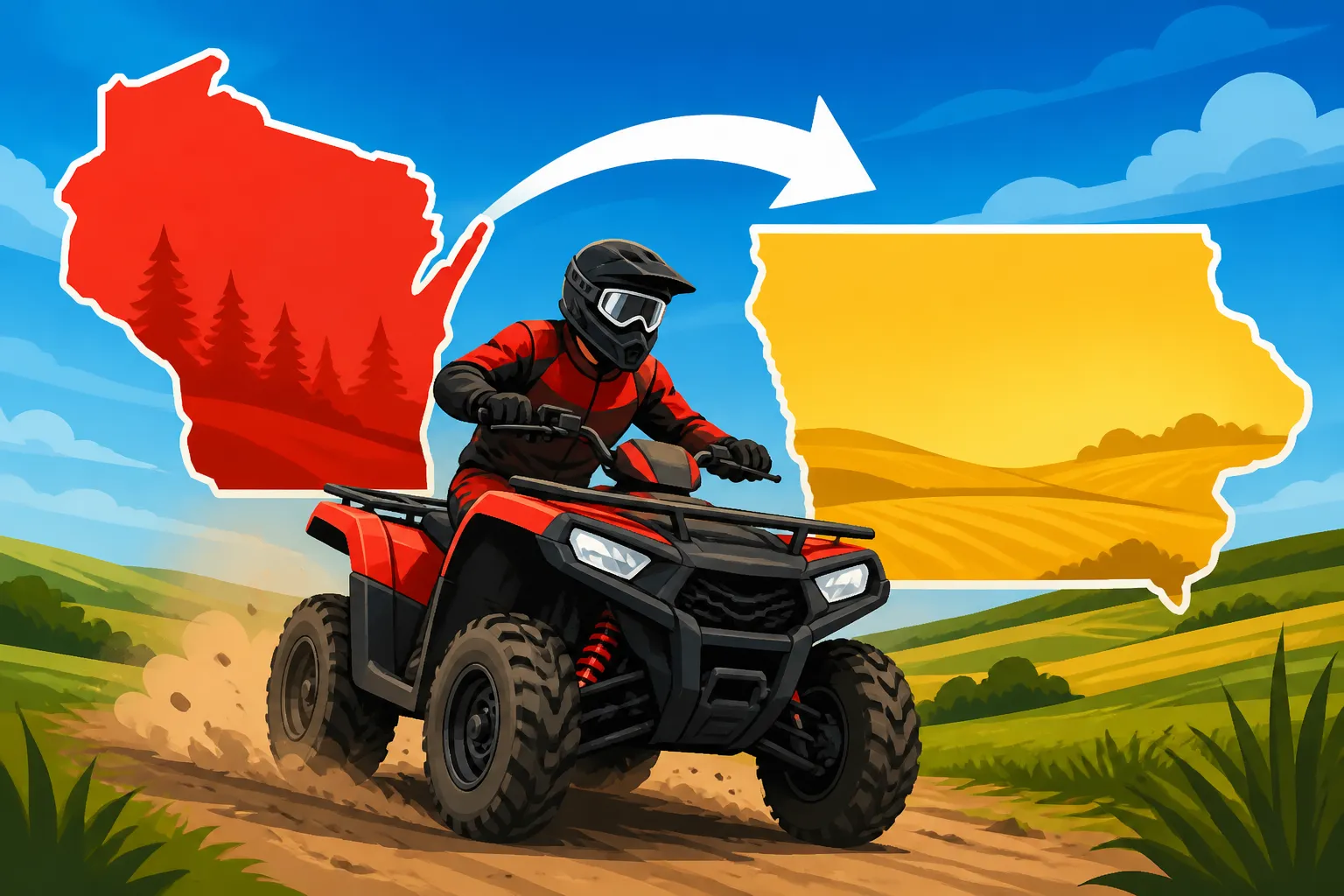
A Wisconsin registration or trail pass does not automatically give your quad permission to ride every Iowa trail. Before loading up, check what Iowa requires for your machine, whether the riding area is open to ATVs, and what rules apply to roads and public land. The key is to treat registration, riding permits and trail access as separate questions.
Does Wisconsin Registration Let You Ride in Iowa?
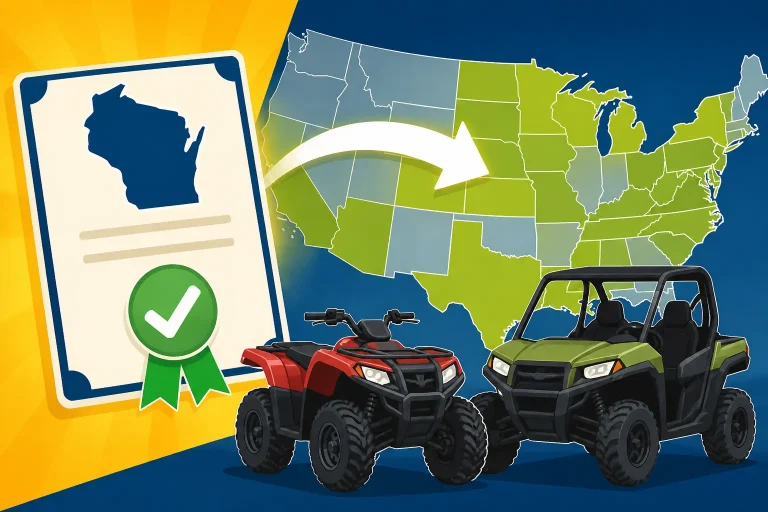
A Wisconsin-registered quad may be eligible to ride in Iowa without getting a second state registration, but that does not mean every Iowa riding requirement is covered. Iowa’s rules can depend on where you plan to ride, how the machine is registered in Wisconsin and whether Iowa requires a separate nonresident user permit for that use.
The safest approach is to confirm the current requirements with the Iowa Department of Natural Resources before traveling. Ask specifically whether your Wisconsin registration qualifies for Iowa’s out-of-state registration exemption and whether you also need a nonresident permit for the public land or trail you intend to use. Do not assume that a Wisconsin decal, registration card or trail pass substitutes for an Iowa permit.
| What you have or plan to do | What to check before riding |
|---|---|
| Current Wisconsin registration | Whether Iowa recognizes it for the type of riding planned |
| Wisconsin trail access or pass | Whether Iowa requires a separate permit or pass |
| Riding on an Iowa public trail | Whether the trail is open to your machine and what access rules apply |
| Riding on a road | Whether that specific road is designated or locally authorized for ATV use |
| Riding on private land | The landowner’s permission and any applicable local rules |
A Wisconsin trail pass is tied to Wisconsin’s trail system; it is not a general permit for riding in other states. Similarly, a Wisconsin registration does not, by itself, establish that an Iowa trail is open or that you meet the trail operator’s conditions. The distinction between registration and access is important anywhere you ride. For Wisconsin’s side of that distinction, see What Wisconsin Riders Need Before They Ride and Wisconsin’s Non-Resident Trail Pass.
It also matters whether your quad is registered for public use in Wisconsin or is registered for private use only. A private-use registration may not provide the documentation or public riding rights you expect when taking the machine across a state line. If you are uncertain what your Wisconsin registration covers, review Public Use Versus Private Use in Wisconsin before you travel.
Permits, Registration and Trail Access Are Separate
Think of the paperwork as three separate layers: the machine’s registration, any state or nonresident permit, and permission to ride on the specific trail or property. Meeting one requirement does not automatically satisfy the others.
Registration
Keep your Wisconsin registration current and bring the registration card with you. Iowa may recognize valid out-of-state registration in some circumstances, but you should confirm that the exemption applies to your machine and intended use. If your registration has expired, is private-use only, or does not clearly identify the machine, contact the relevant agencies before making the trip rather than trying to resolve it at a trailhead.
A registration sticker is useful for identifying the machine, but it may not answer every question about its status. Bring the card or other proof that shows the registration is valid. For background on how state registration and out-of-state machines can differ, see Wisconsin Registration for an Out-of-State Machine.
Nonresident permits
Iowa may have a separate nonresident user-permit requirement for riding an out-of-state ATV or UTV on public land. Do not treat an out-of-state registration exemption as proof that no other permit is needed. Ask the Iowa DNR whether a nonresident permit applies to your situation and how it should be obtained and displayed.
The permit question can be different for riding on private property, on a public trail, or on a route managed by a local agency. If you are joining a group ride, ask the organizer what permits are required, but verify the rule yourself when the consequences of getting it wrong could mean losing access or receiving a citation.
Trail and property access
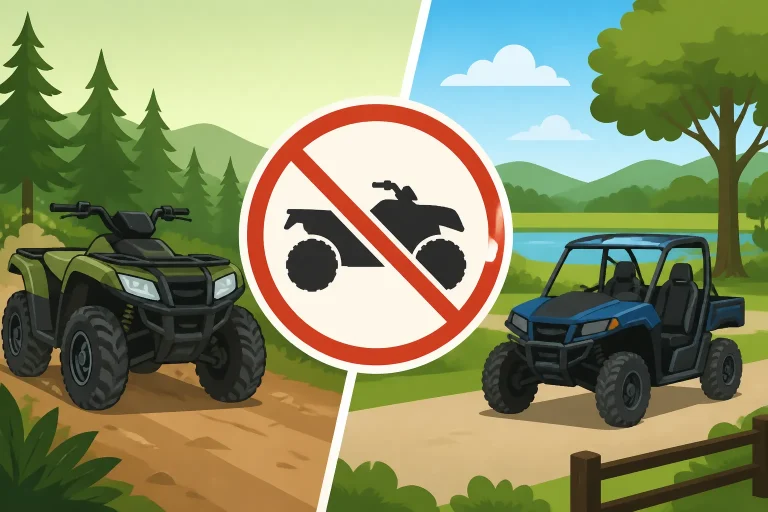
A state permit does not guarantee that a particular trail is open to ATVs. Trail systems can have their own rules for machine type, width, hours, seasonal closures, noise, speed and permitted routes. Some public properties do not allow motorized riding at all, while others restrict use to marked trails.
Before you set out, check the land manager’s current information for the exact trail or property. Confirm that the route is open on your planned day, that your quad or side-by-side fits the rules, and that any local pass or fee is handled. For practical habits that also help on unfamiliar Wisconsin routes, see Checking Wisconsin Trail Status Before You Drive and Reading a Wisconsin County Trail Map.
A good pre-trip check is to get clear answers to these questions:
- Is my machine’s Wisconsin registration valid for riding in Iowa?
- Do I need an Iowa nonresident user permit or another permit?
- Is the specific Iowa trail open to my machine?
- Does the trail manager require a separate pass, reservation or fee?
- Are there seasonal closures or local restrictions that affect my dates?
If you cannot confirm a requirement online, contact the agency or trail manager responsible for that location. A general statement that “Iowa allows ATVs” is not enough to establish that your chosen route is open or that your paperwork is complete.
Roads, Public Land and Private Property
Trail riding and road riding are not interchangeable. Having valid registration and permits does not make every Iowa road legal for a quad. Road access can depend on state rules, local authorization and the designation of the specific road or route.
Treat paved roads, county roads, town streets and highway crossings as separate cases. Before riding on any road, confirm that the road is open to ATV or UTV use and follow its posted conditions. A local rule for one town or county does not automatically apply elsewhere. If a route is not clearly designated for motorized use, do not assume that a short road connection is allowed just because it leads to a trail.
Public land also has property-specific rules. A permit may allow access to certain public riding areas without giving blanket permission to ride across all public land. Stay on marked routes, obey closure signs and avoid entering areas that prohibit motorized vehicles. Wet ground, wildlife areas and seasonal restrictions may affect where riding is allowed.
Private property is different, but it is not a substitute for permission. Get the owner’s approval before riding, and ask where you may travel, whether guests are allowed and whether any local restrictions apply. A machine used only on private land in Wisconsin may still need to meet Iowa requirements if you move it onto public property or a designated trail. See Do You Need Registration on Your Own Wisconsin Land? for the related Wisconsin distinction between private-land use and public access.
If you are taking a side-by-side rather than a quad, check machine-specific rules. Width, equipment and how the vehicle is classified can affect whether it is allowed on a particular trail or route. Do not assume that a trail open to smaller ATVs also accepts a wider UTV. Confirm the trail’s vehicle restrictions before planning a route.
A Practical Checklist Before You Leave Wisconsin
A little preparation can prevent a long drive from ending at a closed trailhead. Start with the exact riding destination rather than searching only for places that generally allow ATVs. Then verify paperwork, access and transport details.
- Choose a specific trail or riding area. Identify its managing agency or organization and find its current rules and closure notices.
- Confirm Iowa’s requirements for your Wisconsin machine. Ask about registration recognition and any separate nonresident user permit.
- Check machine eligibility. Verify that the trail permits your quad or UTV and that any width or equipment limits are met.
- Review local road rules. Confirm whether any road segments are designated for ATV use, and know where crossings are allowed.
- Carry proof of registration and permits. Keep the documents accessible, and make sure the machine’s identifying decals or numbers are visible as required.
- Check the rules for the day you plan to ride. Seasonal closures, conditions and local restrictions can change access.
- Plan transportation and recovery. Secure the machine properly on the trailer and bring the basic tools and supplies appropriate for the route.
A Wisconsin safety certificate or training record may be useful to carry, especially when traveling with younger riders, but do not assume every state or riding area treats credentials identically. Check Iowa’s age and safety requirements for the rider and machine. Wisconsin’s rules are summarized in Wisconsin’s ATV Safety Certificate Requirement, but Iowa rules should be confirmed separately.
For travel planning, remember that trail access can be narrower than state-level permission. A registration may establish that the machine is properly documented, and a permit may satisfy an entry requirement, but neither can open a closed trail or override a local restriction. If an Iowa trail manager’s rules differ from what you expected, follow the rules posted for that property and choose another permitted route.
The practical takeaway is simple: bring current Wisconsin paperwork, verify Iowa’s nonresident requirements, and check access with the manager of the exact place you plan to ride. That gives you a much better chance of arriving ready to ride instead of sorting out registration or permit questions in the parking area.
Disclaimer
This article is for general informational purposes only and does not constitute professional advice. Laws, prices and regulations vary by location and change over time. Consult a qualified professional for guidance on your specific situation.