Wisconsin Route Signs and What They Mean
Navigating Wisconsin's vast network of ATV and UTV trails and routes can sometimes feel like solving a complex puzzle, especially when you encounter a new town or a turn you haven't seen before. Many riders, myself included, have felt that little pang of uncertainty at a crossroads, wondering if the next path is open for their machine or if they're about to venture into restricted territory. This guide is designed to demystify Wisconsin's ATV and UTV route signs, helping you confidently understand what each sign means so you can ride legally and safely, without second-guessing your every turn.
The Foundation: Why Route Signs Matter
When you're out on your quad or side-by-side, the last thing you want is a run-in with a local warden because you misunderstood where you were allowed to ride. Wisconsin has made significant strides in opening up town roads and designated routes for ATV and UTV use, but with that freedom comes the responsibility of understanding the rules, and the signs are your primary teachers. They aren't just suggestions; they are the law, guiding you through permissible areas and alerting you to potential hazards or restrictions. Ignoring them isn't just risky for your wallet; it can also put you and others in danger.
Understanding the "Where Can I Ride?" Dilemma
Every rider has asked this question, often mentally, as they explore new areas. The beauty of Wisconsin's system is that many communities have embraced ATV and UTV tourism, creating extensive networks of routes that link trails, towns, and local businesses. However, this isn't a free-for-all where every gravel road is fair game. Specific roads or segments of roads must be officially designated and properly signed by the local municipality. This means that even if a road looks like a perfect riding path, if it doesn't have the appropriate signage, it's likely off-limits. It's a critical distinction to remember, especially when you're far from home and unfamiliar with local nuances. You can often check official maps or apps, but the physical sign on the ground is the definitive word.
The Role of Municipalities in Opening Routes
It's easy to assume that the Department of Natural Resources (DNR) handles all ATV and UTV route designations, but that's not entirely accurate for road routes. While the DNR sets statewide regulations and manages many state trails, the power to open town roads for ATV and UTV use rests squarely with local municipalities – the towns, villages, and cities themselves. They are the ones who vote on ordinances, conduct studies, and ultimately decide which roads within their jurisdiction will become part of the recreational network. This localized control means that route rules, including hours of operation, speed limits, and specific vehicle types allowed, can vary from one community to another, making signs even more crucial for understanding local rules. [How a Wisconsin Town Opens an ATV Route] delves deeper into this process.
Decoding Common Wisconsin ATV/UTV Route Signs
Understanding the visual language of Wisconsin's route signs is your key to unlocking miles of legal riding. These signs are standardized to a certain extent, meaning that once you learn them, you can apply that knowledge across different counties and communities. It's not just about knowing that a road is open; it's about understanding the specific conditions, too.
The Official ATV/UTV Route Sign
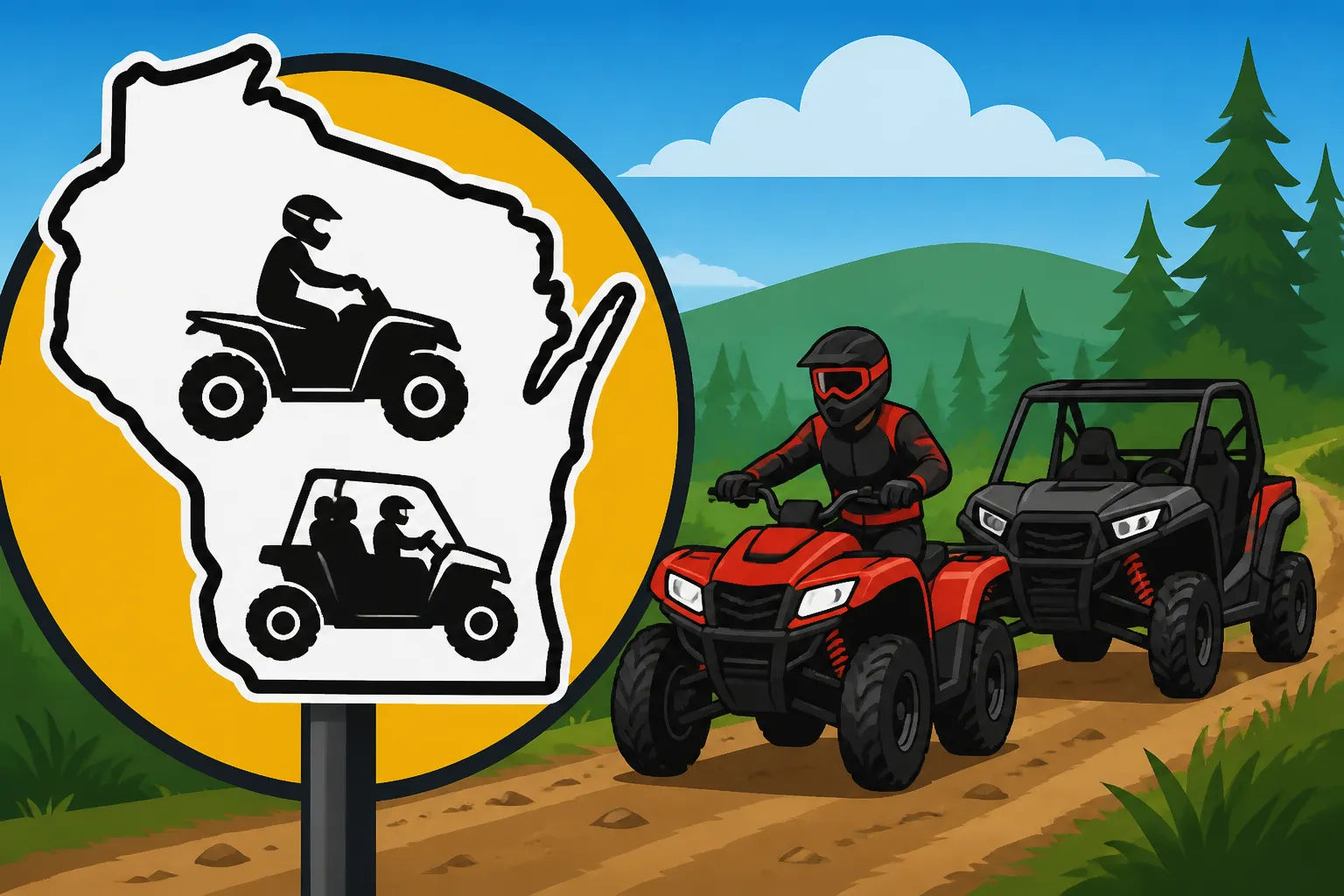
This is the sign you absolutely must recognize. The official Wisconsin ATV/UTV Route sign is typically a rectangular sign, often green or blue, with white lettering and a white graphic of an ATV or UTV. It usually says something direct like "ATV/UTV Route" or "ATV/UTV Trail & Route." This sign unequivocally indicates that the road or path you are entering is designated for ATV and UTV use. Seeing this sign is like getting the green light to proceed, assuming you're following all other relevant regulations. Without it, even if you see tire tracks, you should proceed with caution and verify legality.
When you spot one of these, it means the local authorities have explicitly approved this stretch for off-highway vehicle traffic. It’s not just a friendly suggestion; it's a legal designation. These signs are strategically placed at entry points to routes, at intersections where routes continue, and often at points where the route conditions might change. They are designed to be clear and unambiguous, leaving little room for doubt about the approved status of the thoroughfare.
Supplemental Signage: Arrows, Limits, and Cautions
Beyond the main "ATV/UTV Route" signs, you'll encounter a variety of supplemental signs that provide crucial details for your ride. These signs refine your understanding of the route, much like different voice commands from your GPS.
- Directional Arrows: Often placed beneath the main route sign or at intersections, these arrows point the way, guiding you through turns or indicating the direction the route continues. Without them, you might be left guessing at a confusing intersection, potentially turning onto a road that is not part of the designated route. [Wisconsin Route Signage Standards] dictates how these signs should be designed and placed for consistency.
- Speed Limit Signs: Just like with cars, ATVs and UTVs on designated routes must adhere to posted speed limits. These signs will look familiar, often black and white, indicating a maximum speed. These aren't arbitrary; they are set with safety in mind, considering factors like road conditions, residential areas, and potential interactions with other vehicles or pedestrians. It's important to remember that the posted limit for ATVs and UTVs might be different than the general vehicle speed limit on the same road.
- Hours of Operation: Some municipalities might have specific hours during which ATV/UTV routes are open. You might see signs indicating "Open Dawn to Dusk" or specific timeframes like "7 AM to 10 PM." These restrictions are often put in place to manage noise in residential areas or for safety considerations during low-light conditions. Always check for these, especially if you plan an early morning or late evening ride.
- "No Through Traffic for ORVs" or "Route Ends": These signs are just as important as the ones that allow you to ride. They clearly mark the termination of an ATV/UTV route, signaling that the road ahead is not approved for your machine. Ignoring these could lead to fines for trespassing or riding on an unauthorized road. These often appear when a route hits a state highway or a private road.
Consider equipping your machine with a high-quality GPS or a tablet mount from a brand like SuperATV. This can help you keep track of your location and compare it to official route maps, ensuring you don't miss any critical turns indicated by these smaller, but equally important, signs.
Recognizing Prohibited Areas
Equally important as knowing where you can ride is knowing where you cannot. Wisconsin’s system includes signs that explicitly prohibit ATV and UTV use, often for safety, environmental protection, or simply because that particular stretch of land isn't designated.
- "No ATV/UTV" or "Closed to ORV Traffic": These signs are usually red with a white slash through a vehicle graphic, or clear text indicating prohibition. You might see these at the entrance to protected natural areas, private land, or roads that local ordinances have deemed unsuitable for ATV/UTV traffic. Taking shortcuts or assuming a "no" sign doesn't apply to you is a surefire way to encounter legal trouble.
- "Private Property – No Trespassing": While not specifically an ATV/UTV sign, these are critical for riders. They indicate private land where you do not have permission to ride. Always respect private property signs, even if the trail looks inviting. Straying onto private land without permission can lead to serious legal consequences, not to mention damaging the reputation of the riding community. [Riding Posted Land in Wisconsin] further explains these critical rules.
It’s tempting to follow tracks in the mud or take an unofficial-looking path, especially if you’re looking for adventure. However, for the health of the sport and your own legal protection, always stick to marked routes and trails. Using a robust GPS system, perhaps integrated with a durable mount for a phone or tablet (many riders rely on products from SuperATV for this), can help you stay on designated paths and avoid inadvertently crossing into prohibited zones.
Beyond the Signs: What Else You Need to Know
While signs are your immediate visual cues, a truly informed rider understands that they are part of a larger regulatory framework. Just reading the signs isn’t enough; you need to understand the context.
Local Ordinances and Their Impact
Remember how municipalities open routes? Well, they also craft the specific rules that govern those routes. This means that while the general state laws apply, each town, village, or city can add its own layer of regulations. For example, one town might allow night riding, while the very next town over might have a "dawn to dusk" restriction. Some towns might require additional local permits, although this is less common for routes.
It's your responsibility as a rider to be aware of these local ordinances for any area you plan to ride in. Many communities post their ordinances online, or you can often find information at local DNR stations or town halls. Ignoring these can lead to fines, even if you technically rode on a signed route. For instance, [Finding a Wisconsin Town's ATV Ordinance] can be a valuable resource before you hit unfamiliar territory. Being prepared with this knowledge means a smoother, worry-free ride.
Carrying Maps and Digital Aids
Even with perfectly placed and clearly visible signs, there will be times when a map, either physical or digital, is your best friend. Signs can be obscured by foliage, snow, or even vandalism. They can also be sparse in certain areas, leaving you to guess at which way to turn. That’s where a good map comes in.
- Physical Maps: Carrying a printed map of the area you’re riding in is always a good backup, especially in the Northwoods where cell service can be spotty or non-existent. These maps often highlight designated ATV/UTV routes and trails, along with amenities like gas stations, food, and lodging.
- Digital Apps and GPS Devices: Apps like onX Offroad or dedicated GPS units are incredibly useful. They provide real-time location tracking, often show detailed trail and route networks, and can even help you find points of interest. Make sure your device is fully charged and, if using a phone, consider a power bank. Companies like SuperATV offer robust phone mounts that can withstand the rigors of off-road riding, keeping your navigation handy and secure. [Reading a Wisconsin County Trail Map] is a skill every rider should cultivate, regardless of digital aids.
Table of Common Wisconsin ATV/UTV Route Signs and Meanings
To help visualize what we've discussed, here's a quick reference table of common signs you'll encounter on Wisconsin's ATV and UTV routes:
| Sign Description | Typical Appearance | Meaning | Action for Rider |
|---|---|---|---|
| Official ATV/UTV Route | Rectangular, green or blue, with ATV/UTV graphic | This road/path is legally open for ATV/UTV use. | Proceed, following all other rules and signs. |
| Directional Arrow | White arrow on green/blue background, pointing direction | Indicates continuation or turn of an ATV/UTV route. | Follow the arrow to stay on the designated route. |
| Speed Limit | Standard black/white circular or rectangular speed sign | Maximum allowable speed for ATVs/UTVs on this route. | Observe the posted speed limit. |
| Route Hours of Operation | Rectangular, white text on green/blue background | Specifies legal riding times (e.g., "Dawn to Dusk," "7 AM – 10 PM"). | Only ride during the posted hours. |
| Route Ends / No ORV Through Traffic | Rectangular, often red, with "Route Ends" or vehicle graphic | ATV/UTV route terminates; further travel is prohibited. | Turn around or find an alternate legal route. Do not proceed past this point. |
| No ATV/UTV / Closed to ORV Traffic | Red circle with a slash through ATV/UTV graphic, or text | This area is strictly prohibited for ATV/UTV use. | Do not enter; choose an alternative route. |
| Private Property / No Trespassing | Various, often black text on white or yellow | Entering this land is illegal without explicit permission. | Do not enter. Respect private land boundaries. |
| Share the Road | Rectangular, yellow or white, with text or car/ATV graphics | Be aware of other vehicles and users (cars, bicycles, pedestrians). | Exercise extra caution and courtesy; maintain awareness of surroundings. |
Common Misconceptions and Safety
Even with clear signs and maps, misconceptions can arise, leading to unsafe practices or legal issues. It’s important to clarify these to ensure everyone has a positive and safe experience. Safety isn't just about wearing a helmet; it's also about knowing the rules of the road.
The "Every Town Road" Myth
One of the biggest misconceptions among new, or even some experienced, riders is that if it's a gravel or dirt town road, it must be an ATV/UTV route. This is absolutely not true. While many towns have opened their roads, not all have. As we discussed, a road must be officially designated and properly signed by the local municipality to be considered an ATV/UTV route.
Just because a road looks like it's frequently used by off-road vehicles doesn't mean it's legal. There might be local residents who are exempt (like farmers using machines for agricultural purposes), or it might simply be an illegal path. Always look for the official signage. If you don't see the specific "ATV/UTV Route" signs, assume it's closed to your machine. [Town Roads Open to ATVs in Wisconsin] further clarifies which roads are usually open.
Riding Etiquette and Respect
Beyond merely following the signs, responsible riding on Wisconsin's routes involves a strong sense of etiquette and respect for other users and local residents. You're often sharing these routes with cars, bicycles, pedestrians, and even farm equipment.
- Yield to Others: Always yield to motor vehicles, pedestrians, and bicyclists. They often have the right of way, and it’s simply courteous to slow down, pull over, and allow them to pass safely.
- Control Dust: If the road is dry and dusty, reduce your speed when passing homes, other vehicles, or people. Excessive dust can be a major nuisance and hazard.
- Respect Noise Levels: While some aftermarket parts, like those offered by SuperATV, can enhance performance and looks, ensure your machine still complies with Wisconsin's 96-decibel exhaust limit. Loud machines can disturb residents and other outdoor enthusiasts, leading to negative perceptions and potential route closures. [Wisconsin's 96-Decibel Exhaust Limit] is strictly enforced in many areas.
- Stay on the Route: Never cut corners, ride off into ditches, or create new trails. This damages the environment and can lead to immediate route closures if unchecked.
- Pack It In, Pack It Out: Leave no trace. Any trash you generate, take it with you. A clean route is a welcome route.
Following these etiquette guidelines not only ensures your own safety but also helps maintain good relationships with local communities, which is vital for keeping these routes open and expanding future riding opportunities. Remember, your actions reflect on the entire ATV/UTV riding community.
Disclaimer
This article is for general informational purposes only and does not constitute professional advice. Laws, prices and regulations vary by location and change over time. Consult a qualified professional for guidance on your specific situation.