Where Wisconsin Trail Pass Revenue Is Spent
Wisconsin trail pass revenue helps keep public ATV and UTV riding areas usable, but it does not work like a direct payment to the trail you rode that day. The money supports a statewide program that can fund trail work and related services. Knowing how the system works helps riders understand what a pass pays toward—and what it does not guarantee.
Where Wisconsin trail pass revenue goes
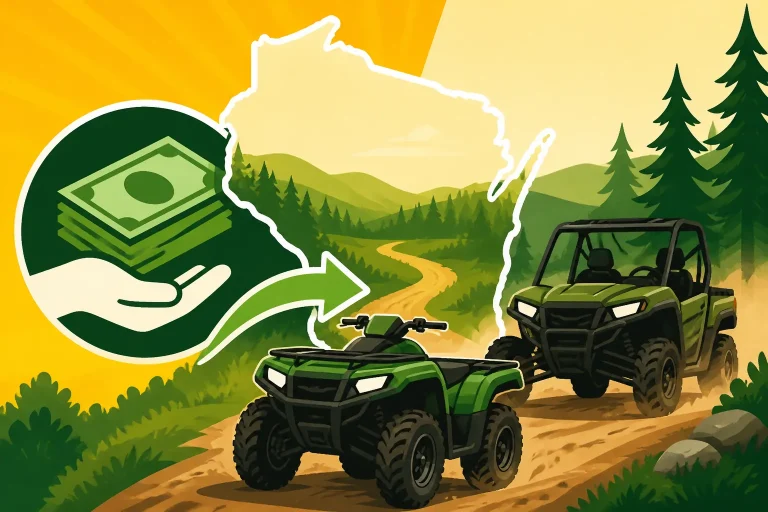
Revenue from Wisconsin ATV and UTV trail passes is used through the state’s off-highway vehicle program to support eligible trail and route projects. A central part of that system is the ATV Trail Aids program, which makes grants available for work on public riding opportunities. The money is not simply handed to every county or divided evenly among trails.
That distinction matters. A trail pass does not buy access to every path in Wisconsin, and buying one does not mean that the fee goes directly to the county where you ride. Instead, funds are administered through a statewide program, with grants and other eligible expenditures supporting the network. For an overview of the grant system, see Wisconsin’s ATV Trail Aids Program
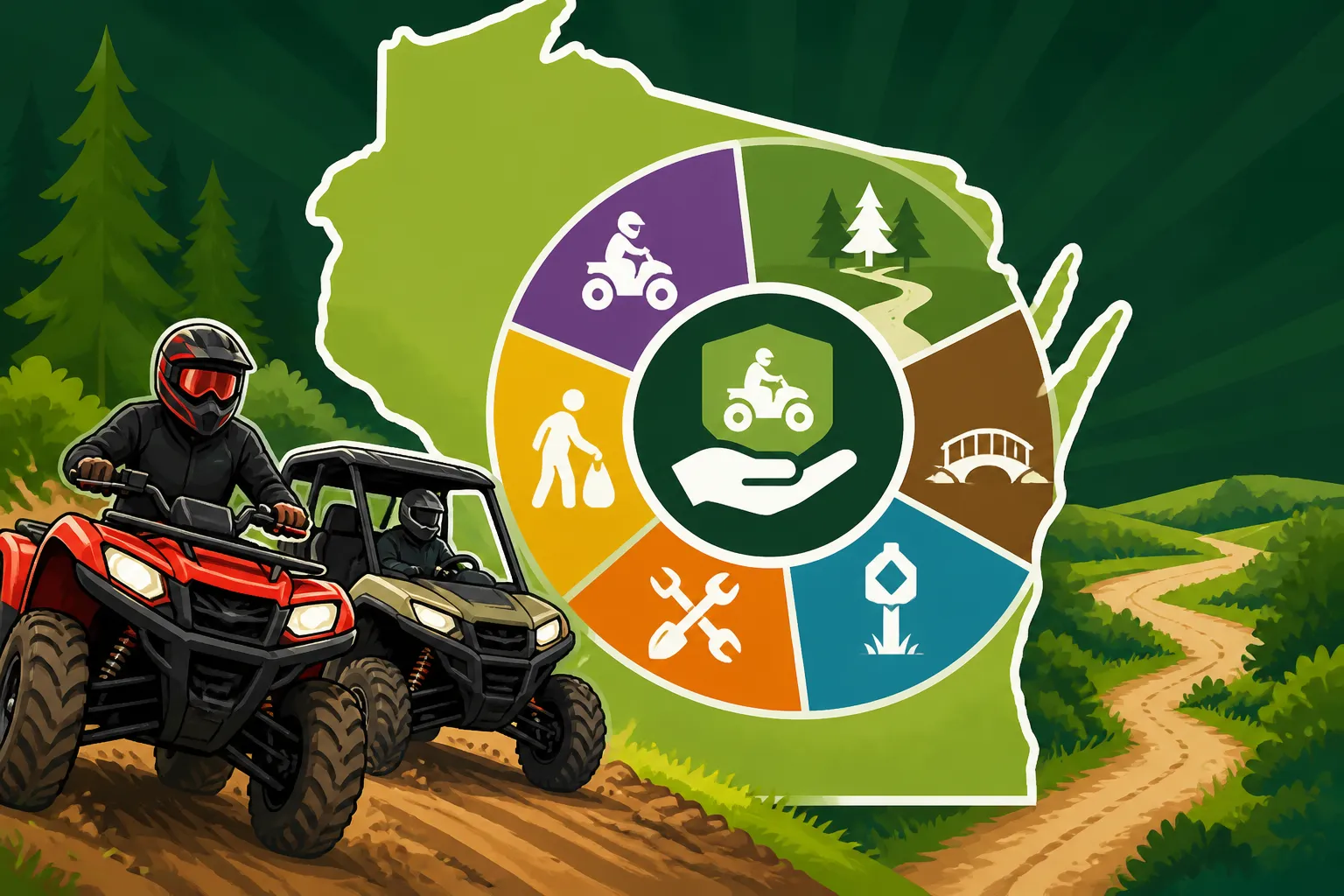
A pass may help support work riders notice on the ground: maintaining a trail surface, repairing a bridge, improving signs, or keeping a connection open. It can also support less visible work, such as planning, coordination, and managing public trail access. The precise grant categories and conditions depend on current program rules, so a particular project’s funding should be checked with the responsible agency or local sponsor.
| What the program may support | What riders might notice | What it does not necessarily mean |
|---|---|---|
| Eligible trail maintenance | Repairs, clearing, drainage work, or surface upkeep | Every trail receives the same level of maintenance |
| Trail development or rehabilitation | New or improved public riding connections | A proposed route is automatically approved |
| Signs and route information | Directional or regulatory signs | Every trail has identical signage |
| Eligible structures and access work | Bridge or crossing improvements | A pass grants permission to use private property |
| Program administration and coordination | Grant review, planning, and oversight | All pass revenue is spent on the trail a rider used |
The table is a practical summary, not a promise that every item is eligible for every grant. The program’s rules determine which costs qualify, and funding decisions depend on applications, project needs, and available resources.
Wisconsin has different registration and pass requirements depending on the machine and where it is used. A Wisconsin-registered machine and an out-of-state machine may have different requirements, and public trails are not interchangeable with private property or every road route. Check Which Wisconsin Trails Require a Pass before planning a ride. If you ride on a machine registered outside Wisconsin, Wisconsin’s Non-Resident Trail Pass explains the pass category that may apply.
How the money reaches trails
Pass revenue becomes useful to a rider through a chain of program decisions. The state establishes rules for the trail-aid system, eligible applicants submit project proposals, and approved work is carried out by the responsible organization. That organization may be a local government or another eligible sponsor, depending on the project and the program rules.
This structure lets local groups identify needs they understand—such as a worn section, a damaged crossing, or a gap in a route—while the state applies program requirements and reviews funding requests. A local trail crew may do some work, a contractor may handle specialized repairs, or a project may involve several partners. The details vary, so it is better to ask who sponsors a specific project than to assume every trail is managed the same way.
Grant funding is not automatic. A project must meet eligibility requirements, have an appropriate sponsor, and fit the program’s priorities and available funding. Some work also requires planning, landowner coordination, permits, or other approvals before construction can begin. A rider may see a trail problem that seems straightforward but still find that fixing it takes time because the remedy involves drainage, a structure, or property access.
The grant process also helps explain why the condition of nearby trails can differ. One trail may have a local sponsor with a ready project and a maintenance plan; another may need additional coordination or may not be eligible for the work being proposed. The amount of trail use alone does not necessarily determine how much support a particular segment receives.
For details on what kinds of projects the grant system can support, see How Wisconsin’s ATV Trail Aids Grants Fund Trails. If you want to understand which organizations may seek funding, Who Can Apply for Wisconsin Trail Aids is a useful next step. Work by volunteers and local trail groups can also be part of the picture; Trail Crews and Bridge Repairs covers the on-the-ground side of that effort.
What funded work can look like
Trail support is more than grading a path. Depending on the approved project, work can address the route itself, the infrastructure needed to use it, or the information riders rely on to stay on the authorized network.
Maintenance and rehabilitation
Routine maintenance can help keep an existing trail passable and reduce damage from use and weather. Depending on the site and approved scope, work may involve clearing vegetation, repairing a worn surface, improving drainage, or addressing erosion. Rehabilitation is generally more substantial than routine upkeep: it can restore a section that has deteriorated or improve a feature so the route can continue serving riders.
Not every muddy spot calls for the same solution. A trail may need drainage work rather than repeated surface repair, and seasonal closures may be necessary to protect it while the ground is vulnerable. Funding does not override trail closures or local rules. Riders should check conditions before setting out, particularly after heavy rain, during spring thaw, or when a county has posted a closure.
Bridges, crossings, and access
A trail network depends on more than the tread beneath the tires. Bridges, culverts, approaches, and other crossings can be essential links. If one structure is unsafe or unusable, a short gap may break a much longer route. Repairing a crossing can therefore have a bigger effect on practical access than its size suggests.
The work may require engineering, inspection, land access, or coordination with another authority. That is one reason a damaged bridge may not be replaced immediately, even when riders regularly report it. Grant eligibility and project schedules matter, and some fixes require approvals beyond the trail program.
Signs and route information
Signs help riders follow an authorized route, recognize restrictions, and avoid accidentally continuing where riding is not allowed. Signage may be part of a funded project when it meets program requirements, but signs also require upkeep and replacement. A missing or damaged sign is worth reporting to the local trail manager or county contact rather than treating an old map or memory as proof that a route remains open.
A funded sign project does not make every nearby road or path an ATV route. Local access rules still matter, and road routes may be established and managed differently from off-road trails. For that distinction, see What a Wisconsin ATV Route Actually Is
Planning and coordination
Some projects need advance work before construction: identifying a suitable route, coordinating with landowners, checking environmental constraints, or preparing a maintenance plan. These steps may not be obvious to riders, but they can determine whether a proposed connection is feasible and whether it can remain open over time.
This is also why trail-pass revenue should not be understood as a simple “fee in, gravel out” arrangement. Public riding access depends on responsible planning and ongoing cooperation, not only on physical repairs. A route that cannot secure the necessary permissions or meet program conditions may not be eligible for the work riders would like to see.
What riders should and should not expect
A trail pass contributes to a shared system. It is not a reservation, a guarantee that a particular trail will be open, or a promise that every ride will take place on a recently maintained surface. Weather, seasonal conditions, land access, local decisions, and project funding can all affect where and when riding is allowed.
A pass also does not replace registration requirements. Registration and trail-pass rules serve different purposes, and riders should confirm which applies to their machine and intended use. For background on the nonresident pass and what it covers, see What Wisconsin’s $35 Non-Resident Trail Pass Covers. The exact pass requirements and current program information should be confirmed through official Wisconsin sources before riding.
For a practical sense of where funds are going, look beyond the pass receipt. Check notices from the county or local trail sponsor, project announcements, trail maps, and posted closure information. If a route has a maintenance or construction project, the local sponsor is often best placed to explain its scope and schedule. For larger questions about statewide funding, use official program information rather than assuming that a visible repair was paid for by one particular fee.
Riders can help the system work by respecting closures, staying on signed routes, reporting damage to the right local contact, and avoiding shortcuts around blocked sections. Riding around a closure can damage the very area a project is meant to protect and can put continued access at risk. A pass supports eligible public riding opportunities, but responsible use helps preserve them.
The clearest takeaway is that Wisconsin trail pass revenue supports a statewide funding system for eligible ATV and UTV trail work, rather than directly paying for the specific trail a rider chooses. Local projects, grant requirements, available funding, and access rules shape what gets built or maintained. Checking current rules and local trail information is the best way to understand both where support is going and where you can ride.
Disclaimer
This article is for general informational purposes only and does not constitute professional advice. Laws, prices and regulations vary by location and change over time. Consult a qualified professional for guidance on your specific situation.