Hauling Feed by Machine on a Town Road
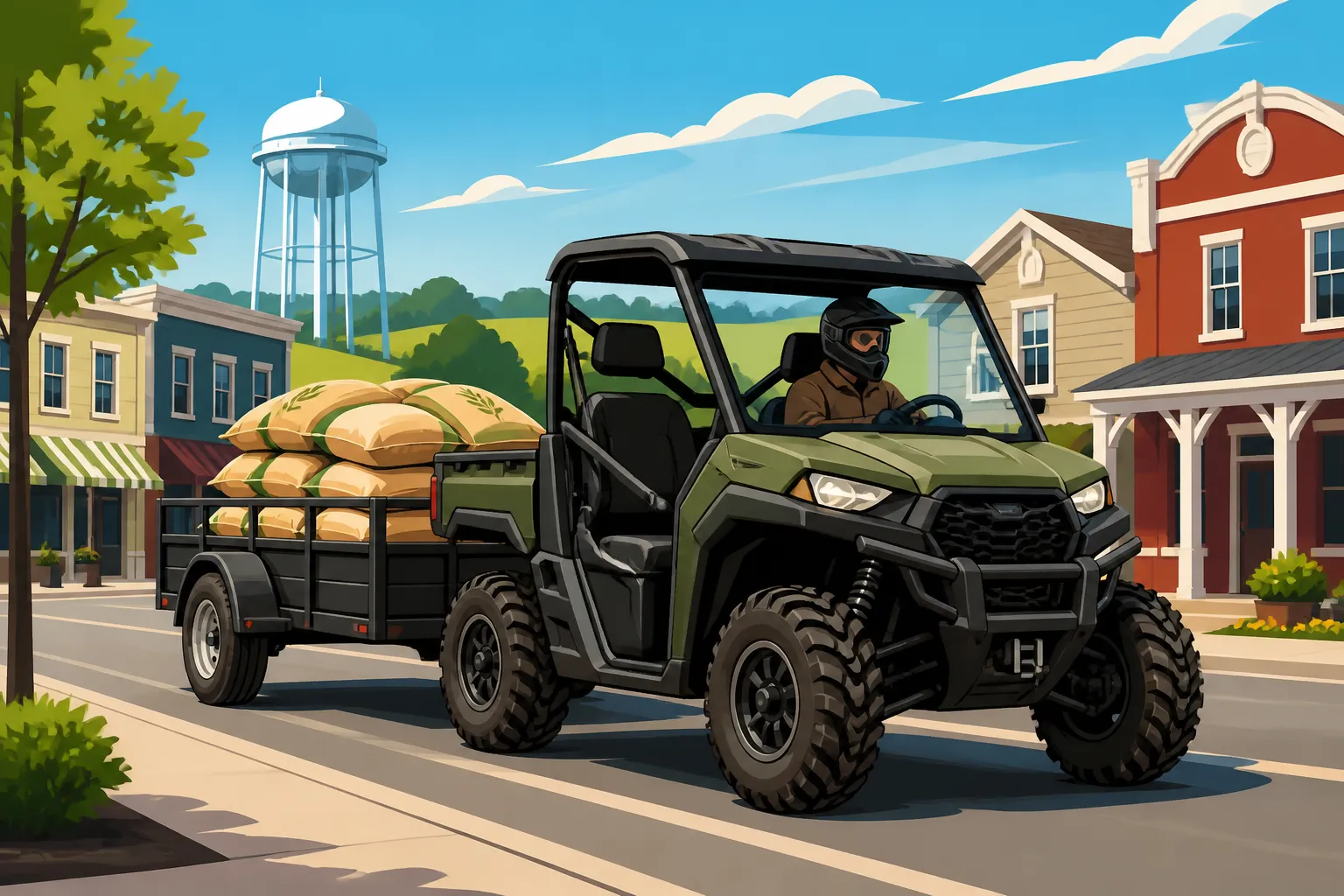
It’s a common frustration for anyone running a small farm, hobby farm, or even just keeping a few animals in rural Wisconsin: you need to move feed, tools, or supplies from one outbuilding to another, or perhaps just down the road to a different pasture, and your trusty ATV or UTV seems like the perfect tool. But then you hit a public town road, and suddenly you’re wondering if you’re breaking the law. This guide will walk you through the nuances of using your machine for agricultural hauling on Wisconsin’s town roads, helping you understand the rules, exemptions, and best practices to keep you working legally and safely.
Understanding Wisconsin's Rules for Farm and Utility Use on Town Roads
Navigating the regulations for ATVs and UTVs in Wisconsin can feel like trying to solve a Rubik's Cube blindfolded, especially when you start mixing recreational use with the demands of farm work. It's not always as simple as "it's for the farm, so it's allowed." Wisconsin has specific provisions, but they often come with conditions and local variations that can trip up even the most seasoned rural resident.
The Core Challenge: Recreational Versus Agricultural Use
Here’s the sticky wicket: Wisconsin generally classifies ATVs and UTVs as recreational vehicles. This means their use on public roads is highly restricted, often limited to designated [Wisconsin ATV & UTV] routes or trails, or for crossing purposes. When you’re using your side-by-side to haul a couple of bags of feed to the sheep pasture across the street, the intent is clearly agricultural. However, the vehicle itself doesn't automatically shed its "recreational" skin just because you're using it for work. This is where many folks get confused, assuming that because it's farm-related, all rules fall away. Unfortunately, that's not always the case.
The distinction between recreational and agricultural or utility use is crucial. Recreational use implies pleasure riding, trail exploration, and leisure. Agricultural use implies direct involvement in farming operations, moving implements, feed, or produce as part of your livelihood or serious hobby. The vehicle's primary design and registration often dictate how it's initially viewed by law enforcement, and then specific exemptions for farm use may apply. It's a layer cake of rules, and knowing which layer you're on at any given moment is key to avoiding an unwelcome conversation with a warden.
Wisconsin's Agricultural Exemption: What It Covers
Good news for farmers: Wisconsin does offer some crucial exemptions for ATVs and UTVs used for legitimate agricultural purposes. These exemptions are usually found within the state statutes concerning vehicle registration and road use. Generally, if your machine is being used exclusively for agricultural purposes between fields, farm buildings, or to access lands owned or leased by the farmer, it might be exempt from certain registration requirements when traveling on public roads for short distances. This is the provision that often allows a farmer to drive their UTV with a load of hay bales across a town road from one field to another.
However, "agricultural purpose" is a defined term, and it’s not infinitely broad. It typically means cultivating the soil, raising crops, dairying, raising livestock, fur farming, or other activities commonly understood as farming. Hauling feed for your backyard chickens from the co-op might fall under this, but using your UTV to pick up lumber for a new deck from the hardware store across town probably would not. It’s also important to remember that this exemption doesn't automatically mean "anything goes." It’s designed to facilitate essential farm operations, not to turn your side-by-side into a general-purpose road vehicle.
Crucially, even with an agricultural exemption, common sense safety rules and basic operational requirements still apply. You can't just throw caution to the wind because you're moving feed. Your machine still needs to be operated safely, follow traffic laws for crossings, and in many cases, will still need to meet specific lighting or signage requirements, especially if you're driving it at dusk or dawn. The idea is to make farming practical, not to create hazards. For a deeper dive into the farm exemptions, you might want to look at [Wisconsin Exemptions for Farm Machines].
Municipal Ordinances and Local Variations
Here’s where it gets even more complicated, and frankly, a bit frustrating for rural residents. While Wisconsin state law provides general frameworks, individual towns, villages, and counties have a significant amount of say in how ATVs and UTVs are used on their local roads. This means that what’s perfectly permissible in one township for hauling feed might be a no-go a few miles down the road in a different municipality. These local rules, known as municipal ordinances, can dictate specific hours of operation, designate certain roads as open or closed, and even add additional requirements like speed limits or insurance mandates.
It's absolutely critical to check the specific ordinances for the town or county where your farm is located, and for any areas you might need to traverse. You might assume your town road is fair game, only to find out there’s a local rule that restricts utility vehicle use to specific times or only on designated [Wisconsin Towns With Miles of Open Roads]. This isn't just about avoiding a ticket; it's about being a good neighbor and understanding the local community's expectations for shared roadways. A quick call to your town clerk or a visit to the municipal website can save you a lot of grief.
These local rules can be particularly tricky because they often evolve. A town that once had very permissive ATV/UTV rules might adopt stricter ones if residents express concerns about safety or noise. Conversely, a town might open more roads to facilitate local commerce or recreational tourism. Always verify the current rules. This patchwork of regulations means that "riding a Wisconsin town road" isn't a uniform experience across the state, and your specific use case for hauling feed will always be subject to these local interpretations. You can learn more about finding these local rules in [Municipal Ordinances Wisconsin Riders Must Read].
Practicalities of Hauling Feed with Your Machine
Beyond the legalities, there are practical considerations that can make or break your feed-hauling operation. It's not just about what you can do, but what you should do to ensure efficiency, safety, and longevity for your machine. Proper preparation and smart choices can turn a potentially risky chore into a routine task.
Choosing the Right Machine and Attachments
When you're regularly hauling feed, the type of machine you use matters a lot. While a sport quad might be fun on the trails, its limited carrying capacity and lack of a robust cargo bed make it impractical for farm work. This is where utility ATVs (four-wheel drive, racks, often a hitch) and especially UTVs (side-by-sides with a dedicated cargo bed) shine. UTVs, with their larger cargo beds and higher payload capacities, are often the workhorses of choice for small farm operations. They can typically handle hundreds of pounds of feed, often more if you’re using a trailer. Brands like Polaris Ranger, Honda Pioneer, Kawasaki Mule, and Can-Am Defender are specifically designed with utility and hauling in mind.
Once you have the right machine, attachments become key. A sturdy utility trailer is almost essential for larger loads of feed, hay, or even small implements. Look for trailers designed for off-road use, with durable tires and suspension that can handle varied terrain, from gravel roads to muddy pastures. Many manufacturers, and aftermarket companies like SuperATV, offer a range of cargo bed accessories such as bed extenders, cargo boxes, and tie-down systems that can help secure your load and maximize your machine's carrying capacity. Investing in quality attachments means less spillage, safer transport, and less wear and tear on your machine.
Consider also your machine’s tires and suspension. If you’re regularly hauling heavy loads, upgrading to heavier-duty tires can prevent punctures and provide better stability. Similarly, aftermarket suspension upgrades can maintain proper ride height and handling even when your cargo bed is fully loaded. SuperATV, for instance, offers various suspension components that could enhance your machine's load-carrying capabilities. Proper attachments and thoughtful machine preparation are investments that pay off in efficiency and safety.
Safety Considerations When Hauling Loads
Safety is paramount, especially when you’re combining public roads with heavy loads. The dynamics of an ATV or UTV change significantly when you add weight, particularly if it's not evenly distributed. A top-heavy or unbalanced load can increase the risk of rollovers, especially on uneven terrain or during turns. Always distribute weight as low and as centrally as possible in your cargo bed or trailer. Secure your load firmly with straps or netting to prevent shifting during transit. Nothing is more dangerous than a bag of feed sliding out mid-turn on a town road.
Operating speed is another critical safety factor. Even if the town road has a posted speed limit, you should adjust your speed significantly when hauling a heavy load. Braking distances increase, and steering responsiveness decreases. Be extra cautious on corners, hills, and when crossing driveways or other intersections. Visibility is also important; ensure your load doesn't obscure your machine's lights or your line of sight. If using a trailer, make sure the trailer lights are operational and visible, especially if you’re moving feed during low-light conditions.
Finally, consider the personal protective equipment (PPE) you're wearing. While you might not be riding trails, a helmet, eye protection, and sturdy footwear are always recommended, especially when operating a heavy machine with a load. Even a slow-speed tip-over can result in serious injury. Remember, the agricultural exemption facilitates work, but it doesn't waive the laws of physics or common sense. Staying safe on [Riding a Wisconsin Town Road] while hauling is a skill that takes practice and diligence.
The Importance of Proper Registration and Insurance
Even if your specific agricultural use case allows you to bypass some recreational registration requirements, your machine still needs to be identifiable and, most likely, insured. While Wisconsin does not title ATVs, they do require registration for any machine operating on public lands or designated routes. If your farm use involves crossing or briefly traveling on a town road, even with an exemption, having your machine registered as a [Wisconsin Private Use Registrations Expire March 31] machine (if that covers your specific use) or at least clearly identifiable with an agricultural plate or exemption sticker, can prevent misunderstandings. Check with the DNR or your local enforcement agency to understand the specific requirements for machines used primarily for farming.
Insurance is another non-negotiable. While some homeowners' policies might offer limited coverage for ATVs used on your own property, they rarely extend to incidents involving public roads or significant liabilities. If you're involved in an accident while hauling feed on a town road, and you're found at fault, you could face substantial financial repercussions. A dedicated ATV/UTV insurance policy tailored to utility or agricultural use can provide crucial liability coverage, as well as protection for your machine against damage or theft. Even if not legally mandated for your specific agricultural exemption, it's a wise investment. You can research [Wisconsin ATV Insurance Cost] to understand typical premiums and coverage options.
Many municipalities, when they open roads for ATV/UTV use, will also include insurance requirements in their ordinances. Even if your state agricultural exemption seems to allow you on the road, a local ordinance might still demand proof of insurance. It's a layer of protection for you and for the public. A little paperwork and a modest insurance premium are a small price to pay for peace of mind when you're moving essential farm goods.
Navigating Common Scenarios and Potential Pitfalls
Understanding the general rules is one thing, but applying them to real-world situations can still be tricky. From quick trips across the street to larger commercial endeavors, each scenario brings its own set of considerations.
From Barn to Pasture: Short Hauls and Property Lines
This is perhaps the most common scenario for small farm owners: you need to take a couple of bales of hay, some grain, or a water tank from your barn on one side of a town road to a pasture on the other. For these short crossings or brief stretches of travel (think a quarter-mile or less) on a non-designated ATV/UTV route, Wisconsin's agricultural exemptions are most likely to apply. The key here is the exclusivity of the agricultural purpose and the briefness of the road use. You're not "riding the road"; you're simply using it as a necessary connector between parts of your farm.
Even in these seemingly straightforward situations, it’s vital to operate with extreme caution. Treat every road crossing as if it were a major intersection. Stop, look both ways thoroughly, and proceed only when it’s safe. Remember, other vehicles on the road may not expect to see an ATV or UTV, especially one hauling a load. If possible, consider adding a slow-moving vehicle (SMV) triangle to the back of your machine or trailer, even if not strictly required, to enhance visibility. This proactive approach not only keeps you safe but also helps maintain good relations with local law enforcement and your neighbors.
A common pitfall here is extending the definition of "short haul." Driving a mile down the road to check on a distant field, even if it's farm-related, might push the limits of what a warden considers a "short distance" agricultural crossing versus general road use. Always err on the side of caution. If your route starts to feel less like a crossing and more like a drive, it might be time to reconsider your options or ensure you’re on a designated route. This distinction is crucial for [Registering a Side-by-Side Used on a Wisconsin Farm].
Larger Operations and Commercial Considerations
If your farming operation is larger, involves multiple properties, or if you're using your ATV/UTV to provide services (like custom hay baling or land management) for others, the rules can become more stringent. When money changes hands for services, the "agricultural purpose" can morph into a "commercial purpose," which often triggers different sets of regulations, including more robust registration, insurance, and even specific licensing requirements for the operator or the business. Simply put, the stakes get higher, and so do the legal responsibilities.
For commercial operations, even if you’re still technically hauling feed (e.g., delivering feed to a client’s livestock), your machine might need to be registered as a utility vehicle for commercial use, not just agricultural. This could involve different fee structures and requirements. Furthermore, commercial vehicles often have stricter requirements for lighting, reflective tape, and vehicle maintenance. If your side-by-side becomes an integral part of your income-generating business, you should consult with legal counsel or the Wisconsin DNR’s commercial vehicle division to ensure full compliance. SuperATV accessories for heavy-duty commercial use are available, but the legal framework requires careful attention.
Ignoring these distinctions for commercial use can lead to significant fines, impoundment of your machine, or even loss of business licenses. It's not just about what you're hauling, but why you're hauling it and for whom. The state wants to ensure that commercial enterprises are operating safely and responsibly, particularly when they involve public roadways. This is where topics like [Wisconsin Registration for a Machine Used Commercially] become highly relevant.
Staying Compliant and Avoiding Fines
Ultimately, the goal is to get your farm work done without incurring penalties. The best way to stay compliant is to be informed and proactive. Don't assume; always verify. Keep copies of relevant ordinances or state statutes with you, either digitally or physically, especially if you're venturing beyond your immediate property. If you have any doubts, reach out to your local town clerk, county sheriff's department, or the Wisconsin DNR for clarification. They are often your best resource for understanding the specific nuances of your area.
| Scenario | Primary Use | Typical Registration/Exemption | Road Use Considerations | Key Compliance Action |
|---|---|---|---|---|
| Hauling feed across street | Agricultural | Ag Exemption (Limited) | Short crossing only; high caution | Verify local ordinances, safe operation |
| Moving equipment between fields | Agricultural | Ag Exemption (Limited) | Brief travel on local roads | SMV sign, check local rules |
| Delivering feed to client | Commercial | Commercial Reg. (Likely) | May require full road vehicle status | Consult DNR/local law, robust insurance |
| Hauling materials for personal project | Recreational/Utility | Standard ATV/UTV Reg. | Only on designated routes; limited load | Ensure proper registration for road |
| Plowing driveway with machine | Utility | Private Use Reg. (Often) | Limited to private property or specific routes | Confirm local ordinances for routes |
Fines for operating an unregistered or improperly used ATV/UTV on public roads can range from moderate to substantial, not to mention potential legal fees and increased insurance premiums if an accident occurs. Ignorance of the law is rarely a valid defense. Remember, Wisconsin actively enforces its ATV/UTV rules, and wardens are knowledgeable about the agricultural exemptions, but they also know when someone is stretching the intent of those exemptions. For the latest on enforcement, you might check [Wisconsin ATV Rules That Changed Recently] or [Penalties for an Unregistered ATV in Wisconsin]. Be smart, be safe, and understand the rules before you haul that feed.
Disclaimer
This article is for general informational purposes only and does not constitute professional advice. Laws, prices and regulations vary by location and change over time. Consult a qualified professional for guidance on your specific situation.