Getting Back to Camp After Dark
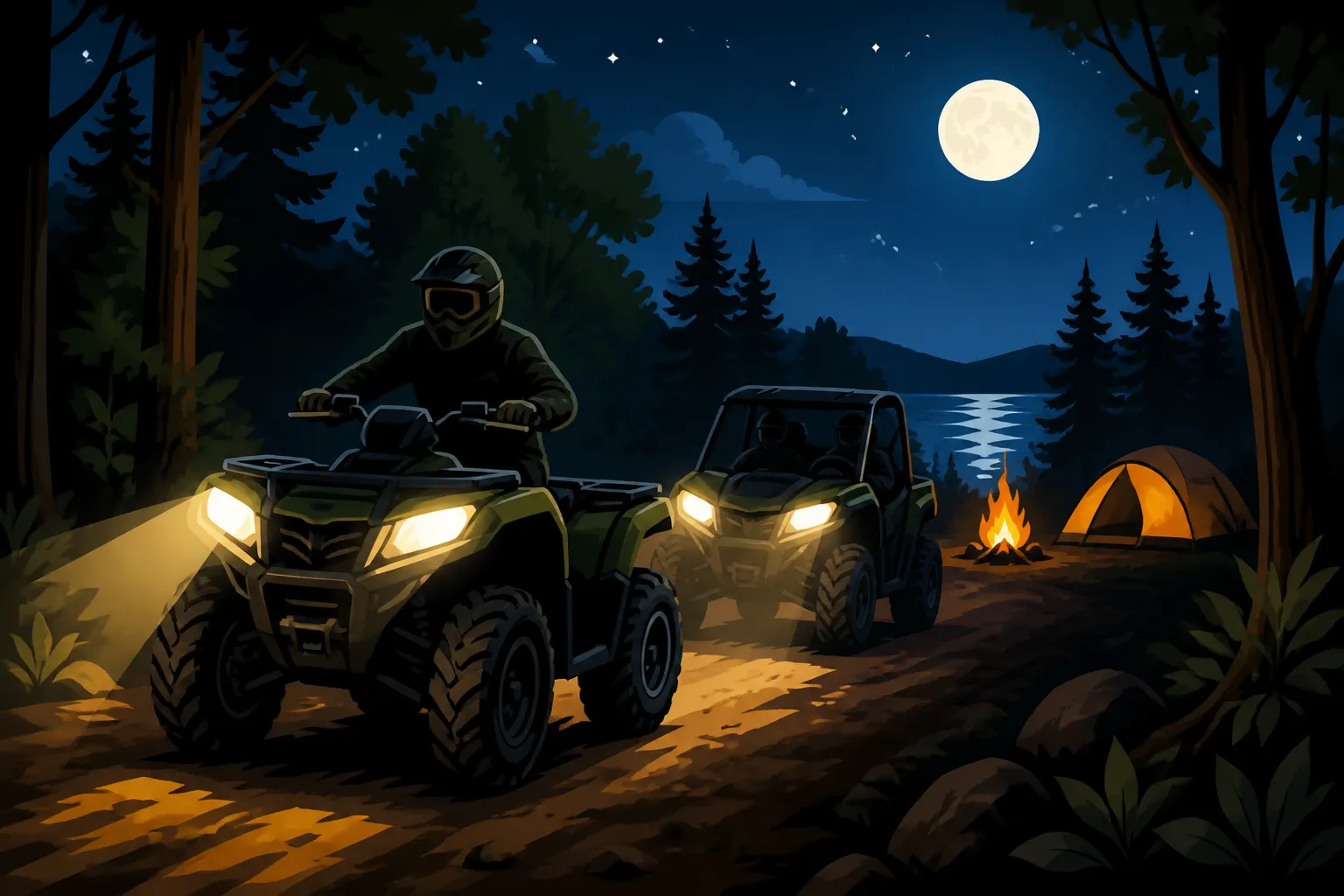
There's nothing quite like a day out on Wisconsin's ATV and UTV trails, especially when you're deep in the Northwoods. But as the sun dips below the horizon and the forest begins to lose its vibrant colors, the journey back to camp can quickly transform from an enjoyable cruise to a challenging navigation test. This guide is all about preparing you for that transition, making sure you understand the rules, have the right gear, and employ smart strategies to get yourself and your machine back to base safely after dark.
Understanding Wisconsin's Night Riding Regulations for ATVs and UTVs
When the sun goes down, the rules of the trail don't change, but their importance certainly gets amplified. Wisconsin has specific requirements for lighting and visibility when operating an ATV or UTV after dark, and knowing these isn't just about avoiding a ticket – it's about staying safe and being seen.
Essential Lighting Requirements
Let's talk about what needs to be glowing on your machine. For starters, your ATV or UTV absolutely needs a functioning headlight. This isn't just any old light; it needs to be bright enough to illuminate the trail ahead, allowing you to see obstacles, sharp turns, and any wildlife that might decide to cross your path. Imagine trying to navigate a rocky, rooted trail with a dim, flickering beam – it's a recipe for disaster. Most modern machines come with adequate headlights from the factory, but it's always worth checking their condition. Make sure they're clean, not cracked, and properly aimed. You can dig deeper into what’s legally required by checking out [Wisconsin Headlight Rules After Dark].
Just as crucial as seeing where you're going is being seen from behind. Your machine needs a taillight that is clearly visible from a certain distance to warn any riders following you. Think about that moment when you're on a dusty trail and suddenly the rider in front of you hits their brakes – a bright, functioning taillight (and brake light!) is critical to prevent a rear-end collision. These lights are often integrated, with the taillight glowing steadily and brightening when you apply the brakes. Don't forget to inspect your brake lights too, ensuring they activate reliably. For more specifics on what's expected, take a look at [Taillight Requirements on a Wisconsin Machine].
Beyond the active lights, many machines also incorporate reflectors. These passive safety features are designed to bounce light back to its source, providing an extra layer of visibility even if your electrical system falters. While they might seem minor, don't underestimate their role in making you more conspicuous to others, especially on dimly lit stretches of trail or road routes where cars might be present.
Eye Protection and Visibility
Night riding introduces a whole new set of challenges for your vision. Even with bright headlights, your depth perception can be altered, and shadows play tricks on your eyes, making it difficult to gauge terrain changes. This is where proper eye protection becomes even more critical. While [Eye Protection on a Wisconsin Route Ride] details the general requirements, at night, you'll want clear lenses or specific low-light tints that enhance contrast without reducing the light getting to your eyes.
Imagine riding through a moonlit forest; your pupils are wide open trying to absorb every bit of available light. Then, an oncoming rider with blinding LED light bars passes you. Without proper eye protection, you could be momentarily blinded, creating a dangerous situation. Clear goggles or a helmet visor are your best friends here. They protect your eyes not just from bugs and branches, but also from the wind, which can dry out your eyes and reduce your ability to see clearly. Also, consider anti-fog treatments, as temperature differences can quickly mist up your lenses and reduce visibility to zero.
Beyond just your eyes, think about your overall visibility to others. While your machine has lights, you as the rider can blend into the background. Wearing brightly colored or reflective gear isn't just for daytime safety; it’s arguably even more important after dark. A reflective vest or jacket can make a huge difference in how quickly other riders or anyone else on shared paths can spot you.
Adhering to Municipal Ordinances
Wisconsin's statewide regulations are the baseline, but many local towns and counties have their own ordinances that can impact your night riding. What might be perfectly legal on a state-managed trail could be prohibited on a local road route or within a specific town's limits. These local rules often dictate specific hours of operation for ATVs and UTVs, especially when it comes to road routes or riding through populated areas.
For example, a small Northwoods town that welcomes ATV traffic might have a strict curfew for machines within village limits to respect residents' peace and quiet. Ignoring these can lead to fines and give the sport a bad name. It's not uncommon for noise limits, for instance, to be more strictly enforced during evening hours. Imagine roaring through a quiet residential area at 10 PM – it's going to draw attention, and not the good kind.
Before you head out, especially if you plan to link up with road routes or pass through any towns on your way back to camp, always make it a point to check the local ordinances. Many trail towns post these rules clearly at trailheads or on their municipal websites. Sometimes a quick call to the local sheriff's department or town clerk can clarify any ambiguities. Getting caught off guard because you didn't check local rules can be a real drag on an otherwise perfect trip. To avoid any unwelcome surprises, familiarizing yourself with [Municipal Hours of Operation for ATVs] and knowing how to go about [Finding a Wisconsin Town's ATV Ordinance] is always a smart move.
Practical Strategies for Safe Night Riding Back to Camp
Beyond the legal requirements, there are plenty of practical steps you can take to make sure your journey back to camp after dark is as smooth and safe as possible. A little bit of preparation goes a long way when the sun isn't doing the work for you.
Pre-Ride Checks for Night Operations
Before you even consider setting out on an evening ride, a thorough check of your machine is non-negotiable. First and foremost, verify your battery's health and charge level. Your entire lighting system, and indeed your machine's ignition, relies on a strong battery. A weak battery can lead to dim lights, a struggling engine, or worse, leaving you stranded in the dark. It’s a good practice to carry a small voltmeter if you’re concerned, or simply ensure your machine started without hesitation earlier in the day.
Next, and this might seem obvious, but physically check all your lights. Headlights, taillights, brake lights, and any auxiliary lights you've installed. Turn them on, walk around your machine, and make sure every bulb is burning bright. Jiggle wires, tap housings – sometimes a loose connection is all it takes for a light to fail at the worst possible moment. If you've got spare bulbs for critical lights, consider tossing them in your tool kit.
Packing essentials takes on new meaning at night. Your usual daytime kit should be supplemented with extra light sources – think a powerful headlamp (with spare batteries) and a sturdy handheld flashlight. These are invaluable for making repairs, reading a map, or just generally seeing what you’re doing if your machine’s lights go out. A fully charged cell phone (though service can be spotty in the Northwoods), a satellite messenger, or a two-way radio are crucial for communication. And never, ever forget your first aid kit. What might be a minor scrape in daylight can become a much bigger deal if you’re trying to bandage it in the dark. For a comprehensive list, consult [What to Carry on a Northwoods Ride].
Lastly, always, always factor in fuel. Running out of gas in the middle of nowhere during the day is an inconvenience; doing it at night can quickly become a stressful ordeal. Plan your route, know your machine's fuel economy, and if there's any doubt, carry an extra gallon. It's cheap insurance. Paying close attention to [Fuel Planning for a Wisconsin Trail Day] is even more critical when riding after dark.
Navigational Tips and Techniques
Navigating familiar trails in the dark can feel surprisingly disorienting. What looked like a simple curve in daylight might appear as a confusing maze of shadows at night. This is where modern navigation tools truly shine. A dedicated GPS unit or a robust app like onX Offroad on your smartphone can be invaluable. Make sure your maps are downloaded for offline use, as cell service is often non-existent deep in the Wisconsin forests. Familiarize yourself with how to use these tools before you need them – trying to learn a new GPS interface in the dark is no fun. [GPS Files for Wisconsin County Trails] can be a lifesaver here.
Trail markers, which are usually so clear and helpful during the day, can become harder to spot at night. Reflective markers are excellent, but painted signs or wooden posts can disappear in the beam of your headlights. Slowing your pace is the most critical advice for night riding. Your reaction time is naturally slower in low light, and you need more time to process the terrain ahead. Rocks, roots, washouts, and puddles that were easily visible earlier in the day can suddenly become hidden hazards. A good rule of thumb: if you're not sure, go slower. This significantly reduces your risk of hitting an unexpected obstacle and damaging your machine or, worse, injuring yourself.
When riding in a group, maintaining proper distance becomes even more important. Dust kicked up by the machine in front can hang in the air, creating a blinding cloud when illuminated by your headlights. Spacing out allows the dust to settle and gives each rider a clearer view. Similarly, avoid following too closely behind someone with incredibly bright lights; their beam can overwhelm your night vision and make it harder for your eyes to adjust to the darker sections of the trail. If you feel like you're [Getting Turned Around in a County Forest] even in daylight, night riding will amplify that feeling.
Enhancing Rider and Machine Visibility
Beyond the legal minimums, there's a lot you can do to boost both your own visibility and that of your machine after dark. For yourself, reflective clothing is paramount. A high-visibility vest or jacket that incorporates reflective strips will make you stand out dramatically when light hits it. Some helmets also come with reflective decals, or you can add your own. Remember, a rider who can be seen is a safer rider.
For your machine, consider adding reflective tape strategically. This simple, inexpensive addition can make your ATV or UTV much more visible from all angles. Apply it to the front and rear racks, the side panels, and even your helmet. The goal is to create a larger, more prominent silhouette that reflects light from other sources. Check out [Reflective Tape for a Northwoods Dusk Ride] for some ideas.
Auxiliary lighting is another game-changer for night riding. While factory headlights are good, they often have a limited beam pattern. Installing LED light bars or pod lights can dramatically widen your field of vision, illuminate ditches, and help you spot wildlife lurking just off the trail. You'll find a wide range of these aftermarket lights designed for off-road use. Companies like SuperATV offer a range of auxiliary lighting options, from powerful LED light bars to compact cube lights, which can significantly boost your visibility and illuminate the trail ahead, turning night into a more manageable twilight. Just be mindful of aiming these powerful lights to avoid blinding oncoming riders – often, you'll want to switch them off when approaching others. Having a well-lit machine doesn't just help you see, it helps others see you, which is critical for safety in the darkness.
Overcoming Common Challenges of Dark Trails
Night riding isn't just about turning on your lights; it brings with it a unique set of challenges that require forethought and specific strategies. Being prepared for these can be the difference between a minor hiccup and a major problem.
Dealing with Wildlife Encounters
Wisconsin's forests are teeming with wildlife, and many animals are most active during dawn, dusk, and throughout the night. Deer, bear, coyotes, and smaller critters like raccoons often venture onto trails after dark. Your bright headlights, while essential for seeing, can also disorient these animals, sometimes causing them to freeze in your path or bolt unpredictably.
It’s crucial to ride defensively and anticipate potential encounters. Keep your speed in check, especially in areas known for wildlife activity. Look for the tell-tale glow of eyes reflecting in your headlights from the treeline. If you spot an animal, slow down even further, flash your lights if necessary, and give it plenty of space to move off the trail. Hitting a deer or even a smaller animal at speed in the dark can result in serious injury to both you and the animal, as well as significant damage to your machine. For more on the critters you might encounter, read up on [Wildlife on a Wisconsin County Trail].
Managing Fatigue and Environmental Factors
Riding at night adds a mental strain that daylight hours don't always impose. Your eyes are constantly working harder, your brain is processing information differently due to limited visibility, and the natural "alertness" that sunlight provides is absent. This can lead to increased fatigue much faster than during a daytime ride. Be honest with yourself about your energy levels, and if you start feeling tired, pull over in a safe, visible spot, take a break, hydrate, and maybe grab a snack. Pushing through fatigue significantly increases your risk of an accident.
Cold weather considerations are amplified at night, especially in Wisconsin. Even on a mild fall day, temperatures can plummet quickly after sunset. This isn't just about personal comfort; it affects visibility (think fogged goggles) and can impact your machine's performance. Layer your clothing, use heated grips or gear if you have it, and ensure you have proper cold weather riding gear. [Cold Weather Gear for Wisconsin Riding] is a must-read if you plan on riding into the evening or during cooler months.
Additionally, environmental factors like fog or mist can turn an already challenging night ride into a near white-out. Fog scatters light, making your headlights less effective and reducing your visible range dramatically. If you encounter dense fog, slow to a crawl, use your hazard lights if you have them, and be prepared to pull over and wait for conditions to improve if it becomes too dangerous to proceed. Your safety is always worth the delay.
Troubleshooting and Emergency Preparedness
What if, despite all your checks, your lights suddenly fail? This is why redundancy is key. Always have that powerful headlamp and flashlight ready. If your main headlight goes out, switch to your secondary light sources immediately and use them to safely navigate to the nearest, safest stopping point. Trying to ride without any forward illumination is incredibly dangerous and should be avoided at all costs.
Getting stuck in the dark – whether it's in mud, a ditch, or on a steep incline – is another scenario that's far more difficult to deal with at night. Visibility is poor, and tasks like hooking up a winch or using recovery straps become more complex. Having robust recovery gear, like a winch from a reputable brand such as SuperATV, becomes absolutely indispensable when you find yourself stuck far from camp after dark. Make sure your winch is well-maintained and you know how to operate it in low-light conditions. Practicing safe winching techniques during the day will pay dividends if you ever need to use it at night. For tips on how to get yourself unstuck, check out [Winching Out of a Northwoods Bog].
Communication is also paramount, especially if you find yourself in a dead zone with no cell service. A satellite messenger device that can send out an SOS signal or communicate with emergency contacts is a worthwhile investment for anyone riding in remote areas, particularly at night. These devices don't rely on cell towers and can be a lifeline when you're far from help. Additionally, aftermarket parts from companies like SuperATV can also include heavy-duty batteries or enhanced charging systems to ensure your lights stay on, giving you peace of mind that your essential systems will function when you need them most.
Group Riding and Etiquette After Sundown
Riding with a group at night can be a lot of fun, adding an extra layer of camaraderie to your adventure. However, it also requires heightened awareness and specific etiquette to ensure everyone stays safe and enjoys the experience.
Communicating in the Dark
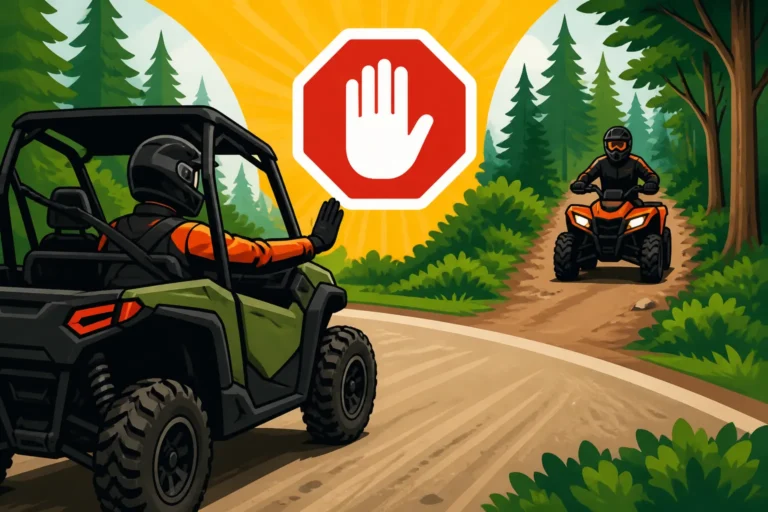
Communication is always important in a group ride, but it becomes critical after dark. Hand signals, which are effective during the day, can be harder to see. This is where helmet-to-helmet communicators or two-way radios truly shine. They allow for instant, clear communication about upcoming hazards, turns, or if someone needs to stop. Imagine being able to warn the entire group about a deer crossing ahead, rather than relying on a last-second brake light flash.
If you don't have electronic communication, establish clear headlight signals. For example, a quick double-flash of your headlights might mean "slow down, hazard ahead," while leaving your turn signal on briefly could indicate a turn you're about to make. Plan these signals before you head out, and make sure everyone in the group understands them. Most importantly, strive to maintain visual contact with your group. Don't push ahead so fast that you lose sight of the rider behind you, and if you realize you've lost someone, stop and wait in a safe location.
Managing Dust and Light Pollution
Dust is a perennial challenge on Wisconsin trails, but at night, it's particularly problematic. Your headlights illuminate the dust cloud, creating a "white-out" effect that can make it impossible to see the trail or the rider in front of you. The solution here is to significantly increase your following distance. Give the dust plenty of time to settle between machines. This might mean the group stretches out more than usual, but safety is the priority.
Auxiliary lights, while incredibly helpful for your own visibility, can become a source of light pollution for other riders. Those powerful LED light bars can be blinding to an oncoming rider or someone following too closely behind. As a courtesy, dim your auxiliary lights when approaching other groups or when you're in close proximity to your own group members. The goal is to illuminate the trail for yourself, not to create a hazard for others. Always be mindful of the impact your lights are having on the night vision of those around you.
Respecting the Environment and Others
Night riding often means less traffic, but it doesn't mean fewer rules or less responsibility. Noise considerations become even more important after dark, especially if your route takes you near homes, cabins, or established campsites. Sound travels further in the still night air, and what might be a tolerable exhaust note during the day can become an irritating rumble at night. Before you head out, inspect your exhaust system for any damage; aftermarket mufflers, which SuperATV might offer, are designed to meet sound regulations and keep your machine running smoothly and quietly. Be extra courteous when passing through residential areas or trail towns, keeping your speed down and minimizing unnecessary revving.
Finally, always adhere to the "Leave No Trace" principles, even in the dark. Pack out everything you pack in. Don't leave trash, even accidental dropped items, on the trail. If you need to stop for a break, do so in an appropriate, designated area. The beauty of Wisconsin's Northwoods is something we all cherish, and preserving it means being responsible stewards, whether the sun is shining or the stars are out.
| Feature | Daytime Riding | Nighttime Riding |
|---|---|---|
| Visibility (Self) | Bright clothing, standard machine lights | Reflective clothing, auxiliary lights, reflective tape |
| Visibility (Other) | Clear view of trail, easy obstacle identification | Reduced depth perception, shadows, potential glare |
| Navigation | Visual cues, trail markers, GPS | GPS, slower pace, reliance on lighting |
| Communication | Hand signals, shouting, radios | Radios, specific light signals, maintaining visual contact |
| Wildlife | Generally less active, easier to spot | Highly active, harder to spot, may be disoriented by lights |
| Fatigue | Gradual onset, natural light aids alertness | Quicker onset, increased mental strain, reduced alertness |
| Gear Check | Lights important, but not critical for vision | Crucial: All lights functional, spare light sources |
| Speed | Can maintain higher speeds on clear trails | Significantly reduced speed, defensive riding |
| Dust/Light | Dust can be an issue | Dust + headlights = blinding white-out, manage auxiliary light use |
Riding an ATV or UTV in Wisconsin after dark offers a unique perspective on the trails and the natural beauty of the state. It's an experience that can be incredibly rewarding, provided you're prepared, informed, and prioritize safety above all else. From ensuring your machine's lights are in perfect working order to understanding the nuances of night navigation and respecting both wildlife and fellow riders, every step you take in preparation contributes to a safer, more enjoyable journey back to camp. So, charge those batteries, check those lights, and embrace the adventure that Wisconsin's trails offer after sundown.
Disclaimer
This article is for general informational purposes only and does not constitute professional advice. Laws, prices and regulations vary by location and change over time. Consult a qualified professional for guidance on your specific situation.