Riding a Wisconsin Route After Sundown
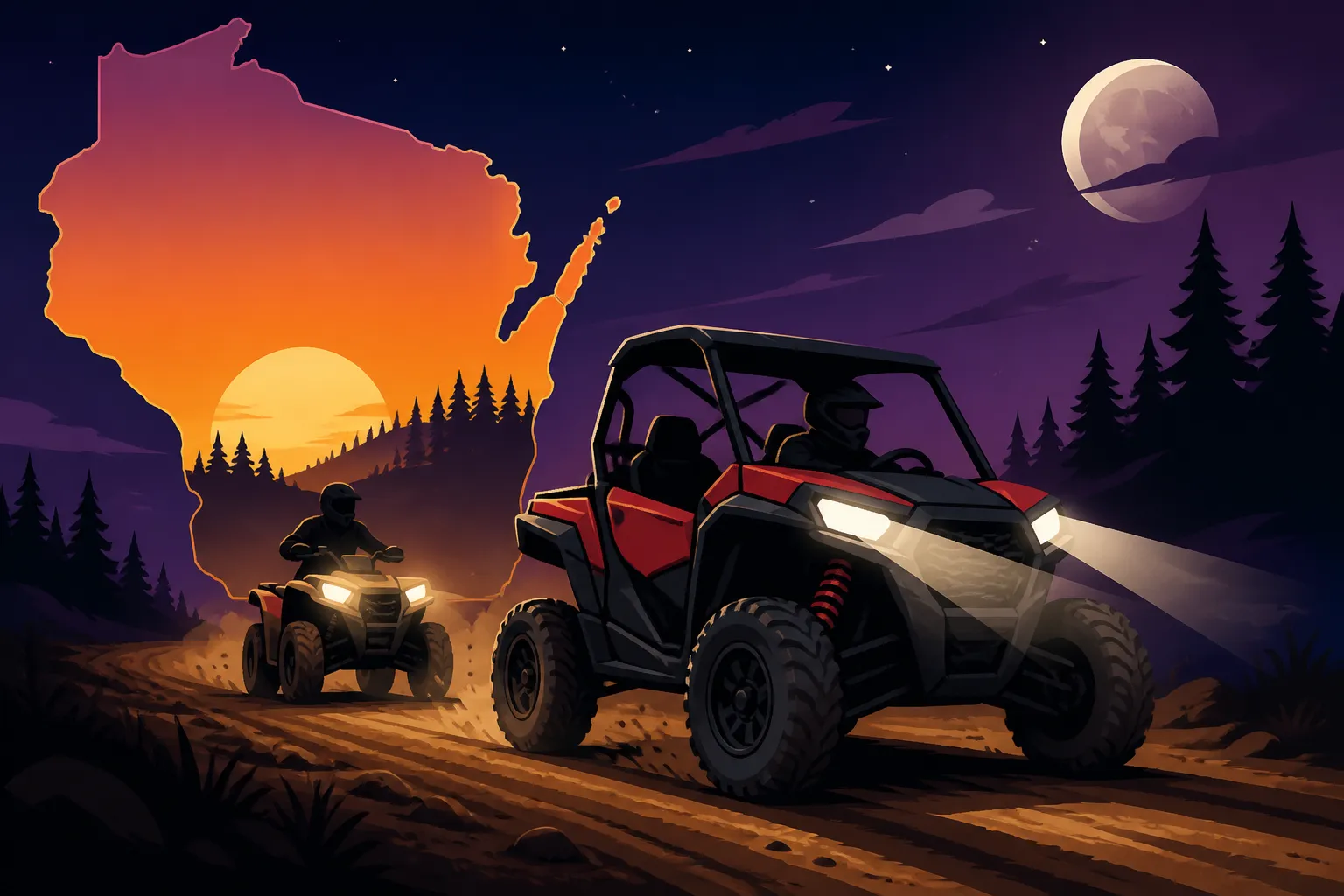
You’ve planned your Wisconsin ATV or UTV route, mapped out the miles, and maybe even stopped for a quick bite at a local trailside tavern. But as the sun dips below the towering pines, that golden hour quickly fades into dusk, and before you know it, you’re navigating familiar terrain under a blanket of stars. This guide is all about helping you understand the specific rules and best practices for riding Wisconsin ATV/UTV routes after sundown, ensuring you stay safe, legal, and truly enjoy the unique experience of night riding in the Badger State.
Navigating Wisconsin ATV/UTV Routes When the Sun Goes Down: What You Need to Know
Riding after sundown on Wisconsin's extensive network of ATV and UTV routes can be an incredible experience, offering a whole new perspective on the landscape. However, it also comes with specific responsibilities and legal requirements that are different from daytime riding. It’s easy to get caught off guard by how quickly darkness can fall, especially in the deep woods of northern Wisconsin, or how suddenly a clear evening can turn foggy.
Wisconsin's Lighting and Reflector Requirements After Dark
First and foremost, the law is very clear: when you're operating an ATV or UTV on any public route in Wisconsin, whether it's an approved town road or a designated trail connection, you absolutely need to be properly lit up during certain hours. Think of it like driving a car at night—your lights aren't optional. This isn't just about being seen; it's also about seeing what's ahead of you, and that’s a critical distinction many riders overlook.
You’ll need at least one white headlight, bright enough to make objects visible for a good distance ahead of your machine. This isn’t just for showing you the way; it's a critical safety feature that announces your presence to oncoming traffic—be it another ATV, a car, or even a local resident on a country road. Complementing this, you must have at least one red taillight, clearly visible from a significant distance to the rear. This lets riders behind you know you’re there, preventing potential rear-end collisions, especially if you need to slow down or stop suddenly. Furthermore, your machine needs to be equipped with side reflectors, typically amber on the front half and red on the rear half, to ensure your machine is visible from all angles, even if your lights aren't directly facing a viewer. These seemingly small details make a huge difference in preventing accidents on dimly lit or unlit routes. [Wisconsin Headlight Rules After Dark] and [Taillight Requirements on a Wisconsin Machine] cover these details comprehensively.
When "After Sundown" Really Means "Lights On"
The exact time that lights become mandatory isn't always tied to the literal moment the sun disappears below the horizon. Laws often specify a period before sunset and after sunrise when lighting is required. For practical purposes, if it’s getting dark, or if visibility is reduced due to fog, rain, or snow, your lights should be on. Don't wait until you can barely see to flip them on. The moment you start thinking, "Hmm, it's getting a little dim," that's your cue.
This is particularly important because many of Wisconsin's ATV/UTV routes traverse areas with heavy tree cover, where dusk can arrive much earlier than in open fields. What might feel like adequate natural light in a city setting is often completely insufficient on a wooded route. It’s a common frustration to misjudge the remaining daylight, especially when you're having a great time and lose track of the clock. Getting caught without proper lighting can lead to citations, which nobody wants after a fun day of riding.
Beyond the Legal Minimum: Essential Gear for Night Riding Safety
Meeting the legal requirements is the baseline for riding Wisconsin routes after sundown, but true safety and enjoyment often call for going above and beyond. Night riding introduces unique challenges to your vision, perception, and reaction time, and being prepared for these can make all the difference.
Enhancing Your Visibility: Auxiliary Lighting and Reflective Gear
While your stock headlight and taillight meet the letter of the law, they might not always provide the optimal visibility you need or desire for comfortable and safe night riding. Many riders choose to add auxiliary LED light bars or spot lights to their machines. These can dramatically improve your forward vision, illuminating potential hazards like fallen branches, potholes, or wildlife that might otherwise go unnoticed until it's too late. Brands like SuperATV offer a wide range of aftermarket lighting solutions that can significantly brighten your path, helping you spot things well in advance and react accordingly. When adding auxiliary lights, always ensure they are aimed properly so as not to blind oncoming riders or motorists, and consider wiring them to a separate switch so you can turn them off when approaching others.
Beyond your machine's lights, consider personal reflective gear. Wearing a reflective vest, jacket, or even helmet stickers can make you more visible to others on the route, especially from the sides. Remember, you're not just trying to see; you're trying to be seen. A rider decked out in bright, reflective clothing is much easier to spot than someone in dark gear, particularly if their machine's lights are momentarily obscured by a turn or terrain feature. [Reflectors for a Wisconsin Route Ride] delves deeper into reflector specifics.
Clear Vision and Communication After Dark
One of the biggest challenges of night riding is maintaining clear vision. Dust, bugs, and even the glare from your own headlights can make it difficult to see clearly. Investing in good quality, clear-lens goggles or a clear-visor helmet is crucial. Tinted visors or sunglasses are great for sunny days but become dangerous at night. Carry a clean cloth to wipe away dust and bug splatters, and consider anti-fog solutions for your eyewear, especially in cooler or humid Wisconsin evenings. Some riders even opt for clear windshields, perhaps from a brand like SuperATV, to help deflect bugs and debris, keeping their line of sight clearer.
Communication is also key, especially if you're riding in a group. Hand signals can be harder to see in the dark. Consider using helmet-mounted communicators or even simple two-way radios to alert fellow riders to upcoming obstacles, turns, or if someone needs to stop. A quick "deer on the left!" or "slow down for mud ahead" can prevent a serious incident. Carrying a whistle or a small, powerful flashlight to signal others can also be invaluable if you get separated or need assistance.
| Lighting/Visibility Item | Purpose | Why It's Crucial at Night |
|---|---|---|
| White Headlight | Illuminates path ahead; signals presence | Required by law; essential for spotting obstacles |
| Red Taillight | Alerts trailing riders/vehicles to your presence | Required by law; prevents rear-end collisions |
| Side Reflectors (Amber/Red) | Enhances visibility from the sides | Required by law; crucial at intersections/crossings |
| Auxiliary LED Light Bar | Dramatically increases forward illumination | Sees farther, spots hazards earlier |
| Clear Goggles/Visor | Maintains unobstructed vision | Tinted eyewear becomes a hazard at night |
| Reflective Clothing | Makes rider more visible to others | Increases rider's profile, especially from sides |
| Communication Device | Enables real-time group alerts | Hand signals less effective in dark; quick warnings |
Smart Strategies for Riding Wisconsin Routes After Dark
Night riding isn't just about having the right gear; it's also about adjusting your riding style and mindset. The familiar routes you cruise during the day can feel entirely different when the sun goes down, presenting new challenges and requiring a heightened level of awareness.
Adjusting Your Speed and Situational Awareness
The most fundamental strategy for riding at night is to slow down. Your ability to perceive depth, color, and movement is significantly reduced in low light, even with excellent lighting. What looked like a small puddle during the day could be a deep rut at night. A curve you take at speed in daylight might conceal a deer or another obstruction that you won't see until it’s too late. Reduce your speed, especially on unfamiliar routes or those with many twists and turns. This gives you more time to react to unexpected hazards, like animals on the route or sudden changes in terrain.
Maintain a greater following distance if you're riding in a group. The dust kicked up by the machine in front of you can turn into an opaque cloud in the beam of your headlights, completely obscuring your vision. Giving extra space allows the dust to settle and provides you a clearer line of sight. Pay close attention to [Wisconsin Route Signage Standards in Wisconsin], as these signs can be harder to spot in the dark. Even subtle changes in the sound of your machine or the feel of the terrain can indicate an upcoming change in the route.
Handling Unexpected Encounters and Fatigue
Encountering wildlife is a much greater concern at night. Deer, bear, and other animals are often more active during dusk and dawn, and their eyes reflecting in your headlights can be your first—and sometimes only—warning. Keep your eyes scanning the edges of the route, not just directly in front of you. If you see an animal, slow down, give it space, and be prepared to stop. Don't assume it will move out of your way.
Fatigue can also set in more quickly at night. The constant strain of seeing in the dark, combined with the cooler temperatures, can be surprisingly draining. Take more frequent breaks, stretch, and stay hydrated. If you start feeling drowsy or your concentration wavers, it’s time to pull over in a safe, visible spot and rest. Pushing through fatigue dramatically increases your risk of an accident. [Wisconsin Alcohol Limits for ATV Operators] are important to remember, as alcohol compounds fatigue and severely impairs judgment.
Courtesy and Safety on Shared Routes
Remember that many Wisconsin ATV/UTV routes share pathways with other motorized vehicles and even private driveways. Your bright auxiliary lights, while great for illuminating your path, can be blinding to others. Be courteous: dim your lights or turn off your auxiliary lights when approaching oncoming traffic or residents’ homes. This is not only good etiquette but a crucial safety measure for everyone on the route.
If you have to stop on the route, always move to the side as much as possible and ensure your taillights are clearly visible. If you’re experiencing mechanical trouble, use any available emergency flashers and place reflective triangles or even a small flare if you have one, to warn approaching riders. Carrying a small toolkit, a tire repair kit, and maybe a SuperATV winch could be a lifesaver if you find yourself stranded in the dark far from help. [Wisconsin Warden Enforcement on Wisconsin Routes] means that wardens will be out there, ensuring everyone is following the rules, even after sundown.
Remember, the goal is to have a fantastic time enjoying Wisconsin’s beautiful routes, and that includes doing so safely and responsibly, regardless of the hour.
Disclaimer
This article is for general informational purposes only and does not constitute professional advice. Laws, prices and regulations vary by location and change over time. Consult a qualified professional for guidance on your specific situation.