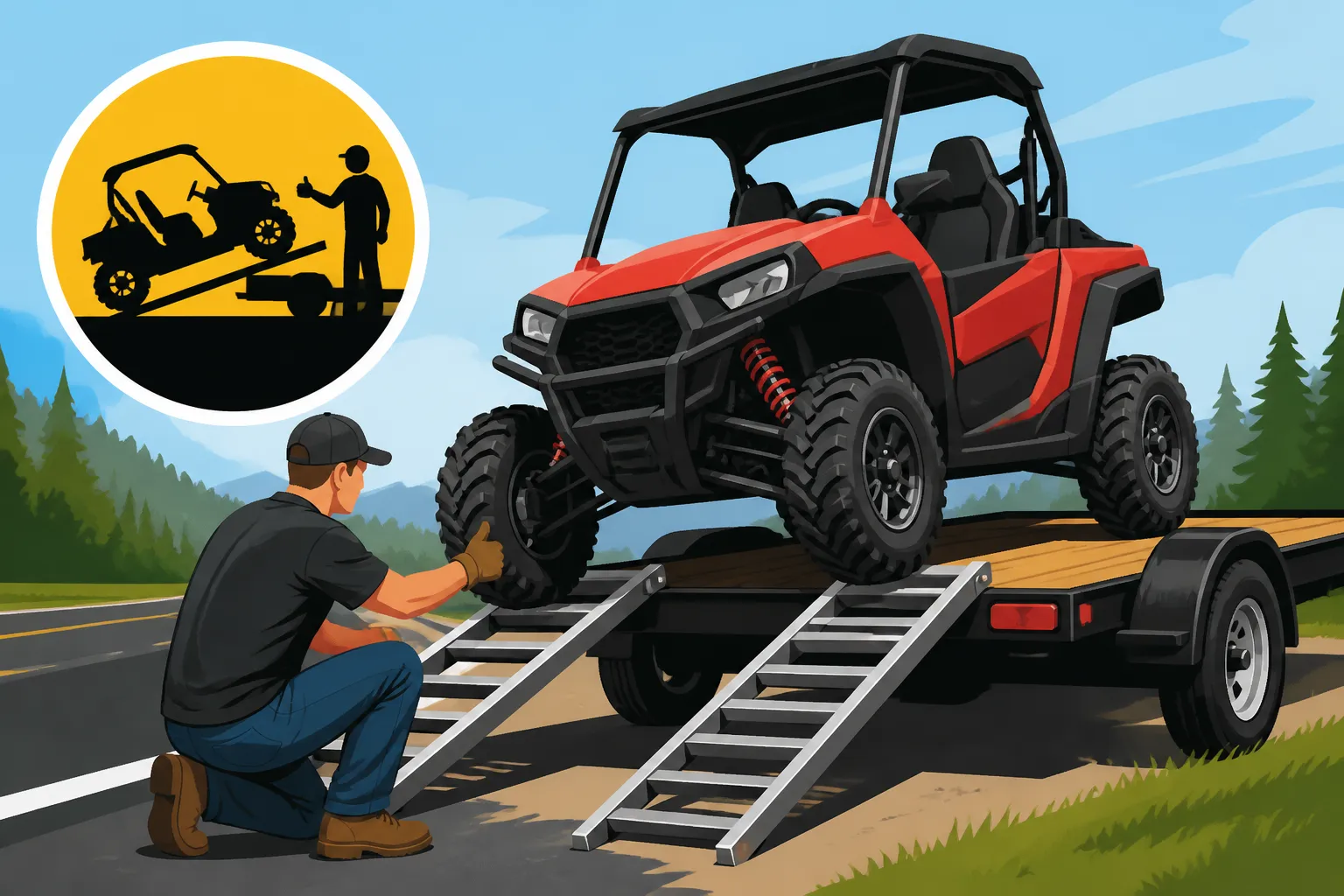
Loading a Machine on a Wisconsin Shoulder
You’ve just enjoyed an incredible day tearing up the trails, mud-splattered and grinning from ear to ear, but now the sun is dipping low, and it's time to get your ATV or UTV safely onto your trailer. The problem? You're often faced with the challenge of loading up on what feels like a postage stamp of asphalt – the shoulder of a busy Wisconsin road. This guide is all about navigating that tricky situation, helping you understand the rules, identify the safest spots, and master the techniques to get your machine loaded without incident, stress, or an unwanted encounter with a Wisconsin warden.
Understanding Wisconsin's Shoulder Rules for ATVs and UTVs
Let's be real, pulling over on a busy road, especially one that leads to popular trail systems like those found in Vilas or Marinette Counties, can feel pretty chaotic. You've got cars whizzing by, limited space, and the pressure to get your machine secured quickly. It's not just about common sense; Wisconsin has specific rules about how you interact with public roadways, even when you're just trying to load up.
General Roadway Rules and How They Apply
Wisconsin state law has clear guidelines for stopping, standing, or parking a vehicle on a public highway. Generally, you’re expected to stop or park off the paved or main traveled portion of the highway, or as close to the right-hand edge of the roadway as possible. This applies to your truck and trailer, which means finding a shoulder wide enough to get your entire rig clear of active traffic lanes is paramount. This isn't just a suggestion; it’s a legal requirement designed for safety. If your trailer is hanging out into a lane, you're creating a hazard and could easily face a citation. Think about it: visibility is often poor on rural roads, especially at dusk or dawn, and sudden obstructions are a recipe for disaster. So, the first rule of thumb is always to prioritize getting your tow vehicle and trailer completely off the driving lane.
Furthermore, remember that shoulders aren’t designed for extended parking or as impromptu staging areas. While a momentary stop for an emergency is generally understood, using a shoulder as a base for twenty minutes while you wrestle with a muddy side-by-side isn’t what the law intends. Wardens and local law enforcement are well aware of popular trail access points, and they’ll often monitor these areas, not to be a nuisance, but to ensure everyone's safety. They're looking for common sense and adherence to the rules.
The Specifics for ATV/UTV Trail Access Points
Here’s where it gets a little more nuanced for us ATV and UTV riders. Many trail systems in Wisconsin are accessed directly from town roads or even county highways, designated as official ATV/UTV routes. This means you might be driving your machine on the road for a short stretch to get to the trailhead. While these routes make it super convenient to get around, they don't necessarily come with dedicated, spacious parking or loading zones. You might find yourself at the end of a fantastic trail, only to realize the "access point" is just a narrow shoulder with a faded sign.
The Wisconsin DNR and local municipalities that manage these routes strongly encourage riders to use designated trailhead parking areas whenever possible. These spots are designed with space in mind for trucks, trailers, and the safe loading and unloading of machines. They often have turn-around areas and enough room for a few rigs to maneuver without impacting traffic. Unfortunately, these aren't always available right where you finish your ride, especially if you've been exploring a long loop or a trail that links to [Wisconsin Trails That Reach a Tavern] rather than a formal trailhead. When a formal trailhead with ample parking isn't an option, you're pushed back to the shoulder dilemma. Always look for signage that might indicate parking restrictions or specific loading zones. Some towns, through local ordinances, might have their own rules regarding roadside parking for recreational vehicles, so staying informed about the area you're riding in is really helpful.
When a Shoulder Stop Becomes a Safety Hazard
Let’s talk about the real dangers. A shoulder stop, even a brief one, introduces several risks. Your vehicle and trailer become obstacles in a space where drivers typically don't expect stationary objects. This is amplified by poor visibility conditions like fog, heavy rain, or darkness. Imagine trying to reverse a 1,000-pound UTV up a narrow ramp onto a trailer while semi-trucks are roaring by at 60 mph just a few feet away. It's a high-stress, high-risk scenario.
Beyond the immediate traffic danger, there’s also the terrain itself. Shoulders aren't always perfectly level and firm. You might encounter soft gravel, a steep incline, or a sharp drop-off into a ditch. Any of these conditions can make loading ramps unstable, increase the chance of your machine tipping, or cause you to lose traction, potentially leading to an accident. The last thing you want after a fun day is a damaged machine, an injured rider, or worse, a collision with another vehicle. When considering a spot, always err on the side of caution. If it feels unsafe, it probably is. It's always better to drive a few extra miles down the road to find a safer, wider pull-off than to risk an accident just to save a few minutes. Safety should be your absolute top priority, and that often means being willing to be flexible with your loading location.
Finding the Safest Spot to Load or Unload Your Machine
Successfully loading your ATV or UTV from a shoulder isn't just about technique; it's mostly about intelligent pre-planning and careful on-the-spot assessment. You can't just throw on the flashers and hope for the best. Taking an extra minute or two to find the right spot can make all the difference between a smooth operation and a white-knuckle experience.
Assessing the Environment: Visibility and Traffic Flow
Before you even think about pulling over, start looking ahead. Your eyes should be scanning for a spot that maximizes visibility for both yourself and oncoming traffic. This means avoiding blind corners, hillcrests, or dips in the road. You want a long, clear stretch of road both in front of and behind your rig so that other drivers have plenty of time to see you and react. If you can see far down the road, chances are other drivers can see you too.
Next, consider traffic flow. Is this a road with intermittent traffic or a constant stream of vehicles? Is it a high-speed highway or a quieter town road? The less traffic, the better. If you’re on a road with heavy or fast-moving traffic, you might need to reconsider loading there altogether. Look for areas with lower speed limits or where traffic naturally slows down. A great indicator of a poor spot is if you feel nervous just pulling your truck and trailer off the road. Trust that gut feeling.
Also, evaluate the shoulder itself. Is it wide enough to fully accommodate your truck and trailer, leaving a generous buffer between your operations and the active traffic lane? Is it level, firm, and free of obstacles like large rocks, potholes, or soft ground that could destabilize your ramps? A slight downgrade can sometimes aid in loading, but an excessive slope, either side-to-side or front-to-back, can be incredibly dangerous. You want solid, predictable ground under your ramps and tires.
Prioritizing Off-Road Staging Areas When Possible
The absolute best-case scenario for loading or unloading your machine is to avoid the shoulder altogether. Always, always prioritize formal off-road staging areas. These include:
- Designated Trailhead Parking Lots: As mentioned before, these are specifically designed for our kind of activity. They're usually spacious, often graveled or paved, and allow for easy maneuvering of trucks and trailers. You'll typically find them clearly marked at popular trail entry points. Many of them even have restroom facilities, making them a true blessing after a long day.
- Larger Public Pull-Offs or Rest Areas: While less common directly adjacent to trails, some larger highways might have official pull-off areas that are far more substantial than a typical shoulder. These are meant for trucks to stop and rest, providing a much safer environment away from high-speed traffic.
- Gas Station or Small Town Parking Lots: If you're ending a ride near a town, consider driving a short distance to a gas station, a large grocery store parking lot, or even a local park that allows trailer parking. Always ask permission if it's a private business, but these locations offer a safe, level, and well-lit environment, often with less direct traffic pressure. Plus, you can grab a cold drink or a snack while you're at it! Places like Eagle River or St. Germain often have public parking areas that are great for this. You might even want to fuel up your rig for the next ride, and then take your time getting strapped down.
Sometimes, it’s just not practical to drive your machine on a town road to get to one of these spots, especially if you have miles to go. In those cases, you’ll need to make the best of a shoulder, but you’ll have done your due diligence in looking for better alternatives first. Think of it as a hierarchy of safety: designated parking first, then spacious public pull-offs, then a carefully selected shoulder, and finally, if absolutely no safe shoulder exists, driving a bit further to find a proper lot. For instance, [Wisconsin Trailhead Parking and Staging] often provides better options.
Equipment and Technique for Safe Shoulder Operations
Even when you’ve found the “safest” shoulder, the actual act of loading requires the right gear and a careful approach. Don’t skimp on this. Investing in quality equipment and knowing how to use it can prevent accidents and make the whole process much less stressful.
Here's what you'll need and how to approach it:
- Robust Ramps: This is non-negotiable. Your ramps must be rated for the weight of your machine, plus your weight if you're riding it up. They should be wide enough to provide stable footing and long enough to create a gentle incline. Steep ramps are dangerous and can cause high-centering or a loss of traction. If you're running a wider side-by-side, consider arched ramps or specialty UTV ramps to prevent scraping. Brands like SuperATV offer a range of heavy-duty ramps designed for all types of machines.
- Securement: Always secure your ramps to your trailer. Many ramps come with safety straps or hooks that prevent them from kicking out as you drive up. This is probably the most common cause of loading accidents. Take the extra 30 seconds to secure them.
- Trailer Stability: Your trailer should be hitched to your tow vehicle. This adds stability and prevents the trailer from shifting or tipping. If, for some reason, you absolutely must load with your trailer unhitched (not recommended on a shoulder!), make sure the tongue jack is fully extended and on firm ground, and that the trailer wheels are chocked.
- Spotter: A spotter is invaluable. They can guide you, check for traffic, ensure ramps are stable, and look for obstacles. If you're alone, use extreme caution. Get out and visually inspect everything multiple times.
- Go Slow: When driving onto the trailer, go slow. Maintain a steady, low RPM. Don't hit the throttle and blast up the ramps. Use minimal throttle to maintain momentum, and keep your body centered. If you feel uneasy, back off, regroup, and try again. Don’t rush.
| Loading Location Type | Pros | Cons | Safety Rating (1-5, 5 being safest) |
|---|---|---|---|
| Designated Trailhead Lot | Ample space, purpose-built, away from traffic, often level and firm. | May require driving on a route to reach, might be crowded on busy weekends. | ⭐⭐⭐⭐⭐ |
| Large Public Pull-Off | More space than a shoulder, typically away from main traffic lanes. | Still exposed to highway speeds, terrain might not be perfectly level, less common near all trails. | ⭐⭐⭐⭐ |
| Gas Station/Store Lot | Level, well-lit, amenities, away from high-speed traffic (with permission). | Requires driving into town, private property (ask first), might be crowded with other vehicles. | ⭐⭐⭐⭐ |
| Wide, Level Shoulder | Convenient for direct trail access, often readily available. | Exposed to traffic, uneven terrain potential, limited maneuvering room, visibility challenges. | ⭐⭐⭐ |
| Narrow/Uneven Shoulder | Direct trail access. | Extremely dangerous, very limited space, high risk of accident, poor visibility, unstable ground. Avoid at all costs. | ⭐ |
Remember, [Strapping a Machine Down for the Freeway] is the final step, but the loading itself needs to be just as secure.
Essential Gear and Practices for Secure Loading
Getting your machine onto the trailer safely is only half the battle. Once it’s up there, it needs to stay put. This means having the right equipment and following best practices for securement. There’s nothing quite like the heart-stopping moment when you see a strap come loose in your rearview mirror on the highway, especially after a long day on the trails near Black River State Forest.
Ramps, Straps, and Stabilizers: Your Safety Toolkit
Think of your loading gear as a safety system, with each component playing a critical role. Skimping on any part of this system is inviting trouble.
Ramps: We touched on this, but it bears repeating. Your ramps are the bridge between the ground and your trailer.
- Length: Longer ramps create a shallower angle, which is much safer and easier to navigate, especially for lower-clearance UTVs. While short ramps are convenient to store, they can be treacherous.
- Width: Ensure your ramps are wide enough for your machine's tires. For ATVs, individual ramps work, but a single, wider ramp or a set of wider arched ramps is often more stable. For UTVs, a dedicated UTV ramp or a pair of extra-wide ramps is essential to match the wider stance.
- Material and Construction: Look for heavy-duty aluminum or steel ramps with a good traction surface. Check for weight ratings – they must exceed the combined weight of your machine and yourself. SuperATV, for example, makes robust ramps that stand up to repeated use and heavy loads. They're built for the kind of wear and tear we put our machines through.
Straps: This is where many people cut corners, and it’s a huge mistake.
- Type: Use heavy-duty ratchet straps. Avoid flimsy bungee cords or cheap cam buckle straps for primary securement. Ratchet straps allow you to apply significant tension, holding your machine firmly in place.
- Rating: Just like ramps, straps have weight ratings. Use straps that can handle the pull-down force required to secure your machine, often far more than its static weight as it bounces down the road.
- Placement: Secure your machine at minimum four points – one at each corner. Some riders even add extra straps for larger UTVs. Attach straps to solid frame points on your ATV/UTV, not to suspension components, axles, or plastic bodywork. For the trailer, find dedicated tie-down points that are structurally sound. Avoid wrapping straps around wheels or tires, as these can loosen over time with tire flex. You want solid, direct frame-to-trailer connections.
- Check and Re-check: After strapping, give each strap a good tug. Bounce the machine a bit. Drive a short distance, then pull over and re-check all your straps. They will loosen slightly after a few miles due to road vibrations. This quick re-check is crucial.
Stabilizers (for trailer): If your trailer is not hitched to your tow vehicle during loading (again, not recommended on a shoulder), you'll need trailer jack stands or wheel chocks. These prevent the trailer from shifting, rocking, or tipping during the loading process.
The Importance of a Spotter and Clear Communication
Loading an ATV or UTV, especially a side-by-side, can create serious blind spots. This is where a spotter becomes your best friend. A good spotter isn't just someone to watch; they're an active participant in the safety process.
- Traffic Awareness: On a shoulder, the spotter's primary role might be traffic control. They can stand further down the road (in a safe location, visible to traffic) and signal you when it's clear to back up or drive on. They can also alert you to fast-approaching vehicles.
- Ramp Guidance: From the side, a spotter can guide your wheels onto the ramps, ensuring you stay centered and don’t veer off. They can tell you if a ramp is shifting or if your machine is getting too close to an edge.
- Blind Spot Coverage: For UTVs, the spotter can help you navigate around obstacles you can't see from the driver's seat, or ensure you don't over-shoot the trailer bed.
Communication is Key: Before you even start, establish clear, concise hand signals or verbal cues with your spotter. Agree on signals for "stop," "go slow," "more left," "more right," and "all clear." Yelling over engine noise and traffic can lead to miscommunication, so practice a few times. If you're alone, you have to be your own spotter, which means stopping, getting out, and checking angles and clearances repeatedly. It takes longer, but it's infinitely safer. If you don't have a spotter, pull far enough forward after loading your machine to get a clear view of your [Two Quads on One Trailer Bed] in your mirrors before hitting the road.
What to Do If No Safe Shoulder Option Exists
This is a scenario you hope to avoid, but it happens. You’re at the end of a fantastic trail loop, and the only "shoulder" available is a crumbling sliver of asphalt next to a steep ditch, with a blind curve just around the bend. What then?
- Don't Force It: The golden rule is: if it doesn't feel safe, it isn't. Do NOT attempt to load in a genuinely unsafe location. The risk of injury, damage, or a traffic accident far outweighs any inconvenience.
- Drive Further: Your best bet is to continue driving your tow vehicle and trailer (and if legal, your ATV/UTV on the road route, or following behind carefully on a route) until you find a suitable, safe location. This might mean going an extra mile or two into the next town to a gas station, a park, or a large business parking lot. Don't be afraid to take this extra time.
- Temporary Parking, Then Drive Machine: In some situations, you might be able to pull your truck and trailer into a slightly wider, but still not ideal, spot. Then, if the ATV/UTV is street-legal on a specific road route, you might drive it a bit further down the road to a more secure location, or to a side road, and then bring the trailer to it. This separates the two risky maneuvers.
- Consider a Different Exit: If you're on a multi-access trail system, is there another exit point with better parking facilities you could have aimed for? This is where pre-ride planning, using apps like onX Offroad or studying county trail maps, really pays off. Knowing [Wisconsin Trailhead Parking and Staging] options beforehand can prevent these dilemmas.
Ultimately, your safety and the safety of others on the road are paramount. A few extra minutes of driving to find a safe loading zone is a small price to pay for peace of mind and an intact machine.
Navigating Common Scenarios and Avoiding Penalties
Even with the best intentions and gear, you might encounter unexpected situations or find yourself in a less-than-ideal spot. Knowing how to react and what to look out for can prevent fines and keep you safe.
Dealing with Unexpected Breakdowns or Emergency Stops
Nobody plans for a breakdown, but they happen. A flat tire on your UTV or a sudden mechanical issue can leave you stranded on a shoulder, making an emergency loading situation necessary.
- Visibility is Crucial: If you break down on a shoulder, immediately activate your hazard lights. If you have them, deploy reflective triangles or flares well behind your vehicle to warn oncoming traffic. High-visibility vests for anyone assisting are also a smart idea, especially at dusk or night. You want to give other drivers as much warning as possible that there’s an obstruction.
- Assess the Best Loading Method: If you must load a broken-down machine from the shoulder, consider the safest method. Can it still be driven slowly up the ramps? Or will you need a winch? Many SuperATV UTVs and ATVs come with winches, or they are a common aftermarket addition. If you have a winch, you can carefully pull the machine onto the trailer, which is often safer than trying to drive a damaged vehicle. Take extra precautions to ensure the trailer doesn’t shift under the winch's pull if you're not hitched.
- Call for Help: Don't hesitate to call for roadside assistance if the situation feels too risky, or if you don't have the proper equipment. Better to wait for professional help than to risk an accident. If you're in a remote area, cell service can be spotty, so ensure someone knows your general riding area and expected return time.
Understanding Local Ordinances and DNR Enforcement
Wisconsin’s DNR wardens and local law enforcement are not out to get you, but they are there to enforce safety and order. If you're perceived as creating a hazard on a shoulder, you could face consequences.
- Illegal Parking/Obstruction: If your truck and trailer are not fully off the main traveled portion of the road, or if you're stopping in a restricted area (e.g., within an intersection, on a bridge, or too close to a crosswalk), you could receive a parking citation. These can vary by municipality but typically come with a monetary fine.
- Operating an Unregistered/Uninsured Machine: While loading, if your machine isn’t registered for public use, and you're caught operating it on a public shoulder, you could potentially face a citation for [Penalties for an Unregistered ATV in Wisconsin]. Always ensure your machine is properly registered, even if you’re just moving it a few feet. For specific details, refer to [Wisconsin DNR ATV Registration Explained].
- Reckless Operation/Safety Violations: If your loading process is deemed reckless or creates an immediate danger to other motorists (e.g., ramps extending far into the traffic lane, people standing in unsafe positions), wardens have the authority to intervene and issue citations for creating a hazard. They want everyone to have fun, but safely. They'll also check your [Wisconsin Registration for Public Use] and often want to see your [What a Wisconsin Warden Asks a Rider For].
- Ignorance Is Not an Excuse: Local ordinances can vary. Some towns might have specific rules about where trailers can park or load, especially within town limits. While it's impossible to know every single rule, being familiar with general state highway laws and looking for local signage will go a long way.
The True Cost of a Risky Loading Situation
Beyond the immediate financial penalties of a ticket, a risky loading situation carries much higher costs:
- Property Damage: A ramp kicking out or a machine tipping can lead to costly damage to your ATV/UTV, your trailer, or your tow vehicle. Repairs can run into the hundreds or even thousands of dollars.
- Medical Expenses: Injuries from loading accidents can range from scrapes and bruises to broken bones or worse. Emergency room visits, physical therapy, and lost work time quickly add up. And if someone else is involved, the costs skyrocket.
- Insurance Implications: If an accident occurs due to unsafe loading, your insurance rates could increase, or your claim could even be denied if gross negligence is determined. Having [Insuring an ATV in Wisconsin] is critical, but it won't cover everything if you're deemed at fault for a preventable accident.
- Legal Fees: In the worst-case scenario, if a collision occurs with another vehicle and serious injury or property damage results, you could face lawsuits and significant legal fees, far outweighing the few minutes you might have saved by rushing.
In short, taking shortcuts on shoulder loading is a gamble with incredibly high stakes. The minor inconvenience of finding a truly safe location, or taking an extra five minutes to secure everything properly, is a small investment in comparison to the potential financial, physical, and emotional toll of an accident. Always prioritize safety, planning, and proper equipment like reliable ramps and [Ramps and Straps Worth the Money]. It’s not just about following the rules; it’s about ensuring every ride ends as happily as it began.
Disclaimer
This article is for general informational purposes only and does not constitute professional advice. Laws, prices and regulations vary by location and change over time. Consult a qualified professional for guidance on your specific situation.