An OWI on an ATV in Wisconsin
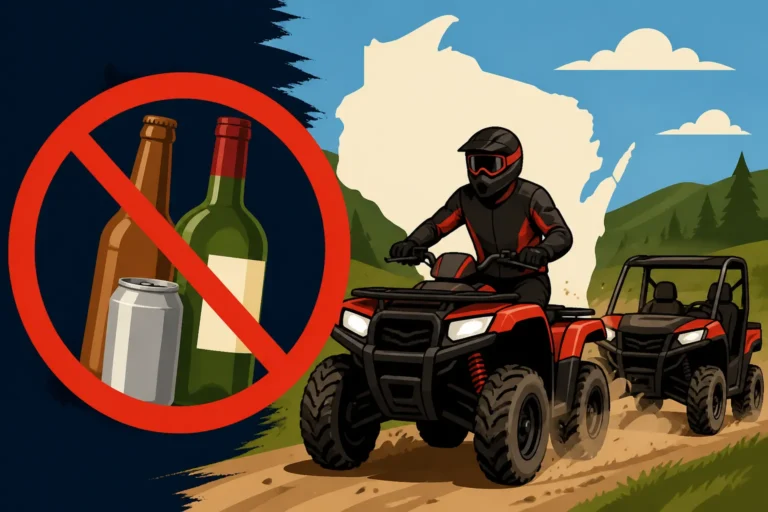
Picture this: you're out enjoying a beautiful Wisconsin day, the sun's shining, the trails are calling, and maybe you've had a couple of adult beverages with friends at a trailside tavern. It feels like a relaxed outing, but what many riders don't fully grasp is just how serious the consequences can be if you decide to hop back on your ATV or UTV after drinking. This guide is here to lay out exactly what an Operating While Intoxicated (OWI) charge on an ATV or UTV in Wisconsin really means, the harsh realities you could face, and how to make sure you're always riding safely and legally.
Understanding OWI Laws for ATVs and UTVs in Wisconsin
It's a common misconception that because you're not in a car on a paved highway, the rules somehow bend or don't apply with the same strictness. Unfortunately, that's simply not true, and this misunderstanding can lead to some really tough lessons. Wisconsin takes impaired operation of recreational vehicles, including ATVs and UTVs, very seriously, often mirroring the penalties you'd face for driving a car under the influence.
What "Operating While Intoxicated" Means on the Trail
First and foremost, "Operating While Intoxicated" (OWI) isn't just about being visibly drunk. In Wisconsin, the legal standard for impairment is a blood alcohol content (BAC) of 0.08% or higher for most adult operators. However, and this is crucial, you can still be charged with an OWI even if your BAC is below 0.08% if law enforcement can prove you were impaired to the point where you couldn't safely operate your machine. This "impaired to a degree that renders you incapable of safely operating" clause is a significant catch-all.
Think about it this way: your ATV or UTV, especially on varied terrain, demands your full attention, quick reflexes, and sound judgment. Even a couple of drinks can dull those senses, slow your reaction time, and affect your decision-making. That subtle impairment might not seem like much after a relaxing lunch, but it could be the difference between safely navigating a tricky turn and ending up in a ditch – or worse. Wardens are trained to observe signs of impairment, from erratic riding to slurred speech, and they don't need a high BAC reading to make an arrest if they believe you're a danger to yourself or others.
The Legal Differences and Similarities with Road Vehicles
When it comes to OWI, Wisconsin's laws treat ATVs and UTVs remarkably similarly to automobiles. The core definition of OWI and the legal BAC limits are essentially the same. This means that if you're convicted of an OWI on your quad, it will typically count as a prior offense if you ever get another OWI in a car, escalating the penalties significantly. It’s not just a "recreational vehicle ticket" that lives in its own little world; it's a serious strike on your record that carries over into your standard driver's license record.
However, there are a few nuances. For instance, while an OWI on an ATV can lead to the suspension of your privilege to operate an ATV or UTV, it doesn't automatically mean your driver's license (for operating a car) will be revoked on a first offense, unlike a car OWI. But don't let that give you false comfort. A second or subsequent ATV OWI will absolutely impact your driver's license. Furthermore, specific municipal ordinances or county rules might add layers of complexity, sometimes requiring you to prove insurance or adhere to stricter hours of operation when riding on designated routes. The important takeaway is that you are held to a very high standard of sobriety, regardless of the type of vehicle.
Where the Laws Apply: Trails, Routes, and Private Land
One of the biggest misconceptions riders have is thinking that OWI laws only apply to public roads or designated ATV trails. Let me be absolutely clear: in Wisconsin, OWI laws for ATVs and UTVs apply almost everywhere.
This means if you're riding on a county forest trail system, an officially designated ATV road route, a frozen lake, or even crossing a public highway, the OWI statutes are in full effect. It also extends to private land under certain circumstances. While riding purely on your own private, non-accessible land might seem exempt, if you operate an ATV while intoxicated and cause an accident, injury, or property damage, you could still face legal repercussions and civil lawsuits. If your private land connects to public trails or roads, or if you have guests riding with you, the line becomes even blurrier and the risks escalate. Don't assume that just because you're "off the beaten path" that you're off the legal hook. Wardens and local law enforcement are vigilant on Wisconsin's extensive trail network, and you can definitely encounter them at any point along your ride.
The Immediate and Long-Term Consequences of an ATV OWI in Wisconsin
An OWI on an ATV isn't just a slap on the wrist. It's a serious legal issue with far-reaching consequences that can impact your finances, your freedom, and your ability to enjoy the very activity you love. It's a situation you absolutely want to avoid at all costs, and understanding the full spectrum of what can happen is key to making responsible choices.
Initial Encounter: What Happens at a Stop or Incident
Let's walk through a hypothetical, but all too real, scenario. You're riding down a designated route, perhaps a bit too fast or swerving slightly. A conservation warden or local police officer observes this. They initiate a stop, just as they would with a car.
First, they'll ask you to stop your machine and provide your registration and identification. You might be asked if you've been drinking. If the officer suspects impairment based on your demeanor, the smell of alcohol, or your riding behavior, they will likely ask you to perform Standardized Field Sobriety Tests (SFSTs). These tests, like walking a straight line or standing on one leg, are designed to assess your balance, coordination, and ability to follow instructions – all of which are affected by alcohol. If you fail these tests, or refuse to take them, it gives the officer probable cause for arrest. You'll then likely be taken into custody, transported to a police station, and asked to submit to a chemical test (like a breathalyzer or blood test) to determine your BAC. Refusing this test can lead to immediate penalties, often more severe than a first-time OWI conviction itself, because Wisconsin has an "implied consent" law. After the tests, if your BAC is over the limit or the evidence of impairment is strong, you'll be booked, fingerprinted, and released with a citation and a court date. It's a jarring, intimidating process that can quickly turn a fun day into a nightmare.
Penalties and Fines You Could Face
The financial hit from an ATV OWI in Wisconsin can be substantial, and it often compounds quickly. For a first offense, you're looking at significant fines, which can be augmented by various surcharges, court costs, and legal fees. While specific figures fluctuate and are best confirmed by a legal professional or the relevant state agencies, understand that these are not minor traffic tickets. [Wisconsin ATV Ticket Amounts] can vary widely, but an OWI will typically be on the higher end, easily running into the hundreds or even thousands of dollars once all is said and done.
Beyond the initial fine, there are other financial implications. Your insurance rates for your ATV, UTV, or even your auto insurance could skyrocket. You might be required to complete an alcohol assessment and follow through with any recommended treatment or educational programs, which also come with fees. If your machine is towed, add towing and impoundment fees to that bill. For second and subsequent offenses, the fines jump dramatically, and you're looking at mandatory jail time, which brings its own set of costs and life disruptions. It truly adds up to a very expensive lesson.
Impact on Your Driving and Riding Privileges
This is where an OWI truly hits home for many riders. While a first-offense ATV OWI might not immediately revoke your driver's license (for a car), it absolutely will result in the suspension of your privilege to operate an ATV or UTV in Wisconsin for a significant period. This means no more trail rides, no more cruising routes, and no more enjoying your machine legally.
If you rack up a second or subsequent ATV OWI, the penalties become much more severe, including mandatory jail time and the potential for a full driver's license revocation, just as if you had committed the OWI in a car. This crossover is a critical point that many people miss. An OWI record stays with you for a long time, impacting not only your riding privileges but also potentially your job prospects, ability to travel, and overall personal freedoms. The message is clear: [Losing Wisconsin Riding Privileges] for an OWI is a very real, and very frustrating, outcome.
Navigating the Legal System After an ATV OWI Charge
Facing an OWI charge, whether it's your first time or not, can feel incredibly overwhelming. The legal system is complex, and it's easy to feel lost or unsure of what to do next. But there are steps you can take, and understanding the process is the first step toward a resolution.
Steps to Take Immediately After a Citation
The moment you receive an OWI citation, your priority should be to gather information and seek professional help. First, make sure you understand the charges against you and your court date. Don't miss this date, as that can lead to even more serious legal trouble.
Second, and perhaps most importantly, do not discuss your case with anyone other than a qualified attorney. Anything you say to friends, family, or even on social media could be used against you. An OWI defense lawyer specializing in Wisconsin law can review the details of your arrest, explain your rights, and help you understand the potential outcomes. They can examine whether the stop was lawful, if field sobriety tests were administered correctly, and if the chemical tests were valid. This initial consultation is vital for understanding your options and building a defense. While it might feel like an added expense, the cost of an attorney is often far less than the long-term financial and personal consequences of an OWI conviction.
Options for Contesting or Resolving the Charge
Once you've consulted with an attorney, you'll have a clearer picture of your situation and the possible paths forward. You generally have a few options:
- Plead Not Guilty and Contest the Charge: Your attorney might identify weaknesses in the prosecution's case, such as issues with the traffic stop, the administration of field sobriety tests, or the calibration of breathalyzer equipment. In these cases, you might go to trial to challenge the evidence. [Fighting an ATV Citation in Wisconsin] can be a complex process, requiring meticulous preparation and a deep understanding of legal procedures.
- Plead Guilty or No Contest: Sometimes, the evidence against you is strong, and contesting the charge may not be the most advantageous strategy. In such situations, your attorney can negotiate with the prosecutor for a plea bargain, potentially reducing the charges or the severity of the penalties. Pleading guilty or no contest means you accept the consequences, but your attorney can still work to mitigate the impact on your record and privileges.
- Deferred Prosecution Agreements: In some jurisdictions, for first-time offenders, there might be options for deferred prosecution. This could involve completing an alcohol assessment, counseling, or community service, after which the charges might be reduced or even dismissed, provided you meet all the program requirements.
Regardless of the path, having an experienced attorney by your side is invaluable. They can navigate the court system, speak on your behalf, and ensure your rights are protected throughout the process.
Learning from the Experience and Moving Forward
No one wants to go through the stress and expense of an OWI. If you find yourself in this situation, it's a profound opportunity for reflection and change. Beyond the legal process, take the time to understand why this happened and how to prevent it from ever happening again. This often involves a commitment to never operate an ATV or UTV after consuming alcohol.
Consider taking a refresher ATV safety course – many of these courses emphasize responsible operation, including avoiding impaired riding. Talk to your riding buddies about setting a "no drinking and riding" policy for group outings. The goal is not just to avoid another citation, but to foster a culture of safety and responsibility that protects yourself, your passengers, and other riders on the trails. An OWI is a tough experience, but it can also be a catalyst for becoming an even more conscientious and exemplary rider.
Preventing an ATV OWI: Responsible Riding in Wisconsin
The best way to deal with an OWI charge is to prevent it from ever happening. It might sound obvious, but in the heat of the moment, or when peer pressure is at play, good judgment can sometimes take a backseat. Wisconsin’s trails and routes offer incredible opportunities for recreation, but they demand respect and a clear head.
The "Zero Tolerance" Approach
When it comes to operating an ATV or UTV, adopting a "zero tolerance" approach to alcohol is by far the safest and smartest strategy. This means if you plan to ride, you do not drink, period. It eliminates any guesswork about your blood alcohol content, any questions about whether you're "impaired enough," and any potential for legal trouble.
The truth is, even a small amount of alcohol can affect your judgment, coordination, and reaction time. On challenging terrain, where split-second decisions and precise control are critical, even slight impairment can lead to a serious accident. Why risk your safety, the safety of your passengers or fellow riders, and your legal standing for a casual drink? Make the decision beforehand: if the keys are in your hand, alcohol stays out of your system. This simple rule provides absolute clarity and peace of mind, ensuring you're always fully capable of handling your machine responsibly.
Designated Riders and Alternative Transportation
If you absolutely want to enjoy alcoholic beverages during a riding trip, then meticulous planning is essential. The concept of a "designated driver" from the automotive world applies perfectly here. Designate one person in your group who will remain completely sober and be responsible for operating the ATVs or UTVs. This person commits to not drinking anything that could impair their ability to ride safely.
Alternatively, if you're stopping at a trailside establishment where drinks are served, consider making it your final stop for the day. Secure your machines and arrange for alternative transportation back to your cabin or lodging. This might mean calling a taxi, using a ride-sharing service if available in that area, or having a sober friend or family member pick you up. Think ahead, especially if you're in a more remote Northwoods location where options might be limited. Having a plan in place before you even leave camp can prevent a difficult situation later on. Remember, [Wisconsin Alcohol Limits for ATV Operators] are strict, and adherence is mandatory.
Understanding Your Limits and the Risks
It's not just about the legal limit; it's about your personal limit and the inherent risks of ATV/UTV operation. Factors like fatigue, dehydration, extreme weather (hot or cold), and even certain medications can amplify the effects of alcohol, meaning you could be significantly impaired even with a low BAC. The type of machine you're operating also plays a role; a powerful side-by-side or sport quad demands even greater focus than a less aggressive utility model.
The trails themselves present challenges – unexpected turns, changing surfaces, obstacles, and other riders. Introducing alcohol into this dynamic significantly escalates the risk of accidents, injuries, and fatalities. It's not just wardens you need to worry about; it's the potential for a life-altering crash. Sometimes, the bravado of group rides can also lead to poor choices. Encourage a culture of responsibility within your riding circle. Speak up if you see someone who's had too much to drink trying to get back on their machine. A moment of uncomfortable conversation is always better than dealing with the devastating aftermath of an OWI or an accident. Responsible riding isn't just about following the rules; it's about prioritizing safety and sound judgment above all else.
| Offense Number | Minimum Fines (plus surcharges/costs) | Operating Privilege Suspension (ATV/UTV) | Driver's License Revocation (Auto) | Jail Time | Alcohol Assessment/Treatment |
|---|---|---|---|---|---|
| 1st OWI | Substantial (e.g., hundreds) | 6 months – 1 year | No automatic revocation | None | Mandatory |
| 2nd OWI | Significantly higher | 1 – 2 years | Mandatory (for car) | Mandatory (e.g., 5 days) | Mandatory |
| 3rd OWI | Even higher (e.g., thousands) | 2 – 3 years | Mandatory (for car) | Mandatory (e.g., 45 days) | Mandatory |
Disclaimer
This article is for general informational purposes only and does not constitute professional advice. Laws, prices and regulations vary by location and change over time. Consult a qualified professional for guidance on your specific situation.