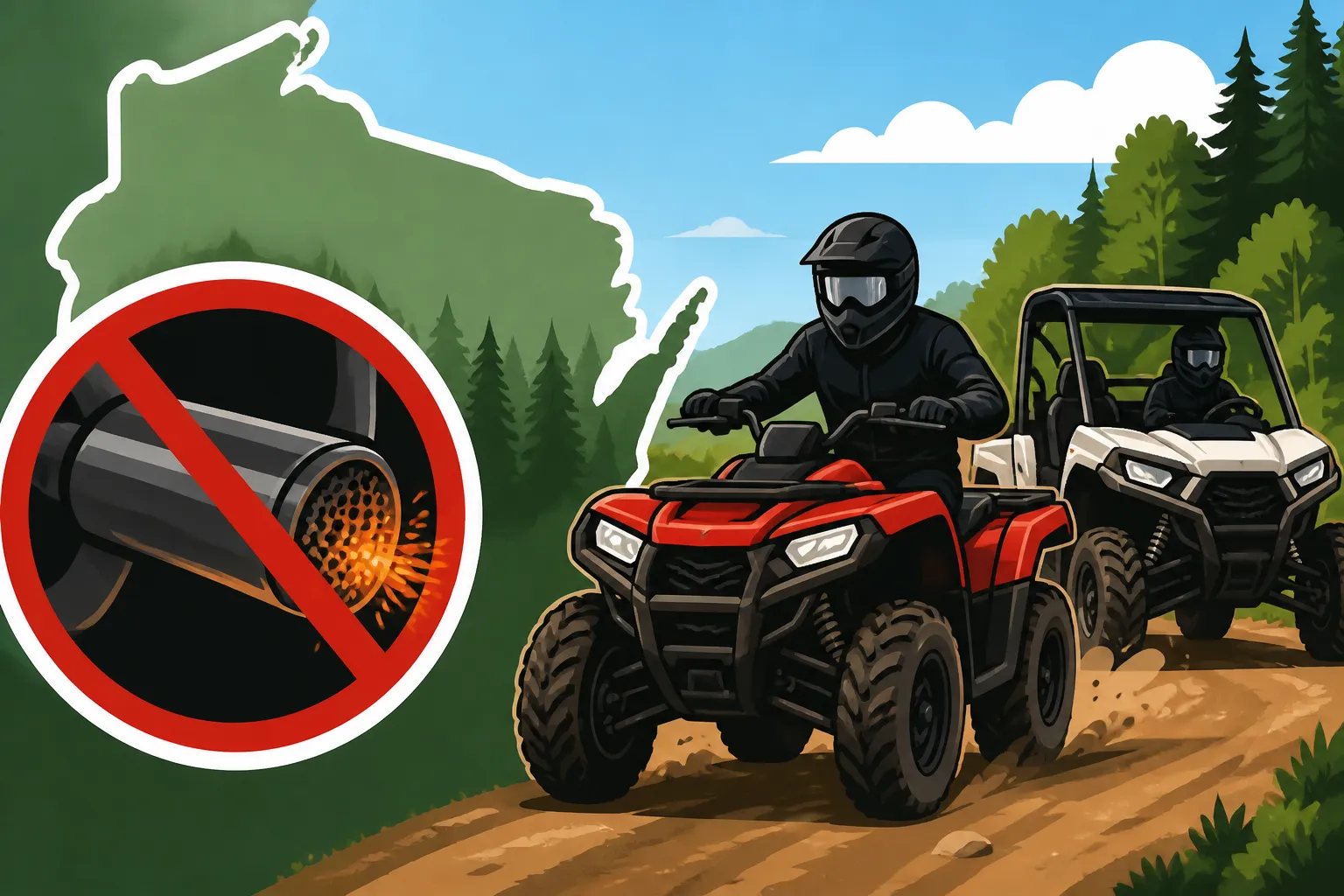
Spark Arrester Rules on Wisconsin Public Land
You've probably been there: gearing up for an epic ride on some of Wisconsin's incredible public trails, only to hear whispers about spark arrester rules and the worry of being caught unprepared. It can feel like there's a new rule around every corner, and getting a clear, straightforward answer on specific equipment requirements, especially for something as critical as fire prevention, can be frustrating. This guide is here to cut through the confusion and give you the real scoop on spark arrester regulations when you're hitting Wisconsin's public lands, ensuring your machine is compliant and your ride is worry-free.
Understanding the "Why" Behind Spark Arrester Rules
Before we dive into the nitty-gritty of what’s required, let's talk about why these rules exist in the first place. It’s easy to feel like regulations are just there to make things complicated, but in the case of spark arresters, the reason is incredibly vital: fire prevention. Wisconsin, with its vast and beautiful forests, peat bogs, and dry grasslands, is particularly vulnerable to wildfires, especially during drier seasons. A single spark from an ATV or UTV can have devastating consequences, wiping out acres of pristine nature, threatening homes, and endangering lives.
When you're out on a trail, especially one that winds through dense timber or across open, dry fields, the risk of an internal combustion engine emitting a hot carbon particle is very real. These tiny, glowing embers, ejected from your exhaust system, can land on dry leaves, pine needles, or tall grasses and ignite a fire in mere seconds. The rapid spread of a wildfire, particularly in remote areas where most ATV/UTV trails exist, can quickly overwhelm firefighting efforts and cause irreparable damage to the very landscapes we love to ride.
Think about the serene beauty of the [Chequamegon-Nicolet and Its Motorized Trail Systems] or the quiet expanse of the [Black River State Forest ATV Riding] – these are treasures we all want to protect. The rules around spark arresters aren't meant to be a burden, but rather a collective responsibility to preserve these natural spaces for everyone, including future generations of riders. By understanding the gravity of the potential impact, it makes adhering to these regulations feel less like a chore and more like a crucial part of being a responsible outdoor enthusiast.
The Real Danger: Wildfires in Wisconsin's Forests
Wisconsin's natural landscapes are diverse and incredibly susceptible to fire. From the deep woods of the Northwoods to the sprawling prairies in other parts of the state, dry conditions can turn a recreational outing into a potential disaster. Imagine cruising through a forest trail during a late summer drought. The ground is parched, the leaves are crisp, and even a discarded cigarette butt could ignite a blaze. Now picture your ATV's exhaust, pushing out hot gases and, without a proper spark arrester, potentially a glowing carbon chunk.
These carbon particles are the culprits. They’re essentially tiny, superheated pieces of soot that break off inside your engine and exhaust system. When they exit the exhaust pipe, they're often still incandescent, easily hot enough to ignite highly flammable materials. It's not just about what you can see; many times, these sparks are small and disappear into the underbrush, only to smolder and erupt into flames hours later, long after you’ve left the area. This makes them particularly insidious, as the source of the fire might be miles away by the time it's discovered.
Wildfires don't just consume trees; they destroy wildlife habitats, pollute the air with smoke, and can even force trail closures for extended periods, impacting not just our riding enjoyment but also local economies that rely on outdoor tourism. The cost of fighting these fires is immense, diverting resources and putting firefighters at risk. The simple, often unseen, presence of a compliant spark arrester is a small but mighty defense against such widespread destruction, safeguarding both the environment and the future of our riding opportunities.
Protecting Our Natural Resources and Fellow Riders
Beyond the environmental impact, spark arrester rules are also about community and safety. When you're riding on public land, you're sharing that space with hikers, campers, hunters, and other outdoor enthusiasts. A wildfire started by an unequipped machine isn't just a threat to the forest; it's a direct threat to anyone recreating or living nearby. Picture a family camping trip cut short, or worse, put in danger, because of a fire that could have been prevented.
The enforcement of these rules, often carried out by DNR wardens and local law enforcement, isn't arbitrary. They're on the lookout because they understand the stakes. They're working to protect the delicate balance of our ecosystems and ensure that everyone can enjoy Wisconsin's natural beauty without undue risk. It's a matter of collective responsibility. Just like we all adhere to speed limits on the road for the safety of ourselves and others, adhering to equipment regulations on trails is about respecting the land and our fellow users.
Furthermore, responsible riding practices, including proper machine maintenance and spark arrester checks, contribute to a positive public image for the entire ATV/UTV community. When riders consistently demonstrate care for the environment and adherence to safety rules, it helps preserve access to trails and prevents negative perceptions that could lead to further restrictions. It's about being good stewards of the land and being considerate neighbors on the trail, ensuring that our access to incredible places like the [Wisconsin County Forest Trail Systems] remains open and enjoyable for everyone.
Wisconsin's Specific Requirements for Spark Arresters on Public Lands
So, what exactly does Wisconsin expect from your machine? The rules are quite clear: any ATV or UTV operating on public lands must be equipped with a U.S. Forest Service (USFS) approved spark arrester. This isn't just a recommendation; it's a legal requirement designed to prevent wildfires, and wardens take it very seriously. It means that simply having "a screen" in your exhaust isn't enough; it needs to meet specific design and performance standards set by the USFS to effectively trap those incandescent carbon particles.
These regulations apply across the board to most public riding areas in Wisconsin. Whether you're exploring a state forest, navigating county-managed trails, or venturing into federal lands like parts of the Chequamegon-Nicolet National Forest, your machine needs to be compliant. It’s important to remember that these rules are in place year-round, not just during periods of high fire danger, because conditions can change quickly, and prevention is always the best approach.
Getting caught without an approved spark arrester isn't just a minor inconvenience; it can lead to citations, fines, and even the immediate termination of your ride. Wardens have the authority to pull you off the trail if your machine is not in compliance, and nobody wants their epic day cut short by a preventable equipment issue. Understanding these specific requirements and making sure your machine is ready before you hit the trail is key to enjoying Wisconsin's incredible riding opportunities without any unwanted surprises.
What Makes a Spark Arrester "Approved" in Wisconsin
When we talk about a "U.S. Forest Service approved" spark arrester, we're referring to a device that has undergone rigorous testing to ensure its effectiveness. It's not just a generic screen you can pick up anywhere. A USFS-approved spark arrester will typically have a specific stamp or marking indicating its approval. This marking often includes the letters "USFS" and a specific number, signifying that it meets the federal standards for spark arresting capabilities.
These devices are designed to cool and trap carbon particles larger than 0.023 inches (approximately 0.584 millimeters) as they exit the exhaust. The design prevents these hot particles from being expelled into the atmosphere, significantly reducing the risk of igniting dry vegetation. Most modern ATVs and UTVs come from the factory with a USFS-approved spark arrester already installed, usually integrated into the muffler system. However, if you've modified your exhaust or purchased an older machine, this is definitely something you'll want to double-check.
It's crucial to understand that homemade spark arresters or simple mesh screens that haven't been tested and approved do not count. While they might seem to offer some protection, they haven't met the federal standards for particle retention and could still allow dangerous sparks to escape. When in doubt, always look for that official USFS stamp. If you can't find it, or if you're unsure, it's best to consult your machine's manual or contact a reputable dealer or a group like [Wisconsin DNR ATV Program Contacts] for clarification.
Where the Rules Apply: State Forests, County Lands, and National Forests
The requirement for a USFS-approved spark arrester is broadly applicable across virtually all public riding land in Wisconsin. This includes the vast networks of state-managed trails, such as those found in state forests and recreation areas. It also covers the extensive [Wisconsin County Forest Trail Systems], which are often managed by individual counties but still fall under these statewide and federal regulations for fire prevention. And, of course, any trails that traverse federal land, like parts of the Chequamegon-Nicolet National Forest, are subject to these federal standards.
It's sometimes easy to assume that rules might vary slightly between state, county, or federal jurisdictions, but when it comes to fire prevention and spark arresters, the standard is essentially universal for public access. The goal is consistent protection of natural resources, regardless of the specific governmental entity managing the land. This consistency actually makes it easier for riders, as you don't generally need to worry about different spark arrester requirements as you cross from one type of public land to another.
The key takeaway here is: if you're riding anywhere that isn't your own private, deeded land, assume a USFS-approved spark arrester is mandatory. This simple assumption will keep you compliant and safe. Always remember that even if you're just riding a short stretch of a [Wisconsin Road Route] to connect to a trail, you're still on public access ways, and compliance is expected. When in doubt, always err on the side of caution and ensure your machine is properly equipped.
The Consequences of Non-Compliance: What to Expect from a Warden
Ignorance of the law is rarely an excuse, and that holds true for spark arrester rules on Wisconsin's public lands. If a Wisconsin DNR warden or other law enforcement officer stops you and finds your ATV or UTV lacking a proper, USFS-approved spark arrester, you can expect some unwelcome consequences. It’s not just a polite request to fix it later; it's a serious infraction because of the inherent fire risk.
First and foremost, you're likely to receive a citation. While I can't give specific fine amounts, these tickets are not cheap and are designed to deter non-compliance. Beyond the financial penalty, a warden has the authority to immediately order you to cease operation of your machine until it's compliant. This means your day of riding could be cut short, potentially miles from your trailer or camp, leaving you in a real bind. You'd then need to figure out how to transport an inoperable (on public land, anyway) machine.
Furthermore, repeated offenses or riding during extreme fire danger without a compliant spark arrester could lead to more severe penalties, including potential impoundment of your machine in extreme cases, or even the revocation of your riding privileges. The wardens are out there to ensure everyone's safety and protect our shared natural resources, and they perform their duties diligently. If you're ever stopped, it's always best to be polite, cooperative, and understand that they're just enforcing rules designed to keep everyone safe and the trails open. For more insight into what officers look for, check out [What a Wisconsin Warden Asks a Rider For].
Checking Your Machine and Maintaining Compliance
Now that you understand the "why" and "where," let's get down to the practical steps of ensuring your machine is always ready for the trail. It's not enough to just hope your ATV or UTV is compliant; you need to know for sure. This involves a little hands-on inspection and understanding what to look for, especially if you've made modifications to your exhaust system or are riding an older machine. It's a simple check that can save you a lot of grief and protect our beautiful Wisconsin wilderness.
This pre-ride inspection should become as routine as checking your tire pressure or fuel level. It's your personal responsibility as a rider, and it shows respect for the rules and the environment. Taking a few minutes before each ride, or at least before your first ride of the season, can prevent issues down the line. It's also a great opportunity to familiarize yourself with your machine's exhaust system, so you know exactly where to look for that all-important USFS stamp.
Remember, compliance isn't a one-time thing. Spark arresters, like any other part of your machine, can wear out, get clogged, or become damaged over time. Regular maintenance is key to keeping them effective and ensuring you remain compliant for every mile of your adventure. A little preventative care goes a long way in ensuring your machine runs clean, quiet (within limits, of course, see [Wisconsin's 96-Decibel Exhaust Limit]), and legally.
Locating and Inspecting Your Spark Arrester
For most factory-equipped ATVs and UTVs, the spark arrester is built into the muffler at the very end of the exhaust system. You'll typically find it at the very tip of the exhaust pipe, often as a screen or a series of baffles. Your first step is to locate this component. Consult your owner's manual if you're unsure; it will usually have diagrams of the exhaust system.
Once you've found it, look for the USFS approval stamp. It might be etched directly into the metal of the muffler or on a small plate attached near the exhaust outlet. It should be clearly visible. If you can't find a stamp, or if the component looks like a generic screen or a rough, homemade addition, there's a good chance it's not compliant.
Beyond just looking for the stamp, visually inspect the spark arrester for any damage. Is the screen intact, or are there holes or tears? Is it clogged with carbon buildup? A damaged or heavily clogged spark arrester won't be effective, even if it's technically "approved." Regular cleaning (which often involves removing a few screws to access the screen) is essential to ensure it can do its job properly. A clean spark arrester not only functions better but also contributes to better exhaust flow and potentially better engine performance.
| Spark Arrester Compliance Checklist | Status (Y/N/NA) | Notes |
|---|---|---|
| USFS Approval Stamp Visible | Look for "USFS" and a number on the muffler or end cap. | |
| Screen Intact, No Holes | A damaged screen allows sparks to escape. | |
| Free of Excessive Carbon Buildup | Clogging reduces effectiveness and can increase back pressure. | |
| Securely Mounted | Ensure it's not loose or about to fall off. | |
| Exhaust System in Good Repair | No leaks or cracks before the arrester that could bypass it. | |
| Owner's Manual Confirms Approval | Consult your manual for factory-installed arrester details. |
Aftermarket Exhaust Systems and Spark Arrester Integration
This is where things can get a little trickier. Many riders choose to install aftermarket exhaust systems on their ATVs or UTVs for various reasons, such as improved performance, a different sound, or aesthetic appeal. However, not all aftermarket exhausts are created equal when it comes to spark arrester compliance. Some high-performance systems are designed for closed-course racing and may not include a USFS-approved spark arrester, or they might offer it as an optional add-on.
If you've installed an aftermarket exhaust, or are considering one from a company like SuperATV or any other reputable brand, it is absolutely imperative to verify that it either comes with an integrated, USFS-approved spark arrester or that an approved spark arrester kit can be, and has been, properly installed with it. Do not assume. Check the product specifications, read reviews, or contact the manufacturer directly to confirm its compliance. [Aftermarket Exhaust and the Wisconsin Sound Limit] is another good article to review if you're considering modifying your exhaust.
Running an aftermarket exhaust without a compliant spark arrester on public land is a direct violation of the rules, even if you just didn't realize it. The responsibility lies with the owner/operator to ensure their machine is always compliant. If your aftermarket system doesn't have an approved arrester, you'll need to source and install one, or reconsider using that exhaust on public trails. Don't risk a ticket or, more importantly, starting a wildfire, for the sake of a louder exhaust note or a few extra horsepower.
Ongoing Maintenance to Keep Your Arrester Effective
Just like changing your oil or checking your brakes, maintaining your spark arrester is a critical part of routine ATV/UTV care. Over time, carbon and exhaust byproducts can build up on the screen or baffles of the spark arrester, leading to clogging. A clogged spark arrester can reduce its effectiveness, restrict exhaust flow (potentially impacting performance), and in some cases, even lead to overheating issues.
Most spark arresters are designed to be removable for cleaning. Typically, this involves removing a few small screws or bolts from the end cap of your muffler. Once removed, you can usually clean the screen with a wire brush, scraper, or even a parts cleaner to remove the carbon buildup. Always consult your machine's service manual or the spark arrester manufacturer's instructions for the recommended cleaning procedure. Some machines might require more frequent cleaning than others, depending on how you ride and the fuel you use.
Make this inspection and cleaning part of your regular maintenance schedule – perhaps every 50-100 hours of operation, or at the start of each riding season. It's a small task that ensures your machine remains legally compliant, operates efficiently, and most importantly, minimizes the risk of inadvertently starting a wildfire. A well-maintained spark arrester is a testament to responsible riding and helps keep Wisconsin's beautiful public lands open for all of us to enjoy.
Disclaimer
This article is for general informational purposes only and does not constitute professional advice. Laws, prices and regulations vary by location and change over time. Consult a qualified professional for guidance on your specific situation.