Riding the Shoulder of a Wisconsin Route
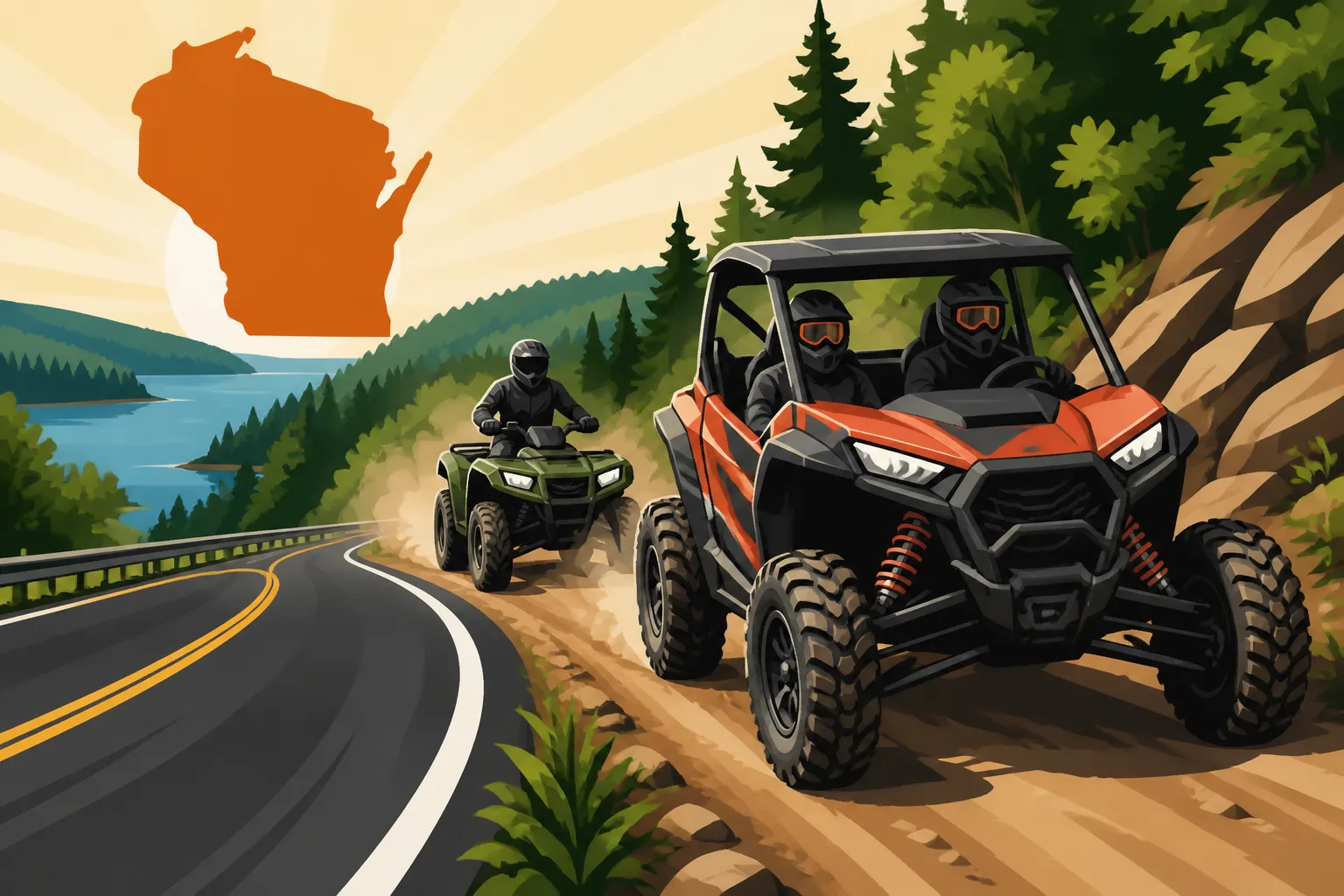
It's a common sight when you're out riding the ATV or UTV routes across Wisconsin: an off-road machine hugging the shoulder of a town or county road, seemingly trying to give cars as much room as possible. But while the intention might be good, many riders are actually putting themselves in a tricky spot legally and, often, physically. This guide is all about untangling the rules of riding the shoulder on Wisconsin's designated ATV and UTV routes, so you can ride confidently and within the law.
What Exactly Is a Wisconsin ATV Route?
Before we dive into the specifics of shoulder riding, it’s crucial to understand what a "route" actually is in Wisconsin's ATV and UTV world. We're not talking about just any old road you decide to ride down. A Wisconsin ATV or UTV route is a public road, typically a town or county road, that has been specifically designated and opened for off-road vehicle use by local ordinance. This isn't a federal highway or a state highway, though you might cross them under specific rules. These are usually the local blacktops or gravel roads that weave through our beautiful towns and forests.
Think about it: it takes a local government, like a town board or county board, to formally vote and open these roads. They have to post proper signage, follow certain state guidelines, and make sure everyone knows these roads are now shared spaces. You'll see signs clearly marking the beginning and end of these routes, often with arrows indicating the direction of travel or special conditions. Without that official designation, a road is just a road, and riding your ATV or UTV on it is a no-go. Understanding [What a Wisconsin ATV Route Actually Is] is the first step to knowing how to ride it properly. The establishment of these routes is a careful process, often involving community input and local enforcement planning. For more on how these routes come to be, check out [How a Wisconsin Town Opens an ATV Route].
These routes are invaluable, connecting trails, providing access to gas stations or restaurants, and sometimes becoming the primary way to get from one great riding area to another. They allow us to truly explore the state without constantly loading and unloading our machines. But with that privilege comes a responsibility to know and follow the rules specific to these routes, and that includes where you're allowed to position your machine on the pavement.
The Shoulder Riding Conundrum: What the Rules Say
Here’s where it gets a little counterintuitive for many riders, especially those who are used to other types of recreational vehicles. In Wisconsin, when you're riding on a designated ATV or UTV route, you are generally required to operate your machine on the traveled portion of the roadway, not the shoulder.
I know, I know, it sounds crazy, right? Your first instinct is often to get as far over to the right as possible, out of the way of cars. We've all done it, thinking we're being courteous or safer. But state statutes and local ordinances typically define the "traveled portion" as the part of the road designed for vehicular traffic, from curb to curb or ditch to ditch, excluding the shoulder. The shoulder itself is usually considered part of the highway right-of-way, but not the traveled way for ATVs and UTVs.
Why is this rule in place? It boils down to predictability and safety. When you ride on the shoulder, you might encounter pedestrians, bicyclists, mailboxes, soft gravel, debris, or even culverts that aren't visible or safely traversable at ATV speeds. You're also operating in an area that other drivers aren't expecting a vehicle like yours to be. When everyone knows ATVs and UTVs are expected on the main traveled portion, it helps other drivers know where to look and how to react. It's about maintaining a consistent flow of traffic and minimizing unexpected maneuvers.
Now, there might be very specific, rare instances where a local ordinance explicitly states that a shoulder can be used as part of the route, but this is highly unusual and not the norm. Always assume you should be on the main paved or graveled surface unless signage explicitly directs you otherwise. This is a common point of confusion, and wardens are definitely aware of it. Knowing [What a Wisconsin Warden Asks a Rider For] often includes where you were riding.
Here's a quick breakdown to help clarify:
| Scenario | Common Rider Instinct | Wisconsin Route Rule |
|---|---|---|
| Riding on a paved route | Move way over to the gravel shoulder | Stay on the paved, traveled portion |
| Riding on a gravel route | Ride alongside the road in the ditch | Stay on the main gravel surface |
| Approaching oncoming traffic | Veer off to the shoulder quickly | Maintain position, slow down, be predictable |
| Avoiding dust on a dry route | Drop a wheel onto the soft shoulder | Remain on the hard-packed surface |
It's a big shift in mindset, especially if you're coming from riding off-road trails where you might be more accustomed to varied terrain. But on a designated route, you're essentially another vehicle in traffic.
Why Riding the Shoulder Might Seem Like a Good Idea
Let's be real for a moment. Riders often have totally valid, understandable reasons for wanting to ride the shoulder. You're not trying to break the law, you're usually trying to be considerate or feel safer.
One of the biggest motivations is courtesy to other drivers. You see a car coming, and you naturally want to give them as much room as possible. You might think, "If I'm on the shoulder, they'll have the whole lane to pass me safely." This comes from a good place, wanting to minimize any inconvenience or perceived danger to others. But in this case, good intentions can actually lead to an unforeseen problem.
Another reason is personal safety. Riding a four-wheeler on pavement, especially a busy road, can feel vulnerable. You might feel more secure tucked off to the side, away from the direct flow of traffic. The shoulder can seem like a buffer zone, a place where you're less likely to be hit by a car. Plus, the pavement can sometimes be rough, bumpy, or have potholes. A gravel shoulder might feel smoother or less jarring for your machine, making for a more comfortable ride. Some riders also try to avoid kicking up dust on a dry road, thinking that riding the very edge will mitigate it, though this is rarely effective.
However, the shoulder often presents its own set of dangers that aren't immediately obvious. Shoulders can be soft, unstable, or uneven, especially if they're gravel or dirt. This can lead to a loss of control, particularly if you hit a soft patch or a sudden drop-off. Debris, like glass, nails, or rocks, also tends to collect on shoulders, increasing your risk of a flat tire. Moreover, culverts, driveway entrances, and mailboxes often create unexpected obstacles or changes in terrain that can be dangerous at speed. Even a high-quality aftermarket tire from a brand like SuperATV can struggle with unpredictable soft edges at speed.
It’s crucial to remember that while your intentions are good, the law is designed for overall safety and predictability on shared roadways. What feels safest in the moment might not align with the established rules that minimize risk for all users in the long run.
Staying Legal and Safe on Wisconsin Routes
So, if you can't ride the shoulder, how do you stay legal and safe on Wisconsin's ATV and UTV routes? It boils down to awareness, predictability, and following some common-sense rules of the road.
First and foremost, stay on the designated, traveled portion of the route. This means if it's a paved road, you're on the pavement. If it's a gravel road, you're on the main gravel path. Ride single file, and if you're with a group, leave adequate space between machines. For more on proper group riding etiquette, you might want to review [Riding Two Abreast on a Route], as the same principles of not obstructing traffic apply.
Be highly visible. This isn't just a suggestion, it's a necessity. Make sure your headlights and taillights are functioning, and consider running them during the day, especially on paved routes. Bright clothing can help, and some riders even opt for whip flags on their machines, even if not strictly required on all routes. Aftermarket lighting, perhaps a bright LED bar from SuperATV, can dramatically increase your presence, especially when sharing the road with cars. For evening rides, understanding [Lighting Rules for Wisconsin Night Riding] is absolutely essential.
Mind your speed. Route speed limits are typically the same as for other vehicles on that road, unless a lower limit is posted specifically for ATVs/UTVs. Going too fast for conditions, or significantly slower than other traffic, can create hazards. Be mindful of residential areas and adjust your speed to minimize noise and dust, especially on dry, gravel roads. We've all experienced [Dust on a Dry Wisconsin Town Road] and know how quickly it can become a visibility issue.
Obey all traffic laws. Stop at stop signs, yield to oncoming traffic, and use hand signals or turn signals (if equipped) to indicate your intentions. Treat intersections with extreme caution. Remember, you're sharing the road with cars, trucks, and sometimes even bicycles and pedestrians. Predictability is your best friend.
Know the age and alcohol rules. Wisconsin has specific rules about who can operate an ATV or UTV on a route, including age requirements and safety certification. All riders born on or after January 1, 1988, must complete an ATV and UTV safety certification course. Young riders also have strict supervision requirements and, for UTVs, minimum age limits. And of course, just like operating a car, [Wisconsin Alcohol Limits for ATV Operators] apply. Driving under the influence on an ATV route carries serious penalties. Similarly, if you have younger riders with you, be sure to understand [Wisconsin Helmet Rules for Riders Under 18].
Finally, be aware of enforcement. Wardens and local law enforcement officers regularly patrol ATV and UTV routes. They are there to ensure everyone's safety and will issue citations for violations. Riding on the shoulder when not permitted is definitely something they'll notice. Understanding [Warden Enforcement on Wisconsin Routes] will give you a better idea of what to expect. Fines for violating these rules can add up quickly, not to mention the safety implications. Riding an [Unregistered Machine on Deeded Wisconsin Land] might be one thing, but on a public route, you need to be completely compliant.
By riding responsibly and understanding where you belong on the road, you contribute to a positive perception of ATV and UTV enthusiasts and help ensure these valuable routes remain open for everyone to enjoy.
Disclaimer
This article is for general informational purposes only and does not constitute professional advice. Laws, prices and regulations vary by location and change over time. Consult a qualified professional for guidance on your specific situation.