Wisconsin Fines for Illegal Road Riding
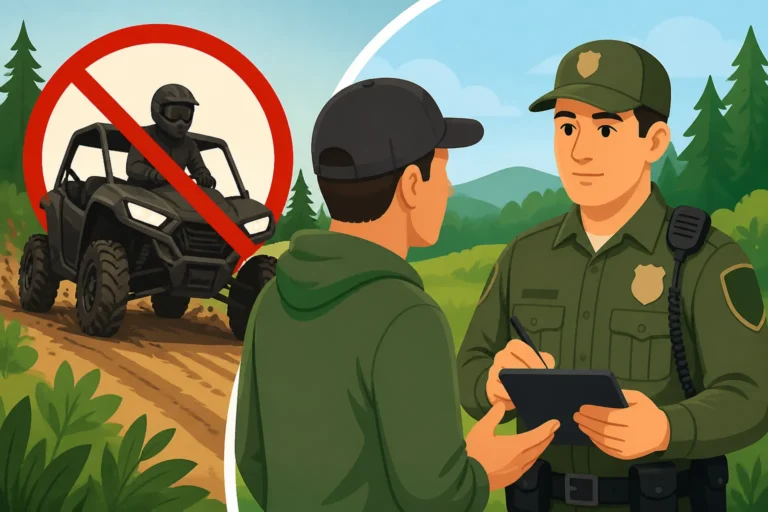
It’s a scenario many Wisconsin ATV and UTV riders have faced: you’re out enjoying the trails, or perhaps just running a quick errand from your cabin, and you see a paved road. It seems like the fastest, easiest way to get where you need to go, cutting out a long, circuitous trail. But taking that shortcut can often lead to a painful financial lesson in the form of a hefty fine for illegal road riding. This guide aims to clear up the confusion, explain the real costs of non-compliance, and help you navigate Wisconsin’s rules so your next ride is both fun and legal.
The Allure and The Risk: Why Riders Are Tempted Onto Wisconsin Roads
Let’s be honest, the temptation to use a paved road when you’re on an ATV or UTV is incredibly strong, especially in rural Wisconsin where trails might not always connect perfectly, or where a local store is just a mile down the blacktop. But what feels like a convenient solution can quickly turn into a stressful encounter with law enforcement and a significant financial hit.
The Convenience Factor: Just a Short Hop
Sometimes, it really is just a short hop. You might be at a trailhead, and the designated road route begins a quarter-mile down a county road that isn’t officially opened for ATV or UTV use. Or perhaps your favorite gas station in a small town is just off the trail, but the direct path involves a stretch of road not marked as an approved route. It feels innocuous, a minor transgression for the sake of efficiency. Many riders think, "What's the harm? I'm going slow, and I'll be off in a minute." This mindset, while understandable, often leads to situations where wardens are present, enforcing the rules exactly as they're written.
Consider a rider staying at a cabin in Vilas County. The county forest trails are right there, but the nearest bait shop or supper club is a mile up the county road. There’s no designated route, but the road is quiet, rarely traveled. It’s a natural impulse to take the quick way, rather than load the machine onto a trailer or drive a much longer, indirect route on trails. This desire for convenience, to seamlessly integrate ATV or UTV travel into daily activities, is a major driver behind illegal road use.
Misunderstanding the Rules: "I Thought It Was Okay Here"
Another significant reason riders end up with fines is a genuine misunderstanding of the rules, or confusion about local ordinances. Wisconsin’s regulations for ATV and UTV road routes can be complex, varying from county to county and even town to town. Just because one town has embraced ATV routes doesn't mean the neighboring one has the same rules, or even any routes at all. This patchwork of regulations can be incredibly difficult to keep track of, especially for visitors who aren't intimately familiar with local maps and ordinances.
Imagine you're riding in a popular trail town like St. Germain or Arbor Vitae, where ATV road routes are plentiful and well-marked. You ride responsibly, following all the signs. Then you cross into a different municipality that hasn't opened its town roads, or has only opened specific ones, and suddenly you're operating illegally without realizing it. The signs might not be as clear, or you might have missed a subtle change in jurisdiction. This can lead to frustration and a feeling of being unfairly targeted, even though the law is technically being broken. Riders need to remember that ignorance of the law is rarely accepted as a defense. For a deeper dive into the specific definitions, check out [Wisconsin Road Rules Riders Get Wrong].
Lack of Designated Access Points
Sometimes, the frustration stems from a lack of logical access. You might have a perfectly legal trail that runs right alongside a main artery, but there’s no designated crossing or connection point to access a business or another trail system just across the road. This forces riders to either find an alternative route, which might be miles out of the way, or—and this is where the trouble starts—take a chance by briefly using a prohibited section of road to bridge the gap.
This issue is particularly prevalent in areas where road routes are still developing. Local ATV clubs work tirelessly with municipalities to establish these routes, but it’s a slow process with many variables. Until every logical connection is made, riders will continue to face gaps in the legal network. For instance, you might be riding a well-established county trail, but to reach a specific restaurant for lunch, the final 500 feet involves a state highway shoulder that is strictly off-limits. The temptation to "just get there" can be overwhelming, but it's precisely these situations that wardens monitor closely.
Decoding "Illegal": Specific Violations That Lead to Fines in Wisconsin
To avoid fines, it’s crucial to understand exactly what constitutes "illegal" road riding in Wisconsin. It's not just about where you ride, but also how you ride and what you ride. The state has clear statutes governing ATV and UTV operation, and local ordinances often add another layer of rules.
Riding on Prohibited Roads or Highways
This is perhaps the most common and obvious violation. Wisconsin law distinguishes between several types of roads, and only specific ones can be designated as ATV/UTV routes. Generally, ATVs and UTVs are prohibited from operating on state or federal highways, and often on county roads unless explicitly designated and signed as an ATV/UTV route by local ordinance. Town roads can be opened by local municipalities, but again, they must be signed. Riding on a road not designated for ATV/UTV use, even for a short distance, is illegal.
Think of those stretches of busy state highway, perhaps even with a wide shoulder. That shoulder might seem safe, but if it’s not part of an officially opened route, you cannot ride your machine there. Similarly, county roads often carry more traffic and higher speed limits than town roads, making them more dangerous and thus more restricted. A crucial piece of information for any rider is knowing [What a Wisconsin ATV Route Actually Is] and where they are allowed to ride. Wardens will check signage rigorously, and if a road isn't clearly marked with the official ATV/UTV route signs, you're likely in violation. This also includes crossing highways, which has its own strict set of rules, as outlined in [Crossing a Wisconsin Highway Safely].
Ignoring Age, Safety, and Equipment Rules on Routes
Even when riding on a legally designated road route, there are still rules that apply to the operator and the machine itself. These rules are designed for safety, especially when sharing roads with traditional vehicles. Violations here can also lead to fines.
- Age and Safety Certificates: For instance, riders born on or after January 1, 1988, must complete an ATV safety certification course to operate on public lands, including road routes. There are also specific age restrictions for operating ATVs (12+) and UTVs (16+) on routes, and rules about supervision for younger riders. Ignoring these can result in fines for both the rider and, potentially, the supervising adult.
- Helmet and Eye Protection: While adults over 18 often don't need a helmet on private property, Wisconsin has specific [Wisconsin Helmet Rules for Riders Under 18] that apply on public routes. Even for adults, eye protection is often required, particularly on road routes where dust and debris from other vehicles can be a hazard.
- Equipment Requirements: Machines operated on road routes must meet certain equipment standards. This includes working headlights, taillights, brake lights, and a properly functioning muffler system that adheres to Wisconsin's 96-decibel sound limit. Having aftermarket exhaust systems that exceed this limit is a common issue. You might also need proper reflective tape, especially for night riding. SuperATV offers a range of accessories, including lighting upgrades and mirrors, that can help ensure your machine is compliant for route riding.
A rider who is 15 years old, for example, might be riding an ATV on a designated route, which is generally permissible with proper certification and supervision. However, if that same 15-year-old is driving a UTV on that route, they are violating the age restriction for UTVs on public routes, which carries its own penalty.
Operating Under the Influence or Recklessly
This is by far the most serious category of violation and carries the harshest penalties. Operating an ATV or UTV while under the influence of alcohol or drugs (OWI), or operating recklessly, is not only illegal but incredibly dangerous, significantly increasing the risk of serious injury or death. Wisconsin has strict laws regarding [Wisconsin Alcohol Limits for ATV Operators], mirroring those for automobiles.
Reckless riding can include excessive speed on a route, driving in a manner that endangers others, performing stunts, or ignoring traffic laws like stop signs and yield signs. These actions pose a direct threat to public safety and are often met with zero tolerance by law enforcement. An OWI on an ATV or UTV carries similar consequences to an OWI in a car, including significant fines, loss of operating privileges, and potential jail time. These aren't just minor infractions; they are criminal offenses with long-lasting implications for your record and your freedom to operate any motorized vehicle.
The Financial Blow: Wisconsin's Fines for Illegal Road Riding
So, what’s the real cost if you get caught riding illegally on a Wisconsin road? It’s often much more than just a slap on the wrist. Fines can range significantly depending on the specific violation, whether it's a first offense, and if there are aggravating factors.
Understanding the Base Fines and Court Costs
For many minor violations, like riding on a prohibited road or failing to have proper lighting, you might be looking at a base fine in the ballpark of a few hundred dollars. However, this base fine is rarely the final amount you pay. Wisconsin adds various court costs, surcharges, and other fees to the base fine, significantly increasing the total. For example, a $200 base fine could easily become a bill closer to $400 or $500 once all the additional charges are tacked on.
Let's say a rider is stopped for riding a designated town road outside of its permitted hours of operation. Many towns have [Municipal Hours of Operation for ATVs] to mitigate noise complaints from residents. The warden issues a citation for operating after hours. The fine might start at $150, but then the court tacks on a justice surcharge, a penalty assessment, court costs, and a crime lab fee. Suddenly, that $150 violation has ballooned into a $350 or $400 bill, all for a brief ride after sundown.
Penalties for Repeat Offenses and Aggravating Factors
Wisconsin law often includes escalating penalties for repeat offenders. If you've been cited for illegal ATV or UTV road riding before, a subsequent offense within a certain timeframe (often 12 or 24 months) can result in a substantially higher fine. This is meant to deter habitual disregard for the rules.
Aggravating factors can also increase the severity of the fine. For instance, if you're riding illegally on a road and you're also speeding, operating without required safety equipment, or causing property damage, the initial fine could be significantly enhanced. Operating under the influence, as mentioned, carries entirely different and much more severe legal ramifications, including mandatory minimum fines that are thousands of dollars, along with other penalties. You can find more specific details regarding [Wisconsin ATV Ticket Amounts] in other resources.
Additional Surcharges and Fees
Beyond the base fine, several surcharges and fees are automatically added to most citations in Wisconsin. These can include:
- Court Costs: Fees associated with processing your citation through the court system.
- Penalty Assessment: A state-mandated surcharge on all fines, often a significant percentage of the base fine.
- Justice Information System Surcharge: A fee to support the state’s justice information systems.
- Victim/Witness Surcharge: A fee that contributes to victim and witness support services.
These add-ons are not negotiable and can make a seemingly small initial fine feel like a punch to the gut. The table below illustrates some common violations and potential costs, though specific amounts can vary widely based on municipality and individual case details.
| Violation Type | Base Fine (Estimated) | Typical Total (With Surcharges/Fees) | Potential Additional Penalties |
|---|---|---|---|
| Operating on Prohibited Road | $150 – $250 | $350 – $550 | License suspension (repeat) |
| No Headlights/Taillights (Night) | $100 – $200 | $250 – $450 | Impoundment (severe case) |
| Exceeding Sound Limit | $150 – $300 | $350 – $600 | Order to fix exhaust |
| Underage Operator (ATV) | $200 – $400 | $450 – $800 | Loss of operating privileges |
| No Safety Certificate (if required) | $150 – $250 | $350 – $550 | Cannot ride until certified |
| Reckless Operation | $300 – $1,000+ | $600 – $2,000+ | License suspension, jail |
| Operating While Intoxicated (OWI – 1st) | $500 – $1,500+ | $1,000 – $3,000+ | License revocation, jail |
It's a stark reminder that even a "minor" infraction can end up costing you a substantial amount of money, money that could have been better spent on trail passes, fuel for legal rides, or even some new accessories from a brand like SuperATV.
Beyond the Wallet: Other Consequences of Illegal Road Riding
While the financial fines are immediately painful, the repercussions of illegal road riding in Wisconsin can extend far beyond the money spent. There are other, sometimes more severe, consequences that can impact your ability to ride, your vehicle, and even your personal life.
Driver's License and Operating Privileges Implications
This is a big one that many riders don't consider until it's too late. Certain ATV and UTV violations, particularly those involving reckless operation or operating while intoxicated (OWI), can directly impact your regular driver's license. An OWI on an ATV or UTV carries the same penalties as an OWI in a car, meaning you could face significant revocation or suspension of your driver's license, affecting your ability to drive any vehicle, including your daily commute.
Even for less severe violations, repeat offenses can lead to the suspension or revocation of your ATV/UTV operating privileges. This means you wouldn't be able to legally ride an off-highway vehicle on any public land or trail in Wisconsin for a specified period. Imagine planning that big trip Up North with your friends, only to find out you're legally prohibited from joining them on the trails because of a past infraction. It’s a bitter pill to swallow. For questions about fighting a citation, you may want to look up [Fighting an ATV Citation in Wisconsin].
Insurance Headaches and Machine Impoundment
If you're involved in an accident while riding illegally on a road, your insurance company might refuse to cover damages or injuries. Most ATV/UTV insurance policies have clauses that void coverage if the machine is being operated outside of legal parameters or in a prohibited area. This means you could be personally liable for thousands, if not tens of thousands, of dollars in damages to property or medical bills for yourself and others. Many riders wonder, [Does a Homeowners Policy Cover a Wisconsin Quad]? The answer is usually no, especially when operating off your own property.
In more serious cases, especially for repeat offenses or severe violations like OWI, law enforcement has the authority to impound your machine. This not only incurs towing and storage fees (which can add up quickly) but also puts your machine out of commission indefinitely until the legal issues are resolved. Having your pride and joy hauled away on a tow truck is a sure way to ruin a riding weekend, and getting it back can be a complex and expensive process.
Impact on Your Machine's Registration and Future Sales
While Wisconsin doesn't title ATVs and UTVs in the same way it titles cars, serious violations can still affect your machine's registration status. If your operating privileges are suspended, it might impact how your machine is registered or renewed.
Furthermore, if your machine is involved in an incident that results in significant damage or is deemed a salvage due to an accident during illegal operation, this could appear on any records associated with the VIN. While Wisconsin may not have a central database of ATV "titles" to show this, a local shop or a warden might keep records. This could make it more difficult to sell the machine in the future, as potential buyers might be wary of a machine with a problematic history. Even a seemingly minor issue can become a red flag when [Buying a Used ATV in Wisconsin: The Paperwork].
Staying on the Right Side of the Law: How to Ride Legally in Wisconsin
The good news is that avoiding fines for illegal road riding in Wisconsin is entirely possible with a bit of planning, awareness, and adherence to the rules. The state has made great strides in expanding its ATV and UTV trail and road route network, and by understanding how to use it, you can enjoy countless hours of legal riding.
Mastering Wisconsin's ATV and UTV Road Route Rules
The first step is to become intimately familiar with the specific rules governing road routes in Wisconsin. This means understanding which types of roads can be opened, how they are signed, and where to find information on current routes.
- Check Local Ordinances and Maps: Before heading out, especially to a new area, check the county and town websites for their ATV/UTV ordinances and maps. Many counties, like Marinette and Oconto, have extensive maps detailing open routes. Websites like the Wisconsin DNR also provide resources for finding trails and routes. Apps like onX Offroad are becoming increasingly popular for real-time trail and route information.
- Look for Official Signage: Always ride only on roads clearly marked with official ATV/UTV route signs. These are typically square or rectangular signs with a white ATV/UTV symbol on a green or brown background, often accompanied by "ROUTE" text. If you don't see a sign, assume the road is closed to ATV/UTV traffic. [Route Signage Standards in Wisconsin] offers a comprehensive look at what to expect.
- Observe Posted Hours and Speed Limits: Many municipal routes have specific hours of operation (e.g., "Dawn to Dusk") and lower speed limits than those for automobiles. Adhering to these is crucial.
- Understand Crossing Rules: Know the specific rules for crossing highways. Often, you must come to a complete stop, look both ways, cross at a 90-degree angle, and not travel along the highway, even briefly.
- Study up on [Wisconsin Road Rules Riders Get Wrong]: Many common misconceptions can lead to fines.
Ensuring Your Machine and Rider Meet All Requirements
Beyond the location, make sure your machine and your riding qualifications are up to par for legal operation on Wisconsin's road routes.
- Machine Requirements:
- Registration: Ensure your machine is properly registered with the Wisconsin DNR. This includes displaying your decals correctly. You'll need public use registration for public roads. Read about [Wisconsin Public Use ATV Registration] to ensure you're covered.
- Equipment: Your ATV or UTV must have working headlights, taillights, brake lights, and a US Forest Service approved spark arrestor. Your exhaust system must meet the 96-decibel sound limit. Consider upgrading your stock lighting with brighter LED options from a company like SuperATV for enhanced visibility, which can also help you meet compliance requirements.
- Mirrors: While not always strictly required for all ATVs, side-by-sides often benefit from and may require rearview mirrors, especially for road use.
- Rider Requirements:
- Safety Certificate: If you were born on or after January 1, 1988, you must have an ATV safety certificate to ride on public land, including road routes. Information on [Wisconsin's ATV Safety Certificate Requirement] is readily available.
- Age Limits: Be aware of the age restrictions: 12 years and older for ATVs, and 16 years and older for UTVs on public routes, with specific supervision rules for younger riders.
- Helmets and Eye Protection: Riders under 18 must wear a helmet. All riders, regardless of age, should wear eye protection on road routes to protect against debris.
- No Alcohol: Never operate an ATV or UTV under the influence of alcohol or drugs.
Planning Your Ride to Avoid Legal Pitfalls
A little proactive planning can save a lot of headaches and money.
- Pre-Ride Mapping: Before you even load your machine, plan your route using official maps. Identify all legal road routes, trail connections, and any areas you need to avoid. Know exactly where you plan to enter and exit road sections.
- Stay Updated: Trail and route conditions, as well as openings and closures, can change. Check the DNR website or local county forestry websites for the latest updates before you head out.
- Ride with a Buddy (or a Club): Riding with experienced local riders or joining an ATV/UTV club can be invaluable. They often know the intricacies of local routes and can help you navigate confusing sections. Many clubs also perform trail maintenance and advocate for more legal riding opportunities.
- Carry Necessary Documentation: Always carry your ATV/UTV registration card and your safety certificate (if required). You may also want to carry a copy of the local ordinance map if you’re riding in an unfamiliar area. [Do You Carry Papers on a Wisconsin Trail?] The answer is yes, always.
By understanding the rules, preparing your machine and yourself, and planning your rides meticulously, you can ensure that your Wisconsin ATV and UTV adventures are always enjoyable, safe, and, most importantly, legal.
Disclaimer
This article is for general informational purposes only and does not constitute professional advice. Laws, prices and regulations vary by location and change over time. Consult a qualified professional for guidance on your specific situation.