Road Route Rules for a Rider Aged 12 to 15
It’s a common scenario for Wisconsin families: you’ve got a capable young rider, perhaps 12 to 15 years old, who’s confidently handled their ATV on private land or designated trails. Now, with more and more towns opening up ATV road routes, the question inevitably arises – can my child ride there, and if so, what are the specific rules? This guide is here to untangle the complexities and provide clear, empathetic answers, ensuring your family stays safe and compliant while enjoying Wisconsin’s expanding route system.
The Specific Challenge for Young Riders on Wisconsin Road Routes
Navigating the rules for ATV and UTV operation in Wisconsin can feel like deciphering a complex legal document, especially when it comes to young riders. For those aged 12 to 15, the landscape shifts dramatically when moving from a secluded trail to a marked town road route. It's not just about knowing how to operate the machine; it's about understanding the specific legal framework that governs their presence on a public thoroughfare.
Understanding the Unique Rules for Ages 12-15
Wisconsin's regulations are designed with safety in mind, and that means different rules for different age groups. For a rider between 12 and 15 years old, simply having the skill to operate an ATV isn't enough. The state has set clear parameters around their eligibility to ride on road routes, including mandatory safety certification and strict supervision requirements. These rules are put in place to protect not only the young rider but also other motorists and pedestrians who share these public ways. It's a significant leap from the less regulated environment of private land, where family rules often dictate the boundaries.
The distinction is crucial: a 12-year-old might be a seasoned pro on the family farm, but that doesn't automatically grant them the right to ride on a town route. Families often get frustrated by what feels like excessive bureaucracy, but these stipulations are born from years of experience and a commitment to minimizing accidents. For a deeper dive into general rules for this age group, you might find [Wisconsin's Rule for Riders Aged 12 to 15] helpful, as it lays out the foundational requirements.
The Critical Difference Between Trails and Routes
Many families mistakenly believe that if their child can ride on a designated ATV trail, they can automatically ride on an ATV road route. This is a common misconception that can lead to confusion and even fines. Trails, while often maintained by the state or counties, are typically off-road paths specifically designed for recreational vehicles. Road routes, on the other hand, are public roads that have been designated by a local municipality for ATV use. They are still roads, shared with cars, trucks, bicycles, and pedestrians, which brings a different set of safety concerns and legal obligations.
The distinction impacts everything from speed limits and right-of-way rules to required safety equipment and, critically, who can operate what. Think of it like a bicycle path versus a regular street; while both are for travel, the rules of engagement and the inherent risks are vastly different. Knowing this difference is the first step toward responsible riding on Wisconsin's expanding network of open roads.
Essential Foundations: Age, Certification, and Machine Type
Before your 12- to 15-year-old even thinks about putting a tire on a Wisconsin ATV road route, there are non-negotiable requirements that must be met. These aren't suggestions; they are legal mandates designed to ensure a baseline of knowledge and appropriate equipment for the rider and their machine. Skipping any of these steps could result in serious consequences, both legal and safety-related.
The Mandate for an ATV Safety Certificate
One of the most fundamental requirements for any rider born on or after January 1, 1988, is the completion of a Wisconsin ATV safety certification course. This is not optional for your 12- to 15-year-old. This course, whether taken online or in person, covers essential safety practices, Wisconsin's specific laws, and responsible riding etiquette. It's designed to equip young riders with the knowledge they need to make safe decisions on the trails and, especially, on road routes where the stakes are higher.
Many parents see this as a hurdle, but in reality, it's an invaluable educational tool. The course instills a deeper understanding of machine operation, environmental responsibility, and the nuances of sharing public spaces. Without this certificate, a 12- to 15-year-old is simply not legally allowed to operate an ATV on a public road route, regardless of their skill level or supervision. You can find more details on [Wisconsin's ATV Safety Certificate Requirement].
Why UTVs are Different for Young Operators
Here's where another common misunderstanding crops up: the difference between ATVs and UTVs for young riders on road routes. While a 12- to 15-year-old can operate an ATV on a road route under specific conditions, the rules are much stricter for UTVs. Wisconsin law generally dictates that a person must be at least 16 years old and possess a valid driver's license to operate a UTV on a public road. This is a significant distinction, and it often catches families by surprise.
The reasons for this difference are rooted in the perceived risk and operational characteristics of UTVs. They are often heavier, wider, and can carry more passengers, making them behave more like small cars in a roadway environment. For a full breakdown on this particular issue, refer to [Why a 15-Year-Old Cannot Drive a UTV on a Route], which elaborates on these age-specific limitations. So, if your family has a side-by-side, understand that your 12- to 15-year-old will not be legally allowed to drive it on a public route.
Matching Machine Size to Rider Ability
Beyond the legal age and certification, there's a crucial, practical consideration: ensuring the ATV itself is appropriate for your young rider. Wisconsin law has guidelines for youth ATV size, generally based on engine displacement, and it’s paramount that the machine fits the rider’s size, weight, and experience level. A machine that is too large or too powerful can quickly become unmanageable, especially on a public road where quick reactions and precise control are vital.
Parents should conduct a thorough assessment: can the rider comfortably reach all controls? Can they start, stop, and turn the machine with confidence and without excessive effort? Does the machine feel stable and responsive under their control? This isn't just about avoiding a ticket; it's about preventing accidents. A machine that fits properly allows for better control, reducing fatigue and improving the rider's ability to react to unexpected situations on a shared roadway.
The Crucial Role of Supervision on Wisconsin Roadways
Even with an ATV safety certificate and an appropriately sized machine, a 12- to 15-year-old cannot simply ride alone on a Wisconsin ATV road route. State law mandates direct supervision, and this isn't a vague suggestion; it comes with specific requirements that parents and guardians need to understand fully. This aspect is one of the most frequently misunderstood parts of the regulations.
Defining "Parent-Approved Adult" for Route Riding
For a 12- to 15-year-old to legally operate an ATV on a road route, they must be "accompanied by a parent, guardian, or an adult at least 18 years old who is designated by a parent or guardian." This means a responsible adult must be present, not just somewhere in the vicinity. This "parent-approved adult" must also be capable of providing direct oversight and intervention if necessary. They should be experienced in ATV operation and knowledgeable about the specific rules of the road route being ridden.
This isn't a time for your 18-year-old neighbor who's never ridden before to take on the responsibility. The spirit of the law implies a knowledgeable adult who can genuinely supervise, offer guidance, and ensure safety. It's about mentorship and immediate support, which is critical when a young rider is navigating the unpredictable environment of a public road alongside other traffic.
Proximity and Visibility: What Supervision Looks Like
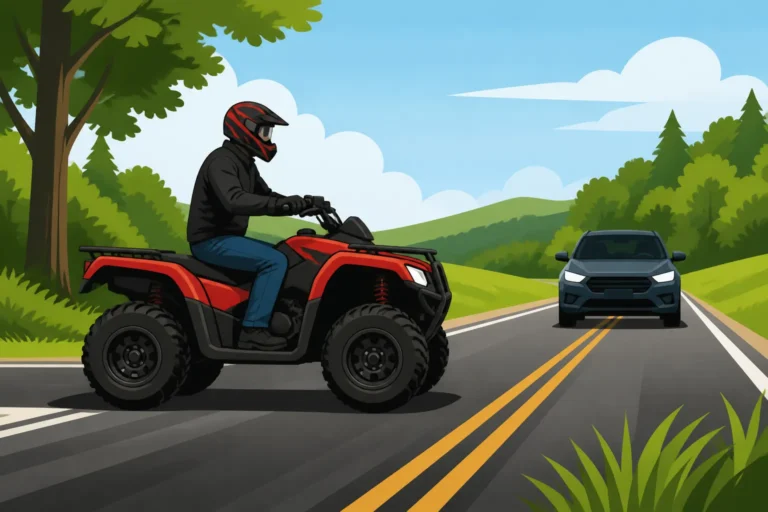
The definition of "accompanied by" often raises questions. It doesn't mean the adult is following a mile behind in a pickup truck. The supervising adult must be riding an ATV or UTV and be in a position to immediately intervene or assist the young rider. This usually means riding either directly in front of or behind the youth, maintaining a safe but close distance that allows for constant observation and communication.
The goal is that the supervising adult can see and hear the young rider at all times, and the young rider can easily communicate with their supervisor. On a busy road route, this proximity becomes even more vital, as the adult can help anticipate hazards, signal turns, or provide verbal cues to the younger rider. The law aims to create a safe convoy, not just a casual presence. In practice, this means the adult needs to be prepared to ride at the youth's pace and skill level, ensuring the entire group maintains a cohesive and safe presence on the route. More context can be found in discussions around [Riding With a Parent-Approved Adult].
Required Gear and Machine Compliance for Youth Riders
Beyond the rider's age and certification, the ATV itself must be properly equipped and the rider must wear appropriate safety gear. These requirements are not just good ideas; they are legally enforced for youth riders on Wisconsin road routes. Ignoring them can lead to citations and, more importantly, put your child at undue risk.
Helmet and Eye Protection Standards for Under 18
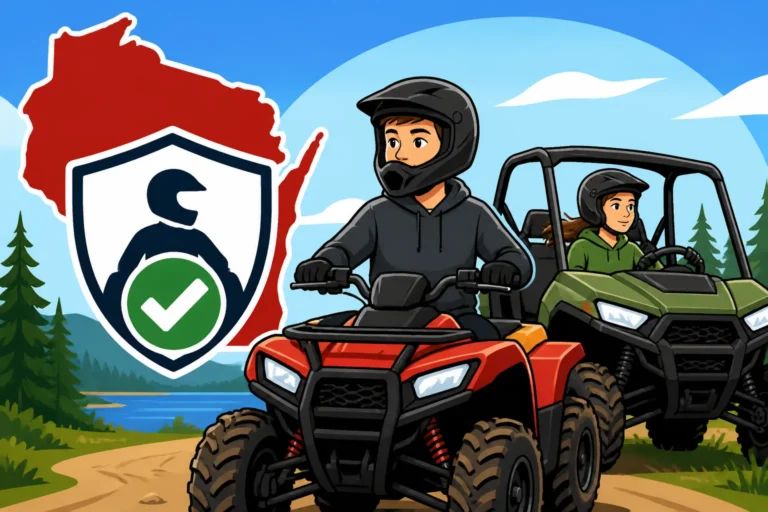
Wisconsin law is clear: any person under the age of 18 operating or riding as a passenger on an ATV or UTV on a public road route must wear a U.S. DOT-approved helmet. This is a non-negotiable safety measure. This isn't just any helmet; it needs to meet Department of Transportation standards, ensuring it provides adequate protection in the event of an impact. Bicycle helmets or other non-DOT approved headgear are not sufficient and will not meet the legal requirement.
In addition to a helmet, eye protection is also mandatory for all ATV and UTV riders in Wisconsin, regardless of age, when not in an enclosed cab. For young riders, this is especially important to protect their eyes from dust, debris, insects, and branches, which can impair vision and cause accidents. Whether it's goggles or a full-face shield on their helmet, clear vision is critical for safe riding. Make sure to check out [Wisconsin Helmet Rules for Riders Under 18] for more details on these specific regulations.
Ensuring Your ATV Meets Route Lighting and Sound Rules
When riding on public road routes, an ATV effectively becomes a small vehicle sharing the road with others. This means it must meet specific equipment requirements designed for visibility and public safety. Your child's ATV must have at least one headlight and one taillight, both operational, whenever riding on a road route. If riding between sunset and sunrise, or at any time when visibility is limited, these lights must be illuminated. Many riders look to trusted brands like SuperATV for aftermarket lighting solutions that meet state requirements, ensuring their young rider's machine is visible and compliant.
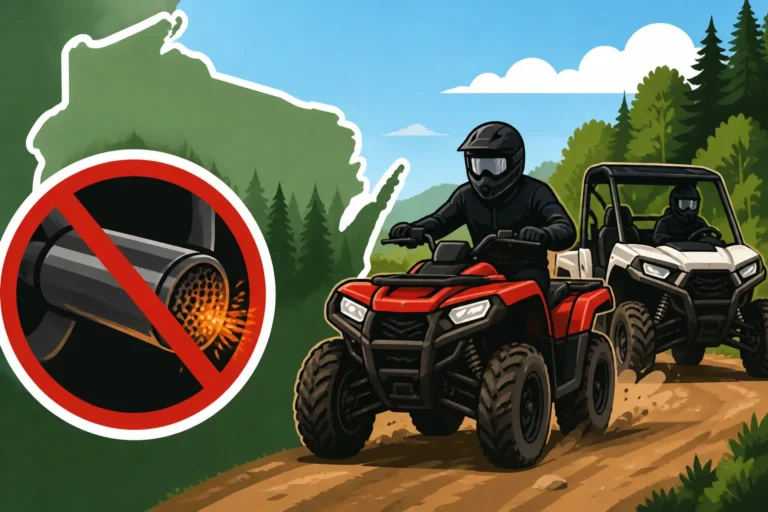
Additionally, ATVs on road routes are subject to sound limits. Wisconsin law sets a 96-decibel limit, which is measured at 20 inches from the exhaust outlet. While most stock ATVs meet this requirement, if your machine has an aftermarket exhaust, it's crucial to ensure it's still compliant. Loud machines can disturb residents and attract unwanted attention from law enforcement. Learn more about general lighting requirements in [Lighting Rules for Wisconsin Night Riding].
Essential Machine Accessories for Safety on the Road
Beyond the basics, there are several accessories that, while not always legally mandated, are highly recommended for enhancing safety on road routes, especially for younger riders. Proper mirrors are crucial for the rider to see traffic approaching from behind or to the sides, something they might not be accustomed to doing on private trails. Consider durable, easy-to-adjust mirrors, perhaps from a brand known for quality like SuperATV. A working horn is also essential for signaling intentions or alerting others to your presence.
A visible flag or whip can also be beneficial, especially if the young rider's machine is smaller and might be obscured by taller vehicles or terrain features. Reflective tape on the machine or the rider's gear can significantly increase visibility, particularly during dawn, dusk, or overcast conditions. Outfitting the machine with these types of enhancements, and ensuring they are regularly maintained, adds an extra layer of protection for your child.
Navigating Local Road Route Ordinances and What to Expect
While Wisconsin has statewide ATV laws, a significant portion of the road route rules are determined at the local level by individual towns, villages, and counties. This means that the rules can vary from one municipality to the next, adding another layer of complexity for riders. Understanding these local ordinances is just as important as knowing the state laws.
How Municipalities Can Add Layers of Rules
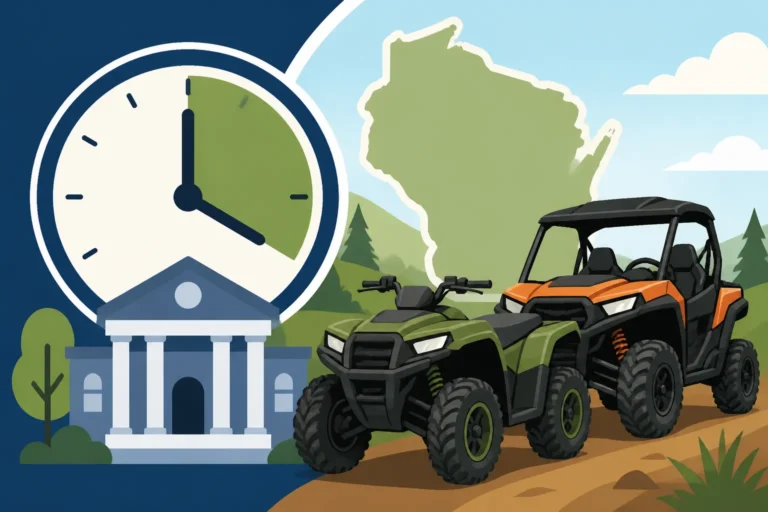
Local governments have the authority to establish or close ATV road routes within their jurisdiction. When they do, they can also impose additional restrictions beyond state law. These might include specific hours of operation for the routes, speed limits that are lower than the posted road speed, or even municipal insurance requirements. For example, some towns might allow ATVs on certain roads only between 7 AM and 9 PM, while others might have different hours.
It's absolutely critical to research the local ordinances of any area where you plan to ride. What's legal in one town might be a violation just across the county line. This means doing your homework before you hit the trail, checking municipal websites, or contacting local law enforcement or the DNR. A good place to start understanding this variability is [Municipal Ordinances Wisconsin Riders Must Read]. Never assume that if you can ride on a route in one town, you can ride under the same rules in the next.
Understanding Route Signage and Hours of Operation
Whenever a road is designated as an ATV route, it must be clearly marked with official signage. These signs indicate that ATV use is permitted and may also specify any local restrictions, such as hours of operation or special conditions. It's the rider's responsibility to understand and obey all posted signage. For a young rider, this means teaching them to actively look for and interpret these signs, not just follow the leader.
The hours of operation are particularly important. Riding outside of the designated hours, even if it's just by a few minutes, can result in a citation. These hours are often established to minimize noise impacts on residential areas or to align with periods of lower traffic volume. A quick way to get into trouble is to ride past the established closing time, especially if your group is loud or numerous. Always keep an eye on the clock and the posted signs.
Table: Wisconsin ATV Road Route Rules for Riders Aged 12-15 At a Glance
| Requirement | ATV (12-15 yrs) on Route | UTV (12-15 yrs) on Route | Notes |
|---|---|---|---|
| ATV Safety Certificate | Required | N/A (age restriction) | For riders born Jan 1, 1988 or after |
| Minimum Age | 12 | 16 (for UTV) | 16+ AND valid driver's license for UTV on routes |
| Supervision by Adult (18+) | Required | N/A (age restriction) | Adult must be parent/guardian or designated by them, riding with youth |
| DOT-Approved Helmet (<18) | Required | Required | Mandatory for operators and passengers under 18 |
| Eye Protection | Required | Required | Unless in enclosed cab |
| Headlights & Taillights | Required | Required | Must be on when riding on route |
| Sound Limit (96 dB) | Required | Required | Applies to all machines on routes |
| Local Ordinances | Adhere to all | Adhere to all | Can include hours, speed limits, insurance, etc. |
| Road Route Signage | Obey all | Obey all | Indicates permitted use and local restrictions |
Staying Safe and Avoiding Penalties
The ultimate goal of all these rules and regulations isn't to make riding less fun; it's to ensure everyone's safety and to preserve access to these routes for future enjoyment. Educating your young rider and consistently modeling responsible behavior are your best tools for achieving this.
The Importance of Responsible Riding Habits
Beyond simply following the letter of the law, instilling a strong sense of responsible riding habits in your 12- to 15-year-old is paramount. This means riding defensively, always assuming other motorists don't see you, and maintaining appropriate speeds for the conditions and the environment. Road routes are shared spaces, and that means respecting other users, whether they are in a car, on a bicycle, or walking.
Teaching your child to signal turns, ride single file, and yield to oncoming traffic are fundamental lessons that apply just as much to an ATV on a road route as they do to a car on a highway. Avoiding sudden movements, excessive noise, or reckless behavior not only keeps them safe but also contributes to a positive public perception of ATV riders, which is essential for maintaining route access. For general information about what a warden might look for, consider [What a Wisconsin Warden Asks a Rider For].
What Happens if Rules Are Broken
The penalties for violating Wisconsin's ATV road route rules can range from fines to the loss of riding privileges. For a young rider, these consequences can be particularly impactful. An unregistered ATV, riding without proper supervision, or operating a UTV underage on a route can all lead to citations and financial penalties. Beyond the immediate legal repercussions, a violation can also damage the trust placed in young riders and potentially lead to further restrictions on future riding opportunities.
It's also important to remember that wardens and local law enforcement actively patrol these routes, especially in popular riding areas. They are well-versed in the regulations and are there to ensure compliance for everyone's safety. Ignorance of the law is rarely an excuse, so being proactive in understanding and following the rules is the best defense against receiving a ticket. Understanding [Wisconsin Fines for Illegal Road Riding] can give you a better idea of the potential consequences.
Preparing for Warden Interactions
Even when you're doing everything right, there's always a chance you might encounter a Wisconsin DNR warden or local law enforcement on a road route. Preparing your young rider for this possibility can help ensure a smooth and respectful interaction. Teach them to pull over safely, turn off their engine, and keep their hands visible.
They should know that the warden will likely ask for their ATV safety certificate, proof of registration (for the machine they are operating), and their identification. The supervising adult should also be prepared to present their identification and confirm their relationship to the young rider. Being polite, cooperative, and having all necessary paperwork readily accessible can make these interactions quick and painless, allowing you to get back to enjoying your ride.
Disclaimer
This article is for general informational purposes only and does not constitute professional advice. Laws, prices and regulations vary by location and change over time. Consult a qualified professional for guidance on your specific situation.