Using a Side-by-Side for Farm Work on a Route
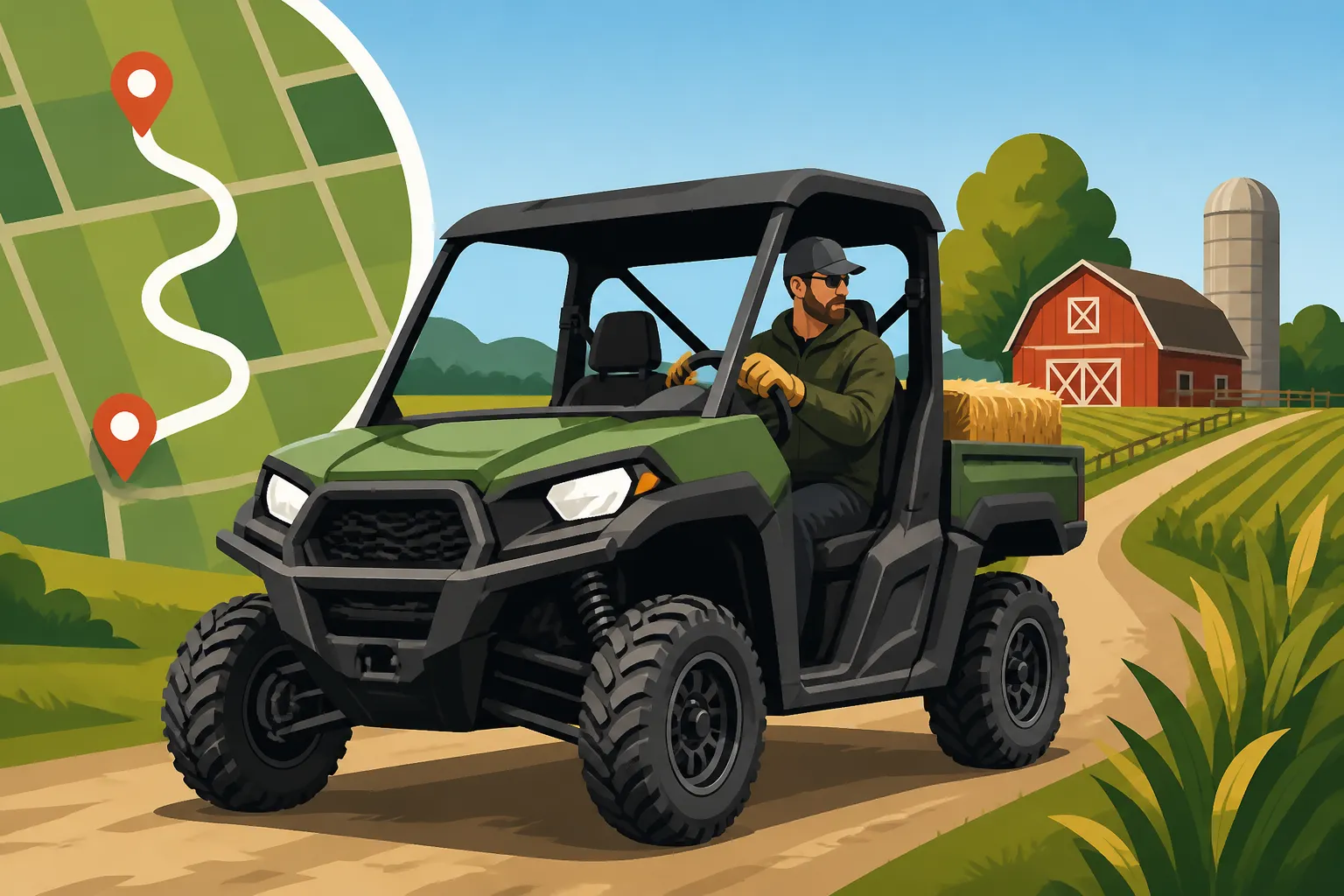
It’s a scenario played out on farms across Wisconsin every single day: you’ve got fields or outbuildings on different sides of a town road, or you need to run into the co-op for a quick part. Your side-by-side is the perfect tool for the job, built for hauling and nimble enough to navigate barnyards. But a nagging question always pops up: can you actually use your UTV on that public road for farm work without breaking the law? This guide is here to untangle Wisconsin’s rules for using your side-by-side for legitimate agricultural purposes on public routes, helping you stay compliant and efficient.
Understanding Wisconsin's Agricultural Exemptions for UTVs
Wisconsin recognizes that utility terrain vehicles (UTVs), or side-by-sides, are incredibly valuable tools for agricultural operations. They're often seen as modern-day workhorses, capable of tasks that once required a tractor or pickup truck. However, simply using your UTV on a farm doesn't automatically grant it free rein on every public road. There are specific guidelines and, yes, some hoops to jump through, to ensure you're operating legally when your farm work takes you onto a public route. It’s all about understanding the intent and the specific allowances.
What Qualifies as "Farm Work" in Wisconsin?
First and foremost, it’s crucial to understand what the state considers "farm work" or "agricultural purposes" when it comes to UTV use on public roads. This isn't just a casual drive down the road while wearing your work boots; it refers to direct activities essential to the operation of a farm. Think about it: a farmer needs to check on livestock grazing in a distant pasture, or perhaps transport tools and feed to a field that's across a township road. These are the kinds of tasks that fit the bill.
Examples of legitimate farm work might include hauling small equipment like fence posts, moving feed or water to animals, scouting fields for crop conditions, or transporting personnel between different parcels of land owned or operated by the farm. It’s about the direct support of agricultural production, maintenance, or management. This clearly distinguishes it from purely recreational use, even if that recreational ride is taking place on rural roads. The moment your side-by-side rolls onto a public route, its purpose for being there becomes critical to its legal standing.
The intention behind your UTV’s movement on a public route is key. Are you driving it to the local bait shop, or are you moving irrigation parts from the shop to the back forty? One is recreational, the other is agricultural. Wisconsin law attempts to create a distinction that acknowledges the practical needs of farmers without opening up all roads to general UTV use. For some machines, like a dedicated utility side-by-side, it’s clear, but for a crossover model, the specific use on that particular trip dictates its status.
The Specifics of Wisconsin's Exemptions
Wisconsin law does provide certain exemptions for UTVs used for agricultural purposes, but these are not absolute. The general rule is that if you're operating your UTV on public routes, even for farm work, it often still needs to be registered. However, there are nuances. For instance, a UTV used exclusively for agricultural purposes on land owned or leased by the operator generally doesn't need public use registration unless it crosses public rights-of-way for short distances between fields. But if it's going down a public route, even for a short haul, the waters get murkier.
The exemptions often hinge on whether the UTV is primarily an "implement of husbandry" or if it falls under the general definition of an "all-terrain vehicle" or "utility terrain vehicle" when on public ways. An implement of husbandry is typically a farm vehicle specifically designed and used for agricultural operations. Some UTVs, especially those purpose-built for farm tasks, might lean into this definition, potentially offering more leeway in certain situations. However, most side-by-sides, even those with significant hauling capabilities, are generally still classified as UTVs requiring registration if used on designated public routes. This is a common point of confusion for many farmers.
Essentially, while Wisconsin provides some flexibility for [Wisconsin Exemptions for Farm Machines] and [Rules for a Work Machine], it's not a free pass. If your side-by-side regularly travels on town roads, county roads, or state highways (where permitted) for farm-related tasks, you will likely need to ensure it has the proper [Registering an ATV in Wisconsin] or UTV registration. The spirit of these rules is to allow necessary farm operations to continue while still maintaining order and safety on public roadways, which means meeting fundamental requirements.
Navigating Wisconsin Road Routes with a Farm UTV
When your farm work requires you to move your side-by-side onto a public road, understanding how to navigate these routes legally and safely is paramount. It’s not simply a matter of having a UTV that can do the job; it’s about knowing the rules that govern its operation on shared public spaces. Ignoring these details can lead to fines, safety hazards, and frustration.
Local Ordinances and Designated Routes
A common misconception is that if you’re a farmer, you can just use your UTV on any local road for farm work. This is not universally true. Wisconsin law allows towns, cities, and counties to open their roads to ATVs and UTVs, creating designated "routes." Even for agricultural use, these routes are often the only public roads you can legally traverse. This means a road isn't automatically open to your UTV simply because it’s a rural road or because you’re doing farm work. You still have to abide by the local decisions.
It’s crucial to check the specific [Municipal Ordinances Wisconsin Riders Must Read] for your township or county. What’s allowed in one municipality might be prohibited just across the road in another. These ordinances often dictate which roads are open, what hours they can be used, and any specific safety requirements beyond state law. For a farmer, this means knowing the local lay of the land, not just in terms of fields but in terms of legal UTV access. Don't assume; always verify.
This local control can be particularly frustrating for farmers whose land parcels might span different municipal boundaries. One part of your operation might be fine taking the side-by-side down the road, while another section, only a mile away but in a different township, prohibits it. It requires careful planning and a thorough understanding of the local rules. The convenience of a side-by-side for farm tasks can quickly turn into a headache if you’re caught on a closed route, even if your intentions are purely agricultural.
Equipment Requirements for Road Use
Whether you’re using your side-by-side for recreation or for farm work on a designated public route, safety equipment is non-negotiable. Wisconsin law requires UTVs operating on public routes to meet certain equipment standards to ensure visibility and safe operation. This isn't just a suggestion; it’s a legal mandate designed to protect you and other road users. Meeting these requirements helps keep everyone safe.
You'll need working headlights and taillights, especially if you're operating during dawn, dusk, or nighttime hours. Brake lights are also essential. Mirrors, typically at least one rearview mirror, are required to give the operator a clear view of traffic behind them. Additionally, a "slow-moving vehicle" (SMV) emblem must be displayed prominently on the rear of the UTV if it's traveling at speeds typically slower than surrounding traffic. This bright orange triangle alerts faster-moving vehicles to your presence, which is especially important for farm machinery. Many UTVs, especially those designed for utility, come equipped with some of these features, but others may need aftermarket additions. Companies like SuperATV offer a wide range of accessories, from turn signal kits to mirrors, that can help bring your farm UTV up to snuff for road legal requirements.
| Equipment Requirement | Description | Importance |
|---|---|---|
| Headlights | White, visible from at least 500 feet | Crucial for visibility to others, especially at night or in low light |
| Taillights | Red, visible from at least 500 feet | Signals your presence from the rear |
| Brake Lights | Red, illuminates when brakes are applied | Warns following vehicles of deceleration |
| Rearview Mirror | At least one, providing a clear view of the rear | Essential for awareness of traffic behind you |
| Slow-Moving Vehicle (SMV) Emblem | Fluorescent orange triangle on the rear for vehicles traveling less than 25 mph | Highly visible warning to faster traffic that you are moving slowly |
| Fenders | Covers over tires to prevent debris throw (often standard) | Reduces spray and debris onto other vehicles and riders |
These aren't just recommendations; they are vital safety features that can prevent accidents. Even if you're just moving your UTV a short distance on a route for farm work, these requirements apply. Ensuring your machine is properly equipped is a critical step in responsible and legal operation on Wisconsin's public roads.
Common Pitfalls and Best Practices for Farmers
Using a side-by-side for farm work on public routes comes with a unique set of challenges and responsibilities. While the convenience is undeniable, navigating the legal landscape and ensuring safety requires attention to detail. Many farmers fall into common traps, often due to unfamiliarity with specific regulations or assuming that "it's just a farm machine." Avoiding these pitfalls means being proactive and informed.
Insurance, Licensing, and Age Restrictions
One of the most significant areas where farmers can face issues is with insurance coverage. Many assume their existing farm or homeowners insurance policy automatically covers their UTV when it's used on public roads, even for farm work. This is often not the case. While a [Does a Homeowners Policy Cover a Wisconsin Quad?] for incidental use on your own property might be true, once you venture onto public routes, even for legitimate farm tasks, you typically need specific ATV/UTV insurance that provides liability and possibly collision coverage for road use. An accident on a public route without proper coverage can be financially devastating.
Driver’s licensing is another key factor. If you're operating your side-by-side on a public road or designated route, even for farm work, you generally need a valid driver’s license. This isn't just for pleasure riding; it's a requirement for operating a motorized vehicle on public ways. Furthermore, age restrictions apply. While children often help out on farms, allowing a youth to operate a UTV on a public route, even for agricultural purposes, is likely subject to the same age and safety certification rules as recreational riders. A 12-year-old might be skilled on the farm, but they cannot legally drive a UTV on a public route. This is a crucial distinction that many farm families overlook, risking citations and serious liability.
Staying Compliant and Safe
Beyond the legal requirements, operating a UTV for farm work on public routes demands common sense and an emphasis on safety. One major concern is unintentional trespass. Just because a road is open to UTVs doesn't mean the land immediately adjacent to it is fair game. Farmers often need to access fields from a route, but ensure you are on your own property or have explicit permission to cross private land. [Wisconsin Trespass Law for Riders] applies just as much to a UTV farmer as it does to a recreational rider. Respecting property boundaries is fundamental to maintaining good relationships with neighbors and avoiding legal trouble.
Maintaining appropriate speeds and being acutely aware of your surroundings are also critical. Designated routes often have [Speed Limits on a Wisconsin Route], and even if your UTV is capable of higher speeds, exercising caution, especially when hauling a load or moving between fields, is vital. Remember, you're sharing the road with cars, trucks, and potentially other larger farm equipment. Defensive driving, making eye contact with other drivers, and using appropriate hand signals can prevent accidents. Never assume other drivers see you, especially if your UTV is smaller than typical road vehicles.
Finally, always carry the necessary documentation. This includes your UTV registration card, proof of insurance, and your driver's license. If you are stopped by law enforcement, having these documents readily available can make the encounter smoother and quicker. [Keeping the Registration Card With the Machine] is not just good practice; it’s often a legal requirement. Being prepared and operating your UTV as safely and compliantly as possible ensures that your valuable farm tool remains an asset, not a liability, when used on public roads.
Registration Nuances for Agricultural UTVs in Wisconsin
The question of registration for a side-by-side used primarily for farm work, especially when it touches public routes, can be a real head-scratcher. Many farmers logically assume that if it's a "work machine," it must be exempt from all the recreational rules. While Wisconsin law does provide some specific considerations for agricultural machines, it's not a blanket exemption from registration if your UTV ever leaves your private property and enters a public right-of-way. It’s important to clarify when, and why, your farm UTV might still need to be registered.
When is Registration Still Required?
The core principle in Wisconsin is that if your UTV is operated on public land or routes, it generally needs to be registered. This holds true even if its primary purpose is agricultural. The distinction lies in where it's being used. If your side-by-side lives entirely on your farm, never venturing beyond your property lines, then it likely falls under the category of [Registering a Machine That Never Leaves Your Land] and wouldn't require a public use registration. However, the moment you use that UTV to traverse a town road to get to an adjacent field, or drive it down a county route to reach another parcel, you are engaging with public infrastructure.
In these scenarios, the UTV is no longer solely a private farm implement; it is now operating as a vehicle on a public right-of-way. Therefore, it typically requires a valid public use registration from the Wisconsin DNR. This ensures that the machine is identified and that its operation contributes to the state's trail and route maintenance funds. While the machine's purpose is farm work, its location of operation dictates the registration requirement. This can be frustrating for farmers who view their UTV as simply another piece of field equipment, but it's how Wisconsin manages motorized vehicle use on public land. The DNR has excellent resources that explain [Wisconsin DNR ATV Registration Explained] in detail.
Think of it this way: your tractor might not need registration if it's only used in the fields. But if you drive that tractor down a public highway, it typically needs to meet specific road-use requirements, including certain lighting and potentially slow-moving vehicle signage. The same logic applies to UTVs. While some very specific, narrow exemptions exist for certain implements of husbandry crossing roads, most side-by-sides, even those heavily used on the farm, will need a public use registration if they consistently travel on designated public routes. Understanding [Public Use Versus Private Use in Wisconsin] is key here.
Wisconsin's Agricultural Route Exemptions and Limitations
While general registration rules apply, Wisconsin law does contain specific provisions that offer some flexibility for agricultural operations regarding ATVs and UTVs. These are often found under statutes related to "implements of husbandry" or vehicles used exclusively for agricultural operations. The aim is to allow farmers to efficiently manage their land without undue bureaucratic burden, while still ensuring safety and accountability on public routes. However, these exemptions are usually quite specific and not open-ended.
For example, a UTV may be exempt from certain road restrictions if it is being used "exclusively in agricultural operations" and is traveling between two fields on the same farm, provided the distance is minimal and directly related to farm work. However, this isn't a license to drive for miles down a state highway. There are typically limitations on the distance you can travel under such an exemption, and it's almost always restricted to local roads that have been designated as routes. This means you can't just hop on any road you choose, regardless of the agricultural purpose.
Moreover, even with an agricultural exemption, your UTV will still need to meet basic safety requirements like lights and an SMV emblem, as discussed earlier. These are universal safety standards for any slower-moving vehicle on a public road. Some UTVs are incredibly versatile, and upgrades from companies like SuperATV can enhance their utility, making them even more capable for farm tasks, but these upgrades don't inherently exempt them from road rules. If your UTV primarily serves your farm but might occasionally need to use public roads, you’ll likely still need a [Wisconsin Private Use Registration Fee] or a public use registration, depending on the extent and nature of that public road use. Always check the specific statute (Wisconsin Statute 23.33) and local ordinances to confirm what applies to your unique situation, as the interpretation can vary.
Disclaimer
This article is for general informational purposes only and does not constitute professional advice. Laws, prices and regulations vary by location and change over time. Consult a qualified professional for guidance on your specific situation.