What a Wisconsin ATV Route Actually Is
There's a common misconception among ATV and UTV enthusiasts that all public riding in Wisconsin happens on dedicated, often rugged, trails. However, many riders quickly discover a vast network of "ATV routes" crisscrossing the state, leading to questions and sometimes frustrations about what these routes actually are, how they differ from trails, and what rules apply. This guide will fully unpack the concept of a Wisconsin ATV route, helping you understand their purpose, the regulations that govern them, and how you can confidently navigate them.
Demystifying the Wisconsin ATV Route Definition
When you hear "ATV route" in Wisconsin, it's easy to picture a rough, wooded path through the wilderness. But that's usually not the case at all. A Wisconsin ATV route is a designated segment of a public road, often a town or county road, that has been opened for use by all-terrain vehicles and utility terrain vehicles. It's a fundamental distinction that every rider needs to grasp before they head out.
More Than Just a Trail
Think of an ATV route not as a destination in itself, but as a connector. Dedicated ATV trails, like those you'd find in the Chequamegon-Nicolet National Forest or many county forests, are purpose-built for off-road machines. They often feature natural obstacles, varying terrain, and are designed for recreational riding away from traditional traffic. Routes, on the other hand, are existing paved or gravel public roads where local municipalities have voted to allow ATV/UTV traffic. They serve a crucial role in linking these dedicated trail systems, allowing riders to access towns for fuel, food, lodging, and other services. This can feel a little counterintuitive at first if you're used to strictly off-road riding, but it's the backbone of much of Wisconsin's interconnected riding experience.
Many riders come to Wisconsin expecting purely dirt or gravel trails, only to find themselves on paved roads in town. This can be jarring, especially if they haven't prepared for the different rules and etiquette required for road riding. It’s not just about what your machine can handle, but what the law permits and expects of you when sharing the road with cars, trucks, and even bicycles. Understanding this difference is key to a smooth and legal ride. For an even deeper dive into the common pitfalls, check out [Wisconsin Road Route Rules Riders Get Wrong].
The Legal Framework and Local Control
The designation of an ATV route isn't a statewide blanket rule. Instead, it's a highly localized process driven by municipal ordinances. Wisconsin law allows towns, villages, and cities to pass ordinances opening specific portions of their roads for ATV/UTV use. This means that what's legal in one township might be strictly prohibited just across the county line or even in the next municipality. The Wisconsin Department of Natural Resources (DNR) provides guidelines and signage standards, but the power to open, close, or set specific operating hours for routes rests firmly with local government.
This localized control is a double-edged sword. On one hand, it allows communities to tailor routes to their specific needs and concerns, integrating them into their local economies. On the other, it demands that riders pay close attention to local signage and ordinances. You can't assume that because you're on a route now, the next section of road is also open. Always look for the specific signage indicating an ATV route. This granular level of control means that proper planning and checking local regulations before your ride are absolutely essential to avoid fines or other issues.
Types of Roads Designated as ATV Routes
Wisconsin’s network of ATV routes utilizes various types of public roads, each with its own process for designation and often, specific nuances for riders. Knowing the difference helps in understanding where you can ride and why.
Town Roads and Their Opening Process
The most common type of ATV route you'll encounter in Wisconsin is on a town road. These are local roads maintained by the township, often unpaved or lightly paved, connecting homes and businesses within the town's boundaries. The process for opening a town road as an ATV route typically involves the town board holding public meetings, discussing local concerns, and then passing an official ordinance. This ordinance will specify exactly which roads or segments of roads are open, along with any specific rules like hours of operation or speed limits beyond the statewide default.
Once the ordinance is passed, the town works with local ATV clubs or the DNR to install proper signage. This process reflects the community's decision to embrace ATV/UTV tourism and provide connectivity for riders. For many towns in northern Wisconsin, particularly those that are popular tourist destinations, opening routes has become a vital way to support local businesses. They want riders to be able to access their restaurants, gas stations, and shops directly from the trail system. You can learn more about this specific process by reading [How a Wisconsin Town Opens an ATV Route].
County Roads and Shared Responsibility
County roads, which are generally more heavily traveled and often connect different towns and villages, can also be designated as ATV routes. The process here is often a bit more complex, requiring approval from the county board in addition to, or sometimes in coordination with, the individual town boards through which the county road passes. Because county roads often have higher speed limits and more traffic, the decisions to open them for ATV/UTV use are usually weighed very carefully.
When you're riding on a county road that's designated as an ATV route, it's paramount to be extra vigilant. These roads tend to have more car traffic, wider shoulders, and often higher speed limits for other vehicles, even if ATVs are restricted to a lower speed. Riding responsibly and courteously is not just a suggestion; it's a necessity for rider safety and for maintaining positive relationships with local residents and other road users. This shared responsibility makes it critical for riders to understand the implications of using these more substantial roadways.
The Uncommon Case of State Highways
While most ATV routes are found on town and county roads, the topic of state highways often comes up. It’s important to clarify that state highways are generally not open for ATV/UTV use in Wisconsin. There are extremely limited exceptions, usually for crossing at a designated intersection, or for short stretches where a local municipality has received specific approval from the Wisconsin Department of Transportation (DOT) to open a very short segment to bridge a gap in the trail system. Even in these rare cases, the rules are very strict, and riders should never assume a state highway is open unless explicitly signed.
Attempting to ride an ATV or UTV on a state highway without clear, legal designation can lead to significant fines and penalties. These roads are designed for high-speed vehicular traffic, and ATVs and UTVs simply aren't built for that environment, making it extremely dangerous. Always refer to your map and signage. If in doubt, stay off state highways. For further details on these limitations, consult [Wisconsin Rules on State Highways].
Signage, Speed Limits, and Operational Rules
Navigating Wisconsin's ATV routes requires more than just knowing where they are on a map; it demands an understanding of the specific rules that apply to their use. The signage you encounter, the speed limits you adhere to, and the local hours of operation are all crucial elements of a legal and enjoyable ride.
Decoding Route Signage
One of the most important aspects of riding an ATV route in Wisconsin is being able to interpret the signage. You'll typically see square or rectangular signs, often green or brown, clearly marked "ALL-TERRAIN VEHICLE ROUTE" or a similar phrase, sometimes with an arrow indicating the direction. These signs are your primary confirmation that you are indeed on a legally designated route. Without these signs, even if you see tire tracks, assume the road is not open to ATVs. The DNR sets standards for these signs to ensure consistency, but local variations in appearance or supplementary information might exist.
Beyond the main route signs, you might also encounter regulatory signs dictating speed limits, times of operation, or special local conditions. Some signs might warn of specific hazards like "rough road" or "shared road." It's essential to not only spot these signs but to read and heed them. They are there for your safety and to ensure harmony with other road users and residents. Ignoring signage is not just illegal; it can put you and others at risk. To understand the visual cues better, look into [Route Signage Standards in Wisconsin].
Navigating Speed Limits and Road Etiquette
When you're on a Wisconsin ATV route, you are sharing the road with cars, trucks, bicycles, and pedestrians. This means a completely different dynamic than being on a dedicated trail. The statewide default speed limit for ATVs on designated routes is generally 35 mph, but local ordinances can, and often do, set lower limits, especially in more populated areas or near residential zones. Always be on the lookout for posted speed limits specific to ATVs or UTVs, and remember that even if the speed limit for cars is higher, your machine's limit might be different.
Road etiquette is also critical. Stay to the right side of the road, just as any other vehicle would. Be mindful of dust, especially on gravel roads, and slow down when passing homes, driveways, or other road users. Use appropriate hand signals for turns if your machine isn't equipped with turn signals, and always yield to larger vehicles. The goal is to be a good ambassador for the sport, ensuring that local communities continue to welcome ATV/UTV traffic. Think about it: a responsible rider benefits everyone who rides after them.
Hours of Operation and Other Local Ordinances
Unlike dedicated trails, which are often open from dawn to dusk or for 24 hours, many Wisconsin ATV routes have specific hours of operation set by local ordinance. It's not uncommon to find routes that are closed between certain evening and morning hours, or even on specific days of the week. These restrictions are usually put in place to address noise concerns from local residents. Always check local ordinances or posted signage for these specific times. Riding outside of these hours can result in fines and contributes to negative perceptions of ATV riders.
Beyond hours, some municipalities may have other unique local ordinances. These might include rules about parking your machine, noise levels beyond the state 96-decibel limit, or even additional insurance requirements. It's truly a patchwork, which again highlights the importance of checking with the local municipality or looking for detailed signage. While this can seem like a lot to remember, a quick check of the county or town's official website before you head out can save you a lot of hassle. For more details on this topic, refer to [Municipal Hours of Operation for ATVs].
Rider Responsibilities and Equipment Considerations
Riding an ATV or UTV on a designated Wisconsin route comes with a distinct set of responsibilities, both for the operator and for the machine itself. These rules are in place to ensure safety, minimize environmental impact, and maintain harmonious relationships with other road users and local communities.
Essential Gear and Machine Requirements
When riding on public roads, your ATV or UTV must be equipped to meet certain safety standards, similar to other motor vehicles. This includes having working headlights and taillights for visibility, especially if riding around dusk or at night. A functional spark arrester is also required to prevent wildfires, a standard piece of equipment on most modern machines. Beyond the basics, ensuring your tires are in good condition for varying surfaces, from pavement to gravel, is crucial. While pure mud tires might be great on trails, they can wear quickly and handle poorly on paved roads.
Many riders invest in aftermarket accessories to enhance their machine's performance and safety on routes. For instance, companies like SuperATV offer a range of products from full cab enclosures for winter riding to windshields that provide protection from debris, which can be particularly useful on dusty gravel roads or when encountering oncoming traffic. Upgraded lighting or even turn signal kits (if not factory equipped) can also significantly improve your visibility to others, which is paramount when sharing the road. Always ensure any modifications comply with state and local regulations, as some aftermarket parts may not be street-legal in all contexts.
Insurance, Registration, and Safety Certification
Operating an ATV or UTV on a Wisconsin route requires proper registration, and depending on your birthdate, an ATV safety certificate. All machines operating on public routes must be properly registered with the Wisconsin DNR. This includes both public use registrations, which are most common for those using trails and routes, and private use registrations if you're only riding on your own land and occasionally crossing a route. Don't forget that if you're an out-of-state rider, you'll need a [Wisconsin Registration for an Out-of-State Machine] to legally ride on Wisconsin's public trails and routes.
While not universally mandated by state law for all ATV/UTV operation, some municipalities may have ordinances requiring operators on their routes to carry liability insurance. It's always a good idea to have insurance regardless, as accidents can happen. Many homeowner's policies offer limited coverage, but a dedicated ATV/UTV policy provides more comprehensive protection. As for safety certification, Wisconsin law requires anyone born on or after January 1, 1988, to possess an ATV or UTV safety certificate to operate on public lands, which includes designated routes. Ignoring these requirements can lead to fines and legal complications, so make sure all your paperwork is in order before you hit the road. For more on what insurance might cost, see [Wisconsin ATV Insurance Cost].
Understanding Passenger and Age Restrictions
The rules regarding passengers and operator age on Wisconsin ATV routes are specific and must be followed. Generally, an ATV or UTV can only carry as many passengers as it was designed for, meaning a single-rider ATV cannot legally carry a passenger on a public route. Side-by-sides (UTVs) are designed for multiple occupants and must have proper seating and restraints for all passengers. Children riding as passengers must be able to keep their feet on the floorboards or footrests and hold onto handholds.
Operator age restrictions are also important. For ATVs, a person must be at least 12 years old to operate an ATV on public routes and trails, and if they are between 12 and 15, they must be accompanied by a parent or guardian, or someone over 18 designated by a parent. For UTVs, the minimum age to operate on routes and trails is 16. Even if you're 16, if you were born on or after January 1, 1988, you still need that safety certificate. These rules are in place for the safety of young riders and other road users. Make sure you fully understand these age and supervision rules to avoid issues, especially when riding with younger family members. Detailed information for different age groups can be found in [Wisconsin Rules for a Rider Who Turns 16].
The Rider Experience on a Wisconsin ATV Route
Riding on an ATV route in Wisconsin offers a unique experience, blending the adventure of trail riding with the practicality of accessing local communities. It's a different rhythm than pure trail riding, requiring awareness and courtesy, but it opens up a vast, interconnected network for exploration.
Connecting Trails and Accessing Amenities
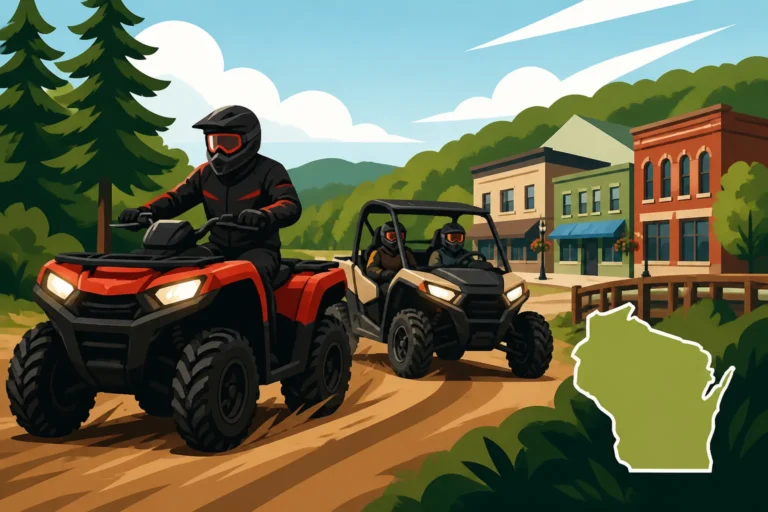
One of the greatest benefits of Wisconsin's ATV route system is its ability to seamlessly connect disparate trail systems. Imagine riding through miles of dense forest on a dedicated trail, only to smoothly transition onto a town road that leads you directly to a gas station for a fill-up, a restaurant for a warm meal, or a local motel for the night. This connectivity transforms what might be isolated trail segments into expansive, multi-day riding adventures. Towns that embrace ATV tourism often make it easy to ride right up to businesses, providing designated parking for machines.
This integration of routes into the local infrastructure is a huge draw for riders. It means you don't have to trailer your machine every time you need supplies or want to grab lunch. Instead, you can ride directly to where you need to go, enjoying the journey and experiencing the local flavor of Wisconsin's small towns. It also fosters a sense of community between riders and local residents, supporting small businesses that rely on tourism. Riding your machine right into town feels like an authentic part of the Northwoods experience. Explore this further in [Riding Into a Wisconsin Trail Town].
Different Riding Surfaces and Conditions
ATV routes in Wisconsin are not uniform in their surface or condition. You'll encounter everything from smooth asphalt to rough, washboard gravel roads, and sometimes even short stretches of dirt. The conditions can also change dramatically with weather. A gravel route that's perfectly smooth and dust-free after a rain can become a dusty, bumpy washboard on a dry, sunny day. Paved routes might have potholes or rough patches, just like any other road. It's important to be prepared for these variations and adjust your riding style accordingly.
The type of surface also influences how you operate your machine. On pavement, you'll notice less traction than on dirt or gravel, requiring smoother braking and acceleration. Gravel roads, while offering more traction, can kick up significant dust and present loose stones, demanding a watchful eye and a slower pace. Always be aware of your surroundings, anticipate changes in surface, and maintain a safe speed for the conditions. Remember, you're sharing these surfaces with other vehicles, so good visibility and control are paramount. For more on riding different road types, see [Riding a Gravel Road Into a Northwoods Town].
Respecting Communities and Private Property
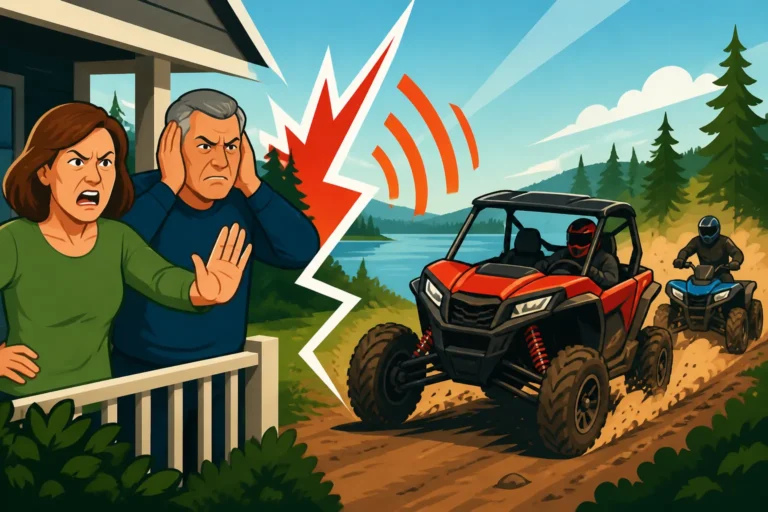
Riding on ATV routes means riding through populated areas, often past homes and businesses. This brings with it a significant responsibility to be a respectful and courteous rider. Noise is a major concern for many residents, so keeping your machine's exhaust within legal limits (96 decibels) and avoiding unnecessary revving is crucial. Minimizing dust when passing homes on gravel roads is also appreciated – slow down! Loud pipes and fast, dusty passes can quickly turn local support for ATV routes into opposition.
Furthermore, always be mindful of private property. ATV routes are on public roads, but the land immediately adjacent is often private. Never stray from the marked route onto private property unless you have explicit permission from the landowner. Trespassing can lead to legal issues and damages the reputation of all riders. By demonstrating respect for residents, property, and the environment, you help ensure that these valuable route connections remain open for everyone to enjoy. Being a responsible rider is about more than just following the law; it's about being a good neighbor and a good steward of the riding privilege. For important details, consult [Wisconsin Trespass Rules Along Routes].
| Route Type | Designation Process | Primary Use | Typical Speed Limit (ATV/UTV) | Shared With | Common Surface |
|---|---|---|---|---|---|
| Town Road | Local town board ordinance | Connecting trails, access to amenities | 35 mph (often lower) | Cars, trucks, bicycles, pedestrians | Gravel, paved |
| County Road | County board approval, local coordination | Longer connectors, access to larger towns | 35 mph (often lower) | Cars, trucks, bicycles, farm equipment | Paved, gravel |
| State Highway | Rare, specific DOT approval (crossings only) | Very limited, specific points of access/crossing | Varies by specific designation | High-speed vehicle traffic (caution advised) | Paved |
Disclaimer
This article is for general informational purposes only and does not constitute professional advice. Laws, prices and regulations vary by location and change over time. Consult a qualified professional for guidance on your specific situation.