Route Signage Standards in Wisconsin
Oh, the open road – or, in our case, the open route – in Wisconsin! It's one of the best feelings, isn't it? But let's be real, trying to figure out exactly where you can and can't ride your ATV or UTV can sometimes feel like trying to solve a riddle wrapped in an enigma. Many riders get frustrated, pulling up to what looks like a perfectly good road only to wonder if they're about to unwittingly break a rule because they didn't see the right sign, or worse, saw one they didn't understand. This guide is here to shed some light on the sometimes-confusing world of route signage standards in Wisconsin, helping you ride confidently and legally.
The Foundation of Wisconsin's ATV/UTV Route System
Navigating the vast network of ATV and UTV routes across Wisconsin is a fantastic way to experience our beautiful state, from the northern forests to the rolling hills. However, the success and safety of this system hinge entirely on clear, consistent communication between the authorities and the riders. That communication often comes in the form of signs. Without them, it would be pure chaos, and none of us want that when we're out enjoying a ride.
Why Signage is Crucial for Rider Safety and Compliance
Imagine driving a car on a road with no stop signs, no speed limits, and no directional arrows. It would be an absolute nightmare, right? The same principle applies, perhaps even more so, to ATV and UTV routes. These routes often share space with other vehicles, cross busy intersections, or have specific restrictions based on time of day or season. Proper signage is the first line of defense in preventing accidents, ensuring riders understand local rules, and protecting our access to these routes for years to come. It’s not just about telling you where to go; it's about making sure you get there safely and legally, without causing issues for other users or the communities that host us. Clear signs help avoid confrontations, reduce confusion, and ultimately make for a more enjoyable experience for everyone on the trail and route.
Who Sets the Standards: The Role of the Wisconsin DNR and Localities
So, who decides what signs go where, and what they mean? It's a collaborative effort, but primarily, the Wisconsin Department of Natural Resources (DNR) sets the overarching guidelines and standards for ATV and UTV route signage. They provide a framework and often mandate specific sign types, colors, and sizes to ensure a degree of uniformity across the state. However, it's crucial to remember that while the DNR sets the standards, the actual opening and managing of these routes falls to local municipalities – towns, villages, and counties.
This is where things can get a little nuanced. A town board votes to open a section of road as an ATV route, and they are then responsible for properly signing it according to DNR standards. This means while the type of sign might be consistent statewide, the presence of a sign can vary significantly from one jurisdiction to the next, depending on local ordinances and how proactively they manage their route system. This dual responsibility highlights why checking [Finding a Wisconsin Town's ATV Ordinance] is so important before you head out. Don't assume that because one town has a certain type of sign, the next town over will have exactly the same setup or identical rules.
Deciphering the Standard Route Signs You'll Encounter
When you hit the routes, you'll notice a range of signs, each serving a specific purpose. Understanding these common signs is key to a smooth and legal ride. They're not just decorations; they are directives that we, as responsible riders, need to obey. Ignoring them isn't just a risk to your safety, but also to your wallet and our continued riding privileges.
Essential Regulatory Signs: Stop, Yield, and Speed Limits
Just like driving a car, you'll encounter standard traffic control signs on ATV/UTV routes. These are non-negotiable and must be obeyed.
- Stop Signs: These are the classic red octagons you know. When you see one, you must come to a complete stop before the stop line, crosswalk, or intersection. Look both ways for traffic, pedestrians, and other riders before proceeding safely. No rolling stops!
- Yield Signs: The inverted red triangle means you must slow down and be prepared to stop if necessary to yield the right-of-way to other traffic or pedestrians. You don't necessarily have to stop if the way is clear, but your priority is to let others go first.
- Speed Limit Signs: These white rectangular signs with black lettering tell you the maximum legal speed. Remember, posted speeds are maximums, not minimums. Always ride at a speed appropriate for conditions, visibility, and traffic. On shared routes, especially in residential areas, this often means slowing down significantly. Many routes through towns will have limits as low as 10 or 15 mph to minimize noise and dust for residents.
These regulatory signs are typically identical to those used for vehicular traffic, leaving no room for misinterpretation. Understanding and respecting them is fundamental to being a safe and courteous rider on Wisconsin's road routes. Ignoring them can lead to citations, and more importantly, can put you and others at serious risk.
Directional and Informational Signs: Guiding Your Journey
Beyond the regulatory signs, you'll find signs designed to guide you along the route and provide specific information relevant to ATV/UTV use. These are often the green or brown signs that denote route entrances and exits.
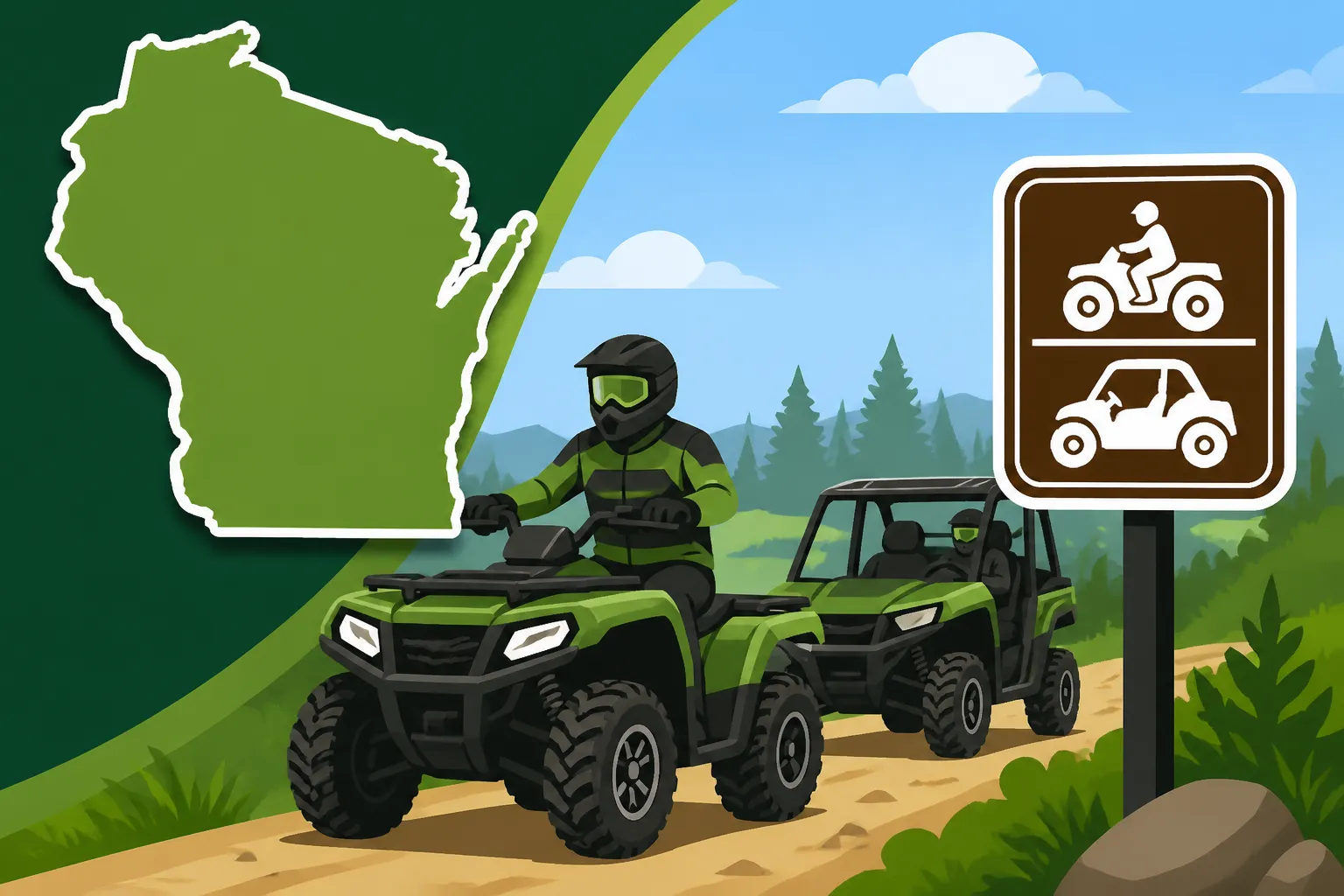
- Route Markers: These signs typically feature an ATV or UTV silhouette, sometimes with an arrow, indicating the direction of the open route. They often appear at intersections or turns where the route might otherwise be unclear. These are your breadcrumbs, leading you through the designated network.
- "ATV Route" or "UTV Route" Signs: Often green or blue with white lettering, these signs clearly designate a road or section of road as open for ATV/UTV use. You'll usually see them at the beginning of an officially designated route. They confirm you are on a legal path.
- Informational Panels: Sometimes, you'll encounter signs that provide additional details, such as "Routes Open Dawn to Dusk" or "Helmets Required Under 18." These are crucial for understanding specific local rules. Pay close attention to any supplementary text, as it could contain vital information unique to that area. The more specific a sign, the more it typically reflects a local ordinance passed by the municipality, which can be different from general state laws.
These signs are critical for finding your way and understanding specific local rules. While many towns follow similar guidelines, variations exist. For instance, some towns might have specific [Municipal Hours of Operation for ATVs] clearly posted, while others might operate under broader state guidelines. Always keep your eyes peeled for these helpful markers.
Understanding Route Endings and Transitions
One of the most common sources of confusion for riders is knowing exactly where an ATV or UTV route ends, or how it transitions into a trail or another type of riding area. It's not always a dramatic "STOP" sign for ATVs; sometimes it's a subtle change.
- "Route Ends" Signs: These are probably the most important signs for preventing accidental trespassing or illegal riding. When you see a sign that says "ATV Route Ends" or "UTV Route Ends," it means exactly that: your legal right to ride on that specific road or segment of road has concluded. From that point forward, you must either turn onto another designated route or trail, or trailer your machine. Continuing past this sign, even for a short distance, can result in a citation for illegal operation. These signs are often accompanied by a diagonal slash over an ATV/UTV symbol, similar to a "no parking" sign.
- Transition Signs (Route to Trail): Sometimes, a route might lead directly into a designated ATV trail. In these instances, you'll typically see signage indicating the transition, such as "Trail Ahead" or specific trail markers. Remember that rules can change drastically from a road route to a trail. For example, speed limits, noise restrictions, and even the type of machine allowed might differ. Always be aware of your surroundings and look for signs that denote these changes. Knowing [Where a Wisconsin Trail Meets a Route] is vital for seamless riding.
- No Entry Signs: Similar to "Route Ends," these signs, often with a red circle and a diagonal line over an ATV/UTV symbol, explicitly forbid entry. This could be due to private land, an unapproved road, or environmental restrictions. Treat these as absolute "do not enter" commands.
It's tempting to think, "Oh, I'll just go a little further," but resisting that temptation is paramount. The lines between open and closed areas are there for a reason, protecting both private landowners and the integrity of the route system. Always err on the side of caution.
| Sign Type | Appearance | Primary Purpose | Typical Location | Enforcement Body |
|---|---|---|---|---|
| Stop | Red Octagon, "STOP" | Mandates complete stop, yield to cross-traffic | Intersections, major crossings | Local Law Enforcement, DNR Warden |
| Yield | Red/White Triangle, "YIELD" | Mandates yielding right-of-way to cross-traffic | Intersections, merges | Local Law Enforcement, DNR Warden |
| Speed Limit | White Rectangle, "SPEED LIMIT" | Sets maximum legal speed | Periodically along routes, entering residential areas | Local Law Enforcement, DNR Warden |
| Route Ahead/Directional | Green/Brown, ATV/UTV symbol, arrow | Guides riders along designated route | Turns, intersections within route system | Local Municipality |
| ATV/UTV Route | Green/Blue Rectangle, "ATV/UTV ROUTE" | Designates road as open for ATV/UTV use | Beginning of route, periodically along longer segments | Local Municipality |
| Route Ends | White Rectangle, "ROUTE ENDS" or ATV/UTV symbol w/ slash | Indicates end of legal riding on that segment | End of designated route, before private land/unopened road | Local Municipality |
| No Entry | Red Circle, ATV/UTV symbol w/ slash | Prohibits entry into specific area | Entrances to restricted areas | Local Municipality, DNR Warden |
| Hours of Operation | White Rectangle, specific times | States legal riding hours for the route | Beginning of route, within towns | Local Municipality |
| Helmet Required | White Rectangle, "HELMET REQUIRED UNDER 18" | Informs riders of specific safety equipment rules | Beginning of route, relevant areas | Local Municipality, DNR Warden |
Special Considerations and Supplemental Signage
While there are standard signs, the reality of Wisconsin's diverse landscapes and local governments means you'll often encounter supplemental signage. These signs are critical because they often address specific conditions or local rules that aren't covered by the general state guidelines. Ignoring them can lead to unexpected fines or even unsafe situations.
Seasonal Restrictions and Temporary Closures
Wisconsin's weather is famously unpredictable, and this directly impacts our riding opportunities. Snow, ice, heavy rains, or even logging operations can necessitate seasonal or temporary route closures, and signs are how these are communicated.
- "Route Closed" or "Seasonal Closure" Signs: These signs, often bright orange or yellow, will indicate that a route is temporarily or seasonally closed. This is particularly common during spring thaw when the ground is too soft, or during winter when routes might transition to snowmobile-only trails. [When Wisconsin Trails Open After Thaw] is a common concern, and these signs are your official notification. Riding on a closed route can lead to significant fines and contribute to trail degradation, potentially jeopardizing future access for everyone. Always respect these closures, as they are put in place to protect the trails and prevent costly damage.
- Emergency Closure Signs: Less common but equally important, these signs might appear due to unforeseen events like flooding, storm damage, or even local emergencies. They are usually very clear and demand immediate attention. If you encounter one, turn back. Your safety and the safety of emergency responders are paramount.
Before heading out, it's always a good idea to check local county or DNR websites for current trail and route conditions. A sign might be missed, but a quick online check can save you a lot of trouble.
Municipal-Specific Ordinances and Signage Additions
As mentioned, local towns and counties have the authority to establish specific ordinances that govern ATV/UTV use within their borders. These ordinances often lead to unique signs you might not see everywhere else.
- "No Parking on Shoulder" or "Designated Parking Only" Signs: While less about riding and more about staging, these signs are important for maintaining good relations with local communities. Parking illegally can block driveways, obstruct traffic, or even interfere with emergency vehicle access. Look for designated staging areas or parking lots when stopping.
- "Noise Ordinance Strictly Enforced" Signs: Some communities, especially those with residential areas bordering routes, are very sensitive to noise levels. You might see signs reminding you of the [The 96-Decibel Sound Test in Wisconsin] or generally encouraging quiet operation. Respecting these signs helps prevent noise complaints from lake neighbors up north and keeps routes open.
- "Road Route Only – No Off-Road Travel" Signs: These are critical. They emphasize that while you can ride on the designated road, you cannot leave the paved or graveled surface to explore ditches, fields, or private property alongside the route. This directly addresses trespass issues and resource damage.
These municipal-specific signs are a testament to the fact that riding in Wisconsin requires attention to detail. What's perfectly fine in one town might be prohibited just a few miles down the road. It’s why understanding the specific [Wisconsin Towns With Miles of Open Roads] and their local rules is so important.
Trail-to-Route Connections and Shared Use Markings
Many riding experiences in Wisconsin involve transitioning between dedicated trails and designated road routes. The signage here is designed to make these transitions clear, but it also highlights the change in rules and expectations.
- "Entering Trail System" / "Leaving Trail System" Signs: These signs mark the boundary where a road route ends and a trail begins, or vice-versa. When transitioning from a route to a trail, you might encounter different speed limits, different surface types (gravel vs. dirt), and potentially different right-of-way rules.
- Shared Use Signs: On some routes, you might see signs indicating shared use with bicycles, pedestrians, or even horses. These signs remind you to be extra vigilant, reduce your speed, and give ample space to other users. A good example is [Wisconsin Rules on Rail-Trails], where multi-use is common, and specific etiquette is required. In some areas, farm equipment may also share the routes, and signs might warn of this, advising you to drive carefully.
These transition signs are not just for your information; they are a constant reminder of the varying environments we ride in and the need to adapt our riding style accordingly. Smooth transitions make for safe and harmonious coexistence.
Common Misconceptions and Rider Responsibilities
Even with clear signage, misunderstandings can arise. Sometimes it's due to unfamiliarity, other times it's simply wishing the rules were different. Addressing these misconceptions directly is part of being a responsible rider and advocating for our sport.
"If There's No Sign, It Must Be Open": A Dangerous Assumption
This is perhaps one of the most dangerous misconceptions out there for ATV and UTV riders in Wisconsin. The reality is quite the opposite: unless a road or trail is explicitly signed as an open ATV/UTV route or trail, you should assume it is closed to motorized off-highway vehicle use. Wisconsin law operates under the principle that off-highway vehicle use is restricted unless designated otherwise.
Just because a road looks like a perfect gravel path, or a forest road seems inviting, doesn't mean it's legal to ride. Many roads are county highways or town roads not designated for ATV/UTV use, or they could be private logging roads where permission is required. Riding on undesignated roads can lead to trespassing charges, fines for operating an unregistered vehicle (if not on your own land), and severe penalties. This assumption also ignores the fact that signs can be vandalized, overgrown, or simply missing. Relying on the absence of a sign rather than the presence of an "ATV Route" sign is a recipe for trouble. Always look for the affirmative sign that grants you permission to ride, rather than the lack of one that might suggest it.
The Importance of Local Ordinances Beyond DNR Signs
While the DNR sets statewide guidelines, local municipalities have significant power to implement their own ATV/UTV ordinances, as long as they don't conflict with state law. This means that a road route might have additional rules specific to that town, village, or county that aren't necessarily covered by a standard DNR sign.
- Time of Day Restrictions: A state law might allow riding from 5 AM to midnight, but a town ordinance could restrict it to "dawn to dusk" within its municipal limits.
- Insurance Requirements: While state law doesn't generally mandate ATV/UTV insurance for all riding, certain municipalities may require it for their road routes. Checking [Municipal Insurance Requirements in Wisconsin] is a smart move.
- Specific Road Designations: A town might open only some of its town roads, not all, and their ordinance would specify which ones.
These local rules are often posted on their municipal websites or at town halls. When planning a trip, especially to a new area, always make an effort to find and review the local ordinances. Relying solely on the signs you see on the day of your ride might leave you missing crucial details. This is why resources like [Finding a Wisconsin Town's ATV Ordinance] are so incredibly valuable for prepared riders.
What to Do When Signs Are Missing or Vandalized
It's an unfortunate reality that signs, even critical safety and regulatory signs, can sometimes be missing, damaged, or vandalized. This poses a real challenge for riders who are trying to do the right thing.
- If you suspect a sign is missing: If you know a route is supposed to be open but can't find appropriate signage, the safest course of action is to turn around and find an alternative, clearly marked route. Do not assume the route is open just because a sign is gone. You could be riding illegally.
- Report missing or damaged signs: If you encounter a missing, defaced, or damaged sign, make a note of the location and report it to the local municipality (town, village, or county) responsible for the route, or to the Wisconsin DNR. This helps ensure the signs are replaced quickly, benefiting all riders. Many ATV clubs also play an active role in maintaining and reporting issues with signage, so consider reaching out to them if you're a member of a local club. Your report can prevent accidents or citations for other riders down the line.
- When in doubt, don't go: This is the golden rule. If you are unsure whether an area is open or what the rules are due to unclear or absent signage, do not proceed. Find a clearly marked route or consult a local map or ordinance. It's always better to be safe than sorry when it comes to riding legally and responsibly.
The Impact of Aftermarket Accessories on Visibility and Compliance
As riders, we love to customize our machines. Aftermarket accessories from companies like SuperATV can enhance performance, comfort, and certainly, appearance. However, when it comes to route riding, some accessories also play a critical role in safety and ensuring compliance with Wisconsin's rules. It's not just about looking cool; it's about being seen and heard appropriately.
Lighting and Reflectors: Ensuring Your Machine is Seen
On Wisconsin's road routes, your ATV or UTV shares space with cars, trucks, and sometimes even pedestrians or cyclists. Visibility is paramount, especially during dawn, dusk, or in inclement weather.
- Headlights and Taillights: Wisconsin law requires ATVs and UTVs to have at least one headlight and one taillight operating when riding on routes, especially during hours of darkness or limited visibility. Ensure they are in good working order and clean. Many riders upgrade to brighter LED options, available from companies like SuperATV, which significantly improve forward visibility and make your machine more noticeable to oncoming traffic.
- Brake Lights: A working brake light is essential for signaling your intentions to traffic behind you. Regularly check that it illuminates when you apply the brakes.
- Reflectors: While not always explicitly stated for every route, having reflectors on the front, rear, and sides of your machine greatly enhances your visibility from various angles, particularly at night. These can be easily added as aftermarket accessories. Consider using reflective tape as an additional measure, especially if you ride frequently in low-light conditions. When thinking about [Lighting Rules for Wisconsin Night Riding], consider adding more than the bare minimum for your own safety.
Remember, being seen is just as important as being able to see. Investing in good quality lighting and reflectors is a small price to pay for increased safety on shared road routes.
Whip Flags and Visibility Enhancements
In certain riding environments, particularly open dunes or areas with significant elevation changes, whip flags are a standard safety requirement. While not universally mandated on all Wisconsin road routes, they are highly recommended, and some specific local ordinances or organized events might require them.
- Whip Flags: A bright, high-mounted flag on a flexible pole (a "whip") dramatically increases your machine's visibility, especially over hills or around blind corners where a driver in a larger vehicle might not see your ATV or UTV until it's too late. Many riders choose a whip flag from SuperATV that includes an LED light for enhanced night visibility, making you stand out even more.
- Importance on Routes: On road routes, where you're often encountering passenger vehicles, a whip flag can act as an early warning system. It's a small accessory that can make a big difference in preventing a collision, particularly for smaller ATVs that might sit low to the ground. For riding in areas with dense trees or heavy underbrush, even on routes, it can help other riders spot you sooner.
While it might seem like an extra step, adding a whip flag is a proactive safety measure that shows you're committed to being a visible and responsible rider on Wisconsin's diverse terrain.
The "DIY" Signage Dilemma and Why It's a Bad Idea
Sometimes, riders or even landowners get frustrated with official processes and consider putting up their own "unofficial" signs to direct traffic or restrict access. This is almost always a bad idea and can create more problems than it solves.
- Confusing for Riders: Non-standard, homemade signs can contradict official signage, use confusing language, or be placed improperly, leading to rider confusion and potential legal issues.
- Lack of Authority: A homemade sign has no legal authority. If a route is officially open, a "no ATVs" sign put up by a private citizen holds no legal weight to close the route. Conversely, an unofficial "ATV Route" sign can lead riders onto private property or closed areas, making them liable for trespassing.
- Liability Issues: Landowners who put up unofficial signs could potentially open themselves up to liability if a rider gets hurt relying on their misleading information.
- Undermining the System: The entire system of route signage relies on consistency and official approval. "DIY" signs undermine this system, making it harder for everyone to understand and follow the rules.
If you believe there's an issue with signage, or an area that should or shouldn't be open, the correct process is to contact your local town, county, or the Wisconsin DNR. They are the authorities responsible for managing and signing the routes. Working through official channels is the only way to ensure clear, consistent, and legally binding signage for all riders.
Disclaimer
This article is for general informational purposes only and does not constitute professional advice. Laws, prices and regulations vary by location and change over time. Consult a qualified professional for guidance on your specific situation.