How a Wisconsin Town Opens an ATV Route
Oh, the dream of rolling right out of your driveway, or cruising from your cabin directly to a favorite diner without having to load up on a trailer! It's a vision many Wisconsin ATV and UTV enthusiasts share, but the reality of making that happen often feels like navigating a dense, unmarked forest. We've all been there, seeing tantalizing stretches of road just begging to be ridden, only to be met with a "No ATVs" sign. It's frustrating, confusing, and can really dampen the spirit of an otherwise perfect day on the trails. This comprehensive guide is here to shed light on exactly how a Wisconsin town navigates the complex path to opening an ATV or UTV route, breaking down the steps, the challenges, and what it truly takes to make local road riding a reality.
Understanding the Local Control Landscape
One of the biggest head-scratchers for riders, especially those new to Wisconsin, is why the rules seem to change every time you cross a town line. You can be cruising happily down a designated route in one township, only to find the very next road, identical in appearance, is strictly off-limits. It feels arbitrary, and sometimes, frankly, a little unfair. But there's a method to this madness, rooted deep in how local governance works in our state.
Why Towns Have the Say
In Wisconsin, local municipalities – cities, villages, and towns – possess a significant degree of "home rule" authority. This means they have the power to create their own ordinances, or local laws, regarding many aspects of daily life within their borders, including how roads are used. When it comes to ATV and UTV routes, the state provides the general framework and statutes, but it leaves the ultimate decision-making power about which local roads are open, and under what specific conditions, to the local governing bodies. This is why you'll see such a patchwork of regulations; each town board is responding to its unique local conditions, community desires, and perceived challenges. It can be incredibly frustrating for riders who just want consistent rules, but it also means that local advocacy truly matters. Your voice, and the voices of your riding community, can directly influence these local decisions. It’s not just about what the state says; it’s about what your neighbors and local elected officials decide is best for your neck of the woods.
This local control extends to everything from the hours of operation to the types of machines allowed, and even specific safety requirements that might go beyond state minimums. It's a hyperlocal political process, and it means that a town board meeting in a small Northwoods community might have a completely different perspective than one in a more suburban setting. Understanding this fundamental principle is the first step in comprehending why opening a route isn't a simple flick of a switch, but rather a deliberate legislative process at the local level.
The Role of the Wisconsin DNR
While towns hold the reins for opening specific local routes, the Wisconsin Department of Natural Resources (DNR) plays a crucial, overarching role in the world of ATV and UTV riding throughout the state. Think of the DNR as setting the broad rules of the game, while the towns decide which specific fields can be played on. The DNR is responsible for everything from [Registering an ATV in Wisconsin] and [Wisconsin DNR ATV Registration Explained] to managing statewide trail systems and administering safety programs. They oversee the statewide safety certificate requirements for riders born after a certain date and establish the general operational guidelines for machines on public lands and trails.
However, where the DNR's role often gets misunderstood is in its authority over local road routes. The DNR does not approve or deny a town's decision to open a road route. They provide statutory guidance, sample ordinances, and expertise, helping towns understand the state laws they must adhere to. They explain what constitutes an ATV or UTV route under state law and the basic requirements for signage and operation. But the actual green light for a town road to become an ATV route? That's solely in the hands of the town board. The DNR's involvement is more about support and guidance, ensuring that if a town does open a route, it does so in a manner consistent with broader state law, rather than dictating if or where those routes should be. This distinction is vital for anyone trying to advocate for a new route; you're petitioning your local officials, not the state DNR.
The Initial Spark: Why a Town Considers a Route
Every ATV or UTV route that exists today started somewhere, usually with a desire. It could be a persistent group of local riders, a forward-thinking business owner, or a community looking for a new way to boost its local economy. Understanding the motivations behind opening a route can help advocates tailor their message and build support within a community.
Community Demand and Economic Boost
Often, the strongest catalyst for a town considering an ATV or UTV route is grassroots community demand. Riders who live in the area, or those who frequently visit, see the potential for connecting their favorite trails, accessing local businesses, or simply having more places to ride safely. They've likely been loading their machines onto trailers, driving just a few miles, and then unloading, all while thinking, "Why can't I just ride this road?" This frustration often boils over into conversations with neighbors, local businesses, and eventually, the town board.
Beyond just the convenience for riders, there's a powerful economic incentive for many small Wisconsin towns, especially those in the Northwoods. Opening ATV and UTV routes can be a huge boon for local tourism. When riders know they can access gas stations, restaurants, convenience stores, and lodging directly from the trail or route, they're much more likely to spend their money in that community. Imagine a group of riders heading out for a day, knowing they can ride directly to a local diner for lunch, then stop at a gas station to refuel, and perhaps even swing by a hardware store for a part or an accessory from a brand like SuperATV. This influx of visitor spending can be critical for the survival and prosperity of small-town businesses, especially in areas that rely heavily on seasonal tourism. Local leaders, recognizing this potential, often become advocates themselves, seeing route development as a viable strategy for economic development and community vitality.
Connecting Trails and Filling Gaps
Another major driving force behind the creation of local ATV and UTV routes is the desire to connect existing trail systems. Wisconsin boasts an incredible network of county, state, and national forest trails, but often these systems are fragmented by short stretches of town roads that are off-limits. This creates frustrating "dead ends" where riders must stop, load their machines onto a trailer, drive a short distance, and then unload to access the next segment of trail. It breaks the flow of a ride, adds hassle, and discourages longer journeys.
By strategically opening these short road segments, towns can effectively "fill in the gaps," creating much longer, more continuous riding experiences. This not only enhances the appeal of the local trail network but also draws riders from further away who are looking for extended adventures. Imagine a trail that currently has a 10-mile segment, a 2-mile road closure, and then another 15-mile segment. If that 2-mile road closure can become an ATV route, suddenly you have a 27-mile contiguous riding opportunity! This connectivity is crucial for developing robust, multi-county trail systems that truly make Wisconsin a premier riding destination. The goal is often to provide seamless access to everything from local trailheads to dining establishments, ensuring that riders can experience the full breadth of what an area has to offer without unnecessary interruptions.
The Formal Process: From Idea to Ordinance
Once a town recognizes the potential benefits of opening an ATV route, the idea has to move through a formal, often detailed, process before it becomes a legal reality. This isn't a quick decision; it involves public input, legal drafting, and careful consideration by the town's elected officials.
Proposing the Route to the Town Board
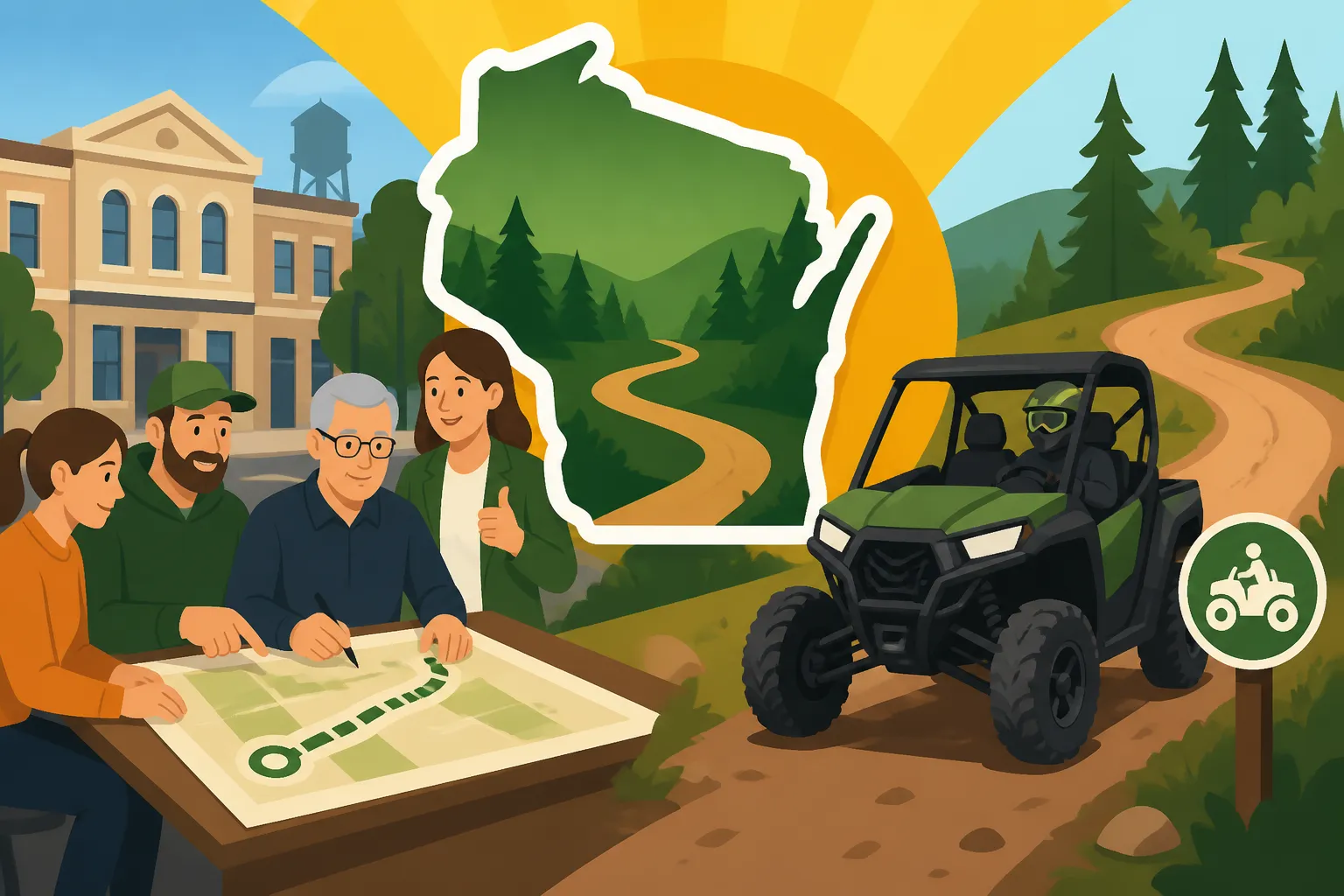
The journey to an approved ATV route typically begins with a formal proposal to the town board. This isn't usually a casual chat; it often involves preparing a detailed presentation. Riders or community advocates should come armed with a clear map outlining the proposed roads for the route, explaining why these specific roads are chosen (e.g., they connect to an existing trail, they lead to a business, they avoid residential areas). It's also incredibly helpful to demonstrate community support, perhaps with a petition signed by local residents and businesses, or letters from area clubs. You'll want to address potential concerns upfront, showing that you've thought about safety, noise, and environmental impact.
A well-researched proposal will also include suggestions for hours of operation, speed limits, and even types of machines to be allowed, drawing on examples from successful routes in neighboring towns. This proactive approach shows the town board that the proponents are serious, responsible, and have done their homework. Attending town board meetings, speaking during public comment periods, and reaching out to individual board members beforehand can lay crucial groundwork. It's about building relationships and demonstrating the positive impact an ATV route could have, while also showing respect for the local legislative process.
Public Hearings and Community Input
Once a town board has seriously considered the proposal, a critical next step is typically to hold one or more public hearings. This is where the community at large gets its official say, and it's a vital part of the democratic process. These hearings are advertised in advance, giving all residents the opportunity to attend, listen, and express their opinions, both for and against the proposed route. This is where the rubber meets the road, so to speak, as concerns about noise, increased traffic, safety for children and pets, and potential impacts on property values often come to the forefront.
For advocates, it's crucial to attend these hearings and calmly address concerns, providing factual information and highlighting the benefits. It's not uncommon for emotions to run high, and a balanced, respectful approach is key. Local ATV clubs often play a significant role here, organizing their members to attend and speak in favor, providing a unified voice. [Wisconsin ATV Clubs and the Trails They Keep] are often at the forefront of these efforts, acting as liaisons between riders and local government. The town board uses these hearings to gauge public sentiment, gather additional information, and identify any specific issues that need to be addressed in the final ordinance. It's a testament to local democracy, and while it can be a contentious process, it's essential for ensuring the route serves the broader community.
Drafting and Adopting the Ordinance
After gathering all the input from public hearings and discussing the proposal amongst themselves, the town board will move to draft an official ordinance. This document is the legal backbone of the ATV route, outlining every specific detail and rule. It will typically define the exact roads or segments of roads that are open to ATVs and UTVs, specify the legal hours of operation, set speed limits (which are usually lower than the posted vehicle speed limit), and sometimes even dictate [Wisconsin Helmet Rules for Riders Under 18] or other safety requirements. The ordinance will also likely address signage requirements, clarifying what types of signs must be posted and where.
Legal counsel for the town will ensure the ordinance complies with all state statutes regarding ATV and UTV operation on roadways. Once drafted, the ordinance usually goes through several readings and a final vote by the town board. If it passes, it is formally adopted and officially becomes local law. The town then takes on the responsibility of installing the necessary [Route Signage Standards in Wisconsin], communicating the new rules to residents and riders, and working with local law enforcement for enforcement. This final step marks the culmination of months, sometimes years, of discussion, advocacy, and legislative work, officially opening the doors for riders to enjoy those previously off-limits roads.
Key Elements of a Successful ATV Route Ordinance
A well-crafted ATV route ordinance is more than just a list of open roads; it's a comprehensive document designed to ensure safety, minimize disruption, and clarify expectations for both riders and residents. It's the blueprint for how the route will function within the community.
Defining Permitted Roads and Hours of Operation
One of the most critical components of any ATV route ordinance is the precise identification of the roads that are open for use. This isn't just a general designation; it details specific road names, sometimes even precise start and end points (e.g., "Main Street from the intersection of Elm Road to the town limits"). Towns often carefully select roads that minimize impact on densely populated residential areas, or that serve to connect existing trail systems or local businesses. It's common to see primarily town roads included, though some towns may enter into agreements with counties to include short stretches of [County Roads Wisconsin Towns Can Open] that are crucial for connectivity. The frustration arises when obvious connecting roads are left out due to local opposition or perceived difficulties, leaving riders with incomplete routes.
Equally important are the specified hours of operation. Most towns do not allow 24-hour ATV or UTV use on routes. Common restrictions include daytime-only riding, or specific hours like 7 AM to 10 PM. This is primarily to address concerns about noise disturbance in quiet residential areas, especially during late-night hours. The ordinance will clearly spell out these times, and riders are expected to adhere strictly to them. Violations can lead to citations and even the reconsideration of the route's privileges by the town board. Adhering to these defined parameters is crucial for maintaining good relations with the community and ensuring the route remains open.
Machine Types, Safety Gear, and Speed Limits
A good ordinance doesn't just open roads; it also specifies who can ride and how. Most ordinances will clearly distinguish between ATVs and UTVs, sometimes with different rules, particularly for youth. For example, a common state rule is that riders between 12 and 15 years old can operate an ATV on routes with adult supervision, but [Why UTVs Are Treated Differently on Routes] often means they cannot operate a UTV on a route until age 16, even with supervision. The ordinance will reflect these state-level distinctions and potentially add local ones. Safety gear is also a common element; while Wisconsin has state helmet laws for riders under 18, a town might reinforce requirements for [Eye Protection on a Wisconsin Ride] or even suggest helmets for all riders on routes, although it cannot make it a local law for adults if state law doesn't.
Speed limits are another crucial aspect. Even if a town road has a posted 45 MPH speed limit for cars, the ordinance for ATV/UTV routes almost always specifies a lower limit, often 25 MPH or even 10 MPH in densely populated areas. This is a common point of contention for riders who feel they could safely go faster, but it's a critical safety measure designed to ensure ATVs and UTVs blend more safely with vehicle traffic and reduce perceived risks to pedestrians and property owners. Adhering to these lower speed limits is not just about avoiding a ticket; it's about demonstrating responsible riding and maintaining the goodwill of the community.
Signage, Enforcement, and Financial Considerations
No route can function effectively without clear and consistent signage. The ordinance will detail the requirements for [Route Signage Standards in Wisconsin], specifying the type, size, and placement of signs that clearly designate the start and end of routes, along with any special conditions (like speed limits or hours). These signs are not just helpful for riders; they also inform motorists and residents that ATVs and UTVs are legally permitted on those roads. Towns need to budget for the initial installation of these signs and their ongoing maintenance, as signs can be damaged, stolen, or fade over time.
Enforcement of these ordinances falls to local law enforcement, typically the county sheriff's department or, in some cases, local town constables. This requires clear communication between the town board and law enforcement to ensure officers are aware of the new rules and how to enforce them fairly. Violations can range from speeding and riding outside of designated hours to operating an unregistered machine ([Penalties for an Unregistered ATV in Wisconsin]). Financially, towns need to consider not just the cost of signage, but also potential administrative costs and perhaps even increased road maintenance if the route experiences heavy use. While local routes don't typically qualify for [Wisconsin Trail Aids and Registration Revenue], some towns might explore partnerships with local clubs or special appropriations to cover these expenses. Riders, in turn, often support these routes by patronizing local businesses, contributing to the very economy the routes are meant to boost.
Overcoming Challenges and Addressing Concerns
Opening an ATV route is rarely without its hurdles. Towns must navigate a range of potential issues, from noise complaints to safety concerns, to ensure the route is a positive addition to the community rather than a source of contention. Addressing these challenges proactively and transparently is key to long-term success.
Managing Noise and Environmental Impact
One of the most frequent and vocal concerns raised by residents regarding ATV and UTV routes is noise. Engines, especially those with aftermarket exhaust systems, can be loud, and the sound carries, particularly in quiet rural settings. An ordinance will often reference Wisconsin's state-level sound limit of [The 96-Decibel Sound Test in Wisconsin] as measured at 20 inches from the exhaust, but local residents often feel even compliant machines are too noisy. To mitigate these concerns, towns might emphasize enforcement of noise limits and encourage responsible riding, such as avoiding unnecessary revving or quick acceleration.
Riders can play a significant role here by ensuring their machines meet sound requirements and by being mindful of their impact, especially when passing homes or quiet areas. Using stock exhaust systems or choosing aftermarket parts from reputable companies like SuperATV that focus on compliance and quality can help. Beyond noise, there can be environmental concerns, such as dust generated on gravel roads or the potential for riders to veer off designated routes and damage sensitive areas. Towns often address this by clearly marking routes, enforcing trespass laws, and encouraging riders to stay on the path. Educational campaigns can also help riders understand the importance of minimizing their environmental footprint, ensuring the trails and routes remain beautiful for everyone.
Ensuring Rider Safety and Education
Safety is paramount, and it's another area where towns often face significant questions from residents. Concerns about collisions with other vehicles, accidents involving pedestrians, or riders unfamiliar with road rules are common. A robust ordinance, coupled with community outreach, can go a long way in alleviating these fears. Towns emphasize that riders must hold a valid [Wisconsin's ATV Safety Certificate Requirement] if born after January 1, 1988, and encourage all riders, regardless of age, to take a safety course. These courses teach critical skills for operating machines safely, including navigating road intersections and understanding right-of-way rules.
Furthermore, towns can collaborate with local law enforcement to ensure adequate patrolling of routes, especially during peak riding times. Promoting safe riding practices—such as riding single file, maintaining appropriate speeds, and using proper hand signals—is crucial. Communication campaigns through local media or town websites can remind both riders and motorists to share the road responsibly. By fostering a culture of safety and education, towns can help build confidence among residents that ATV routes can be enjoyed without compromising community well-being. This might even extend to encouraging the use of bright colors and flags to increase visibility for riders, further enhancing safety on shared roads.
Property Owner Rights and Trespass
While ATV routes are designed to provide legal access on public roads, a recurring concern for property owners is the fear of riders trespassing onto private land. This is a legitimate worry, as even a few irresponsible riders can sour public opinion and jeopardize the future of an entire route. Town ordinances typically reinforce existing [Wisconsin Trespass Rules Along Routes] and empower local law enforcement to strictly enforce them. Clear signage marking the route's boundaries and any adjacent private property is essential.
For riders, respecting private property is not just a legal obligation but a moral one. It's about being a good ambassador for the sport. This means staying strictly on the designated route, not pulling off into fields or driveways without permission, and certainly not cutting across private land to connect to other trails. Property owners often fear damage to crops, fences, or simply the loss of their privacy. Towns can also work to clearly communicate where parking and staging areas are located, preventing riders from inadvertently parking on private property. Acknowledging and actively addressing these concerns builds trust and helps maintain a harmonious relationship between riders and the non-riding community, which is essential for the longevity of any ATV route.
The Ongoing Life of an ATV Route
Opening an ATV route is not a one-and-done event; it's an ongoing commitment. Like any piece of community infrastructure, routes require maintenance, periodic review, and a willingness to adapt to changing circumstances. The best routes are those that continue to serve their community well year after year.
Maintenance and Adaption
Once a route is established, it's not a "set it and forget it" situation. Town roads, especially gravel ones that frequently become ATV routes, can experience wear and tear from increased use by ATVs and UTVs, particularly if they are used by machines equipped with heavy-duty accessories from brands like SuperATV, which might imply more serious off-road use before hitting the route. This means towns need to plan for ongoing maintenance, such as grading and dust control, especially during dry periods. The signage itself also requires maintenance; signs can fade, be damaged by weather, or even be stolen, necessitating replacement.
Furthermore, towns should periodically review the effectiveness and impact of their routes. Are there unforeseen safety issues? Have noise complaints increased? Are there opportunities to expand the route or connect to new trail systems that have opened up in neighboring areas? This adaptive approach allows a town to respond to community feedback and evolving riding patterns. Perhaps an initial set of hours needs to be adjusted, or a specific problematic section of road needs alternative routing. This willingness to adapt shows good governance and a commitment to making the route work for everyone involved, riders and residents alike.
Collaboration with Neighboring Jurisdictions
The true power of an ATV route often comes from its ability to connect with a larger network. A single town's route, while beneficial, can be greatly enhanced if it links up with routes or trails in adjacent townships or even county forest lands. This is where collaboration with [Town Roads Open to ATVs in Wisconsin] and neighboring jurisdictions becomes invaluable. When multiple towns or a county agree to open connecting routes, it transforms a series of isolated segments into a cohesive, extensive riding destination. This is where riders can truly embark on longer journeys, exploring new areas and patronizing a wider array of businesses.
These collaborations often involve formal agreements between municipalities, coordinating signage, rules, and sometimes even shared enforcement efforts. It allows for the creation of regional maps and promotions, drawing in visitors from a broader geographical area. Such interconnected systems maximize the economic benefits for all participating communities and provide an unparalleled riding experience for enthusiasts. Without this spirit of collaboration, many excellent routes would remain isolated, limiting their full potential. It's a testament to what can be achieved when communities work together for a common goal.
Celebrating Success and Promoting Responsible Riding
When a town successfully opens and maintains an ATV route, it's a win for everyone. It means local businesses see more traffic, residents have new recreational opportunities, and riders have more safe and legal places to enjoy their machines. Celebrating these successes can reinforce positive community sentiment and encourage continued support for ATV and UTV recreation. This might involve local events, mentions in town newsletters, or even working with tourism groups to promote the new riding opportunities.
Ultimately, the long-term success of any ATV route hinges on the behavior of the riders themselves. Promoting responsible riding isn't just about avoiding tickets; it's about being a good neighbor and a respectful user of shared public spaces. This means always adhering to speed limits, riding within designated hours, being mindful of noise, respecting private property, and demonstrating courtesy to other road users, whether they are in cars, on bicycles, or walking. By acting as ambassadors for the sport, riders ensure that the positive impacts of ATV routes continue to outweigh any potential drawbacks, securing these valuable riding opportunities for years to come. Whether it's using reliable recovery gear from SuperATV to help a fellow rider on the trail or simply waving to a homeowner along the route, every action contributes to the overall perception of the riding community.
| Step in Opening an ATV Route | Description | Key Considerations |
|---|---|---|
| Initial Idea/Demand | Local riders, businesses, or community members identify a need or desire for ATV/UTV road access to connect trails or access services. | Grassroots support, economic potential, identifying gaps in existing trail networks. |
| Proposal to Town Board | Formal presentation to the local governing body, often including maps, proposed rules, and evidence of community support. | Research, clear communication, addressing anticipated concerns (noise, safety, trespass). |
| Public Hearing(s) | Official forums where residents can voice opinions for or against the proposed route, allowing the town board to gauge public sentiment. | Transparency, respectful dialogue, addressing concerns about noise, safety, and property rights. |
| Ordinance Drafting | Legal document outlining specific open roads, hours of operation, speed limits, machine types, and safety requirements. | Compliance with state law, clarity, enforceability, legal review by town counsel. |
| Ordinance Adoption | The town board votes on and formally adopts the ordinance, making it local law. | Majority vote, official publication, effective date. |
| Signage & Enforcement | Installation of required route signs, communication of new rules to residents and riders, and collaboration with law enforcement. | Budgeting for signs, clear [Route Signage Standards in Wisconsin], training for law enforcement, promoting rider education. |
| Ongoing Review | Periodic assessment of the route's impact, maintenance needs, and opportunities for expansion or modification. | Community feedback, road maintenance, adapting to changing conditions, inter-jurisdictional collaboration. |
Disclaimer
This article is for general informational purposes only and does not constitute professional advice. Laws, prices and regulations vary by location and change over time. Consult a qualified professional for guidance on your specific situation.