Do Wisconsin Passes Cover Frozen Lakes?
If you’re bringing an ATV or UTV to Wisconsin for an ice ride, it’s easy to assume a trail pass gives you access to any frozen lake. It does not. The pass or short-term receipt is part of the requirement for nonresidents, but it is not a blanket guarantee that a particular waterway or access point is open to riding.
What a Wisconsin pass allows on frozen waterways
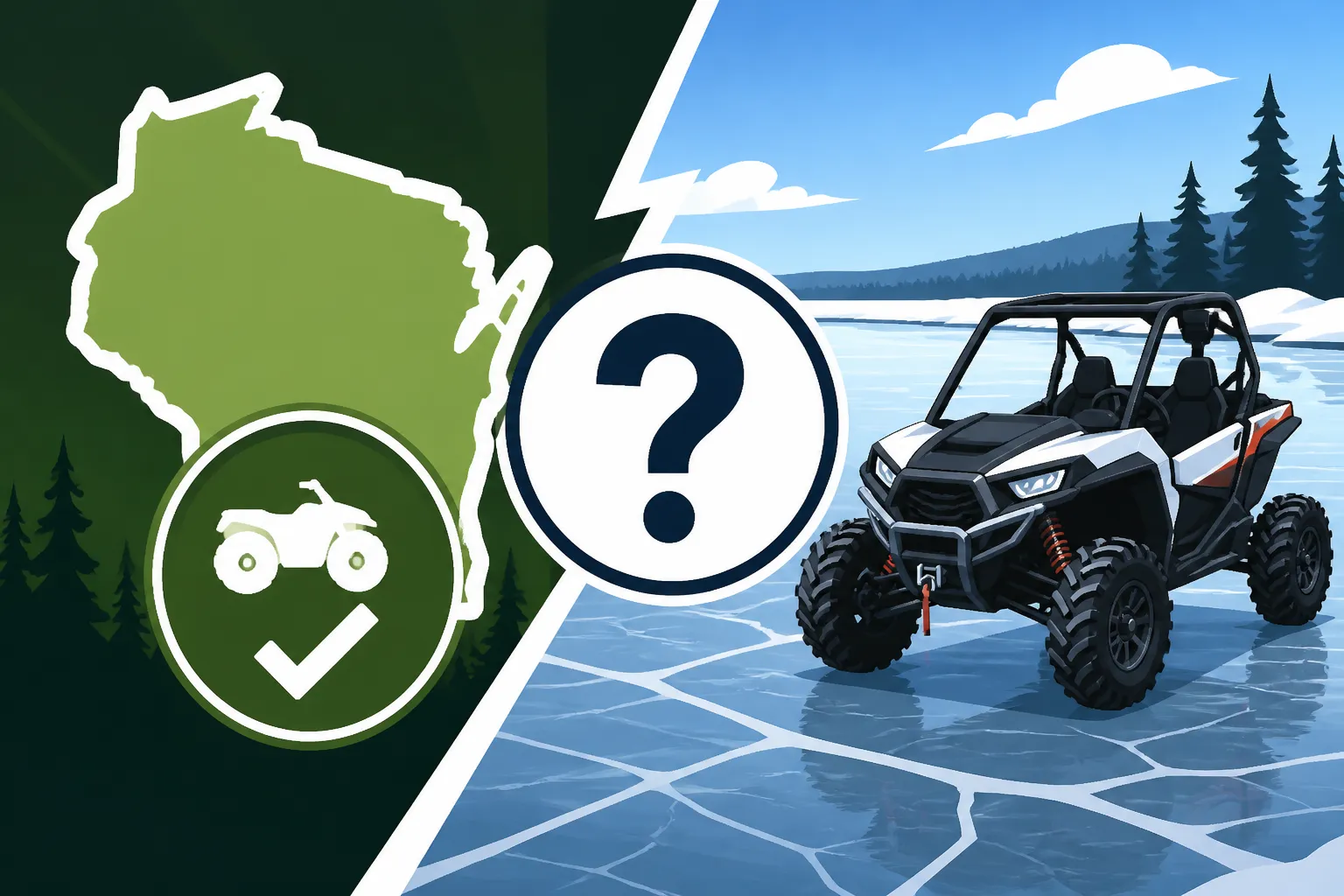
The Wisconsin DNR says nonresidents bringing an ATV or UTV into Wisconsin may operate on designated corridors and frozen waterways with either an annual trail pass or a 5-day trail use receipt. That answers the basic question: the pass system can cover frozen-waterway riding by a nonresident, provided the ride is on a permitted waterway or corridor.
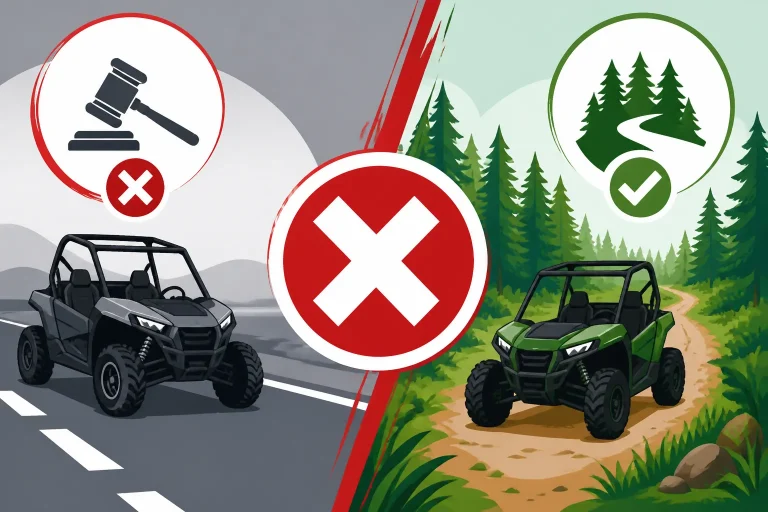
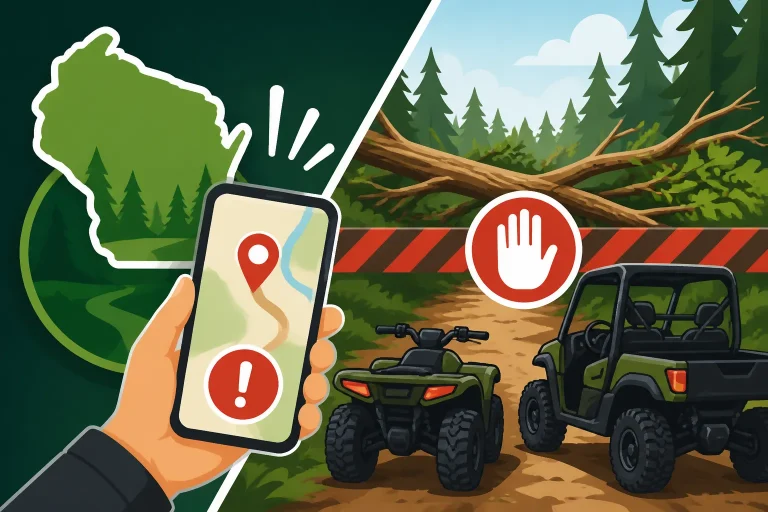
The important distinction is that having a pass does not mean every frozen lake is open to motorized use. A pass is a required credential for eligible nonresident riding; it does not, by itself, establish that you may enter a specific lake, use a particular shoreline, or cross private property to reach the ice. Check current local access rules and closures before unloading. For a broader explanation of the nonresident credential, see Wisconsin’s Non-Resident Trail Pass and What Wisconsin’s $35 Non-Resident Trail Pass Covers.
A pass also does not make an unsafe ice surface safe. Ice conditions can change across a lake and over time, and a valid pass does not assess thickness or carrying capacity. Check conditions through appropriate local sources, use sound judgment, and be prepared to turn back. Ice Thickness Before You Ride Out covers the separate safety question of whether the ice is suitable for travel.
A practical way to think about it is to check three things separately:
- Pass or receipt: Do you have the required nonresident credential for riding?
- Access: Is the particular frozen waterway and your route onto it open to ATV or UTV use?
- Conditions: Is the ice safe enough for your machine and the conditions where you plan to ride?
A “yes” on the first point does not answer the other two.
Choosing between the annual pass and the 5-day receipt
Nonresidents can choose between an annual ATV/UTV trail pass and a 5-day trail use receipt. The annual option runs to the seasonal expiration date; the short-term receipt is issued for a consecutive block of days. Which makes sense depends on how often you expect to ride and when your trip falls.
| Credential | Best fit | Validity and practical notes |
|---|---|---|
| Annual nonresident ATV/UTV trail pass | More than one trip or a longer riding season | According to the Wisconsin DNR, the fee is $35 and the pass expires March 31 each year, as of November 2026. |
| 5-day nonresident trail use receipt | A brief visit or a single short trip | According to the Wisconsin DNR, the fee is $20 and the receipt covers 5 consecutive days, as of November 2026. |
The dates matter. An annual pass does not necessarily cover a full year from the day you buy it; the Wisconsin DNR says it expires on March 31. A 5-day receipt runs for consecutive days, so consider your arrival and departure dates before choosing it. For complete details about the credential and its use, see Wisconsin Rules for a Machine on Ice.
If you are comparing the two options, think about the riding you actually plan to do rather than choosing based on the label alone. A short visit may suit the 5-day receipt. If you expect to return or ride on multiple occasions, compare that option with the annual pass and its fixed expiration date. Check the DNR’s current information before purchasing, since fees and requirements can change.
Getting ready to ride right away
The Wisconsin DNR says that ordering an annual trail pass provides a temporary operating receipt printed on plain white paper, allowing immediate operation. The physical annual pass decal arrives by mail in approximately two weeks. If you use the temporary receipt, keep it available while riding and follow the DNR’s current instructions for displaying or carrying the pass materials.
This timing can matter if your trip is soon. Do not assume the physical decal will arrive before you travel. Confirm what documentation you will have on the day you ride and whether it meets the current requirements. If you are buying the pass in person or choosing the short-term receipt, check the issuing method and instructions before heading to the trail or lake.
A pass is not the same as vehicle registration
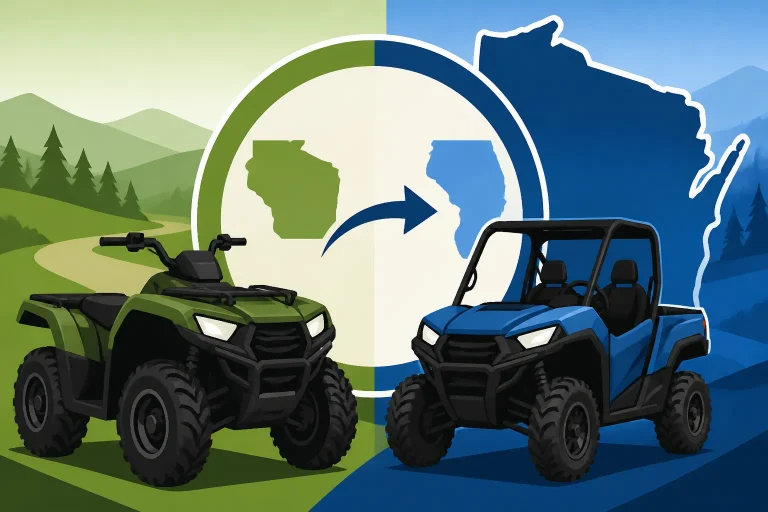
A trail pass and vehicle registration address different requirements. The pass is the nonresident credential described by the Wisconsin DNR for operating on designated corridors and frozen waterways. Registration concerns the vehicle’s legal status. Do not treat one as a substitute for the other.
The Wisconsin DNR says nonresidents who keep their ATV or UTV in Wisconsin must register the vehicle in the state. That is different from bringing a machine into Wisconsin for a visit. If your machine will stay in the state, check the registration rules rather than assuming that buying a trail pass settles the matter. Registering an ATV in Wisconsin explains the general registration process, while Wisconsin Registration for an Out-of-State Machine addresses machines arriving from elsewhere.
If you are visiting from a neighboring state, avoid relying on the idea that your home registration automatically answers every Wisconsin pass question. The relevant requirement depends on your situation, including whether you are bringing the vehicle temporarily or keeping it in Wisconsin. For a state-specific example, see Do Minnesota Riders Need a Wisconsin Pass?. If the machine is borrowed, the owner’s paperwork and your pass obligation are still separate things to confirm; Passes for a Borrowed Machine Up North may help with that scenario.
For a Wisconsin-registered machine, do not assume the nonresident pass guidance is the complete answer to your situation. Confirm the applicable registration and riding rules with the Wisconsin DNR. The key point is simple: a registration document should not be mistaken for proof that a particular frozen-waterway route is open, and a pass should not be mistaken for registration.
Before heading onto a frozen lake
A little checking before the trip can prevent a wasted drive or an avoidable risk. Use this checklist as a starting point, then confirm current requirements for your machine and destination.
- Confirm the credential. Decide whether the annual pass or 5-day receipt fits your visit. Check current DNR requirements and fee information before buying.
- Check the destination. Verify that the frozen waterway and the access route are open to ATV or UTV use. A pass does not establish permission to cross private land or use a closed access point.
- Check the ice separately. Look for current local conditions and use caution. A trail pass does not certify the ice.
- Sort out registration. If you are a nonresident keeping the machine in Wisconsin, the Wisconsin DNR says you must register it in the state.
- Review rider requirements. Wisconsin DNR rules require operators born on or after Jan. 1, 1988, who meet the relevant minimum age, to complete a safety certification course for public riding areas. The stated minimum age is at least 12 for ATV operators and at least 16 for UTV operators. If those rules may apply to someone in your group, verify the details before the trip.
- Ride responsibly. The Wisconsin DNR advises operators to wear a helmet, wear a seat belt in a UTV, ride sober, and operate within their means.
For questions focused on lake access and local restrictions, Wisconsin Rules on Frozen Lakes and Riding a Frozen Wisconsin Lake are useful next reads. They address the riding context; the pass itself is only one part of planning. When in doubt, pause and confirm the rules for the exact access point and waterway instead of assuming a nearby route or lake follows the same conditions.
Sources
- Wisconsin Department of Natural Resources — All-terrain vehicle (ATV) and utility-terrain vehicle (UTV) registration | | Wisconsin DNR (checked November 3, 2026)
- Wisconsin DNR — Nonresident ATV and UTV Trail Passes | | Wisconsin DNR (checked November 3, 2026)
- Wisconsin Department of Natural Resources — ATV | Wisconsin DNR (checked November 3, 2026)
- Wisconsin DNR — Safety Education | Sign up for a safety education course | Wisconsin DNR (checked November 3, 2026)
- Wisconsin Department of Transportation — Wisconsin Department of Transportation All-Terrain Vehicles and Utility Terrain Vehicles on state highways (checked November 3, 2026)
Disclaimer
This article is for general informational purposes only and does not constitute professional advice. Laws, prices and regulations vary by location and change over time. Consult a qualified professional for guidance on your specific situation.