Can a 12-Year-Old Ride a Wisconsin Trail?
A 12-year-old may be ready for a Wisconsin trail, but age alone does not settle whether they can ride. The answer depends on the machine, safety certification, adult supervision and trail access rules. Here’s what families need to check before setting out, including why the rules for a UTV are different from those for an ATV.
The short answer: yes on an ATV, with conditions
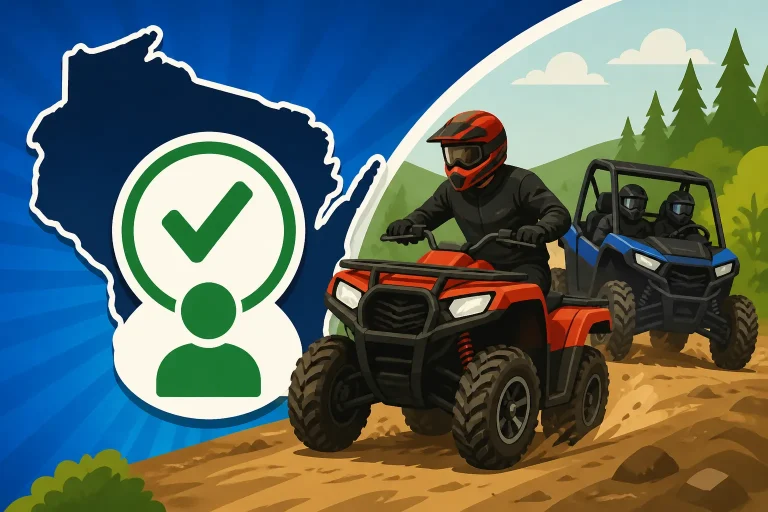
A 12-year-old can ride an ATV on a Wisconsin public trail if they meet the youth-operator requirements. In general, that means completing the required ATV safety certification and riding with an adult who meets the supervision rules. A child turning 12 does not automatically qualify to ride alone.
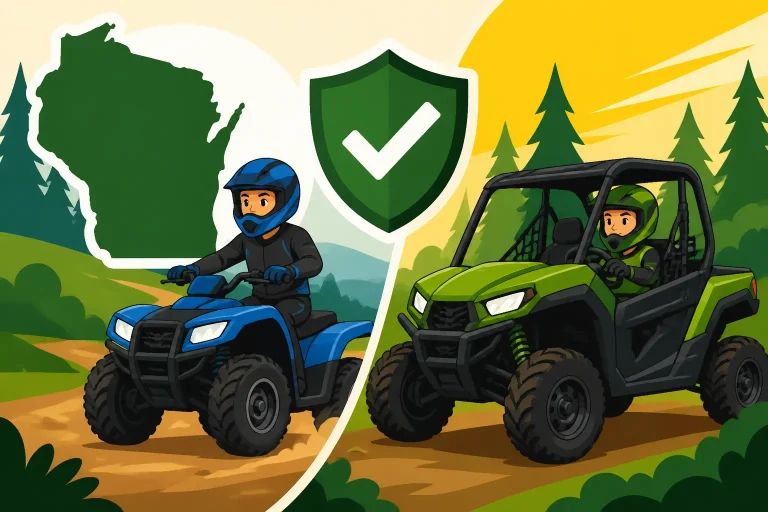
The distinction between an ATV and a UTV matters. Wisconsin sets a different minimum operating age for UTVs: a 12-year-old cannot operate one on a public trail. The simple age summary is 12 for an ATV, 16 for a UTV, though safety certification and supervision requirements still apply to young ATV riders. See Twelve for an ATV, Sixteen for a UTV for a closer look at that distinction.
| Question | What a family should plan for |
|---|---|
| Can a 12-year-old operate an ATV on a Wisconsin public trail? | Yes, if the youth meets the certification and adult-supervision requirements. |
| Can a 12-year-old operate a UTV on a public trail? | No. The minimum operating age for a UTV is 16. |
| Can the child ride without an adult nearby? | Do not plan on that. Youth operators must meet the adult-accompaniment requirement. |
| Does a trail pass replace registration or certification? | No. Each requirement serves a separate purpose. |
| Does permission to ride private land automatically cover public trails? | No. Private-land exceptions do not make a public trail a private riding area. |
Certification is important even when a child has ridden for years on family property. Familiarity with the machine does not substitute for the required credential on public trails. Check Wisconsin’s ATV Safety Certificate Requirement for who needs certification and Wisconsin Safety Courses Online and In Person for course options.
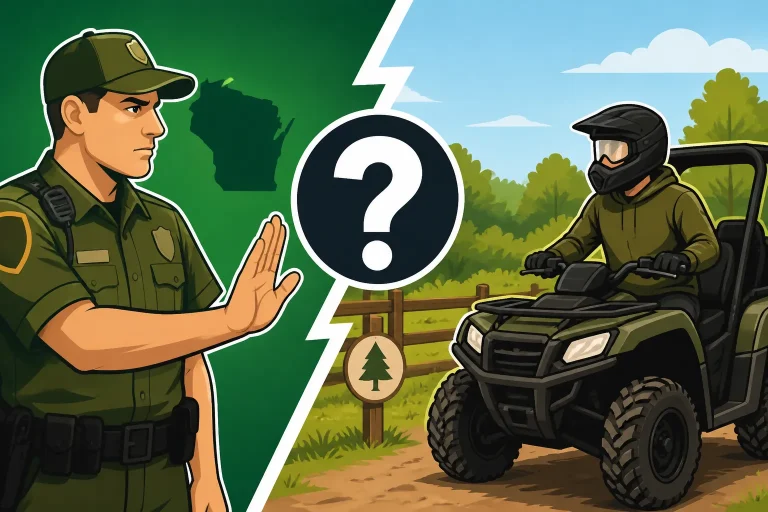
Adult accompaniment is also a real condition, not just a suggestion to have a parent somewhere in the group. The adult should be close enough to supervise the young rider and respond if something goes wrong. Before the ride, confirm the current definition of accompaniment with the Wisconsin DNR, and choose a pace and route that let the adult keep the child in view and under control.
The answer can change if the ride moves off a designated trail and onto a road route, roadway, or other public area. Those locations can have additional rules, and a town or county may set conditions for routes it opens. A family should check the local route rules rather than assuming that permission to ride a trail applies everywhere.
Certification, adult supervision and choosing the machine
Finish the safety requirement before the trip
For a 12-year-old, safety certification is one of the first things to settle. The course is meant to prepare young operators for practical decisions: recognizing hazards, controlling speed, understanding right-of-way, and riding with other people around. It is not simply a form to carry in a pocket.
Keep proof of certification accessible, whether as an accepted card or another form the issuing program provides. If the certificate is lost or the family is unsure whether an out-of-state course counts, check before traveling. The requirements are covered in Out-of-State Certificates Wisconsin Accepts and Replacing a Lost Wisconsin Certificate.
A safety course does not mean a child is ready for every machine or every trail. A newly certified rider still needs practice in a controlled setting, with an adult watching. Start with basic controls, braking, turns, and stopping on uneven ground. A child should know how to shut off the machine, what to do if it stalls, and how to signal that they need help.
Adult accompaniment should shape the ride
Plan the ride so supervision is practical. Keep the adult close, avoid spreading the group over long distances, and agree on simple signals and stopping points before leaving the staging area. If the adult is riding another machine, it should be possible to stop promptly and assist the child.
Do not treat an adult’s presence at the trailhead or camp as enough. The point is to supervise the young operator while they ride. If the route is crowded, rough, unfamiliar, or beyond the child’s current skill, choose an easier outing or wait until the young rider has more practice.
The parent or guardian should also decide whether the specific machine is a sensible fit. Consider the child’s reach to the controls, ability to steer and brake, and capacity to handle the machine’s weight and power. A machine that is technically within the ATV category can still be too large or too powerful for a particular child. Follow the manufacturer’s operating guidance, and do not remove safety equipment or modify a machine to make it seem more manageable.
Do not confuse riding an ATV with driving a UTV
A UTV’s seating and controls can make it look more like a small vehicle, but that does not make it an appropriate vehicle for a 12-year-old to operate on a Wisconsin public trail. The operator age limit is different from the ATV rule. A youth who is old enough and qualified to operate an ATV may still be too young to drive a UTV.
A child riding as a passenger is a separate question from operating the UTV. Follow the vehicle’s seating and restraint instructions, and check any applicable rules for passengers. Never place a child in a seat that lacks the proper restraint or is not designed for a passenger.
If you are unsure how a particular side-by-side is classified, check its documentation and the applicable Wisconsin rules rather than relying on what people call it casually. Why UTVs Are Treated Differently on Routes explains why the vehicle category can affect where and how it may be operated.
Trail access, registration and route rules
A child’s eligibility to operate an ATV is only one part of a legal ride. The machine must also be allowed on the location, and the required registration or trail pass must be in place. A safety certificate does not register the machine, and registration does not replace the youth operator requirements.
For a Wisconsin public trail, check the machine’s registration status and make sure its decals or other required identification are displayed correctly. Wisconsin machines and machines registered elsewhere may follow different permit steps. Wisconsin’s Public Use ATV Registration explains the public-use registration option, while Wisconsin’s Non-Resident Trail Pass covers the permit question for visitors using qualifying Wisconsin trails.
Do not assume that a pass for one machine covers every machine in the group. Confirm which machine the permit applies to and whether the trail system you plan to use requires it. A pass also does not grant access to a closed trail, private property, or a route that the machine is not allowed to use.
Road routes need a separate check. A trail is not the same thing as a town road opened to ATV or UTV traffic. Route access depends on local authorization, and towns can have additional operating rules. Read What a Wisconsin ATV Route Actually Is and check the relevant local rules before planning a trip that connects trails through a community.
For a route-specific ride, verify matters such as permitted vehicle types, hours, speed limits, equipment, and age-related requirements. A route can have different conditions from a nearby trail. If the planned trip includes a road crossing, use the designated crossing and follow the applicable crossing rules; do not assume a child can ride along a road simply because the trail continues on the other side.
Private property is another distinct case. Wisconsin has an exception related to riding on land owned by a youth’s parent or guardian, but a family should not treat that as a blanket exemption for public trails, leased property, or a friend’s land. Get permission from the landowner and check the rules that apply to that property. Wisconsin’s Safety Certificate Exception for Family-Owned Land discusses the limited private-land exception.
A practical pre-ride check for parents
Before taking a 12-year-old onto a Wisconsin trail, work through these checks rather than making the decision at the trailhead.
- Confirm the vehicle category. Make sure the child will operate an ATV, not a UTV. If you cannot tell how the machine is classified, check its documentation and the applicable state rules.
- Confirm the child’s certification. Make sure the child has completed the required course and that you can provide proof if asked. If the course was completed outside Wisconsin, verify that it is accepted.
- Arrange adult supervision. Have an adult accompany the young rider as required. Plan a route and group arrangement that allow close supervision, not a ride where the adult disappears around bends or falls far behind.
- Check the machine’s fit and condition. The child should be able to reach and operate the controls safely. Check the brakes, throttle, tires, lights, and other equipment before departure, and follow the manufacturer’s guidance.
- Confirm trail access and permits. Check that the trail is open to the vehicle and that the machine has the required registration or pass. Review any local rules if the outing uses a road route.
- Choose a suitable first outing. Pick a manageable route and pace. Avoid treating a child’s first public-trail ride as the time to test how they handle steep, rough, or crowded conditions.
- Set clear group rules. Agree on where to stop, how to signal, what to do if separated, and the instruction to stop whenever the child feels uncertain or the adult cannot supervise effectively.
Gear matters, too. A properly fitted helmet and appropriate protective equipment help address risks that certification cannot eliminate. If shopping online, including through Amazon, check the helmet’s safety markings, fit, and return policy rather than choosing by appearance alone. Follow Wisconsin’s current equipment rules for the rider’s age and the type of riding planned.
Finally, check current official guidance before the trip, especially when the plan involves a road route, a machine registered outside Wisconsin, or a course taken in another state. Rules and local access conditions can change, and trail status can change with weather or maintenance. A quick check before loading the trailer can prevent a ride from turning into a paperwork problem—or an unsafe situation.
Disclaimer
This article is for general informational purposes only and does not constitute professional advice. Laws, prices and regulations vary by location and change over time. Consult a qualified professional for guidance on your specific situation.